Baroque · 1611
Still Life with Nuts, Candy and Flowers (Clara Peeters, 1611)
Clara Peeters (1587–1657) har skapt Still Life with Nuts, Candy and Flowers. Den er fra 1611. Det tilhører Baroque-bevegelsen. Laget i Oil On Panel. Verket er bevart ved Museo del Prado i Madrid, Spania. Mål: 52 × 73 cm
- 1611
- Oil On Panel
- 52 × 73 cm
- Museo del Prado, Madrid

 Forhåndsvisning

 Håndmalt oljemaleri
 Send
 Del
 Faktablad for elever


 Last ned bilde
 Liknende objekter
 Røntgenundersøkelse
 Lysbildefremvisning
 Spørsmål og svar

 Statistikk
Still Life with Nuts, Candy and Flowers, kort fortalt
- Tittel
- Still Life with Nuts, Candy and Flowers
- Kunstner
- Clara Peeters (1587–1657)
- Kunstner født i
- Antwerpen, Belgia
- Dato
- 1611
- Materiale
- Oil On Panel
- Mål
- 52 × 73 cm
- Utstillingssted
- Museo del Prado, Madrid, Spania
- Bevegelse
- Baroque
- Tidsperiode
- Early Modern
- Motiv
- food, flowers, fruit, bowl, candlelight, luxury
Hva forestiller Still Life with Nuts, Candy and Flowers?
A Sensory Feast: The Opulence of Clara Peeters
In the quiet intimacy of a seventeenth-century tabletop, Clara Peeters invites us into a world where the mundane is elevated to the magnificent. Still Life with Nuts, Candy and Flowers is not merely a depiction of food; it is a masterclass in sensory storytelling. As one gazes upon this 1611 masterpiece, the eye is immediately drawn to the lush, tactile abundance of the arrangement. Polished bowls overflow with an assortment of nuts, while delicate candies and vibrant fruits—apples and oranges—rest alongside elegant glassware. There is a profound sense of weight and texture here; one can almost feel the rough shell of a walnut against the smooth, cool surface of a silver platter or the delicate, ephemeral softness of a flower petal. Peeters captures a moment of suspended animation, where the sweetness of life is presented in all its colorful, decadent glory.
The painting serves as a breathtaking window into the Baroque era, a period defined by its dramatic flair and intense realism. Moving away from the rigid, geometric constraints of earlier Mannerist traditions, Peeters embraces an asymmetrical composition that feels organic and alive. This deliberate lack of strict symmetry creates a dynamic energy, guiding the viewer’s gaze in a wandering, exploratory path across the table. The interplay of light and shadow—the hallmark of the Baroque style—is utilized with surgical precision. Light dances across the sheen of polished metal and the translucent skin of fruit, while deep, velvety shadows provide a sense of depth and mystery, grounding the vibrant colors in a space that feels both tangible and atmospheric.
Technique and the Art of Observation
To behold this work is to witness the extraordinary technical prowess of a true pioneer. Executed with oil on panel, Peeters employed sophisticated glazing techniques to build layers of luminous color, allowing light to penetrate the paint and reflect from within, much like the natural glow of ripe fruit. Her ability to render different materials—the glint of a wine glass, the matte surface of a nut, the organic texture of a potted plant—demonstrates an obsessive devotion to verisimilitude. Every brushstroke is subservient to the goal of absolute realism, making this piece a triumph of observational skill. For the collector or interior designer, such a work offers more than just decoration; it provides a focal point of profound complexity that rewards prolonged contemplation.
Beyond its physical beauty, the painting whispers of deeper, more contemplative themes. In the tradition of the Dutch ontbijtjes (breakfast pieces), such arrangements often functioned as subtle meditations on the fleeting nature of pleasure and the passage of time. The abundance of the feast stands in a delicate balance with the inherent fragility of the flowers and the perishable nature of the food. This tension between abundance and decay creates an emotional resonance that transcends the centuries, offering a poignant reminder to cherish the sensory richness of the present moment. It is this marriage of exquisite craftsmanship and soulful depth that makes Peeters’ vision an enduring inspiration for those seeking to bring a sense of history, elegance, and narrative weight into a contemporary space.
Hvilket museum har Still Life with Nuts, Candy and Flowers?
Museo del Prado
Madrid, Spania
Historien til Museo del Prado Røttene til Museo del Prado er uløselig knyttet til den spanske kongeamlings samlinger, med en historie som strekker seg helt tilbake til det 18. århundre. Det som begynte som en visjon om et naturhistorisk kabinett under Ferdinand VII, utviklet seg etter hvert til et dedikert fristed for maleri og skulptur.


Høyoppløselige bilder av Still Life with Nuts, Candy and Flowers

Fritlig eiendom: kunstneren døde i 1657.
Andre størrelser, beskjæringer og siteringer →Clara Peeters, Still Life with Nuts, Candy and Flowers (1611).
Clara Peeters (1587–1657), Still Life with Nuts, Candy and Flowers, 1611, oil on panel, Museo del Prado, Madrid, Spania. Fri tilgjengelighet Bilde: OriginalUniqueArt.com.
Spørsmål om Still Life with Nuts, Candy and Flowers, besvart
Hvilket museum har det originale verket "Still Life with Nuts, Candy and Flowers"?
"Still Life with Nuts, Candy and Flowers" av Clara Peeters er utstilt på Museo del Prado, Madrid, Spania. Museumsoppføringen refererer til originalverket, ikke til reproduksjoner.
Når ble "Still Life with Nuts, Candy and Flowers" laget?
"Still Life with Nuts, Candy and Flowers" av Clara Peeters ble skapt i 1611.
Hvilket medium er "Still Life with Nuts, Candy and Flowers" av Clara Peeters utført i?
"Still Life with Nuts, Candy and Flowers" av Clara Peeters er utført i Oil On Panel. Reproduksjonene har som mål å gjengi utseendet til denne teknikken.
Hva er de faktiske målene på "Still Life with Nuts, Candy and Flowers" av Clara Peeters?
"Still Life with Nuts, Candy and Flowers" måler 52 x 73 cm i sin originale form. Originalmålene er en nyttig referanse når du skal velge størrelse på en reproduksjon.
Hva forestiller "Still Life with Nuts, Candy and Flowers" av Clara Peeters?
Temaene i "Still Life with Nuts, Candy and Flowers" av Clara Peeters inkluderer food, flowers, fruit, bowl, candlelight, luxury, texture, composition. Sammen oppsummerer de verkets motiv.
Er "Still Life with Nuts, Candy and Flowers" fri for opphavsrett?
Opphavsrettslig status for "Still Life with Nuts, Candy and Flowers" av Clara Peeters: verket er fritt tilgjengelig – opphavsretten har utløpt. Dette avgjør om det er tillatt å lage frie reproduksjoner av bildet.
Hvilken kunstner kan "Still Life with Nuts, Candy and Flowers" tilskrives?
Kunstneren bak "Still Life with Nuts, Candy and Flowers" er Clara Peeters. Verket er katalogisert under Clara Peeters sitt navn.
Hvilken stilart tilhører "Still Life with Nuts, Candy and Flowers"?
Kunstretningen knyttet til "Still Life with Nuts, Candy and Flowers" av Clara Peeters er Baroque. Denne klassifiseringen plasserer verket sammen med relaterte kunstnere og kunstverk.
Hvilken periode i Clara Peeters sin karriere tilhører "Still Life with Nuts, Candy and Flowers"?
"Still Life with Nuts, Candy and Flowers" representerer Clara Peeters sin Mature Period.
Om kunstneren, Clara Peeters

1587–1657, Belgia
Clara Peeters
Clara Peeters: Pionerinnen for den nederlandske stillbildet Clara Peeters (1594-etter 1657) står som en unik figur i det sekstende århundrets flamske kunst – en av de tidligste anerkjente kvinnelige malerne som opererte innenfor den blomstrende nederlandske gullalderen. Til tross for samfunnsmessige begrensninger som sterkt begrenset kvinners tilgang til kunstnerisk utdanning og laugsmedlemskap, skapte Peeters en bemerkelsesverdig karriere, og etterlot seg et verk som er preget av omhyggelig detalj, innovative komposisjonsteknikker og en fascinasjon for å fange teksturer og nyanser i hverdagen – spesielt mat. Hennes arv fortsetter å inspirere forskere og kunstnere over hele verden, mens de graver dypere inn i spørsmål rundt hennes identitet, utdanning og den gåtefulle naturen til hennes kunstneriske produksjon. Tidlig liv og familie Clara Peeters ble født i Antwerpen rundt 1587 – det eksakte datoen er fortsatt gjenstand for debatt blant historikere.
Andre verk av Clara Peeters
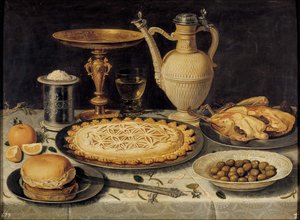 Table with Orange, Olives and Pie1611
 Still Life with Cheeses, Artichoke, and Cherries1625
 Madonna And Child Within A Floral Wreath1621
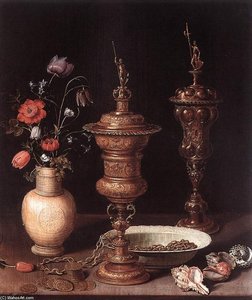 Still-Life with Flowers and Goblets1612

Essays om Still Life with Nuts, Candy and Flowers
 Luminous Vessels: The Transcendent Art of the Bottle in Impressionist Still LifeExplore how Impressionist masters captured light through glass and bottles. Discover the magic of light and texture today.
 18th century Dutch paintersJan van Huysum completed Flowers and Fruit in 1723. Compare his botanical precision with the maritime works of Willem van de Velde the Youn…
 Master of Abundance: The Top 25 Essential Artworks by Frans SnydersBorn in 1579, Snyders trained under Pieter Brueghel the Younger. Count the twenty-five works that define his Baroque mastery of texture and…