

 Send
Send Del med andre
 Vis detaljer

 Last ned bildet
 Liknende objekter
 Lysbildefremvisning
Dying Achilles


 Vis hele teksten
Håndlaget oljereproduksjon
Håndmalt olje på lerret i din valgte størrelse og ramme, laget på bestilling av våre kunstnere. ( Kjøp trykk Kjøp bilde)




































Velg mellom våre forhåndsdefinerte størrelser som bevarer kunstverkets opprinnelige proporsjoner.

Du kan angi egne mål for å tilpasse en spesifikk ramme eller plass. Dersom den valgte størrelsen ikke samsvarer med originalbildets proporsjoner, vil vi enten beskjære kunstverket eller utvide maleriet med ytterligere håndmalte elementer. En digital mockup vil bli sendt til din godkjenning før produksjonen starter.
Vennligst merk at forhåndsvisningen på skjermen ikke gjenspeiler den faktiske beskjæringen eller utvidelsen. Kun mockuppen vil vise den endelige komposisjonen nøyaktig.
Selv om tilpassede størrelser er tilgjengelige, anbefaler vi å velge et mål fra den forhåndsdefinerte listen for å bevare de originale proporsjonene.
Etter bestilling vil OriginalUniqueArt.com-teamet sende e-post til kunden for instruksjoner og sende et utkast (mockup) som forhåndsvisning.
Verdensomspennende levering () på 3–4 uker i stedet for standard 5 uker. (18 August). Ingen kompromisser med kvaliteten.

Gratis ekspressfrakt over hele verden

Lerretsduk av høykvalitets lin

Full forsikring under transport

Garanti for refusjon av toll og importavgifter

Garantert korrekt fargegjengivelse

60 dagers returrett (kun ved feil)

100% pengene tilbake-garanti

Rabatt ved flere kjøp
 Glassalternativet er kun tilgjengelig i størrelser under 110 cm

Dying Achilles
Teknikk for reproduksjon
Størrelse på reproduksjon
-


Endelig pris
$ 325
Beskrivelse av kunstverket
A Moment Frozen in Marble: Christophe Veyrier’s “Dying Achilles”
Christophe Veyrier's "Dying Achilles," sculpted in 1683, stands as a poignant emblem of the Baroque artistic spirit—a testament to Pierre Puget’s influence blended with Veyrier’s own formative years spent amidst the vibrant artistic milieu of Genoa. Born in Trets, Provence, France, Veyrier inherited a profound connection to sculpture from his uncle, Pierre Puget—a celebrated artist renowned for his expressive marble figures and masterful manipulation of drapery—establishing him firmly within a lineage of exceptional artistic talent. This familial legacy undoubtedly instilled in Veyrier a dedication to capturing emotion and grandeur through sculptural form. The Sculpture's Narrative: Mythological Resonance and Baroque Drama At its core, “Dying Achilles” embodies the dramatic conventions characteristic of Baroque art. The sculpture depicts the heroic Achilles—a figure central to Greek mythology—in his final moments of agony, cradled by an unseen force, likely Death or a personification of mourning. This depiction isn’t merely anatomical accuracy; it's a deliberate orchestration of visual elements designed to evoke profound emotional response. The artist skillfully portrays Achilles in a contorted posture, conveying palpable pain and surrender—a gesture mirroring the vulnerability inherent in confronting mortality. Supporting him is another figure, positioned beneath Achilles, striving valiantly to maintain his stability, symbolizing compassion or perhaps representing fate itself. Technical Mastery: Baroque Craftsmanship and Marble Texture Veyrier’s technical prowess shines through in the meticulous execution of this marble sculpture. The medium—marble—was favored by Baroque sculptors for its ability to convey both solidity and luminosity. Christophe Veyrier's skill is evident in his masterful handling of texture, achieved through subtle variations in tone that reveal the inherent beauty of the stone itself. Strong lines delineate Achilles’ musculature and drapery, emphasizing physical strength even as it yields to defeat—a deliberate contrast intended to heighten dramatic impact. The sculptor skillfully utilizes light and shadow to sculpturally illuminate the figure, creating highlights and recesses that accentuate its three-dimensionality and deepen its emotional resonance. Historical Context: Puget's Legacy and Genoese Artistic Influence The sculpture’s genesis is inextricably linked to Pierre Puget—a sculptor whose artistic vision profoundly shaped Veyrier’s own approach. Puget’s influence is particularly noticeable in the pose of Achilles, mirroring the grandeur and expressive dynamism found in Puget’s monumental St. Sebastian in S.Maria del Carignano, Genoa – a masterpiece that cemented Puget's reputation as one of the foremost sculptors of his era. Veyrier spent formative years in Genoa during this period, immersing himself in the artistic fervor of the city and absorbing the stylistic innovations championed by Genoese artists. This exposure undoubtedly contributed to Veyrier’s distinctive style—characterized by a harmonious blend of classical restraint and Baroque exuberance. Symbolic Depth: Confronting Mortality and Embracing Vulnerability “Dying Achilles” transcends mere representation; it delves into profound symbolic themes. The sculpture confronts the inevitability of death, portraying Achilles as vulnerable and accepting of his impending demise—a poignant meditation on human fragility amidst heroic grandeur. The artist’s expressive depiction captures the essence of sorrow and resignation, prompting contemplation on the human condition. Furthermore, the sculpture serves as a reminder that even the most formidable figures are susceptible to suffering and loss—a timeless message resonating across cultures and epochs. Further Exploration: Viewing “Dying Achilles” at Stowe House A remarkable opportunity to experience Christophe Veyrier’s masterpiece firsthand awaits visitors to Stowe House in Buckinghamshire, England. This stunning sculpture resides within a dedicated gallery showcasing the artist's oeuvre alongside works by Thomas Banks—a fellow sculptor who collaborated with Puget on monumental projects during Louis XIV’s reign. Examining “Dying Achilles” alongside Banks’ sculptures offers invaluable insight into the artistic currents of the Baroque period and underscores Veyrier’s enduring contribution to European art history.Om kunstneren
Christophe Veyrier: A Sculptor Shaped by Puget and Genoa
Christophe Veyrier (25 June 1637 – 10 June 1689) stands as a testament to the artistic fervor of the French Baroque, firmly rooted in the legacy of Pierre Puget but profoundly impacted by his formative years spent in Genoa. Born in Trets, Provence, France, he inherited a talent for sculpture from his uncle, Pierre Puget—a celebrated artist known for his expressive marble figures and masterful handling of drapery—establishing him as part of a significant artistic lineage. This connection to Puget’s oeuvre would undoubtedly shape Veyrier's own stylistic sensibilities.- Early Life & Training: Veyrier’s formal training commenced in Aix-en-Provence, where he honed his skills under the tutelage of Jean Baptiste Tourte, a prominent sculptor who championed classical ideals alongside Baroque dynamism. This dual influence—classical restraint tempered by baroque fervor—became a hallmark of Veyrier's artistic approach.
- Genoa and Artistic Awakening: A pivotal moment arrived in 1663 when Veyrier relocated to Genoa, Italy, a city renowned for its artistic patronage and vibrant cultural milieu. During his time there, he immersed himself in the humanist traditions of Renaissance sculpture, absorbing inspiration from artists like Michelangelo Buonarroti and Bernini—figures who had revolutionized sculptural technique and conceptual exploration. The encounter with these masters undoubtedly broadened Veyrier’s artistic horizons.
Rome: Refining Technique and Embracing Religious Patronage
Between 1668 and 1670, Veyrier ventured to Rome—the epicenter of Baroque art—where he continued his artistic development. This period witnessed a deepening engagement with the stylistic conventions of papal sculpture, particularly those championed by Bernini. He meticulously studied Bernini’s monumental works, absorbing lessons in dramatic composition, expressive gesture, and masterful illusionistic rendering. The influence of Bernini is palpable in Veyrier's later sculptures, where he skillfully employs techniques to convey emotion and grandeur.- Notable Commissions & Artistic Achievements: Veyrier’s career gained considerable renown through prestigious commissions, most notably the creation of religious statues for the Chapel of Corpus Domini in Toulon Cathedral. This ambitious undertaking demanded exceptional technical skill and artistic vision—a testament to Veyrier's dedication and talent. Furthermore, he produced sculptures depicting mythological subjects, including Stowe House’s celebrated ‘Family of Darius,’ demonstrating his versatility as an artist. His work is held by esteemed institutions worldwide – Musée d’art Toulon; Musée Granet Aix-en-Provence; Louvre Museum Paris; Victoria & Albert Museum London; Metropolitan Museum of Art New York.
Legacy and Influence
Christophe Veyrier's sculptures endure as enduring symbols of the French Baroque, embodying both classical elegance and dramatic fervor. His meticulous attention to detail—particularly in capturing human emotion—solidifies his position among the foremost sculptors of his era. Like Puget before him, Veyrier skillfully blended humanist ideals with artistic innovation, leaving an indelible mark on the history of sculpture. His contribution to Toulon Cathedral’s iconography remains particularly significant, reflecting a commitment to religious art that continues to inspire admiration.- Further Exploration: For deeper insights into Christophe Veyrier's artistic oeuvre and biographical details, consult the Wikipedia article linked above: Wikipedia.

Christophe Veyrier
1637 - 1689 , France
Kort om kunstneren
- Artistic Movement Or Style: Renaissance Sculpture
- Artists Or Movements Influenced By This Artist: ['Stowe House']
- Artists Who Influenced This Artist: ['Pierre Puget']
- Date Of Birth: June 25, 1637
- Date Of Death: June 10, 1689
- Full Name: Christophe Veyrier
- Nationality: French
- Notable Artworks:
- Bust of Christ
- Dying Achilles
- Marsyas
- Place Of Birth: Trets, France
Relaterte artikler

Bronseklassikere: 10 skulpturer som revolusjonerte kunsten | OriginalUniqueArt
Utforsk 10 legendariske bronseskulpturer som formet kunsthistorien! Fra Rodin til Michelangelo – oppdag historiene, teknikkene og skjønnheten bak tidløse mesterverk. Finn din perfekte veggkunst eller interiørdekor på OriginalUniqueArt.com.

The Enduring Allure of Marble in Art History: From Classical Sculpture to Modern Abstraction
Explore the captivating history of marble sculpture from ancient Greece to modern art. Discover renowned artists like Canova & Michelangelo, carving techniques, and investment insights at OriginalUniqueArt.

Timeless Elegance: A Complete Guide to the Sublime Beauty and Artistry of Marble Sculpture
Discover the sublime beauty of marble art through an expert exploration of Renaissance and Neoclassical masterpieces. From the delicate textures of Carpeaux to the grandeur of Sansovino, immerse yourself in a guide to timeless elegance and sculptural perfection.

The Enduring Form: Exploring Themes & Techniques in Sculpture Across Historical Periods
Explore the rich history of sculpture from ancient masterpieces to contemporary innovations. Discover key techniques, influential artists & investment potential for discerning art collectors.
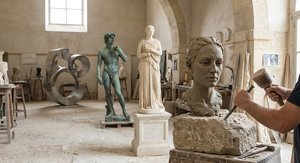
The Enduring Form: Sculpture Across History, Technique & Emotional Resonance
Explore the rich history of sculpture with OriginalUniqueArt. Discover key techniques, influential artists & investment potential for discerning collectors. Expert insights into valuing and collecting timeless masterpieces.

