Rococo · 1736
Bear Hunt (Charles André van Loo, 1736)
Charles André van Loo (1705–1765) har laget Bear Hunt. Den er fra 1736. Det tilhører Rococo-bevegelsen. Den er laget i Oil On Canvas. Verket er bevart ved Musée de Picardie i Amiens, Frankrike. Mål: 184 × 129 cm
- 1736
- Oil On Canvas
- 184 × 129 cm
- Musée de Picardie, Amiens

 Forhåndsvisning

 Håndmalt oljemaleri
 Send
 Del
 Faktablad


 Last ned bilde
 Liknende objekter
 Røntgenundersøkelse
 Lysbildefremvisning
 Spørsmål og svar

 Statistikk
Bear Hunt, kort fortalt
- Tittel
- Bear Hunt
- Kunstner
- Charles André van Loo (1705–1765)
- Kunstner født i
- Nice, Frankrike
- Dato
- 1736
- Medium
- Oil On Canvas
- Dimensjoner
- 184 × 129 cm
- Hvor det kan ses
- Musée de Picardie, Amiens, Frankrike
- Bevegelse
- Rococo
- Periode
- Early Modern
- Motiv
- people, bears, dogs, horses, guns, rocks
Hva forestiller Bear Hunt?
Identification of the Artwork and Artist
The oil on canvas titled Bear Hunt was painted by Charles-André van Loo in 1736. This work emerged from the hand of an artist born in Nice, France, in 1705. He belonged to a successful dynasty of Dutch painters, a lineage of creators who shaped the visual language of their era. His life spanned the decades between his birth and his death in 1765.
Charles-André van Loo brought a specific precision to this scene. The canvas captures a moment of movement within the wilderness. It is a piece from a period of significant activity for the artist. His brushwork defines the tension of the chase. The light falls upon the figures and the animals in the landscape.
The work remains a specific record of a hunt. It carries the weight of the artist's early career. A quiet stillness exists beneath the action of the hunt. The shadows of the trees stretch across the ground.
Visual Composition and Subject Matter
This large oil on canvas captures a moment of sudden movement in the wild. Near a cluster of jagged rocks, the landscape opens into a rugged wilderness. Several men grip guns, their bodies poised for the chase. Dogs weave through the brush, their instincts driving them toward the scent of the prey. Horses stand nearby, silent witnesses to the exertion, ready to carry the hunters across the uneven ground.
The bears are scattered throughout the scene, some looming in the foreground and others fading into the distant greenery. The composition relies on this distribution of weight to create a sense of scale. There is a palpable tension in the air, a rush of adrenaline that defines the hunt. The great outdoors provides a chaotic, unscripted stage for this encounter. The hunt moves with a sudden, sharp energy.
Related Works by the Same Artist
The artist’s hand moved through many realms, from the quietude of a Self Portrait to the grand scale of mythological drama. In Venus and Amor, held at the Kunsthalle Bremen, the brush captures a different kind of grace. He explored the tension of legend in Jupiter and Antiope and rendered the myth of Perseus and Andromeda in multiple versions. These figures exist alongside the courtly presence of the Portrait of Marie Leszczynska, Queen of France. A smaller, focused study of Mademoiselle Clairon as Medea appeared in 1760.
The hunt remains a recurring pulse in his oeuvre. He captured aristocratic leisure in Halt of the Hunt, a work now held at The Metropolitan Museum of Art. This interest in the chase extends to the overdoor paintings created for the petits appartements of Louis XV at Versailles. Such works reflect a life spent navigating the precise requirements of royal patronage and the fluid movement of the Rococo style. The paint dries on the canvas, leaving only the shadow of the chase.
Hvilket museum har Bear Hunt?
Musée de Picardie
Amiens, Frankrike
En tidens fristed: Sjelen til Musée de Picardie Dypt inne i det historiske hjertet av Amiens i Frankrike, står Musée de Picardie som et dypsindig vitnesbyrd om den vedvarende dialogen mellom menneskeheten og dens kreative impulser. Å tre gjennom dets dører er å gå inn i et rike der tidens grenser oppløses, akkurat som lyset som danser gjennom de storslåtte, luftige salene. Selve museets struktur, et mesterverk fra det andre keiserdømmet skapt av arkitektene Henri Parent og Arthur-Stanislas Diet, fungerer som en taus forteller om Frankrikes kulturelle storhetstid.


Høyoppløselige bilder av Bear Hunt
Fritlig eiendom: kunstneren døde i 1765.
Charles André van Loo, Bear Hunt (1736), Musée de Picardie. Felleseie
Spørsmål om Bear Hunt, besvart
Hvilket museum har det originale verket "Bear Hunt"?
Du kan se originalen av "Bear Hunt" på Musée de Picardie, Amiens, Frankrike.
I hvilket år ble "Bear Hunt" av Charles André van Loo skapt?
"Bear Hunt" av Charles André van Loo ble skapt i 1736.
Hvilken teknikk er brukt i "Bear Hunt" av Charles André van Loo?
"Bear Hunt" er utført i Oil On Canvas.
Hva er de faktiske målene på "Bear Hunt" av Charles André van Loo?
Det originale verket "Bear Hunt" av Charles André van Loo måler 184 x 129 cm.
Hva forestiller "Bear Hunt" av Charles André van Loo?
Motivene i "Bear Hunt" er people, bears, dogs, horses, guns, rocks, wilderness.
Er "Bear Hunt" av Charles André van Loo i det frie domene?
Opphavsrettslig status for "Bear Hunt" av Charles André van Loo: verket er fritt tilgjengelig – opphavsretten har utløpt. Dette avgjør om det er tillatt å lage frie reproduksjoner av bildet.
Hvem har skapt "Bear Hunt"?
"Bear Hunt" tilskrives Charles André van Loo.
Hvilken kunstretning tilhører "Bear Hunt" av Charles André van Loo?
Kunstretningen knyttet til "Bear Hunt" av Charles André van Loo er Rococo. Denne klassifiseringen plasserer verket sammen med relaterte kunstnere og kunstverk.
Hvilken fase av Charles André van Loo sin kunstneriske utvikling representerer "Bear Hunt"?
"Bear Hunt" tilhører Mature Period i Charles André van Loo sin karriere. Denne klassifiseringen knytter verket til kunstnerens utvikling.
Om kunstneren, Charles André van Loo
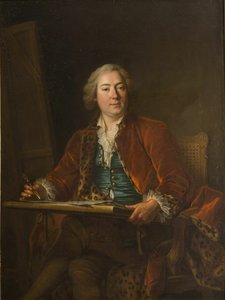
1705–1765, Frankrike
Charles André van Loo
Early Life and Training Charles André van Loo (født 15 februar 1705 i Nice, Frankrike) var sønn av maleren Louis-Abraham van Loo og yngre bror til Jean-Baptiste van Loo. Han var medlem av en vellykket nederlandsk kunstdynasti og ble født inn i et miljø hvor kunst hadde høy status og betydning. Hans far var en dyktig kunstner som hadde hatt stor innflytelse på hans egen utvikling, noe som gjenspeiles i hans senere arbeid. Van Loo begynte sin kunstneriske opplæring i Torino før han flyttet til Roma i 1712 hvor han studerte under Benedetto Luti og Pierre Legros.
Om Charles André van Loo Fremtredende verk av Charles André van Loo
Også av Charles André van Loo
 Spanish Concert (Spanish Сonversation)1754
 Aeneas Carrying Anchises1729
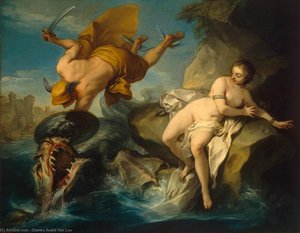 Perseus and Andromeda1735
 The sultana1747
Essays om Bear Hunt
 Charles-André van Loo: A Study in Rococo Portraiture & the French Court's Artistic DynamicsExplore the elegant world of Charles-André van Loo, a master of Rococo portraiture at the French court. Discover his life, techniques, and …
 16th century Flemish paintersMasterpieces by Bruegel and Jan Brueghel define 16th century Flemish art. Explore the full collection online at OriginalUniqueArt.com.
 17th century Flemish paintersMasterpieces by Van Dyck and Teniers define Flemish Baroque. Explore museum-quality reproductions on OriginalUniqueArt.com.