
![Landscape At Céret [paysage À Céret] — Chaim Soutine](/media/artworks/images-full/35/5a/355a615cc0de7aff615dd914cfa996d2.jpg)
 Se i rommet
 Del som digitalt kort
 Del
Del
 Detaljer
 Studentguide

 Last ned
 Liknende objekter
 Røntgen
 Lysbildefremvisning
 Besøksstatistikk
Landscape at Céret [Paysage à Céret]
 Acrylic On Canvas
- WallArt
- Expressionism
 1922
1922- Modern
 79.0 x 87.0 cm
 Nagoya City Art Museum
 Les mer
Håndlaget oljereproduksjon
Håndmalt olje på lerret i din valgte størrelse og ramme, laget på bestilling av våre kunstnere. ( Bytt til trykkversjon Gå til digitalt bilde)




P118B Nkr10

P118H Nkr10

P118W Nkr10

P438Z Nkr10

P508JH Nkr12

P508YH Nkr12

P805H Nkr10

P805Z Nkr10

P919BZ Nkr10

P919G Nkr10

P919XJ Nkr10

P959ZH Nkr10

P968JZ Nkr12

W106C Nkr8

W218G Nkr10

W218JH Nkr8

W218Y Nkr10

W307PJ Nkr10

W316G Nkr10

W316PJ Nkr8

W316Y Nkr10

W398PJ Nkr8

W4111J Nkr10

W500HY Nkr15

W500JH Nkr15

W692G Nkr12

W849H Nkr8

W940BG Nkr15

W953PJ Nkr8




Velg mellom våre forhåndsdefinerte størrelser som bevarer kunstverkets opprinnelige proporsjoner.

Skriv inn bredden og høyden du trenger, slik at den passer til din ramme eller vegg. Dette er håndmalt, så for en størrelse med en annen form kan kunstneren male litt mer rundt bildet, eller beskjære det noe — du velger selv. Vi sender deg en digital mockup for godkjenning før maleriet påbegynnes. Bildet som vises på denne siden viser ikke det faktiske resultatet — kun mockuppen gjør det.
Etter bestilling vil OriginalUniqueArt.com-teamet sende e-post til kunden for instruksjoner og sende et utkast (mockup) som forhåndsvisning.
Verdensomspennende levering () på 3–4 uker i stedet for standard 5 uker. (25 October). Ingen kompromisser med kvaliteten.

Gratis ekspressfrakt over hele verden

Lerretsduk av høykvalitets lin

Full transportforsikring

Garanti for refusjon av toll og importavgifter

Garantert fargeekthet

100 dagers returrett ved fabrikasjonsfeil

100% pengene tilbake-garanti

Mengderabatt
 Glassalternativet er kun tilgjengelig i størrelser under 110 cm
![Landscape at Céret [Paysage à Céret]](/static/images/originaluniqueart/artworks/painting.a1e74a1cb7dc.png)
Landscape at Céret [Paysage à Céret]
Reproduksjonsmetode
Format på reproduksjon
-


Totalpris
Nkr 2852
Landscape at Céret by Chaim Soutine: A Vision of Turbulent Beauty
Chaim Soutine’s “Landscape at Céret” is more than just a depiction of a Pyrenean hillside; it's a visceral expression of the artist’s inner turmoil and a testament to his singular artistic vision. Painted in 1922, during a pivotal period of his career, this work embodies the raw emotion that would come to define Soutine’s oeuvre – a style characterized by intensely expressive brushwork, distorted forms, and a profound engagement with the psychological landscape.
- Subject Matter: The painting presents a dramatic mountain scene dominated by gnarled trees ablaze with autumnal hues. A small village nestles amongst the foliage, adding a touch of human presence to the otherwise imposing natural world.
- Historical Context: Soutine’s time in Céret was profoundly influential. Following World War I, he sought refuge and creative renewal in this region, a place already associated with artistic innovation – notably, the Cubist explorations of Picasso and Braque. His relationship with art dealer Zachari Zborowski proved crucial to his success, providing both support and access to the Parisian art market.
A Style Forged in Emotion: Soutine’s Technique
Soutine's technique is immediately arresting. He employs a dynamic, almost violent brushstroke – thick impasto applied with a frenetic energy that seems to capture the very essence of movement and instability. The trees aren’t rendered realistically; instead, they are monumentalized, their branches twisting and reaching like tormented limbs. This distortion isn't merely stylistic; it reflects Soutine’s emotional state, his struggle to reconcile beauty with suffering.
- Impasto Technique: The heavy application of paint (impasto) creates a tactile surface, inviting the viewer to engage physically with the artwork.
- Color Palette: Dominated by yellows, ochres, and browns, the color palette evokes a sense of heat, intensity, and perhaps even decay – mirroring the themes of mortality and transformation often present in Soutine’s work.
- Brushwork: The swirling, directional brushstrokes create a powerful sense of movement and energy, drawing the eye across the canvas and contributing to the painting's overall feeling of unease.
Symbolism and Emotional Resonance
"Landscape at Céret" is laden with symbolic weight. The towering trees can be interpreted as representing both strength and vulnerability, while the solitary figure gazing out towards the viewer suggests a sense of isolation and contemplation. The chaotic arrangement of elements – the distorted forms, the intense colors – reflects Soutine’s own psychological state, hinting at the anxieties and uncertainties that permeated his life. The painting speaks to themes of memory, loss, and the struggle for meaning in a world often perceived as hostile or absurd.
- Interpretation: The scene can be seen as a reflection of Soutine's own emotional landscape – turbulent, passionate, and deeply personal.
- Human Element: The presence of the figure adds another layer of complexity, inviting viewers to consider their own relationship with nature and the act of observation.
Dimensions & Details
This exceptional reproduction captures every nuance of Soutine’s original masterpiece. The dimensions are 79 x 87 cm (31 ¼ x 34 ¼ inches), making it suitable for a variety of interior spaces. Produced using high-quality materials, this hand-painted reproduction offers an authentic representation of this iconic work, ensuring that its beauty and emotional power will be enjoyed for generations to come.
Spørsmål og svar
Hvilken metning og intensitet har "Landscape at Céret [Paysage à Céret]" av Chaim Soutine?
Fargene i "Landscape at Céret [Paysage à Céret]" av Chaim Soutine viser en Subtle Color metning med en Balanced intensitet.
Hva slags verk er "Landscape at Céret [Paysage à Céret]"?
"Landscape at Céret [Paysage à Céret]" av Chaim Soutine er klassifisert som WallArt. Kategorien beskriver hvilken type kunstverk originalen er.
Hvilken historisk periode stammer "Landscape at Céret [Paysage à Céret]" av Chaim Soutine fra?
Den historiske perioden til "Landscape at Céret [Paysage à Céret]" av Chaim Soutine er Modern. Denne klassifiseringen plasserer verket i kunsthistorien.
Kunstnerbiografi
A Life Forged in Turmoil: The World of Chaim Soutine
Chaim Soutine’s life was a tapestry woven from threads of profound hardship and incandescent artistic passion. Born in 1893 in Smilovichi, a small Jewish shtetl near Minsk in the Russian Empire (now Belarus), his early years were steeped in poverty and the constraints of Orthodox religious observance. This formative experience—a childhood marked by material scarcity and a sense of cultural isolation—became the bedrock upon which his distinctive artistic vision was built. Despite discouragement from representing figures realistically within his upbringing, a remarkable talent for drawing emerged, hinting at the intense emotionality that would later characterize his work. He received formal training at an art academy in Vilna (now Vilnius) between 1910 and 1913, but it was his emigration to Paris in 1913 that proved to be a pivotal turning point. Enrolling at the École des Beaux-Arts under Fernand Cormon, Soutine found himself immersed in a vibrant artistic community, yet he remained largely outside of prevailing trends, forging an independent path defined by raw emotion and innovative technique. The initial years in Paris were marked by extreme poverty—a struggle that mirrored the turbulent inner world reflected in his paintings.An Expressionist Apart: Style and Influences
While often categorized as an Expressionist, to label Soutine solely within this movement feels reductive. His style was profoundly individual, a complex synthesis of traditional European painting – particularly the works of Rembrandt, Chardin, and Courbet – filtered through a lens of intense emotionality. He didn’t merely imitate these masters; he absorbed their techniques and compositional strategies, then violently reinterpreted them to convey his own subjective experience. Bold colors, applied with thick impasto—a textured application of paint that gives his canvases a palpable physicality—and agitated brushwork are hallmarks of his distinctive style. Soutine wasn't interested in precise representation; instead, he sought to capture the *essence* of his subjects, imbuing them with a sense of unease, psychological tension, or even outright turmoil. Landscapes, portraits, and still lifes became his primary vehicles for this exploration—each painting a visceral expression of feeling rather than a mere depiction of reality. Recurring themes like food and animals reflected both personal experiences rooted in scarcity and the significance of ritual within Jewish culture, adding layers of meaning to his work. His brushstrokes weren’t delicate; they were forceful, almost violent, conveying a sense of urgency and emotional intensity.Development and Defining Works
Soutine's artistic development unfolded through distinct periods, each marked by unique stylistic explorations. The early Parisian years (1913-1917) saw him grappling with his voice amidst financial hardship and the influence of other artists in Paris. He spent time studying the works of masters like Rembrandt and Chardin, absorbing their techniques and compositional strategies. The period spent in Céret between 1919 and 1922 proved crucial. Surrounded by the dramatic landscapes of southern France, Soutine produced many of his most celebrated paintings – a period characterized by vibrant colors, distorted forms, and a sense of almost violent energy. Trees, cliffs, and fields became swirling masses of paint, reflecting not just what he saw but how he *felt* in their presence. His portraits, too, stood apart for their psychological depth, often depicting working-class individuals with an honesty that challenged conventional portraiture. Notable works from this period include studies related to “The Dance of Life,” alongside numerous landscapes capturing the essence of Céret and poignant portraits of Russian émigrés in Paris.Recognition, Legacy, and Lasting Impact
Soutine’s path to recognition wasn't straightforward. The art dealer Leopold Zborowski played a crucial role in promoting Soutine's work and securing his financial stability, recognizing the unique power of his vision. Initial critical reception was mixed, but his reputation gradually grew over time. His expressive use of paint and emotional intensity profoundly influenced later artists, including Willem de Kooning and Francis Bacon, who saw in Soutine a kindred spirit—an artist willing to push the boundaries of representation in pursuit of authentic expression. Today, Chaim Soutine is rightfully recognized as a major figure in Expressionism and a significant contributor to 20th-century art. His works are held in prestigious museums worldwide, testaments to his enduring legacy. He represents a crucial bridge between traditional European painting techniques and the emerging forms of Abstract Expressionism, prioritizing emotional expression over objective representation and developing an artistic voice that transcended typical Expressionist concerns. His innovative style paved the way for future generations of artists seeking to explore the depths of human emotion through the power of paint.
Chaim Soutine
1894 - 1943 , Russland
Kort om kunstneren
- Artistic Movement Or Style: Expressionisme
- Artists Or Movements Influenced By This Artist:
- Willem de Kooning
- Francis Bacon
- Abst Ekspresjonisme
- Artists Who Influenced This Artist:
- Rembrandt
- Chardin
- Courbet
- Date Of Birth: 13. januar 1893
- Date Of Death: 1943
- Full Name: Chaim Soutine
- Nationality: Fransk
- Notable Artworks:
- Still Life med sild
- Uten tittel (2161)
- Studie for Dansen
- Place Of Birth: Smilovichi, Russland
Relaterte artikler

Evocations of Place: A Historical Journey Through Landscape Art
Explore the rich history of landscape art with OriginalUniqueArt. Discover renowned artists, movements like Impressionism & Romanticism, and expert guidance for collecting timeless pieces. Find your perfect serene escape today!
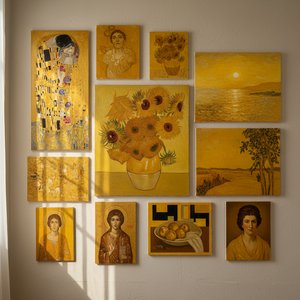
Gylne mesterverk: Topp 10 malerier dominert av okergult – OriginalUniqueArt.no
Utforsk 10 ikoniske malerier dominert av varmt okergult! Fra Van Gogh til Monet – lær historien bak mesterverkene og finn inspirasjon for ditt hjem. Museumskvalitet kunsttrykk på OriginalUniqueArt.com. Oppdag hele samlingen online!

Romantiske landskap: Topp 10 mesterverk for hjemmet – Kunst fra OriginalUniqueArt.com
Oppdag de 10 mest ikoniske romantiske landskapsmaleriene! Fra Caspar David Friedrich til Turner – utforsk kunsthistorien, stemningen og fargepalettene. Finn museumskvalitets reproduksjoner på OriginalUniqueArt.com.

Evocations of Place: A Historical Journey Through Landscape Art
Explore the rich history of landscape art with OriginalUniqueArt. Discover renowned artists, movements like Impressionism & tonalism, and expert guidance for collecting timeless pieces. Find your perfect serene escape today!

John Constable: Topp 25 Maler – Engelsk Landskapskunst i Ditt Hjem
Opplev John Constables 25 mest ikoniske malerier! Fordyp deg i engelsk romantikk, landskapskunst og atmosfæriske scener. Finn museumskvalitets reproduksjoner & interiørinspirasjon på OriginalUniqueArt.com. Utforsk samlingen online!
