

 Bestill trykk Kjøp digitalt bilde
 Send
Send
 Del med andre
 Vis detaljer
 Legg til i favoritter

 Last ned bildet
 Liknende objekter
 Røntgenundersøkelse
 Lysbildefremvisning
Arcadia
 Oil
Oil- WallArt
- Neorealism
 Modern
 103.0 x 66.0 cm
 Ministero degli Affari Esteri e della Cooperazione Internazionale. Collezione Farnesina
 Vis hele teksten
Håndlaget oljereproduksjon
Håndmalt olje på lerret i din valgte størrelse og ramme, laget på bestilling av våre kunstnere.




P118B $10

P118H $10

P118W $10

P438Z $10

P508JH $12

P508YH $12

P805H $10

P805Z $10

P919BZ $10

P919G $10

P919XJ $10

P959ZH $10

P968JZ $12

W106C $8

W218G $10

W218JH $8

W218Y $10

W307PJ $10

W316G $10

W316PJ $8

W316Y $10

W398PJ $8

W4111J $10

W500HY $15

W500JH $15

W692G $12

W849H $8

W940BG $15

W953PJ $8




Velg mellom våre forhåndsdefinerte størrelser som bevarer kunstverkets opprinnelige proporsjoner.

Du kan angi egne mål for å tilpasse en spesifikk ramme eller plass. Dersom den valgte størrelsen ikke samsvarer med originalbildets proporsjoner, vil vi enten beskjære kunstverket eller utvide maleriet med ytterligere håndmalte elementer. En digital mockup vil bli sendt til din godkjenning før produksjonen starter.
Vennligst merk at forhåndsvisningen på skjermen ikke gjenspeiler den faktiske beskjæringen eller utvidelsen. Kun mockuppen vil vise den endelige komposisjonen nøyaktig.
Selv om tilpassede størrelser er tilgjengelige, anbefaler vi å velge et mål fra den forhåndsdefinerte listen for å bevare de originale proporsjonene.
Etter bestilling vil OriginalUniqueArt.com-teamet sende e-post til kunden for instruksjoner og sende et utkast (mockup) som forhåndsvisning.
Verdensomspennende levering () på 3–4 uker i stedet for standard 5 uker. (17 July). Ingen kompromisser med kvaliteten.

Gratis ekspressfrakt over hele verden

Lerretsduk av høykvalitets lin

Full forsikring under transport

Garanti for refusjon av toll og importavgifter

Garantert korrekt fargegjengivelse

60 dagers returrett (kun ved feil)

100% pengene tilbake-garanti

Rabatt ved flere kjøp
 Glassalternativet er kun tilgjengelig i størrelser under 110 cm

Arcadia
Teknikk for reproduksjon
Størrelse på reproduksjon
-


Endelig pris
-
Beskrivelse av kunstverket
A Serene Vision of Classical Harmony
In the quietude of Arcadia, the viewer is transported into a realm where time seems to suspend its forward march, yielding instead to a state of eternal repose. This evocative masterpiece by the Italian master Carlo Levi captures a moment of profound stillness, depicting a naked figure resting gracefully upon the earth. The composition is anchored by the soft, rhythmic presence of a woman in slumber, her head cradled by a pillow as she lies amidst a bountiful scattering of apples and seasonal fruits. There is an undeniable intimacy to the scene; the way the light touches the curves of the human form and the textured skin of the fruit creates a sensory experience that invites the observer to breathe in the very essence of peace. The presence of a secondary figure, partially veiled in the background, adds a layer of narrative mystery, suggesting a shared, quiet existence within this pastoral sanctuary.
The technical execution of Arcadia reveals Levi’s deep connection to the avant-garde movements of his era. Influenced by the geometric precision and pure volumes of Felice Casorati, Levi employs a style that balances soft, organic shapes with a structured, almost architectural sense of form. The painting is not merely a depiction of a landscape or a figure, but an exploration of geometry striving for perfection. Each element—from the rounded weight of the fallen apples to the gentle contour of the reclining subject—is rendered with a deliberate, sculptural quality. This mastery of volume lends the work a tactile presence, making the scene feel tangible and grounded, even as it touches upon the ethereal qualities of a dreamscape.
Symbolism and the Neorealist Soul
Beyond its aesthetic allure, Arcadia serves as a window into the complex intellectual landscape of early 20th-century Italy. While the title evokes the classical myth of a utopian wilderness, the painting is infused with the burgeoning spirit of Neorealism that would later define Levi’s career. The connection between the human body and the natural world is palpable; the figure does not merely lie upon the ground but seems to emerge from it, part of a singular, breathing ecosystem of earth, fruit, and flesh. This symbiosis acts as a powerful symbol of life's fundamental resilience and the enduring beauty found in simplicity. For the collector, this piece offers more than decoration; it offers a philosophical meditation on our primal connection to the rhythms of nature.
For interior designers and connoisseurs of fine art, Arcadia represents a sophisticated choice for creating an atmosphere of contemplative luxury. The painting’s palette and composition possess a unique ability to anchor a room, providing a focal point that is both intellectually stimulating and emotionally soothing. Whether placed in a sun-drenched studio or a formal gallery setting, the work radiates a sense of timelessness. It is a piece that rewards prolonged study, revealing new nuances of light and shadow with every glance, making it an invaluable acquisition for those looking to infuse their spaces with the profound, quiet strength of Italian modernism.
Om kunstneren
Carlo Levi: A Painter's Witness to Resilience and Revolution
Carlo Levi (1902-1975) stands as a singular figure in Italian art history—a painter, writer, activist, and doctor whose oeuvre transcends mere aesthetic beauty to embody the spirit of his time. Born in Turin, Italy, Levi’s life was marked by intellectual curiosity, political engagement, and profound empathy for the marginalized communities of Southern Italy during the tumultuous years following World War II. His artistic output reflects this multifaceted perspective, characterized by a distinctive Neorealist style that captured both the stark realities of poverty and the enduring human spirit.Early Life and Artistic Beginnings
Levi’s formative years instilled in him a deep appreciation for literature and philosophy—influences that would permeate his subsequent creative endeavors. He pursued medical studies at Turin University, graduating in 1924, but simultaneously nurtured his artistic inclinations. His debut exhibition at the XIV Venice Biennale in 1938 signaled the emergence of a talent destined to captivate audiences with its uncompromising honesty and evocative imagery. Levi’s artistic explorations extended beyond traditional landscapes; he experimented with abstraction and explored themes of solitude and displacement—a preoccupation that would find expression in his autobiographical masterpiece, *Cristo si è fermato a Eboli*.The Influence of Surrealism and Parisian Exile
Levi's artistic sensibilities were further shaped by encounters with prominent artists like Sergei Prokofiev and Igor Stravinsky during his time in Paris. This immersion in avant-garde movements fostered an interest in experimentation and challenged conventional artistic conventions. The surrealist aesthetic—particularly its preoccupation with dreamlike imagery and subconscious exploration—left a discernible imprint on Levi’s visual vocabulary, contributing to the distinctive character of his paintings.“Cristo si è Fermato a Eboli”: A Literary Landmark
Levi's literary breakthrough arrived in 1945 with *Cristo si è fermato a Eboli*, a poignant memoir documenting his exile in Lucania—a region ravaged by poverty and neglect during the postwar reconstruction effort. This book, lauded for its lyrical prose and unflinching portrayal of social injustice, catapulted Levi to national prominence and cemented his reputation as a humanist voice committed to confronting uncomfortable truths. The novel’s narrative style—characterized by fragmented perspectives and evocative sensory details—became synonymous with the “problem of the south,” sparking crucial debates about Italy's socio-economic disparities.Notable Works: Landscapes of Suffering and Reflection
Levi’s artistic output encompasses a diverse range of landscapes and figurative compositions that grapple with themes of resilience, memory, and human dignity. Paintings like *L'Orologio* (1950) and *Le Parole Sono Pietre* (1955) exemplify his masterful technique—employing muted palettes and subtle brushstrokes to convey profound emotional depth. These works serve as visual meditations on the complexities of existence, reflecting Levi’s unwavering belief in the transformative power of art to illuminate human experience.Legacy and Recognition
Carlo Levi's artistic legacy extends beyond individual paintings; it resides in his enduring contribution to Italian literature and culture—a testament to his ability to synthesize intellectual rigor with compassionate empathy. His story continues to inspire artists and writers alike, reminding us that art can serve as a catalyst for social change and a conduit for confronting difficult questions about human condition. Levi’s work is housed in museums across Italy and internationally, including the National Museum of Fine Arts in Valletta, Malta, ensuring his artistic vision remains accessible to future generations.
Carlo Levi
1902 - 1975 , Italy
Kort om kunstneren
- Artistic Movement Or Style: Neorealism
- Artists Or Movements Influenced By This Artist: ['Italian Literature']
- Artists Who Influenced This Artist:
- Sergei Prokofiev
- Igor Stravinsky
- Date Of Birth: November 29, 1902
- Date Of Death: January 4, 1975
- Full Name: Carlo Levi
- Nationality: Italian
- Notable Artworks:
- The Watch
- Words Are Stones
- Christ Stopped at Eboli
- Place Of Birth: Turin, Italy
Relaterte artikler
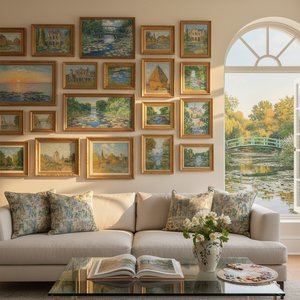
Claude Monet: Topp 25 Maler – Impressionisme for Ditt Hjem | OriginalUniqueArt.no
Oppdag Claude Monets 25 mest ikoniske malerier! Fordyp deg i impressionismens verden, fra vannliljer til soleiloppgang. Historien bak kunsten & eksklusive reproduksjoner på OriginalUniqueArt.no – for et kunstfullt hjem.

Paul Cézannes 25 Mesterverk: En Kunstnerisk Reise for Ditt Hjem
Utforsk Paul Cézannes 25 mest ikoniske malerier! Oppdag historien bak impresjonismens mesterverk, fra stilleben til landskap. Finn kunsttrykk av høy kvalitet og interiørinspirasjon på OriginalUniqueArt.com.

The Enduring Allure of the Nude: A Historical & Artistic Exploration of the Human Form
Explore the captivating history of nude art! Discover iconic paintings & artists from classical to modern eras. Uncover symbolism, techniques & find museum-quality reproductions at OriginalUniqueArt.

Veiled Distances: Exploring Atmospheric Perspective in Painting – Techniques, History & Emotional Resonance
Explore the art of atmospheric perspective! Discover historical techniques, scientific principles & practical tips for creating depth & mood in your paintings. Learn from masters like da Vinci and elevate your artwork.

Geometrisk Abstraksjon: Topp 10 Mesterverk for Kunstelskere – OriginalUniqueArt.com
Utforsk de 10 mest innflytelsesrike verkene innen geometrisk abstraksjon! Oppdag historiene bak Mondrian, Kandinsky og Malevich. Finn inspirasjon til interiøret med OriginalUniqueArt.coms eksklusive reproduksjoner – museumskvalitet for ditt hjem. Utforsk samlingen online!

