

 Se i rommet
 Del som digitalt kort
 Del
Del
 Detaljer
 Studentguide

 Last ned
 Liknende objekter
 Røntgen
 Lysbildefremvisning
 Besøksstatistikk
Saint Michael
 Acrylic On Canvas
- WallArt
- Late Gothic
 1476
1476 90.0 x 26.0 cm
 Nasjonalgalleriet
 Les mer
Giclée / Kunsttrykk
Giclée- eller lerretsprint av museumskvalitet med rask produksjon og fleksible valgmuligheter for etterbehandling. ( Bestill håndmalt reproduksjon Gå til digitalt bilde)




P118B Nkr10

P118H Nkr10

P118W Nkr10

P438Z Nkr10

P508JH Nkr12

P508YH Nkr12

P805H Nkr10

P805Z Nkr10

P919BZ Nkr10

P919G Nkr10

P919XJ Nkr10

P959ZH Nkr10

P968JZ Nkr12

W106C Nkr8

W218G Nkr10

W218JH Nkr8

W218Y Nkr10

W307PJ Nkr10

W316G Nkr10

W316PJ Nkr8

W316Y Nkr10

W398PJ Nkr8

W4111J Nkr10

W500HY Nkr15

W500JH Nkr15

W692G Nkr12

W849H Nkr8

W940BG Nkr15

W953PJ Nkr8




Velg mellom våre forhåndsdefinerte størrelser som bevarer kunstverkets opprinnelige proporsjoner.

Skriv inn bredden og høyden du trenger, slik at den passer til din ramme eller vegg. Et trykk kan kun beskjæres, aldri gjøres større enn bildet, så et format med en annen form vil miste en del av motivet. Vi sender deg en digital mockup for godkjenning før vi trykker noe som helst. Bildet som vises på denne siden viser ikke den faktiske beskjæringen — det er kun mockuppen som gjør det.
Verdensomspennende levering () på 2 uker i stedet for standard 4/5 uker. (21 October)

Gratis ekspressfrakt over hele verden

Lerretsduk av høykvalitets lin

Full transportforsikring

Garanti for refusjon av toll og importavgifter

Garantert fargeekthet

100 dagers returrett ved fabrikasjonsfeil

100% pengene tilbake-garanti

Mengderabatt
 Glassalternativet er kun tilgjengelig i størrelser under 110 cm

Saint Michael
Giclée / Kunsttrykk
Format på reproduksjon
-


Totalpris
Nkr 755
A Vision of Heavenly Conflict
Carlo Crivelli's "Saint Michael," painted around 1476, isn’t merely a depiction of an angel battling a demon; it’s a meticulously crafted tableau of spiritual warfare, brimming with Renaissance artistry and profound symbolism. This panel, once part of a larger altarpiece intended for the church of San Domenico in Ascoli Piceno, Italy, immediately draws the eye into a dynamic scene where youthful Michael, radiating aristocratic beauty yet possessing an undeniable ferocity, confronts the writhing embodiment of evil beneath his feet. The composition isn’t simply about physical combat; it's a carefully orchestrated visual argument between order and chaos, light and darkness, good and sin.
Crivelli, deeply influenced by the Venetian artistic traditions of Vivarini and Mantegna, masterfully employs techniques that elevate this scene beyond simple religious illustration. Notice the masterful use of foreshortening – a signature element of Crivelli’s style – which dramatically compresses the space, pulling the viewer into the heart of the battle. The devil's head, positioned prominently at the bottom of the panel, is rendered with unsettling detail, highlighting his grotesque features and desperate struggle. Conversely, Michael’s face holds an expression of serene determination, a subtle contrast to the chaotic energy surrounding him.
The Archangel: A Symbol of Divine Authority
Saint Michael isn't just any angel; he is the Archangel, the chief warrior in God’s army. Within Christian iconography, he represents divine justice, protection, and victory over evil. The halo surrounding his head, a common symbol of holiness, emphasizes his elevated status. His armor, rendered with exquisite detail – polished metal reflecting light, intricate stitching – speaks to his martial prowess and unwavering commitment to defending humanity from demonic influence. The shield he holds aloft isn’t just a defensive tool; it's a visual declaration of God’s authority and Michael’s role as its representative.
Historically, the figure of Michael has deep roots in Jewish tradition, where he served as Israel’s protector and advocate. This connection is reflected in the painting’s composition – the devil beneath Michael isn't simply a monstrous foe; he represents the forces arrayed against God’s chosen people. The scene thus resonates with themes of faith, struggle, and ultimately, triumph over adversity—a narrative that has captivated audiences for centuries.
Renaissance Technique and Emotional Resonance
Crivelli's skill as a painter is evident in the meticulous rendering of textures – the smooth sheen of Michael’s armor, the rough scales of the devil, the folds of his garments. He utilizes tempera on poplar wood, a technique favored during this period for its luminosity and ability to capture intricate detail. The use of vibrant colors—rich blues, reds, and golds—further enhances the painting's visual impact, creating a sense of drama and intensity. Beyond technical mastery, Crivelli imbues the scene with an emotional resonance that transcends mere representation; it speaks to the timeless struggle between good and evil, hope and despair.
The panel’s enduring appeal lies in its ability to evoke both awe and contemplation. It's a reminder of humanity’s vulnerability in the face of darkness, but also of the unwavering strength and protection offered by divine grace. “Saint Michael” is more than just a painting; it’s a powerful testament to the enduring themes of faith, courage, and the eternal battle between light and shadow.
Spørsmål og svar
Hvordan finner jeg kunstverk som ligner på "Saint Michael" av Carlo Crivelli?
Verker som ligner på "Saint Michael" er oppført på verkets Lignende verk-side.
Hvor mye lys ser fargene i "Saint Michael" ut til å reflektere?
Fargene i "Saint Michael" har en Soft Shadow luminans.
Hvordan er fargekomposisjonen i "Saint Michael" av Carlo Crivelli bygget opp?
Fargeanalysen av "Saint Michael" av Carlo Crivelli viser en Bold kontrast og en Strong Color Unity harmoni.
Kunstnerbiografi
tidlig liv og utdanning
Den italienske renessansemaleren Carlo Crivelli ble født i Venezia rundt 1430-35. Han sprang ut av en familie av kunstnere og mottok sin kunstneriske dannelse i de kulturelle sentrene Venezia og Padova. Det antas at Crivellis tidlige opplæring fant sted under Jacobello del Fiore, som fremdeles var aktiv i 1436, og han studerte også ved Vivarini-skolen i Venezia.
karriere og stil
Crivelli tilbrakte sine tidlige år i Veneto-regionen, hvor han absorberte dype impulser fra mestere som Vivarini, Squarcione og Mantegna. Innen 1458 forlot han Veneto og tilbrakte mesteparten av sin karriere i Marche-regionen ved Ancona. Her utviklet han en særegen personlig stil som står i markant kontrast til den til hans venetianske samtidige, Giovanni Bellini. Crivellis verk er preget av en konservativ, dekorativ sengotisk sans, kjennetegnet av en lineær kvalitet, en uovertruffen detaljrikdom og den forførende bruken av "trompe l'oeil"-teknikker som leker med betrakterens blikk.
bemerkelsesverdige verk og samarbeid
* Carlo Crivellis maleri "Madonna og barnet på tronen" (106 x 55 cm, Museum of Fine Arts, Budapest, Ungarn) står som et fremragende eksempel på hans unike stil. * Han samarbeidet med sin yngre bror, Vittorio Crivelli, på flere prosjekter. * Pietro Alemanno, en maler som emigrerte til Marche-regionen fra Tyskland/Østerrike, var både hans elev og samarbeidspartner.
museer og samlinger
* Pinacoteca di Brera i Milano, Italia, rommer flere av Crivellis verk, inkludert "Pietà" (128 x 241 cm). * Museo San Giovanni in Bragora i Venezia, Italia, inneholder en samling kunstverk fra ulike perioder og stiler, deriblant verk som tilskrives Crivelli.
- Se Carlo Crivellis kunstverk på OriginalUniqueArt.com
- Utforsk Jacopo Robustis verk på OriginalUniqueArt.com
- Les mer om Carlo Crivelli på Wikipedia
Crivellis ettermæle fortsetter å inspirere både kunstentusiaster og lærde, og hans arbeid forblir et vitnesbyrd om den vedvarende kraften i en konservativ, dekorativ sengotisk sans.

Carlo Crivelli
1435 - 1495 , Italia
Kort om kunstneren
- Artistic Movement Or Style: Sengotikk/Renessanse
- Artists Or Movements Influenced By This Artist: ['Giovanni Bellini']
- Artists Who Influenced This Artist:
- Jacobello del Fiore
- Vivarini
- Squarcione
- Mantegna
- Date Of Birth: ca. 1430-35 Venezia
- Date Of Death: ca. 1495 Italia
- Full Name: Carlo Crivelli
- Nationality: Italiensk
- Notable Artworks:
- Madonna og barnet
- Sankt Bartolomeus
- Sankt Rochus
- Place Of Birth: Venezia, Italia
Relaterte artikler

Giovanni Fattori: Realism, Identity & the Tuscan Landscape – A Macchiaioli Master
Explore the life & art of Giovanni Fattori, a leading figure of the Macchiaioli movement. Discover his revolutionary realism, captivating Tuscan landscapes, and lasting impact on Italian painting. Learn more at OriginalUniqueArt.

Divine Nature: Exploring the Sacred Iconography and Masterpieces of Saint Francis
Embark on a profound journey through art history with our exploration of Saint Francis's most iconic works. Discover Giotto’s revolutionary frescoes and the spiritual depth of Proto-Renaissance masterpieces through an expert lens for the true classic art enthusiast.
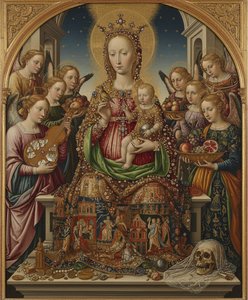
Carlo Crivelli: Mysticism & Materiality in Renaissance Venice
Explore the captivating world of Carlo Crivelli, a Renaissance master blending Gothic detail with profound symbolism. Discover his unique style & lasting influence on Venetian art history.
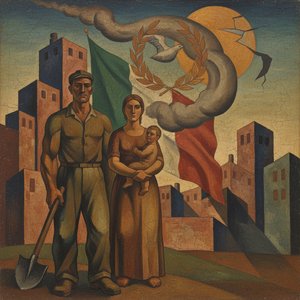
Mario Sironi: A Poetic of Modern Italian Identity Through Symbolism & Social Commentary
Explore the profound works of Mario Sironi, a key figure in Italian Modernism. Discover his evolution from Futurism to Metaphysical painting and his powerful social commentary. Learn about his legacy at OriginalUniqueArt.

Mastering Devotion: The Most Iconic Depictions of Saint Jerome in Art History
Explore the profound iconography of Saint Jerome through art history's most iconic masterpieces. From Renaissance serenity to Baroque drama, discover how legendary painters captured divine devotion in breathtaking oil paintings and fine art reproductions.

