
 Forhåndsvisning
 Send
Send Del
Del
 Vis detaljer
 Utskriftsvennlig guide

 Last ned bilde
 Liknende objekter
 Røntgenundersøkelse
 Lysbildefremvisning
 Q&A
Q&A Statistikk
Untitled (AQTDLT)


 Vis hele teksten
Giclée / Kunsttrykk
Giclée- eller lerretsprint av museumskvalitet med rask produksjon og fleksible valgmuligheter for etterbehandling. ( Kjøp håndmalt maleri Bytt til digitalt bilde)




P118B Nkr10

P118H Nkr10

P118W Nkr10

P438Z Nkr10

P508JH Nkr12

P508YH Nkr12

P805H Nkr10

P805Z Nkr10

P919BZ Nkr10

P919G Nkr10

P919XJ Nkr10

P959ZH Nkr10

P968JZ Nkr12

W106C Nkr8

W218G Nkr10

W218JH Nkr8

W218Y Nkr10

W307PJ Nkr10

W316G Nkr10

W316PJ Nkr8

W316Y Nkr10

W398PJ Nkr8

W4111J Nkr10

W500HY Nkr15

W500JH Nkr15

W692G Nkr12

W849H Nkr8

W940BG Nkr15

W953PJ Nkr8




Velg mellom våre forhåndsdefinerte størrelser som bevarer kunstverkets opprinnelige proporsjoner.

Skriv inn ønsket bredde og høyde for å tilpasse trykket til din ramme eller vegg. Et trykk kan kun beskjæres, aldri skaleres opp utover motivets opprinnelige størrelse, noe som betyr at et format med andre proporsjoner vil føre til tap av deler av bildet. Vi sender deg en digital mockup for godkjenning før vi starter trykkeprosessen. Bildet som vises på denne siden viser ikke den faktiske beskjæringen — det er kun mockuppen som viser dette.
Verdensomspennende levering () på 2 uker i stedet for standard 4/5 uker. (1 November)

Gratis ekspressfrakt over hele verden

Lerretsduk av lin av høy kvalitet

Full transportforsikring

Garanti for refusjon av toll og importavgifter

Garantert fargegjengivelse

100 dagers returrett ved fabrikasjonsfeil

100% pengene tilbake-garanti

Rabatt ved flere kjøp
 Glassalternativet er kun tilgjengelig i størrelser under 110 cm

Untitled (AQTDLT)
Giclée / Kunsttrykk
Størrelse på reproduksjon
-


Totalpris for valgte alternativer
Nkr 770
A Majestic Vista: Carleton Watkins’ 1883 Depiction of Mountain & Town Life
- Subject and Composition: This striking black and white photograph by Carleton Watkins presents a compelling juxtaposition of the natural world and burgeoning human settlement. A dominant, imposing mountain forms the backdrop, its scale dwarfing the town nestled at its base. The composition skillfully balances these elements – the rugged wilderness versus the ordered structures of civilization. Numerous buildings, identifiable by their chimneys, populate the townscape, suggesting a thriving community. The inclusion of a train adds another layer to this narrative, hinting at connectivity and progress.
- Technique & Style: Watkins was a master of the collodion wet-plate process, demanding meticulous preparation and execution in the field. This technique resulted in images characterized by incredible detail, tonal range, and sharpness – qualities readily apparent here. The photograph isn’t merely a record; it's an *interpretation* of the landscape. Watkins didn’t simply capture what was there; he carefully selected viewpoints, controlled exposure, and utilized large-format cameras to create images that conveyed his artistic vision. His style leans towards Pictorialism, emphasizing aesthetic beauty and atmospheric effects over purely documentary accuracy.
Historical Context: The American West & the Railroad’s Influence
- The Era of Expansion: Created in 1883, this photograph exists within a pivotal moment in American history – the rapid expansion westward. Following the Civil War, the completion of the transcontinental railroad spurred settlement and economic development across the West. Watkins’ work often documented these changes, serving as both artistic statements and visual records of a transforming nation.
- Watkins & Preservation: Interestingly, while documenting this expansion, Watkins' photographs also played a crucial role in advocating for the preservation of Western landscapes. His images were instrumental in convincing Congress to establish Yosemite National Park – a testament to the power of photography as an agent of conservation.
- The train visible within the scene is not merely a detail; it’s symbolic of this era, representing progress, connection, and the changing relationship between humans and the environment.
Emotional Impact & Symbolic Resonance
- A Sense of Awe: The photograph evokes a powerful sense of awe in the face of nature’s grandeur. The sheer scale of the mountain inspires humility, while the town represents human ambition and resilience.
- Contrasts & Tensions: There's an underlying tension within the image – a contrast between the untamed wilderness and the ordered world created by humans. This duality speaks to the complex relationship between civilization and nature, a theme that continues to resonate today.
- Timeless Appeal: Watkins’ masterful composition and technical skill ensure this photograph remains captivating for contemporary viewers. It offers not only a glimpse into the past but also prompts reflection on our own place within the natural world.
Spørsmål og svar
Hva har "Untitled (AQTDLT)" til felles med resten av Carleton Watkins sin produksjon?
"Untitled (AQTDLT)" deler med Carleton Watkinss andre verk sin American Romanticism-stil og de gjentakende temaene: american romanticism, westward expansion, landscape pioneer, railroad era views, conservationist themes, yosemite advocacy, photographic documentation, early landscape photography.
Hvor harmoniske er fargene i "Untitled (AQTDLT)" av Carleton Watkins?
"Untitled (AQTDLT)" av Carleton Watkins viser en Strong Color Unity fargeharmoni.
Hvor kan jeg finne en guide til "Untitled (AQTDLT)"?
En Faktablad for studenter-side er tilgjengelig for "Untitled (AQTDLT)" av Carleton Watkins: et utskrivbart faktablad om kunstverket, designet for studenter og bruk i klasserommet.
Om kunstneren
Carleton Watkins: Pioneren innen landskapsfotografi
Tidlig liv og opprinnelse (1829-1851)
- Født: 11. november 1829 i Oneonta, New York.
- Carleton E. Watkins var den eldste av åtte barn født av John og Julia Watkins, henholdsvis en tømrer og en vertinne.
- Han vokste opp i landlige omgivelser, hvor han utviklet ferdigheter som jeger og fisker, og deltok aktivt i lokale fellesskap som kor og den presbyterianske menighetens kor.
- I 1851, drevet av drømmen om lykken, reiste Watkins til San Francisco sammen med sin barndomsvenn, Collis Huntington.
Tidlig karriere og fotografiske begynnelse (1851-1861)
- Selv om de i utgangspunktet ikke fant gull, oppnådde både Watkins og Huntington suksess innen sine respektive felt.
- Watkins begynte som leverandør av forsyninger til gruvedriften før han ble butikkmedarbeider i George Murrays bokhandel.
- Et vendepunkt: En uventet ledig stilling ved studioet til daguerreotypisten Robert H. Vance førte Watkins inn i et læreforhold, til tross for at han ikke hadde noen tidligere erfaring med fotografi.
- Han mestret raskt denne kunstformen, overgikk sin instruktør og etablerte et rykte for arbeid av høy kvalitet.
- Innen 1858 hadde Watkins etablert sin egen fotografivirksomhet, hvor han tok på seg oppdrag som å illustrere California for James Mason Hutchings og dokumentere gruveeiendommer.
Yosemite og epoken med mammutplater (1861-1867)
- Vendepunktet: I juli 1861 reiste Watkins til Yosemite Valley, utstyrt med sitt mammutplate-kamera (som brukte glassplater på 18x22 tommer) og et stereoskopisk kamera.
- Han fanget noen av de første detaljerte fotografiene av Yosemite, og viste dets storslåtte prakt til et publikum i øst.
- Disse bildene var avgjørende for å overbevise Kongressen om å bevare Yosemite Valley som en nasjonalpark – et vitnesbyrd om kraften i visuell dokumentasjon.
- I 1864 ble han engasjert av den geologiske undersøkelsen i California for å fotografere Yosemite.
- Han åpnet sitt første offentlige galleri i yst 1867 og stilte ut ved Verdensutstillingen i Paris, hvor han vant en medalje for sitt arbeid.
Suksess, tilbakeslag og senere liv (1867-1916)
- Watkins’ «Yosemite Art Gallery» viste over hundre store utsikter fra Stillehavskysten og tusenvis av stereoskopiske bilder.
- Forretningsmessige utfordringer: Til tross for kunstnerisk suksess, kjempet Watkins med forretningsdriften og mistet galleriet sitt til kreditor J.J. Cook, som deretter reproduserte arbeidene hans uten kreditering på grunn av manglende opphavsrett for fotografier på den tiden.
- Han svarte med å skape en «Ny serie» med bilder i et forsøk på å gjenvinne sin kunstneriske visjon.
- Watkins giftet seg med Frances Sneed i 1879 og fikk to barn: Julia (født 1881) og Collis (født 1883).
- Et gradvis tap av syn hemmet arbeidet hans på 1890-tallet, noe som kulminerte i en manglende evne til å fullføre et oppdrag for Phoebe Hearst.
De siste årene og et ettermæle
- Økonomiske vanskeligheter førte til at familien Watkins måtte bo i en jernbanevogn i atten måneder.
- Jordskjelvet og brannen i San Francisco i 1906 ødela studioet hans, sammen med utallige fotografier og negativer.
- Watkins trakk seg tilbake til Capay Ranch og ble erklært utilregnelig i 1910, noe som førte til innleggelse ved Napa State Hospital for de gale.
- Død: Han døde i 1916 og ble gravlagt i en umerket grav på sykehusområdet.
- Watkins’ ettermæle lever videre som en pioner innen landskapsfotografi, hvis bilder ikke bare fanget skjønnheten i det amerikanske vesten, men også spilte en avgjørende rolle i dets bevaring.

Carleton Watkins
1829 - 1916 , USA
Kort om kunstneren
- Birth Date: 11. november 1829
- Birth Place: Oneonta, New York
- Death Date: 1916
- Influenced: Amerikas naturvernarbeid
- Influenced By: Robert H. Vance
- Movement: Amerikansk landskapsfotografi
- Name: Carleton Watkins
- Nationality: Amerikansk
- Notable Works:
- The Devil
- Pohono, Bridal Veil, 900 Feet, Yosemite
- Castle Rock, Columbia River
Relaterte artikler

Grant Wood & American Regionalism: Identity, Myth & the Rural Landscape
Explore the world of Grant Wood & American Regionalism with OriginalUniqueArt. Discover the symbolism behind 'American Gothic', recurring themes, and the movement's lasting impact on art history. High-quality reproductions available.

Albert Bierstadt: Luminosity, Landscape & the American Ideal
Explore the breathtaking landscapes of Albert Bierstadt, master of the American West & a leading figure in the Hudson River School. Discover his luminous style and iconic paintings – a timeless investment for art lovers.
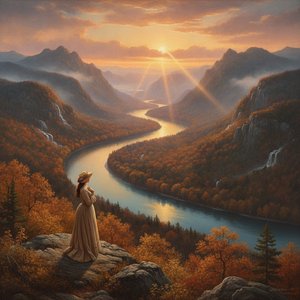
Capturing the Soul of Nature: A Journey Through the Sublime Majesty of American Romanticism
Explore the breathtaking beauty of American Romanticism. Discover how Hudson River School masters captured the sublime spirit of the wilderness through luminous oil landscapes and emotional depth. A journey into the soul of nature for the true art enthusiast.

Evocations of Place: A Historical Journey Through Landscape Art
Explore the rich history of landscape art with OriginalUniqueArt. Discover renowned artists, movements like Impressionism & Romanticism, and expert guidance for collecting timeless pieces. Find your perfect serene escape today!

Herman Herzog: Capturing American Landscapes & the Pursuit of Domestic Idealism
Explore the captivating landscapes of Herman Herzog, a pivotal American artist known for his realistic depictions of Yosemite & Florida scenes. Discover his legacy, artistic journey, and market value with OriginalUniqueArt.