Romantic Industrialization · 1823
Self-Portrait (Carl Blechen, 1823)
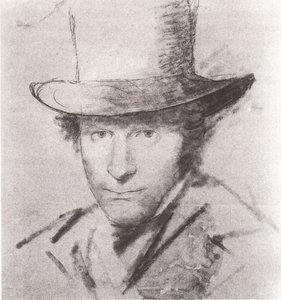
Carl Blechen (1798–1840) har laget Self-Portrait. Den er fra 1823. Det tilhører Romantic Industrialization-bevegelsen. Den er laget i Acrylic. Verket er bevart ved Nationalgalerie i Berlin, Tyskland. Mål: 26 × 20 cm
- 1823
- Acrylic
- 26 × 20 cm
- Nationalgalerie, Berlin

 Forhåndsvisning

 Håndmalt oljemaleri
 Send
 Del
 Faktablad


 Last ned bilde
 Liknende objekter
 Røntgenundersøkelse
 Lysbildefremvisning
 Spørsmål og svar

 Statistikk
Self-Portrait, kort fortalt
- Tittel
- Self-Portrait
- Kunstner
- Carl Blechen (1798–1840)
- Kunstner født i
- Cottbus, Tyskland
- Dato
- 1823
- Medium
- Acrylic
- Dimensjoner
- 26 × 20 cm
- Hvor det kan ses
- Nationalgalerie, Berlin, Tyskland
- Bevegelse
- Romantic Industrialization
- Motiv
- self-portrait, landscape painting, romanticism, german art, baroque style, artist’s vision
Hva forestiller Self-Portrait?
A Visionary Encounter with Industry’s Dawn
- Subject Matter: This striking self-portrait by Carl Blechen captures a contemplative gaze directed downwards, presenting an image of intellectual introspection amidst the burgeoning industrial landscape. The artist's posture exudes seriousness and thoughtfulness—a deliberate contrast to the prevailing Romantic preoccupation with sublime landscapes.
- Style: Blechen’s work exemplifies the Romantic Industrialization movement, marking a pivotal shift away from traditional artistic conventions. While rooted in Romantic ideals of emotion and imagination, he simultaneously confronts the realities of industrial progress with unflinching honesty. The portrait eschews idealized beauty for a psychologically nuanced depiction.
- Technique: Executed in black and white lithograph printing, Blechen skillfully employs tonal gradation to convey depth and texture. Lithography, a relatively new technique at the time, allowed for precise reproductions of detail—a testament to Blechen’s artistic vision and his willingness to experiment with innovative methods.
- Historical Context: Created in 1823, this portrait emerged during a period of intense social and intellectual ferment. The Industrial Revolution was reshaping Europe, prompting artists like Blechen to grapple with questions of modernity, alienation, and the human condition. It reflects a broader artistic dialogue concerning how nature and humanity coexist within an evolving world.
- Symbolism: Beyond its formal representation, the self-portrait carries symbolic weight. The downward gaze suggests introspection and contemplation—a desire to reconcile Romantic idealism with the tangible pressures of industrial society. Furthermore, the suit symbolizes professionalism and social responsibility, mirroring Blechen’s own aspirations as he navigated his artistic career.
Lithograph Printing: A Revolutionary Medium
The choice of lithograph printing was particularly significant for Blechen's time. Unlike oil paints or watercolor—the dominant mediums of the Romantic era—lithography offered unparalleled precision and tonal control. Developed in France during the preceding decade, it allowed artists to achieve photographic realism without resorting to camera obscura techniques. This method ensured that Blechen’s portrait would retain its intricate detail and expressive atmosphere for generations to come.Romantic Industrialization: Bridging Imagination and Reality
Blechen's artistic trajectory represents a fascinating intersection between Romantic idealism and the burgeoning realities of industrialization. While acknowledging the sublime beauty of nature—a hallmark of Romantic art—he simultaneously recognized its vulnerability to encroachment by technological advancements. This duality is powerfully conveyed in his self-portrait, prompting viewers to consider the complexities inherent in reconciling aesthetic ideals with societal transformations.Emotional Resonance: A Portrait of Quiet Contemplation
Ultimately, Blechen’s self-portrait transcends mere visual representation; it communicates a profound emotional resonance. The artist's gaze—directed downwards—suggests a preoccupation with internal reflection and a yearning for understanding amidst the turbulent currents of his era. It invites contemplation on themes of identity, purpose, and the enduring human spirit—a timeless message that continues to captivate audiences today.Hvilket museum har Self-Portrait?
Nationalgalerie
Berlin, Tyskland
Historien til Nationalgalerie Berlin Nationalgalerie er en sentral del av de statlige museene i Berlin. Dens røtter strekker seg tilbake til samlingen som opprinnelig var kjent som Wagenersche und Nationalgalerie, et fundament som la grunnlaget for et depot dedikert til kunsten fra det 19., 20. og 21.


Høyoppløselige bilder av Self-Portrait

Fritlig eiendom: kunstneren døde i 1840.
Andre størrelser, beskjæringer og sitering →Carl Blechen, Self-Portrait (1823), Nationalgalerie. Felleseie
Spørsmål om Self-Portrait, besvart
Hvor kan "Self-Portrait" av Carl Blechen sees utstilt i dag?
Originalen av "Self-Portrait" av Carl Blechen oppbevares i Nationalgalerie, Berlin, Tyskland. En reproduksjon gjør det mulig å stille ut verket i eget hjem.
Hva er dateringen til "Self-Portrait" av Carl Blechen?
"Self-Portrait" dateres til 1823. Denne datoen plasserer verket innenfor Carl Blechen sin karriere og sin epoke.
Hvilken teknikk er "Self-Portrait" laget med?
"Self-Portrait" av Carl Blechen er utført i Acrylic. Reproduksjonene har som mål å gjengi utseendet til denne teknikken.
Hva er de faktiske målene på "Self-Portrait" av Carl Blechen?
Det originale verket "Self-Portrait" av Carl Blechen måler 26 x 20 cm.
Hva forestiller "Self-Portrait"?
Motivene i "Self-Portrait" er self-portrait, landscape painting, romanticism, german art, baroque style, artist’s vision, psychological depth.
Er bildet av "Self-Portrait" av Carl Blechen i det frie domene?
Når det gjelder opphavsrett, er "Self-Portrait" fritt tilgjengelig – opphavsretten har utløpt.
Hvem er kunstneren bak "Self-Portrait"?
Kunstneren bak "Self-Portrait" er Carl Blechen. Verket er katalogisert under Carl Blechen sitt navn.
Hvilken kunstretning tilhører "Self-Portrait" av Carl Blechen?
"Self-Portrait" er et verk innenfor Romantic Industrialization. Retningen angir den kunstneriske tradisjonen verket er en del av.
Hvilken fase av Carl Blechen sin kunstneriske utvikling representerer "Self-Portrait"?
"Self-Portrait" representerer Carl Blechen sin Early Romanticism.
Om kunstneren, Carl Blechen
1798–1840, Tyskland
Carl Blechen
En Pioner innen Romantisk Industrialisering: Livet og Kunsten til Carl Blechen Carl Eduard Ferdinand Blechen, født i Cottbus, Tyskland i 1798, inntar en unik og ofte oversett posisjon innen landskapsmaleriets tradisjon. Hans liv var preget av både kunstnerisk briljans og personlig uro, en dualitet som dypt formet hans stemningsfulle og banebrytende verk. Opprinnelig dømt til en pragmatisk karriere i bankvesenet på grunn av familiens økonomiske situasjon, seiret likevel Blechens iboende kunstneriske tilbøyeligheter. Han studerte ved Berlins Kunstakademi i 1822 og la ut på en vei som skulle gjøre ham til en av de første kunstnerne som tok tak i de estetiske utfordringene – og mulighetene – som tidlig industrialisering presenterte.
Også av Carl Blechen
 Sanssouci Palace1830
 The Interior of the Palm House on the Pfaueninsel Near Potsdam1834
 Tarantella1830
 Afternoon on Capri1829
Essays om Self-Portrait
 The Echo of Self: Reflectivity as a Core Theme in Art History & Contemporary PracticeExplore the rich history of self-representation in art, from Renaissance masters to modern innovators. Discover how artists use portraiture…
 The Inner Landscape: Exploring Themes of Introspection in Visual Art Across Movements & ErasExplore the captivating world of introspective art! Discover how artists across eras – from Rembrandt to Kahlo – used self-portraiture to r…
 Romantic Realism's Finest: 10 Masterpieces for Your Home | OriginalUniqueArtExplore 10 defining masterpieces of Romantic Realism! Discover Courbet, Millet & Daumier's powerful paintings—capturing emotion and social …