

 Se i rommet
 Del som digitalt kort
 Del
Del
 Detaljer
 Studentguide

 Last ned
 Liknende objekter
 Røntgen
 Lysbildefremvisning
 Besøksstatistikk
Jerome
 Akryl på lerret
- Veggkunst
- High Renaissance
 1520
1520 90.0 x 67.0 cm
 Museo Poldi Pezzoli
 Les mer
Giclée / Kunsttrykk
Giclée- eller lerretsprint av museumskvalitet med rask produksjon og fleksible valgmuligheter for etterbehandling. ( Bestill håndmalt reproduksjon Gå til digitalt bilde)




P118B Nkr10

P118H Nkr10

P118W Nkr10

P438Z Nkr10

P508JH Nkr12

P508YH Nkr12

P805H Nkr10

P805Z Nkr10

P919BZ Nkr10

P919G Nkr10

P919XJ Nkr10

P959ZH Nkr10

P968JZ Nkr12

W106C Nkr8

W218G Nkr10

W218JH Nkr8

W218Y Nkr10

W307PJ Nkr10

W316G Nkr10

W316PJ Nkr8

W316Y Nkr10

W398PJ Nkr8

W4111J Nkr10

W500HY Nkr15

W500JH Nkr15

W692G Nkr12

W849H Nkr8

W940BG Nkr15

W953PJ Nkr8




Velg mellom våre forhåndsdefinerte størrelser som bevarer kunstverkets opprinnelige proporsjoner.

Skriv inn bredden og høyden du trenger, slik at den passer til din ramme eller vegg. Et trykk kan kun beskjæres, aldri gjøres større enn bildet, så et format med en annen form vil miste en del av motivet. Vi sender deg en digital mockup for godkjenning før vi trykker noe som helst. Bildet som vises på denne siden viser ikke den faktiske beskjæringen — det er kun mockuppen som gjør det.
Verdensomspennende levering () på 2 uker i stedet for standard 4/5 uker. (22 October)

Gratis ekspressfrakt over hele verden

Lerretsduk av høykvalitets lin

Full transportforsikring

Garanti for refusjon av toll og importavgifter

Garantert fargeekthet

100 dagers returrett ved fabrikasjonsfeil

100% pengene tilbake-garanti

Mengderabatt
 Glassalternativet er kun tilgjengelig i størrelser under 110 cm

Jerome
Giclée / Kunsttrykk
Format på reproduksjon
-


Totalpris
Nkr 758
Bernardino Luini og ”Saint Jerome Penitent” ved Museo Poldi Pezzoli
Museo Poldi Pezzoli i Milano er hjemsted for et av Bernardino Luinis mest ikoniske verk, ”Saint Jerome Penitent”, malt rundt 1520-25. Dette lille maleri, som nå pryder museets samling, forteller en historie om åndelig refleksjon og kontrast mellom fysisk smerte og åndelig renhet – temaer som var sentrale i kunstens atmosfære i Milano etter Leonardo da Vincis avreise. Luini, kjent for sine elegante kvinnelige figurer med ekstreme øyne, viser her sin mest karakteristiske stil: en imponerende kombinasjon av detaljert realism og sublim følelsesmessig dybde.- Kunstnerens Stil: Luinis kunst er preget av sterk kvartovsk stil, noe som gjenspeiles i verkets komposisjon og bruk av lys og skygge. Han var direkte under Leonardo da Vincis innflytelse, noe som manifesterte seg spesielt i hans vekt på naturlig anatomi og psykologisk realisme – kvaliteter som Leonardo hadde perfektionert før sin egen tilbakekomst til Milano.
- Teknikk: Luini brukte olje på panel, en teknikk som var vanlig for tiden og som tillot ham å oppnå en imponerende grad av detalj og tekstur. Spesielt interessant er bruk av perspektiv og komposisjon, hvor Luini forsøker å skape en følelse av dybde og romlighet som gir maleriet et dynamisk preg.
- Historisk Kontekst: Maleriet ble malt i Milano under Renessansen, en periode preget av kulturell blomstring og kunstnerisk innovasjon. Luini var aktiv i miljøet rundt Leonardo da Vinci og Michelangelo, noe som gjenspeiles i verkets estetiske kvaliteter og dets fokus på religiøse temaer.
- Symbolisme: St Jerome Penitent er rik på symbolikk. Figuren sitter på bakken med hendene korslagt foran seg, noe som representerer bønn og selvdisciplin – viktige aspekter av kristen moral i Luinis tid. Den røde kjolen og det lange hvite skjegg bidrar til å fremheve St Jerome’s åndelige karakter og hans kamp mot synd.
- Emosjonell Påvirkning: Maleriet har en sterk emosjonell effekt på betragteren. Luini formidler følelsen av smerte og lengsel etter åndelig opplysning gjennom et nøye uttrykt ansiktsuttrykk og en delikat komposisjon som inviterer til refleksjon. Det er dette aspektet av kunstverket som gjør det spesielt attraktivt for både kunstnere og publikum.
Spørsmål og svar
Hva anbefales en reproduksjon av "Jerome" av Bernardino Luini til?
Anbefalt bruk for "Jerome" av Bernardino Luini er Atmosfære. Den kan også brukes til andre formål.
Kan jeg se en forhåndsvisning av "Jerome" av Bernardino Luini før jeg bestiller?
En forhåndsvisning av "Jerome" av Bernardino Luini er tilgjengelig på kunstverkets Forhåndsvisning-side.
Hva er reproduksjonsrettighetene til "Jerome" hos Museo Poldi Pezzoli?
Opphavsretten til "Jerome" av Bernardino Luini er klar: verket er i det frie domene – opphavsretten har utløpt. At det befinner seg hos Museo Poldi Pezzoli, endrer ikke denne statusen.
Kunstnerbiografi
A Lombard Luminary: The Life and Art of Bernardino Luini
Bernardino Luini, a name resonating softly within the annals of Italian Renaissance painting, emerged from the picturesque region surrounding Lake Maggiore around 1480. Born in Runo, a small *frazione* near Dumenza, his early life remains shrouded in some mystery, yet it’s clear that destiny propelled him towards Milan, the vibrant artistic heartland of northern Italy. By 1500, he had relocated with his father, poised to absorb the burgeoning creative energy of the city. While accounts vary regarding his initial training—some credit Giovan Stefano Scotto, others Ambrogio Bergognone—a more profound influence was undoubtedly on the horizon: Leonardo da Vinci. The precise nature of their relationship remains debated, but it’s widely believed Luini worked directly under the master, a formative experience that would indelibly shape his artistic trajectory. This apprenticeship wasn't merely technical; it was an immersion into a world of subtle observation, innovative composition, and the elusive quality known as *sfumato*, which Luini would skillfully integrate into his own unique style.The Embrace of Leonardo and the Birth of a Style
Luini’s artistic development wasn’t simply imitation; it was a sensitive assimilation of Leonardo’s techniques filtered through his own Lombard sensibility. He didn’t strive to replicate Da Vinci’s intellectual rigor or anatomical precision, but rather embraced the softer, more lyrical aspects of his style. This is particularly evident in his depictions of women—graceful figures with elongated eyes, often described as “Luinesque” by the discerning eye of Vladimir Nabokov. These captivating gazes possess a gentle melancholy, an inwardness that invites contemplation. Early works like the *Adoration of the Magi* (c. 1505) in San Pietro, Luino, already hint at this emerging style, showcasing a delicate handling of light and shadow and a growing mastery of composition. His frescoes for the Oratory of Santa Maria Nuova in Pilastrello and the subsequent commissions throughout Milan solidified his reputation as a leading artist of the region. The influence of Bernardino Zenale’s *Cantù Polyptych* is also visible in works like *St. Anthony of Padua* (1510s), demonstrating Luini's ability to synthesize diverse influences into a cohesive artistic vision.Frescoes, Palaces, and the Flourishing of Creativity
The first two decades of the 16th century witnessed a period of intense creative activity for Luini. He wasn’t confined to religious subjects; his talents were sought after for secular commissions as well. The frescoes he created between 1509 and 1514 for Villa Pelucca in Sesto San Giovanni stand as a testament to his versatility, depicting mythological scenes with a refined elegance that graced the walls of this aristocratic residence. These works, now housed in Milan’s Pinacoteca di Brera, reveal a painter equally adept at capturing the dynamism of classical narratives and the intimate beauty of human form. He continued to receive prestigious commissions, adorning churches and palaces throughout Lombardy with his distinctive style. His ability to imbue even grand-scale frescoes with an air of intimacy and emotional resonance cemented his position as one of the most sought-after artists of his time.Key Works and Techniques
Luini’s oeuvre is characterized by a remarkable consistency in style, despite the diversity of commissions he received. His *Adoration of the Magi* (c. 1505) in San Pietro, Luino, remains a cornerstone of his early work, demonstrating his burgeoning mastery of composition and use of color. The *Lamentation of the Dead Christ* in Santa Maria della Passione (c. 1510s) showcases his ability to evoke profound emotion through subtle gestures and atmospheric effects. The frescoes for Villa Pelucca (1509-1514), now at the Pinacoteca di Brera, are particularly noteworthy for their narrative complexity and delicate rendering of figures. Luini’s signature technique involved a meticulous layering of thin glazes—a *sfumato* approach—to create an illusion of depth and luminosity. His use of muted colors, often dominated by earth tones and subtle blues and greens, contributed to the dreamlike quality of his paintings. The elongated eyes of his female figures – a defining characteristic known as “Luinesque” – are not merely stylistic flourishes but rather contribute to their expressive power, conveying a sense of quiet contemplation and inner life.Legacy and Enduring Appeal
Bernardino Luini passed away in Milan in June 1532, leaving behind a legacy that extended beyond his own lifetime. His son, Aurelio, followed in his footsteps, continuing the family’s artistic tradition. However, it is Bernardino who remains the more celebrated figure, remembered for his graceful figures, delicate *sfumato*, and the uniquely captivating quality of his “Luinesque” women. His work served as an inspiration to subsequent generations of artists, influencing the development of Lombard painting and contributing to the broader currents of Italian Renaissance art. Today, Luini’s masterpieces can be found in museums and churches throughout Italy—the Pinacoteca di Brera being a particularly rich repository of his works. His paintings continue to enchant viewers with their beauty, grace, and enduring emotional power, offering a glimpse into the artistic sensibilities of a bygone era. Salome with the Head of John the Baptist, for example, continues to captivate audiences with its dramatic intensity and masterful execution, while Holy Family with Saints Anne and John the Baptist exemplifies his serene and harmonious compositions.
Bernardino Luini
1480 - 1532 , Italia
Kort om kunstneren
- Artistic Movement Or Style: Renaissance, Mannerisme
- Artists Or Movements Influenced By This Artist: ['Luinesque stil']
- Artists Who Influenced This Artist: ['Leonardo da Vinci']
- Date Of Birth: c. 1480/82
- Date Of Death: 1532
- Full Name: Bernardino Luini
- Nationality: Italiensk
- Notable Artworks:
- Ador. Magi
- St. Anthony
- Villa Pelucca
- Place Of Birth: Reno, Italia
Relaterte artikler
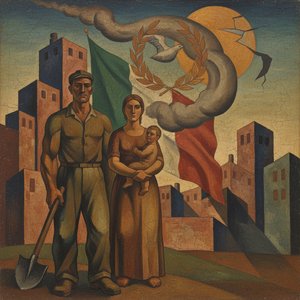
Mario Sironi: A Poetic of Modern Italian Identity Through Symbolism & Social Commentary
Explore the profound works of Mario Sironi, a key figure in Italian Modernism. Discover his evolution from Futurism to Metaphysical painting and his powerful social commentary. Learn about his legacy at OriginalUniqueArt.

Mastering Devotion: The Most Iconic Depictions of Saint Jerome in Art History
Explore the profound iconography of Saint Jerome through art history's most iconic masterpieces. From Renaissance serenity to Baroque drama, discover how legendary painters captured divine devotion in breathtaking oil paintings and fine art reproductions.

Divine Legacy: Exploring the Most Powerful Masterpieces of Saint Peter through Art History
Embark on a sophisticated journey through art history with our exploration of Saint Peter's most powerful masterpieces. Discover the profound emotional depth and technical brilliance of Renaissance and Baroque icons, curated for the discerning classic art enthusiast.

Carlo Carrà: Futurist Visions & Metaphysical Transformations in Early 20th-Century Italian Painting
Explore the artistic journey of Carlo Carrà, a pivotal figure in Italian Futurism & Metaphysical painting. Discover his dynamic compositions, collaborations with de Chirico, and lasting influence on modern art history.

Giovanni Fattori: Realism, Identity & the Tuscan Landscape – A Macchiaioli Master
Explore the life & art of Giovanni Fattori, a leading figure of the Macchiaioli movement. Discover his revolutionary realism, captivating Tuscan landscapes, and lasting impact on Italian painting. Learn more at OriginalUniqueArt.

