Cubism
The Old Bridge (André Derain)
André Derain (1880–1954) har skapt The Old Bridge. Det tilhører Cubism-bevegelsen. Laget i Oil On Canvas.
- Oil On Canvas

 Forhåndsvisning

 Håndmalt oljemaleri
 Send
 Del
 Faktablad for elever


 Last ned bilde
 Liknende objekter
 Røntgenundersøkelse
 Lysbildefremvisning
 Spørsmål og svar

 Statistikk
The Old Bridge, kort fortalt
- Tittel
- The Old Bridge
- Kunstner
- André Derain (1880–1954)
- Kunstner født i
- Chatou, Frankrike
- Materiale
- Oil On Canvas
- Bevegelse
- Cubism
- Tidsperiode
- Modern
- Motiv
- landscape, bridge, townscape, mediterranean, cubism, geometric
Hva forestiller The Old Bridge?
Identification of The Old Bridge
In this work, titled The Old Bridge, André Derain presents a view of a Mediterranean townscape. The composition focuses on a town nestled beneath a bridge, a scene likely inspired by the vistas of Nice, France. It captures a specific sense of place through a structured, almost architectural arrangement of the landscape.
The subject matter centers on the relationship between the built environment and the natural surroundings. A solitary figure stands near the bridge, providing a sense of scale to the buildings and the water in the foreground. This quiet observation of a coastal setting reflects the artist's interest in the interplay between human presence and the permanence of the landscape.
Composition and Visual Elements
The composition is anchored by the bridge, which functions as a central axis for the entire scene. This structure directs the eye through a landscape that has been distilled into a series of Cubist-influenced forms. Rather than following traditional rules of depth, the perspective is deliberately distorted, creating an unusual spatial arrangement where the relationship between the foreground and the distant cityscape feels compressed and rearranged. This abstraction prioritizes the intellectual deconstruction of the view over a literal representation of the Mediterranean townscape.
Throughout the work, lines are angular and broken, contributing to a sense of rhythmic fragmentation. The buildings and the surrounding landscape are constructed from predominantly geometric shapes, specifically rectangles, squares, and triangles. These forms overlap in multiple planes to build a sense of depth through layering rather than through standard vanishing points. A solitary figure stands near the bridge, rendered in a similarly stylized manner that integrates the human presence into the geometric logic of the environment. The resulting arrangement offers a quiet, detached observation of the scene, where the architecture and the landscape are unified by this shared, structural language.
Technique and Artistic Materials
This work is executed in oil on canvas, utilizing a method of layering paint to build up the various forms within the composition. The application of the medium creates a surface that appears somewhat smooth, yet it retains a tactile quality through visible brushstrokes. These marks provide a subtle texture that defines the geometric planes of the architecture and the surrounding landscape.
The color palette is grounded in earthy tones, which are punctuated by delicate hints of blue and green. This choice of pigment contributes to the muted atmosphere of the scene. Lighting is handled with a diffused quality, which allows for the creation of soft shadows across the townscape and the water in the foreground.
Related Works by André Derain
To understand the evolution of this artist, one might look toward his earlier explorations of the French countryside. Around 1904, he produced Landscape near Chatou, a work that reflects his developing eye for the Île-de-France region. This period of experimentation led directly into the radical shifts seen in his 1905 work, Drying the Sails. In that piece, the coastal light of the Mediterranean is captured through a departure from naturalistic color, favoring a more direct expression of the scene's essence.
His interest in urban structures and the movement of a metropolis is further evidenced by his 1906 painting, London Bridge. This work demonstrates how he adapted his approach to the heavy architecture and shifting light of the Thames. It shows a move toward capturing the energy of a city through structural weight and unconventional palettes.
In his later years, the artist's style shifted toward a more restrained aesthetic. This is evident in Sorrowful Landscape, painted in 1946. The work reflects a more controlled and disciplined approach to form, a significant departure from the experimental impulses of his youth.
Høyoppløselige bilder av The Old Bridge
Fritlig eiendom: kunstneren døde i 1954.
André Derain, The Old Bridge. Fri tilgjengelighet
Spørsmål om The Old Bridge, besvart
Hvilken teknikk er "The Old Bridge" laget med?
"The Old Bridge" av André Derain er utført i Oil On Canvas. Reproduksjonene har som mål å gjengi utseendet til denne teknikken.
Hva forestiller "The Old Bridge" av André Derain?
"The Old Bridge" av André Derain avbilder: landscape, bridge, townscape, mediterranean, cubism, geometric, reflection, figure.
Er bildet av "The Old Bridge" av André Derain i det frie domene?
"The Old Bridge" av André Derain er fritt tilgjengelig – opphavsretten har utløpt. Denne statusen avgjør hvordan bildet av verket kan reproduseres.
Hvem er kunstneren bak "The Old Bridge"?
Kunstneren bak "The Old Bridge" er André Derain. Verket er katalogisert under André Derain sitt navn.
Hvilken kunstretning tilhører "The Old Bridge" av André Derain?
Kunstretningen knyttet til "The Old Bridge" av André Derain er Cubism. Denne klassifiseringen plasserer verket sammen med relaterte kunstnere og kunstverk.
Hvilken fase av André Derain sin kunstneriske utvikling representerer "The Old Bridge"?
"The Old Bridge" tilhører Mature Period i André Derain sin karriere. Denne klassifiseringen knytter verket til kunstnerens utvikling.
Hvorfor er den opphavsrettslige statusen til "The Old Bridge" slik den er?
"The Old Bridge" av André Derain er fritt tilgjengelig – opphavsretten har utløpt. Opphavsretten beregnes fra kunstnerens dødsår, og André Derain døde i 1954.
Hvordan passer "The Old Bridge" inn i André Derain sin tematikk og stil?
"The Old Bridge" deler med André Derains andre verk sin Cubism-stil og de gjentakende temaene: fauvist color palette, cubist spatial deconstruction, mediterranean inspiration, london city portraiture, transition & connection, early modern landscape, exploring perspective, derain's artistic evolution.
Hvordan relaterer motivet i "The Old Bridge" seg til André Derain sine vanlige temaer?
André Derain sine tilbakevendende temaer inkluderer fauvist color palette, cubist spatial deconstruction, mediterranean inspiration, london city portraiture, transition & connection, early modern landscape, exploring perspective, derain's artistic evolution; "The Old Bridge" fokuserer på landscape, bridge, townscape, mediterranean, cubism, geometric, reflection, figure.
Om kunstneren, André Derain
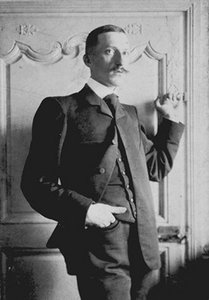
1880–1954, Frankrike
André Derain
Tidlig liv, familie og utdanning I året 1880 trådte André Derain inn i verden i Chatou, en landsby som ligger trygt plassert i Yvelines-regionen i Frankrike. Hans tidlige år ble formet av de stille landskapene i Île-de-France, hvor en naturlig nysgjerrighet for omgivelsene begynte å slå rot. Allerede innen 1895 hadde han begynt å studere på egen hånd, i et forsøk på å forstå den visuelle verden gjennom egne øyne snarere enn gjennom formell undervisning. Denne perioden med selvstendig utforskning gjorde det mulig for ham å utvikle en personlig måte å se på, før akademiets strenge rammer kunne påtvinge ham sin vilje.
Andre verk av André Derain
 badende1907
 London Bridge1906
 Charing Cross from sw1906
 Landscape at L'Estaque1906
Essays om The Old Bridge
 Fragmented Beauty: A Professional Guide to Deconstructed Forms and Cubist Masterpieces for Architectural DesignElevate hospitality interiors with professional-grade Cubist reproductions. Our expert guide explores deconstructed forms for designers, of…
 French artworks of the 1900sFrench artworks from the 1900s by Claude Monet, Henri Matisse, and Paul Cézanne. View the full collection online at OriginalUniqueArt.com.
 André Derain: 25 Radical Fauvist Works and Intense Color LandscapesExplore 25 iconic André Derain paintings and Fauvist color studies. Discover the full collection online at OriginalUniqueArt.com.