
 Forhåndsvisning
 Send
Send Del
Del
 Vis detaljer
 Utskriftsvennlig guide

 Last ned bilde
 Liknende objekter
 Røntgenundersøkelse
 Lysbildefremvisning
 Spørsmål og svar
 Statistikk
Study A

- 46.0 x 61.0 cm


 Vis hele teksten
Giclée / Kunsttrykk
Giclée- eller lerretsprint av museumskvalitet med rask produksjon og fleksible valgmuligheter for etterbehandling. ( Kjøp håndmalt maleri Bytt til digitalt bilde)




P118B Nkr10

P118H Nkr10

P118W Nkr10

P438Z Nkr10

P508JH Nkr12

P508YH Nkr12

P805H Nkr10

P805Z Nkr10

P919BZ Nkr10

P919G Nkr10

P919XJ Nkr10

P959ZH Nkr10

P968JZ Nkr12

W106C Nkr8

W218G Nkr10

W218JH Nkr8

W218Y Nkr10

W307PJ Nkr10

W316G Nkr10

W316PJ Nkr8

W316Y Nkr10

W398PJ Nkr8

W4111J Nkr10

W500HY Nkr15

W500JH Nkr15

W692G Nkr12

W849H Nkr8

W940BG Nkr15

W953PJ Nkr8




Velg mellom våre forhåndsdefinerte størrelser som bevarer kunstverkets opprinnelige proporsjoner.

Skriv inn ønsket bredde og høyde for å tilpasse trykket til din ramme eller vegg. Et trykk kan kun beskjæres, aldri skaleres opp utover motivets opprinnelige størrelse, noe som betyr at et format med andre proporsjoner vil føre til tap av deler av bildet. Vi sender deg en digital mockup for godkjenning før vi starter trykkeprosessen. Bildet som vises på denne siden viser ikke den faktiske beskjæringen — det er kun mockuppen som viser dette.
Verdensomspennende levering () på 2 uker i stedet for standard 4/5 uker. (4 November)

Gratis ekspressfrakt over hele verden

Lerretsduk av lin av høy kvalitet

Full transportforsikring

Garanti for refusjon av toll og importavgifter

Garantert fargegjengivelse

100 dagers returrett ved fabrikasjonsfeil

100% pengene tilbake-garanti

Rabatt ved flere kjøp
 Glassalternativet er kun tilgjengelig i størrelser under 110 cm

Study A
Giclée / Kunsttrykk
Størrelse på reproduksjon
-


Totalpris for valgte alternativer
Nkr 777
A Dance of Circles and Emotion: Unveiling Amadeo de Souza-Cardoso’s “Study A”
Amadeo de Souza-Cardoso's "Study A," painted in 1913, isn’t merely a composition of shapes; it’s a vibrant distillation of the artist’s embrace of early modernism and his deep connection to both Portuguese heritage and Parisian avant-garde influences. This captivating work, rendered in oil on canvas, immediately draws the eye with its dynamic interplay of circles – large, dominant forms that command attention alongside a constellation of smaller, intricately arranged shapes. It's a piece brimming with energy, hinting at a restless spirit and a profound engagement with the visual world.
Souza-Cardoso, born in 1887 in Manhufe, Portugal, was a pivotal figure in Portuguese modernism. His artistic journey began with architectural studies but swiftly pivoted to painting, fueled by an innate desire for expressive innovation. He spent formative years in Paris, immersing himself in the revolutionary currents of Cubism, Futurism, and the vibrant experimentation of movements like Orphism – all of which profoundly shaped his distinctive style. “Study A” stands as a testament to this influence; it’s a synthesis of these diverse sources, filtered through Souza-Cardoso's unique vision.
Decoding the Language of Form: Composition and Technique
The painting’s composition is deliberately unbalanced, creating a sense of controlled chaos. The central circle, a dominant presence, acts as an anchor, while surrounding it are a multitude of smaller circles – some overlapping, others positioned at sharp angles. This arrangement isn't random; it suggests a dynamic tension between order and disorder, stability and movement. Souza-Cardoso masterfully employs color to heighten this effect. Bold blues and reds dominate the palette, injecting an emotional intensity into the work. These colors aren’t blended smoothly; instead, they are applied with visible brushstrokes, adding texture and reinforcing the painting's sense of immediacy.
Souza-Cardoso’s technique is characterized by a loose, expressive application of paint – a hallmark of his engagement with modernism. He eschews meticulous detail in favor of capturing the essence of form and color. The brushwork itself becomes an integral part of the composition, contributing to the painting's overall dynamism. The use of layering and overlapping creates depth and visual interest, inviting the viewer to explore the intricate details within the larger design.
Symbolism and Emotional Resonance
While Souza-Cardoso himself offered little in the way of explicit interpretation, “Study A” resonates with themes of dynamism, transformation, and perhaps even a hint of anxiety. The circles themselves can be interpreted as representing cycles, movement, or interconnectedness – mirroring the artist’s own restless spirit and his fascination with the ever-changing nature of modern life. The bold colors evoke strong emotions: blue suggesting contemplation and depth, while red conveys passion and energy.
Considering Souza-Cardoso's background in caricature, it is not surprising that this work contains a sense of playful experimentation. It’s a visual puzzle, inviting the viewer to engage with its complexities and discover their own interpretations. “Study A” isn’t simply a painting; it’s an invitation to contemplate the beauty and complexity of the modern world.
A Legacy in Reproduction: Bringing "Study A" Home
Reproductions of “Study A” offer a remarkable opportunity to bring this captivating artwork into your home or office. High-quality reproductions capture the painting’s vibrant colors, dynamic composition, and expressive brushwork with stunning accuracy. Whether you choose a canvas print, an acrylic print, or a fine art paper reproduction, you'll be able to appreciate the artistry of Amadeo de Souza-Cardoso for years to come. Consider framing your chosen reproduction in a manner that complements its bold colors and dynamic composition – a simple black frame will allow the artwork to truly shine.
Spørsmål og svar
Hvor kan "Study A" av Amadeo de Souza-Cardoso sees utstilt i dag?
Originalen av "Study A" av Amadeo de Souza-Cardoso oppbevares i Centro de Arte Moderna Gulbenkian, Lisboa, Portugal. En reproduksjon gjør det mulig å stille ut verket i eget hjem.
Hvilken teknikk er brukt for "Study A", og hva er målene?
"Study A" ble laget i Acrylic On Canvas og måler 46 x 61 cm i sin originale form.
Kan man se en lysbildefremvisning av "Study A" av Amadeo de Souza-Cardoso?
Se lysbildefremvisningen her: Bildekarusell for "Study A" av Amadeo de Souza-Cardoso.
Om kunstneren
Amadeo de Souza-Cardoso: A Pioneer of Portuguese Modernism
Amadeo de Souza-Cardoso, a name resonating with the vibrant energy of early 20th-century modernism, remains a somewhat enigmatic figure despite his pivotal role in bridging Portuguese art to the international avant-garde. Born on November 14, 1887, in Manhufe, Mancelos, Amarante, Portugal, his brief but intensely creative life was marked by a restless spirit and an unwavering dedication to artistic innovation. From humble beginnings rooted in the rural landscapes of his homeland, Souza-Cardoso embarked on a journey that would lead him to the heart of Parisian modernism, where he forged connections with some of the most influential artists of his time – Modigliani, Brancusi, Delaunay, and Gris among them. His early education began with architectural studies in Lisbon, but it was the allure of painting, particularly the expressive power of caricature, that truly captured his imagination and set him on a path toward artistic exploration. This initial foray into art wasn’t merely technical training; it was an awakening to the potential of visual language as a means of commentary and self-expression.- Early Life & Education: Amadeo’s formative years were spent in Manhufe, where he absorbed the traditions of rural Portugal. His architectural studies provided him with foundational knowledge but it was caricature—a medium that allowed for biting social critique—that ignited his artistic passion.
- Parisian Encounters & Artistic Development: In 1906, Souza-Cardoso relocated to Paris, immersing himself in the city’s burgeoning artistic milieu. He quickly embraced Cubism and Futurism, establishing himself as one of Portugal's first true modern painters. His style was characterized by bold forms, vibrant colors, and dynamic compositions—a deliberate rejection of academic conventions.
- Key Influences: Souza-Cardoso drew inspiration from masters like Brancusi and Gris, whose sculptural and painterly explorations mirrored his own quest for expressive abstraction. He actively participated in Salon des Indépendants and the Armory Show, showcasing his innovative work to an international audience.
- Synthesis of Styles: Unlike many artists of his era who merely adopted trends, Souza-Cardoso synthesized them with his unique sensibility. His paintings weren’t simply representations of reality; they were investigations into perception, emotion, and the essence of form itself—a testament to his artistic genius.
Notable Works & Artistic Style
Souza-Cardoso's oeuvre is marked by a distinctive stylistic approach that blended Cubism, Futurism, and Expressionism. His canvases pulsated with vibrant color palettes and dynamic compositions—often employing fragmented perspectives to challenge conventional viewpoints. Consider *Saut du Lapin* (1911) and *Cabeça* (1913)—works that exemplify his experimentation with abstraction while retaining a palpable connection to Portuguese cultural heritage. These paintings weren’t chaotic; they were carefully balanced structures revealing a profound artistic vision beneath the surface. His participation in exhibitions like the Salon des Indépendants cemented his reputation as a vanguard artist, bringing Portuguese innovation to the forefront of European art discourse.Recognition & Legacy
Despite initial obscurity following Souza-Cardoso’s untimely death in 1918—a victim of the Spanish Flu pandemic—his contributions to Portuguese modernism have gained renewed appreciation in recent decades. Two major retrospectives – one in 1958 and another at the Grand Palais in Paris in 2016 – reintroduced his work to a wider audience, solidifying his place in art history. Today, his paintings reside in museums across Europe, including Plymouth City Museum & Art Gallery, alongside masterpieces by other prominent artists of the era. His legacy continues to inspire contemporary painters—a reminder that artistic innovation transcends temporal boundaries and cultural distinctions.Concluding Thoughts
Amadeo de Souza-Cardoso’s brief but impactful life stands as a beacon for Portuguese art history. He wasn't merely an artist; he was a translator of ideas, bridging the gap between tradition and modernity—a pioneer who dared to reimagine visual language as a tool for profound artistic expression.
Amadeo de Souza-Cardoso
1887 - 1918 , Portugal
Kort om kunstneren
- Artistic Movement Or Style: Modernism, Cubism, Futurism
- Artists Or Movements Influenced By This Artist:
- Cubism
- Futurism
- Artists Who Influenced This Artist:
- Modigliani
- Brancusi
- Delaunay
- Gris
- Date Of Birth: 14 november 1887
- Date Of Death: 25 october 1918
- Full Name: Amadeo de Souza-Cardoso Ferreira
- Nationality: Portugisisk
- Notable Artworks:
- Saut du Lapin
- Cabeça
- Place Of Birth: Manhufe, Portugal
Relaterte artikler

Goyas 25 Mesterverk: En Reise Gjennom Spansk Kunsthistorie | OriginalUniqueArt.no
Utforsk Francisco Goyas 25 mest ikoniske malerier! Oppdag historiene bak mesterverkene, fra portretter til de mørke etsninge. Finn kunsttrykk av høy kvalitet og inspirasjon for din innredning på OriginalUniqueArt.no – ditt hjem fortjener tidløs spansk kunst.
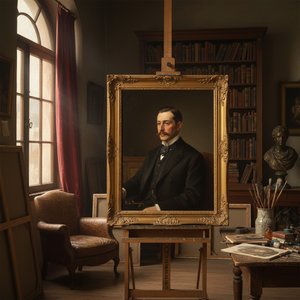
Rafael de Penagos: A Study in Spanish Portraiture & Artistic Identity
Explore the life & art of Rafael de Penagos, a leading Spanish Art Deco illustrator. Discover his iconic 'Penagos Woman', commercial work, and lasting legacy. Learn about this pivotal figure in 20th-century Spanish art history.
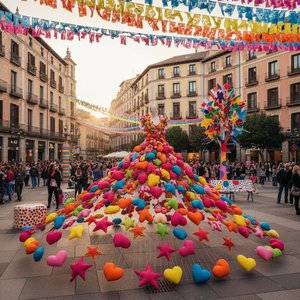
Águeda Ruiz de la Prada: A Study of Eclecticism & Emotional Resonance in Contemporary Spanish Painting
Discover the vibrant world of Ágatha Ruiz de la Prada, a leading figure in contemporary Spanish art. Explore her eclectic style, emotional depth & legacy – a must-read for discerning collectors.

Leonardo da Vincis 25 Mesterverk: Kunst, Historie og Inspirasjon for Ditt Hjem
Oppdag Leonardo da Vincis 25 mest ikoniske kunstverk! Fordyp deg i renessansens mesterverk – fra Mona Lisa til Nattverden. Historie, teknikk og inspirasjon for ditt hjem. Finn museumskvalitets reproduksjoner på OriginalUniqueArt.com.

Om oss
Oppdag vår historie! Vi bringer kunst av verdensklasse inn i livet ditt gjennom ekspertutvalg, skreddersydde kreasjoner og gratis forhåndsvisninger. Godkjent av privatpersoner og bedrifter siden år 2000.


