

 Se i rommet
 Del som digitalt kort
 Del
Del
 Detaljer
 Studentguide

 Last ned
 Liknende objekter
 Røntgen
 Lysbildefremvisning
 Besøksstatistikk
Flower litho
 Lithograph
- Art Nouveau
 1897
1897- 19th Century
 44.0 x 66.0 cm
 Les mer
Giclée / Kunsttrykk
Giclée- eller lerretsprint av museumskvalitet med rask produksjon og fleksible valgmuligheter for etterbehandling. ( Bestill håndmalt reproduksjon Gå til digitalt bilde)




P118B Nkr10

P118H Nkr10

P118W Nkr10

P438Z Nkr10

P508JH Nkr12

P508YH Nkr12

P805H Nkr10

P805Z Nkr10

P919BZ Nkr10

P919G Nkr10

P919XJ Nkr10

P959ZH Nkr10

P968JZ Nkr12

W106C Nkr8

W218G Nkr10

W218JH Nkr8

W218Y Nkr10

W307PJ Nkr10

W316G Nkr10

W316PJ Nkr8

W316Y Nkr10

W398PJ Nkr8

W4111J Nkr10

W500HY Nkr15

W500JH Nkr15

W692G Nkr12

W849H Nkr8

W940BG Nkr15

W953PJ Nkr8




Velg mellom våre forhåndsdefinerte størrelser som bevarer kunstverkets opprinnelige proporsjoner.

Skriv inn bredden og høyden du trenger, slik at den passer til din ramme eller vegg. Et trykk kan kun beskjæres, aldri gjøres større enn bildet, så et format med en annen form vil miste en del av motivet. Vi sender deg en digital mockup for godkjenning før vi trykker noe som helst. Bildet som vises på denne siden viser ikke den faktiske beskjæringen — det er kun mockuppen som gjør det.
Verdensomspennende levering () på 2 uker i stedet for standard 4/5 uker. (23 October)

Gratis ekspressfrakt over hele verden

Lerretsduk av høykvalitets lin

Full transportforsikring

Garanti for refusjon av toll og importavgifter

Garantert fargeekthet

100 dagers returrett ved fabrikasjonsfeil

100% pengene tilbake-garanti

Mengderabatt
 Glassalternativet er kun tilgjengelig i størrelser under 110 cm

Flower litho
Giclée / Kunsttrykk
Format på reproduksjon
-


Totalpris
Nkr 760
A Moment of Floral Grace: Mucha’s ‘Flower Litho’ – A Window into Art Nouveau
This exquisite 1897 lithograph, titled simply “Flower Litho,” offers a captivating glimpse into the world of Alphonse Maria Mucha, one of the most celebrated figures of the Art Nouveau movement. Measuring 44 x 66 cm, this piece isn’t merely a depiction of a woman holding flowers; it's an embodiment of a particular aesthetic – a harmonious blend of natural beauty and stylized elegance that defined Mucha’s distinctive vision. The vibrant palette, dominated by rich reds, yellows, greens, blues, and purples, immediately draws the eye, creating a sense of opulent warmth and inviting contemplation.
The Artist's Vision: Mucha and the Art Nouveau Spirit
Born in Brno, Czech Republic, in 1860, Alphonse Maria Mucha’s artistic journey began with formal training at the Academy of Fine Arts in Prague. However, he quickly recognized the limitations of traditional academic approaches, seeking instead a more fluid and expressive style. His relocation to Paris in 1887 proved pivotal, allowing him to fully immerse himself in the burgeoning Art Nouveau movement. Mucha’s work is instantly recognizable for its flowing lines, organic forms, and an almost palpable sense of movement – qualities he consciously adopted from influences like Pierre-Auguste Renoir and Gustave Moreau. This “Flower Litho” exemplifies this style perfectly, showcasing a woman draped in a delicate lace dress, crowned with symbolic ornamentation, and presented amidst a profusion of blossoms.
Symbolism and Narrative within the Image
The central figure, a beautifully idealized woman, is a recurring motif in Mucha’s oeuvre. Her pose, holding bouquets of flowers, speaks to themes of beauty, fertility, and perhaps even remembrance – common subjects within Art Nouveau's romantic sensibility. The two bouquets themselves are not simply decorative; they likely represent carefully chosen floral symbols with specific meanings, though the precise interpretation would have been understood within the context of late 19th-century symbolism. The potted plant in the background adds depth and a subtle connection to nature, reinforcing the artwork’s core themes. The overall composition evokes a sense of serenity and quiet contemplation, inviting the viewer to lose themselves in its delicate beauty.
Technique and Historical Context
This “Flower Litho” is a lithograph, a printmaking technique that allowed Mucha to reproduce his designs with remarkable precision and detail. The process involved transferring ink from a stone onto paper, resulting in rich, velvety tones – particularly evident in the vibrant hues of the flowers. Created in 1897, this piece reflects the peak of Mucha’s fame, following his success at the Salon des Cent in 1898. It's a testament to his ability to capture and translate the spirit of Art Nouveau into a commercially viable format, influencing countless artists and designers during that era. This reproduction offers an authentic connection to a pivotal moment in art history, allowing you to experience Mucha’s genius firsthand.
Spørsmål og svar
Fremstår fargene i "Flower litho" som sterke eller duse?
"Flower litho" av Alphonse Mucha viser en Vivid fargeintensitet.
Hva er formatet på "Flower litho"?
"Flower litho" av Alphonse Mucha er en Tall komposisjon. Det er verdt å sjekke proporsjonene før du velger trykkstørrelse.
Er "Flower litho" et av Alphonse Mucha sine mest populære verk?
Popularitetsnivået som er registrert for "Flower litho" av Alphonse Mucha, er Iconic.
Kunstnerbiografi
Early Life and Artistic Beginnings
Alphonse Maria Mucha, født den 24. juli 1860 i den lille by Ivančice i Moravia – nå en del av Tsjekkia – var et barn av en kunstnerisk familie. Hans far, Ondřej Mucha, var en hoffsekretær, og hans mor, Amalie (født Mala), var en møllers datter. Familien levde et beskjeden liv, men allerede i ung alder viste Alphonse en tydelig talent for tegning. Han ble ofte sett med blyanten i hånden, fanget i å skape bilder av omgivelsene sine og fantasifulle figurer. Hans tidlige interesse for kunst ble bekreftet da han mottok en gave fra en lokal handelsmann – et sett med papir, noe som var en luksus i den tiden.
Alphonse hadde to eldre søstre, og senere kom to yngre søstre til familien. Han viste tidlig musikalsk talent, og ble utdannet som kantor i den lokale kirken. Denne musikalske bakgrunnen bidrog kanskje til hans sans for harmoni og balanse, noe som senere ville gjenspeile seg i hans kunstneriske stil. Etter fullført gymnazium ønsket han å fortsette sin utdannelse, men familiens økonomiske situasjon hindret ham i å følge drømmen om en akademisk karriere. I stedet begynte han å arbeide som dekorasjonsmaler, og fikk erfaring med scenografi for teatre.
Paris og Kunstnoveau
I 1887 flyttet Alphonse Mucha til Paris, etableringspunktet for mange unge kunstnere på den tiden. Han studerte ved Académie Julian og Académie Colarossi, og begynte å arbeide som illustratør for ulike magasiner og reklamekampanjer. Det var i Paris han fant sin egen unike stil – en distinkt form for Art Nouveau, også kjent som Jugendstil i Tyskland. Denne stilen ble preget av flytende linjer, organiske former og en følelse av bevegelse, og skilte seg markant fra den dominerende akademiske stilen på det tidspunktet.
Mucha ble raskt kjent for sine plakatdesign, spesielt de han skapte for den berømte skuespillerinnen Sarah Bernhardt. Hans første plakat for hennes forestilling av Gismonda i 1894 ble en umiddelbar suksess og markerte starten på hans karriere. Bernhardt var så imponert over resultatet at hun inngikk en seks års kontrakt med Mucha, som resulterte i et hav av plakater og design for hennes forestillinger.
Sarah Bernhardt og Universal Exhibition
Samarbeidet med Sarah Bernhardt ble avgjørende for Muchas suksess. Han skapte ikke bare plakater, men også kostymer og scenografi for hennes forestillinger, noe som ytterligere etablerte hans rykte som en allsidig og talentfull kunstner. I 1900 deltok han i den store Universell utstillingen i Paris, hvor hans Art Nouveau-stil fikk internasjonal anerkjennelse. Han dekorerte både Bosnia og Hersegovinas pavillon og samarbeidet om den østerrikske paviljongen, og demonstrerte dennes popularitet.
Mucha var kjent for å skildre kvinnelige figurer i sine arbeider – ofte idealiserte og omgitt av luksuriøse blomster. Hans plakater og illustrasjoner utstrålte en følelse av eleganse, sensualitet og romantikk, noe som gjorde dem svært populære blant publikum.
Slav Epic og Etternavnet
Etter første verdenskrig begynte Mucha å fokusere på et ambisiøst prosjekt: *The Slav Epic* (Slovansk epopej). Han ble støttet av Charles Richard Crane, en amerikansk industrimagnat og slavofil, som finansierte den monumentale serien med 20 store symbolistiske malerier. Disse bildene skildret historien til alle de slaviske folkene i verden, fra deres mytologiske opprinnelse til moderne tid. Mucha brukte over et tiår på å fullføre *The Slav Epic*, og presenterte den for det nylig uavhengige Tsjekkoslovakia i 1928.
Selv om han var kjent for sine plakater og dekorative kunstverk, betraktet Mucha *The Slav Epic* som sitt viktigste verk. Han hevdet at det representerte hans dypeste lidenskap og et forsøk på å formidle en dypere mening gjennom kunsten – ikke bare for estetikkens skyld, men for å kommunisere en åndelig budskap.
Senere Liv og Arv
Alphonse Mucha giftet seg med Maruska Chytilová i 1906, og de fikk to barn: Jaroslava og Jiří. Familien tilbrakte noen år i USA fra 1906 til 1910, hvor deres datter ble født i New York City. Etter hjemreisen til Tsjekkoslovakia fortsatte Mucha å designe frimerker, sedler og andre offisielle dokumenter for den nye staten. Han døde på 14. juli 1939 i Praha, og hans kunst har siden blitt anerkjent som en viktig del av europeisk kunsthistorie.

Alphonse Mucha
1860 - 1939 , Tsjekkia
Kort om kunstneren
- Artistic Movement Or Style: Art Nouveau
- Artists Or Movements Influenced By This Artist: ['Prokopcová']
- Artists Who Influenced This Artist:
- Renoir
- Moreau
- Date Of Birth: 15. juli 1860
- Date Of Death: 14. juli 1939
- Full Name: Alphonse Maria Mucha
- Nationality: Tsjekkisk
- Notable Artworks:
- Slav Epic
- Gismonda
- Salon des Cent
- Place Of Birth: Brno, Tsjekkia
Relaterte artikler
Timeless Elegance: A Curated Guide to the Flowing Beauty of Art Nouveau Masterpieces
Discover the enchanting world of Art Nouveau. Explore the flowing lines of Alphonse Mucha and learn how to integrate these timeless, organic masterpieces into your collection with expert guidance on fine art appreciation and preservation.
Art Nouveau: Topp 10 Mesterverk som Definerte Epoken – Malerier og Inspirasjon fra OriginalUniqueArt.com
Oppdag de 10 mest ikoniske Art Nouveau mesterverkene! Lær historien bak Alphonse Mucha, Gustav Klimt og andre jugendstil-kunstnere. Finn inspirasjon til interiørdesign og kjøp museumskvalitets reproduksjoner på OriginalUniqueArt.com – din kilde for tidløs kunst.
The Flowing Line & Flourishing Form: Exploring Art Nouveau's Aesthetic Legacy
Explore the captivating world of Art Nouveau! Discover its origins, key artists like Horta & Mucha, regional styles, innovative techniques, and lasting influence on architecture & design. A comprehensive guide for art enthusiasts.
The Elegance of Art Nouveau: Embracing Nature's Fluid Beauty and the Belle Époque Spirit
Discover the enchanting world of Art Nouveau. Explore the organic beauty, flowing lines, and Belle Époque elegance that defined an era of unparalleled craftsmanship and natural inspiration.
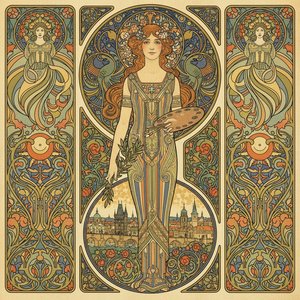
Alphonse Mucha: A Comprehensive Exploration of Art Nouveau's Master of Decorative Symbolism
Explore the life & art of Alphonse Mucha, master of Art Nouveau! Discover his iconic posters, stunning illustrations, and the monumental Slav Epic. A comprehensive guide for collectors & enthusiasts.