Meny
Gratis kunstkonsultasjon
PreviewPreview Bestill trykk Bestill trykkKjøp digitalt bilde Kjøp digitalt bilde SendSend
Vis detaljerVis detaljer Legg til i favoritter Legg til i favoritter Last ned bildetLast ned bildet Liknende objekterLiknende objekter RøntgenundersøkelseRøntgenundersøkelse LysbildefremvisningLysbildefremvisning

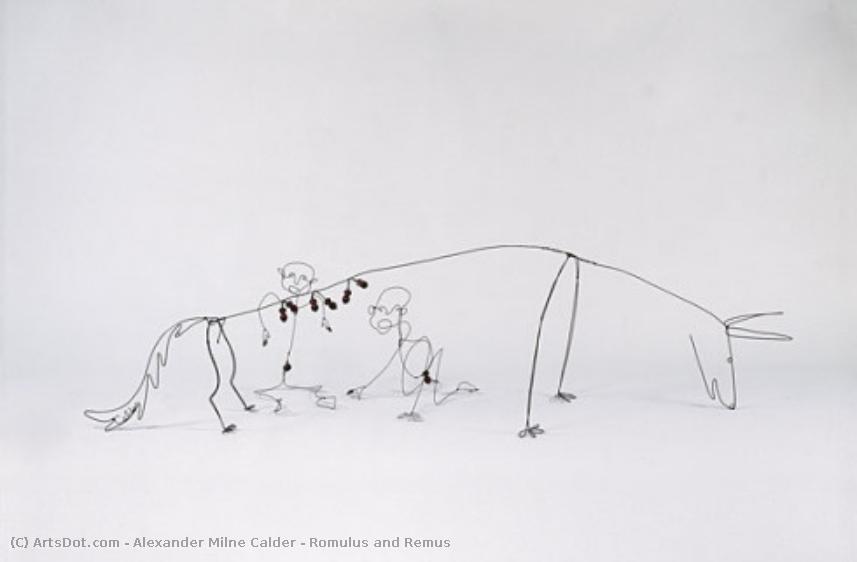
Romulus and Remus

Alexander Calder's 'Romulus and Remus' (1928) is a striking wire sculpture embodying Roman mythology with minimalist elegance. Explore its abstract form, symbolic meaning, and connection to Calder’s artistic legacy.

"NorwegianMetaDescription": "Alexander Calder var en amerikansk-skotsk skulptør kjent for innovative mobiler og monumental arkitektur, inkludert Philadelphia City Hall. Hans verk inspirerer fortsatt kunstnere."

Håndlaget oljereproduksjon

Håndmalt olje på lerret i din valgte størrelse og ramme, laget på bestilling av våre kunstnere.

P118B $10
P118H $10
P118W $10
P438Z $10
P508JH $12
P508YH $12
P805H $10
P805Z $10
P919BZ $10
P919G $10
P919XJ $10
P959ZH $10
P968JZ $12
W106C $8
W218G $10
W218JH $8
W218Y $10
W307PJ $10
W316G $10
W316PJ $8
W316Y $10
W398PJ $8
W4111J $10
W500HY $15
W500JH $15
W692G $12
W849H $8
W940BG $15
W953PJ $8

Standard
custom
CM
INCH

Velg mellom våre forhåndsdefinerte størrelser som bevarer kunstverkets opprinnelige proporsjoner.

bredde
høyde

Du kan angi egne mål for å tilpasse en spesifikk ramme eller plass. Dersom den valgte størrelsen ikke samsvarer med originalbildets proporsjoner, vil vi enten beskjære kunstverket eller utvide maleriet med ytterligere håndmalte elementer. En digital mockup vil bli sendt til din godkjenning før produksjonen starter.
Vennligst merk at forhåndsvisningen på skjermen ikke gjenspeiler den faktiske beskjæringen eller utvidelsen. Kun mockuppen vil vise den endelige komposisjonen nøyaktig.
Selv om tilpassede størrelser er tilgjengelige, anbefaler vi å velge et mål fra den forhåndsdefinerte listen for å bevare de originale proporsjonene.

Eksempler på hva som kan endres: Erstatt ansikt med bilde av kunden; Legg til kjæledyr (f.eks. bytt ut katt med hund); Inkluder en skjult melding i bakgrunnen; Endre bakgrunnslandskap eller elementer.
Etter bestilling vil OriginalUniqueArt.com-teamet sende e-post til kunden for instruksjoner og sende et utkast (mockup) som forhåndsvisning.

Verdensomspennende levering () på 3–4 uker i stedet for standard 5 uker. (25 July). Ingen kompromisser med kvaliteten.

why_choose_icon
Gratis ekspressfrakt over hele verden
why_choose_icon
Lerretsduk av høykvalitets lin
why_choose_icon
Full forsikring under transport
why_choose_icon
Garanti for refusjon av toll og importavgifter
why_choose_icon
Garantert korrekt fargegjengivelse
why_choose_icon
60 dagers returrett (kun ved feil)
why_choose_icon
100% pengene tilbake-garanti
why_choose_icon
Rabatt ved flere kjøp

Totalpris for bestilling

-

reproduction

Romulus and Remus

Teknikk for reproduksjon

Størrelse på reproduksjon

-

Endelig pris

-

Kort om verket

  • Dimensions: 30 1⁄2" × 124 1⁄2"
  • Title: Romulus and Remus
  • Notable elements: Minimalist wire form
  • Subject or theme: Roman Mythology
  • Medium: Wire & Wood
  • Influences:
    • Chance
    • Modernism
  • Movement: Constructivism

Kunstighetsquiz

Det er kun ett riktig svar på hvert spørsmål.

Spørsmål 1:
What is the primary material used in Alexander Calder’s ‘Romulus and Remus’?
Spørsmål 2:
When was Alexander Calder’s ‘Romulus and Remus’ created?
Spørsmål 3:
The artwork ‘Romulus and Remus’ is an example of which artistic movement?
Spørsmål 4:
What does the she-wolf depicted in ‘Romulus and Remus’ symbolize?
Spørsmål 5:
Which of the following best describes the style of ‘Romulus and Remus’?

Beskrivelse av kunstverket

A Moment Frozen in Steel: Exploring Calder’s “Romulus and Remus”

Alexander Milne Calder's "Romulus and Remus," crafted in 1928, isn’t merely a sculpture; it’s a distilled essence of myth rendered in delicate wire. This piece, a testament to the artist’s pioneering approach to three-dimensional form, transcends its subject matter – the legendary founders of Rome – to become a profound meditation on beginnings, brotherhood, and the very act of creation itself. Calder, deeply influenced by Constructivism and early Modernism, sought to liberate sculpture from the constraints of traditional materials, embracing the inherent qualities of industrial wire as both medium and metaphor.

The sculpture’s stark simplicity is its most arresting feature. Two figures, rendered with astonishing grace despite their skeletal construction, stand beneath a subtly arching structure that evokes a horizon line or perhaps a stylized landscape. The color palette – a resolute black and white punctuated by subtle grays – amplifies the work's austerity, forcing the viewer to focus entirely on form and movement. The lines themselves are paramount; thin, almost impossibly delicate wires define every contour, creating an illusion of both fragility and strength. This deliberate reductionist approach mirrors Calder’s broader philosophy: to strip away the superfluous and reveal the fundamental elements of a subject.

The Poetics of Chance and Kinetic Form

Calder's work in this period – particularly his “Cirque Calder” series – exemplifies his fascination with chance and spontaneity. He didn’t meticulously plan every curve or angle; instead, he allowed the wire to guide him, embracing the unpredictable nature of the material. This process is vividly captured in "Romulus and Remus," where the figures appear to be caught mid-action, poised on the precipice of a narrative yet undefined. The slight wobble inherent in the sculpture’s construction – a subtle consequence of its wire composition – hints at a kinetic energy, suggesting that even stillness can hold a dynamic potential.

The technique itself is deceptively complex. Calder skillfully bent and assembled hundreds of individual wires, creating a surprisingly robust structure despite its delicate appearance. The varying thicknesses of the wire contribute to the sculpture’s textural richness, offering subtle shifts in sheen as light catches the metal. This careful manipulation of material speaks to Calder's mastery of his chosen medium – a testament to his ability to transform industrial components into objects of profound beauty and intellectual resonance.

Myth, Brotherhood, and the Dawn of Rome

The subject matter—the story of Romulus and Remus—is deeply rooted in Roman mythology. The legend of the twins suckled by a she-wolf is an enduring symbol of resilience, survival, and the founding of civilization. Calder’s sculpture doesn't simply depict this narrative; it captures its essence – the primal struggle for existence, the bond between brothers, and the birth of a new order. The wire itself can be interpreted as representing the threads that connect us to our past, shaping our present and influencing our future.

Created in 1928, “Romulus and Remus” stands as a pivotal work in Calder’s oeuvre, marking a significant shift towards abstraction while retaining a powerful connection to his artistic roots. It's a sculpture that invites contemplation, prompting viewers to consider the interplay of form, material, and narrative – a timeless meditation on the foundations of human experience.


Om kunstneren

Introduction to Alexander Milne Calder

Alexander Milne Calder (MILL-nee) was a Scottish-American sculptor, born in Aberdeen, Scotland in 1846. He is best known for his architectural sculpture of Philadelphia City Hall, and both his son, Alexander Stirling Calder, and grandson, Alexander ‘sandy’ Calder, became significant sculptors in the 20th century.

Early Life and Education

Calder began his artistic journey in Scotland, apprenticed to sculptor John Rhind while attending the Royal Academy in Edinburgh. He moved to London and worked on the Albert Memorial, immersing himself in Victorian sculpture traditions. His immigration to the United States in 1868 brought him to Philadelphia, where he honed his skills under Joseph A. Bailly and Thomas Eakins at the Pennsylvania Academy of Fine Arts, absorbing influences from Impressionism and Realism. He married Louisa Hale in 1873, establishing a family rooted in artistic pursuits. Calder’s father, Alexander Stirling Calder, was a celebrated sculptor who created numerous public installations, notably the equestrian statue of George Gordon Meade in Fairmount Park. His mother, Nanette Lederer Calder, possessed a talent for painting and studied at the Académie Julian and Sorbonne in Paris. Calder's sister, Margaret Calder Hayes, played an instrumental role in shaping the UC Berkeley Art Museum’s collection.

Career Highlights

Calder achieved international acclaim with his monumental sculpture of William Penn on Philadelphia City Hall’s tower—a project that spanned two decades and demanded meticulous craftsmanship. He collaborated closely with architect John McArthur Jr., transforming the city hall into a breathtaking testament to artistic vision. Calder's pioneering approach to kinetic art revolutionized sculpture, introducing mobiles – delicately balanced sculptures propelled by air currents – which captured the essence of chance and movement. His work resonated deeply with Surrealist artists like Marcel Duchamp, who recognized the profound beauty in embracing spontaneity. Calder’s legacy extends beyond his own creations; he instilled artistic principles within his son and grandson, shaping a lineage of sculptors dedicated to innovation and aesthetic exploration.

Notable Works

Calder's oeuvre encompasses a diverse range of sculptures, reflecting his fascination with both static forms and dynamic motion. Among his most iconic pieces are *Man Cub*, created in 1902—a poignant depiction of childhood innocence—and *Animal Zoo Puzzle*, crafted in 1931—a playful exploration of animal behavior. His monumental sculptures adorn public spaces across the United States, embodying a commitment to artistic expression and civic engagement. Calder’s enduring influence continues to inspire artists today, cementing his place as one of the foremost sculptors of the late nineteenth and early twentieth centuries.

Legacy

Alexander Milne Calder's contribution to sculpture transcends mere technique; he championed an ethos of experimentation and openness—a belief that “theories may be all very well for the artist himself, but they shouldn’t be broadcast to other people.” His sculptures stand as symbols of artistic ingenuity and a celebration of the unpredictable beauty inherent in natural phenomena. Calder's influence can be seen in subsequent generations of sculptors who embraced similar principles of innovation and aesthetic contemplation.
Alexander Calder

Alexander Calder

1898 - 1976 , Skottland

Kort om kunstneren

  • Artistic Movement Or Style: Architectural sculpture
  • Artists Or Movements Influenced By This Artist:
    • Kinetic art
    • Surrealism
  • Artists Who Influenced This Artist: ['John Rhind']
  • Date Of Birth: August 23, 1846
  • Date Of Death: June 14, 1923
  • Full Name: Alexander Milne Calder
  • Nationality: Scottish-American
  • Notable Artworks:
    • Philadelphia City Hall
    • William Penn statue
  • Place Of Birth: Aberdeen, Scotland
Utforsk kunstverk organisert etter temaer, stiler og kjennetegn.