
 Forhåndsvisning
 Send
Send Del
Del
 Vis detaljer
 Utskriftsvennlig guide

 Last ned bilde
 Liknende objekter
 Røntgenundersøkelse
 Lysbildefremvisning
 Spørsmål og svar
 Statistikk
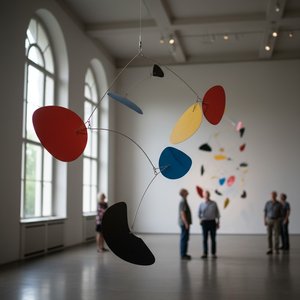
Red Mobile

- 160.0 x 400.0 cm


 Vis hele teksten
Kunstverket som vises på denne siden er beskyttet av opphavsretten, noe som betyr at vi ikke har juridisk tillatelse til å lage eller selge identiske reproduksjoner. Denne beskyttelsen håndheves i henhold til internasjonale avtaler som for eksempel Bernerkonvensjonen og av nasjonale lover, inkludert de som er fastsatt i Amerikansk lov om opphavsrett – Tittel 17.
Denne metoden er i fullt samsvar med opphavsrettslige regler, da den ikke innebærer kopiering eller duplisering av det beskyttede kunstverket. I stedet er det snakk om en kreativ nytolkning – et nytt maleri som er inspirert av originalen, men ikke identisk med den.
Giclée / Kunsttrykk
Giclée- eller lerretsprint av museumskvalitet med rask produksjon og fleksible valgmuligheter for etterbehandling. ( Kjøp håndmalt maleri Bytt til digitalt bilde)




P118B Nkr10

P118H Nkr10

P118W Nkr10

P438Z Nkr10

P508JH Nkr12

P508YH Nkr12

P805H Nkr10

P805Z Nkr10

P919BZ Nkr10

P919G Nkr10

P919XJ Nkr10

P959ZH Nkr10

P968JZ Nkr12

W106C Nkr8

W218G Nkr10

W218JH Nkr8

W218Y Nkr10

W307PJ Nkr10

W316G Nkr10

W316PJ Nkr8

W316Y Nkr10

W398PJ Nkr8

W4111J Nkr10

W500HY Nkr15

W500JH Nkr15

W692G Nkr12

W849H Nkr8

W940BG Nkr15

W953PJ Nkr8




Velg mellom våre forhåndsdefinerte størrelser som bevarer kunstverkets opprinnelige proporsjoner.

Skriv inn ønsket bredde og høyde for å tilpasse trykket til din ramme eller vegg. Et trykk kan kun beskjæres, aldri skaleres opp utover motivets opprinnelige størrelse, noe som betyr at et format med andre proporsjoner vil føre til tap av deler av bildet. Vi sender deg en digital mockup for godkjenning før vi starter trykkeprosessen. Bildet som vises på denne siden viser ikke den faktiske beskjæringen — det er kun mockuppen som viser dette.
Verdensomspennende levering () på 2 uker i stedet for standard 4/5 uker. (7 November)

Gratis ekspressfrakt over hele verden

Lerretsduk av lin av høy kvalitet

Full transportforsikring

Garanti for refusjon av toll og importavgifter

Garantert fargegjengivelse

100 dagers returrett ved fabrikasjonsfeil

100% pengene tilbake-garanti

Rabatt ved flere kjøp
 Glassalternativet er kun tilgjengelig i størrelser under 110 cm

Red Mobile
Giclée / Kunsttrykk
Størrelse på reproduksjon
-


Totalpris for valgte alternativer
Nkr 775
Spørsmål og svar
Hvor kan jeg se originalen av "Red Mobile" av Alexander Calder?
Du kan se originalen av "Red Mobile" på Galleria Civica di Arte Moderna e Contemporanea Torino, Torino, Italia.
Hvordan kan jeg se "Red Mobile" av Alexander Calder som en lysbildefremvisning?
Se lysbildefremvisningen her: Bildekarusell for "Red Mobile" av Alexander Calder.
Hvilken fase av Alexander Calder sin kunstneriske utvikling representerer "Red Mobile"?
"Red Mobile" representerer Alexander Calder sin Modern.
Om kunstneren
Introduction to Alexander Milne Calder
Alexander Milne Calder (MILL-nee) was a Scottish-American sculptor, born in Aberdeen, Scotland in 1846. He is best known for his architectural sculpture of Philadelphia City Hall, and both his son, Alexander Stirling Calder, and grandson, Alexander ‘sandy’ Calder, became significant sculptors in the 20th century.Early Life and Education
Calder began his artistic journey in Scotland, apprenticed to sculptor John Rhind while attending the Royal Academy in Edinburgh. He moved to London and worked on the Albert Memorial, immersing himself in Victorian sculpture traditions. His immigration to the United States in 1868 brought him to Philadelphia, where he honed his skills under Joseph A. Bailly and Thomas Eakins at the Pennsylvania Academy of Fine Arts, absorbing influences from Impressionism and Realism. He married Louisa Hale in 1873, establishing a family rooted in artistic pursuits. Calder’s father, Alexander Stirling Calder, was a celebrated sculptor who created numerous public installations, notably the equestrian statue of George Gordon Meade in Fairmount Park. His mother, Nanette Lederer Calder, possessed a talent for painting and studied at the Académie Julian and Sorbonne in Paris. Calder's sister, Margaret Calder Hayes, played an instrumental role in shaping the UC Berkeley Art Museum’s collection.Career Highlights
Calder achieved international acclaim with his monumental sculpture of William Penn on Philadelphia City Hall’s tower—a project that spanned two decades and demanded meticulous craftsmanship. He collaborated closely with architect John McArthur Jr., transforming the city hall into a breathtaking testament to artistic vision. Calder's pioneering approach to kinetic art revolutionized sculpture, introducing mobiles – delicately balanced sculptures propelled by air currents – which captured the essence of chance and movement. His work resonated deeply with Surrealist artists like Marcel Duchamp, who recognized the profound beauty in embracing spontaneity. Calder’s legacy extends beyond his own creations; he instilled artistic principles within his son and grandson, shaping a lineage of sculptors dedicated to innovation and aesthetic exploration.Notable Works
Calder's oeuvre encompasses a diverse range of sculptures, reflecting his fascination with both static forms and dynamic motion. Among his most iconic pieces are *Man Cub*, created in 1902—a poignant depiction of childhood innocence—and *Animal Zoo Puzzle*, crafted in 1931—a playful exploration of animal behavior. His monumental sculptures adorn public spaces across the United States, embodying a commitment to artistic expression and civic engagement. Calder’s enduring influence continues to inspire artists today, cementing his place as one of the foremost sculptors of the late nineteenth and early twentieth centuries.Legacy
Alexander Milne Calder's contribution to sculpture transcends mere technique; he championed an ethos of experimentation and openness—a belief that “theories may be all very well for the artist himself, but they shouldn’t be broadcast to other people.” His sculptures stand as symbols of artistic ingenuity and a celebration of the unpredictable beauty inherent in natural phenomena. Calder's influence can be seen in subsequent generations of sculptors who embraced similar principles of innovation and aesthetic contemplation.
Alexander Calder
1898 - 1976 , Skottland
Kort om kunstneren
- Artistic Movement Or Style: Architectural sculpture
- Artists Or Movements Influenced By This Artist:
- Kinetic art
- Surrealism
- Artists Who Influenced This Artist: ['John Rhind']
- Date Of Birth: August 23, 1846
- Date Of Death: June 14, 1923
- Full Name: Alexander Milne Calder
- Nationality: Scottish-American
- Notable Artworks:
- Philadelphia City Hall
- William Penn statue
- Place Of Birth: Aberdeen, Scotland
Relaterte artikler
Alexander Calder: Kinetic Sculpture, Mobile Art & the Poetics of Chance
Explore the revolutionary world of Alexander Calder's kinetic sculptures & mobiles. Discover insights for collectors, acquisition advice, and the enduring legacy of this modern master. Expert analysis & art valuation.

Kandinskys 25 Mesterverk: En Reise i Abstrakt Kunst og Fargeharmoni | OriginalUniqueArt.no
Utforsk Wassily Kandinskys 25 mest ikoniske malerier! Oppdag historien bak abstrakt kunst, ekspresjonisme og fargeharmoni. Finn inspirasjon til interiøret – museumskvalitet reproduksjoner på OriginalUniqueArt.com.

Bronseklassikere: 10 skulpturer som revolusjonerte kunsten | OriginalUniqueArt
Utforsk 10 legendariske bronseskulpturer som formet kunsthistorien! Fra Rodin til Michelangelo – oppdag historiene, teknikkene og skjønnheten bak tidløse mesterverk. Finn din perfekte veggkunst eller interiørdekor på OriginalUniqueArt.com.

The Enduring Form: Sculpture Across History, Technique & Emotional Resonance
Explore the rich history of sculpture with OriginalUniqueArt. Discover key techniques, influential artists & investment potential for discerning collectors. Expert insights into valuing and collecting timeless masterpieces.

The Enduring Form: Exploring Themes & Techniques in Sculpture Across Historical Periods
Explore the rich history of sculpture from ancient masterpieces to contemporary innovations. Discover key techniques, influential artists & investment potential for discerning art collectors.
