

 Forhåndsvisning
 Send
Send Del med andre
 Vis detaljer

 Last ned bildet
 Liknende objekter
 Røntgenundersøkelse
 Lysbildefremvisning
 Statistikk
Objets

 Vis hele teksten
Kjøp et høyoppløselig, forbedret digitalt bilde som er langt bedre enn forhåndsvisningen på nettet.
Hver fil er omhyggelig klargjort av våre egne spesialister ved hjelp av avanserte verktøy og profesjonell manuell retusjering. Vi sørger for at hvert bilde har eksepsjonell klarhet, presis fargegjengivelse og fine detaljer.
Den endelige filen leveres via e-post innen 72 timer, optimalisert for umiddelbar bruk i profesjonelle, redaksjonelle og trykte miljøer. Dette er den samme kvaliteten som benyttes av ledende designstudioer, utgivere og gallerier.
Digitalt bilde
Last ned en høyoppløselig fil for personlig bruk, utskrift og kreative prosjekter. ( Bytt til trykk Kjøp håndlaget maleri)
Inkludert i alle bestillinger av digitale bilder
Ekspert digital levering, garantert
Når du velger OriginalUniqueArt.com, får du ikke bare et bilde – du mottar et profesjonelt forbedret digitalt kunstverk, skapt med presisjon og med en garantert tilfredshetsgaranti. Her er alt som automatisk følger med din bestilling:

Rask digital levering
Din høyoppløselige digitale bildefil sendes til din e-post innen 72 timer etter bestilling – klar til umiddelbar bruk.

KI-forbedret digital fil
Ditt kunstverk blir profesjonelt optimalisert ved hjelp av avanserte AI-verktøy og manuell redigering, noe som sikrer maksimal detaljrikdom, klarhet og fargegjengivelse.

Gratis livslang nyutlevering
Har du ved et uhell slettet eller mistet filen din? Ingen bekymring – vi sender den på nytt når som helst, helt gratis.

Ingen importavgifter – noen gang
Nyt ditt kunstverk umiddelbart uten toll, avgifter eller leveringskostnader – digitale nedlastinger er alltid avgiftsfrie.

Garantert fargenøyaktighet
Vi sikrer at ditt digitale bilde gjenspeiler de originale fargene så nøyaktig som mulig ved hjelp av profesjonelle verktøy og fargehåndtering.

100 dagers tilfredshetsgaranti
Hvis du ikke er fornøyd med ditt digitale bilde, vil vi revidere det eller refundere 100% innen 100 dager – uten spørsmål.

100% Penggaranti
Ikke fornøyd? Få full refusjon innen 100 dager etter at du har mottatt din digitale fil – uten spørsmål.

Rabatt ved storkjøp
Kjøp 3 bilder, spar 10% - Kjøp 5, spar 15% - Kjøp 10+, spar 20%. Ideelt for kreative prosjekter, gallerier og byråer.
Om kunstneren
Alecos Kontopoulos: A Pioneer of Greek Abstract Expressionism
Alecos Kontopoulos (1904-1975) stands as a monumental figure in the evolution of Greek art, a bridge between traditional aesthetics and the radical experimentation of modern abstraction. Born in Lamia, Greece, his artistic journey was marked by a profound engagement with social realities, philosophical inquiry, and an unwavering pursuit of visual language that transcended representational forms. Kontopoulos’s career wasn't simply about stylistic shifts; it represented a fundamental reimagining of how art could engage with the complexities of the 20th century, solidifying his place as one of Greece’s most influential artists.Early Influences and Artistic Training
Kontopoulos’s early artistic development was shaped by a confluence of influences. Initially apprenticed to the icon painter George Sarafianos, he gained a foundational understanding of Byzantine techniques and religious iconography – a discipline that instilled in him a meticulous attention to detail and a deep appreciation for color and texture. This traditional training provided a crucial counterpoint to the later explorations of abstraction. He then enrolled at the School of Fine Arts in Athens, where he studied under prominent figures like Georgios Iakovidis, Dimitrios Geraniotis, Pavlos Mathiopoulos, and Nikolaos Ransom. Crucially, his time in Paris from 1930 to 1932 proved transformative. Studying under P. Le Doux and H. Morisset exposed him to the burgeoning avant-garde movements of Europe – Cubism, Futurism, and early Abstraction – broadening his artistic horizons significantly. This period wasn't merely about absorbing new styles; it was a process of critical engagement, leading him to question established conventions and seek alternative modes of expression.The Transition to Abstract Art: A Response to Social and Political Turmoil
Kontopoulos’s shift towards abstraction around 1947 wasn't a stylistic choice made in isolation; it was deeply intertwined with the turbulent political landscape of post-war Greece. Witnessing the hardships, social injustices, and the oppressive atmosphere of the occupation, he felt compelled to move beyond representational art as a means of conveying deeper truths. His abstract works became vehicles for expressing internal emotions, philosophical concepts, and critiques of societal norms. He began utilizing simplified geometric forms, bold colors, and often, a deliberate lack of tonal gradation – rejecting traditional notions of perspective and realism in favor of pure visual impact. This period saw the emergence of his most iconic pieces, characterized by their raw emotional intensity and symbolic weight. The influence of figures like Kandinsky and Malevich is evident, but Kontopoulos forged a distinctly Greek voice within this broader abstract vocabulary.Key Themes and Artistic Techniques
Kontopoulos’s oeuvre is rich in symbolism and intellectual depth. Recurring themes include the human condition, social responsibility, spirituality, and the relationship between art and life. His works frequently explore concepts of faith, doubt, and the search for meaning in a world grappling with uncertainty. Technically, Kontopoulos was a master of color theory, employing vibrant hues to evoke specific emotions and create dynamic visual relationships. He often utilized layering techniques, building up complex compositions through multiple applications of paint, creating surfaces that shimmered with texture and depth. His later works are particularly notable for their use of “force,” a term he himself coined, referring to the inherent energy and dynamism within his paintings – an attempt to capture not just visual form but also the underlying currents of existence.Legacy and Recognition
Alecos Kontopoulos’s impact on Greek art is undeniable. He played a pivotal role in introducing abstract expressionism to Greece, challenging established artistic conventions and paving the way for subsequent generations of artists. His work was exhibited internationally at prestigious venues such as the Biennales of São Paulo (1953, 1955, 1957), Alexandria (1959), and Venice (1960). He received numerous accolades, including the Guggenheim Prize in 1950 (which he famously declined as a protest against the Greek dictatorship) and the First State Prize in 1973. After his death in 1975, Kontopoulos’s legacy was preserved through the establishment of the Alekos Kontopoulos Library in Agia Paraskevi – a testament to his intellectual curiosity and commitment to artistic education – and the Alekos Kontopoulos Gallery in Lamia, which continues to showcase his work. Today, his paintings are held in prominent collections throughout Greece and internationally, ensuring that this visionary artist’s profound contribution to modern art endures.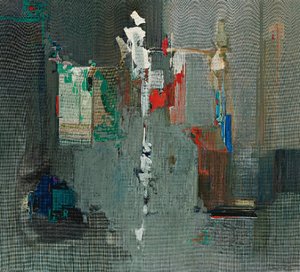
alecos kontopoulos
1904 - 1975
Kort om kunstneren
- Artistic Movement Or Style:
- Abstract Art
- Social Realism
- Artists Or Movements Influenced By This Artist:
- P. Le Daux
- H. Morisset
- Artists Who Influenced This Artist: ['G. Sarafianos']
- Date Of Birth: 1904, Lamia, Greece
- Date Of Death: 1975, Athens, Greece
- Full Name: Alecos Kontopoulos
- Nationality: Greek
- Notable Artworks:
- Night is Coming
- Force
- Armchair
- Place Of Birth: Lamia, Greece