
 Forhåndsvisning
 Send
Send Del
Del
 Vis detaljer
 Utskriftsvennlig guide

 Last ned bilde
 Liknende objekter
 Røntgenundersøkelse
 Lysbildefremvisning
 Spørsmål og svar
 Statistikk
Day of Rest

 Vis hele teksten
Giclée / Kunsttrykk
Giclée- eller lerretsprint av museumskvalitet med rask produksjon og fleksible valgmuligheter for etterbehandling. ( Kjøp håndmalt maleri Bytt til digitalt bilde)




P118B Nkr10

P118H Nkr10

P118W Nkr10

P438Z Nkr10

P508JH Nkr12

P508YH Nkr12

P805H Nkr10

P805Z Nkr10

P919BZ Nkr10

P919G Nkr10

P919XJ Nkr10

P959ZH Nkr10

P968JZ Nkr12

W106C Nkr8

W218G Nkr10

W218JH Nkr8

W218Y Nkr10

W307PJ Nkr10

W316G Nkr10

W316PJ Nkr8

W316Y Nkr10

W398PJ Nkr8

W4111J Nkr10

W500HY Nkr15

W500JH Nkr15

W692G Nkr12

W849H Nkr8

W940BG Nkr15

W953PJ Nkr8




Velg mellom våre forhåndsdefinerte størrelser som bevarer kunstverkets opprinnelige proporsjoner.

Skriv inn ønsket bredde og høyde for å tilpasse trykket til din ramme eller vegg. Et trykk kan kun beskjæres, aldri skaleres opp utover motivets opprinnelige størrelse, noe som betyr at et format med andre proporsjoner vil føre til tap av deler av bildet. Vi sender deg en digital mockup for godkjenning før vi starter trykkeprosessen. Bildet som vises på denne siden viser ikke den faktiske beskjæringen — det er kun mockuppen som viser dette.
Verdensomspennende levering () på 2 uker i stedet for standard 4/5 uker. (7 November)

Gratis ekspressfrakt over hele verden

Lerretsduk av lin av høy kvalitet

Full transportforsikring

Garanti for refusjon av toll og importavgifter

Garantert fargegjengivelse

100 dagers returrett ved fabrikasjonsfeil

100% pengene tilbake-garanti

Rabatt ved flere kjøp
 Glassalternativet er kun tilgjengelig i størrelser under 110 cm

Day of Rest
Giclée / Kunsttrykk
Størrelse på reproduksjon
-


Totalpris for valgte alternativer
Nkr 775
Albert Edelfelt: A Portrait of Finnish Identity
Albert Gustaf Aristides Edelfelt (21 July 1854 – 18 August 1905) stands as a monumental figure in Finnish art history, recognized for his unwavering commitment to Realism and his masterful depiction of the Finnish landscape and its people. Born in Porvoo, Finland, son of Swedish architect Carl Albert Edelfelt, he inherited an artistic lineage steeped in Scandinavian tradition but swiftly forged his own distinctive path—one that championed observation and honest representation above idealized notions.
Edelfelt’s formative years were spent honing his skills at the Drawing School of the Finnish Art Society, followed by a crucial period studying in Antwerp and Paris. These experiences instilled in him a profound understanding of European artistic currents while simultaneously grounding him in the burgeoning Finnish national consciousness. He embraced Impressionistic techniques—particularly visible in works like “The Eklöf Boys on the Veranda of Villa Sjökulla”—capturing fleeting moments of light and atmosphere with delicate brushstrokes and vibrant color palettes.
Style and Technique: The Essence of Realism
Edelfelt’s artistic philosophy revolved around capturing the essence of Finnish life as it unfolded. Unlike Romantic painters who sought to elevate subjects into heroic narratives, Edelfelt prioritized accuracy—a painstaking attention to detail that rendered everyday scenes with remarkable immediacy. His canvases are characterized by a meticulous layering of paint—often employing glazing techniques—to achieve luminous surfaces and subtle tonal gradations. This approach allowed him to convey not only visual fidelity but also an emotional resonance rooted in genuine observation.
- Glazing Techniques: Edelfelt skillfully applied thin layers of translucent pigment over existing paint, creating depth and luminosity.
- Color Palette: Warm hues—particularly ochres, reds, and yellows—dominated his palette, reflecting the colors of the Finnish countryside and conveying a sense of warmth and tranquility.
- Brushwork: Loose, expressive brushstrokes conveyed movement and texture, capturing the dynamism of Finnish life while maintaining compositional balance.
Historical Context: Finland’s Quest for Independence
Edelfelt's artistic output coincided with Finland’s tumultuous struggle for independence from Russia—a period marked by fervent nationalist sentiment and a desire to establish a distinct cultural identity. His paintings served as powerful emblems of Finnish heritage, portraying scenes of rural life, maritime traditions, and familial bonds—values that resonated deeply with the aspirations of a nation striving to define itself on the world stage. Works like “Portrait of Louis Pasteur” exemplify Edelfelt’s ability to convey intellectual curiosity alongside artistic skill.
Symbolism and Emotional Impact: Capturing the Soul of Finland
Beyond mere visual representation, Edelfelt's canvases communicated profound emotional truths about Finnish culture and experience. The depiction of children—particularly “The Eklöf Boys”—symbolizes innocence, vitality, and the continuity of tradition—themes that underscore Edelfelt’s belief in the importance of preserving Finland’s cultural heritage. His paintings evoke a sense of nostalgia for simpler times—a yearning for connection to the land and its traditions—leaving viewers with an enduring appreciation for the beauty and resilience of Finnish spirit.
Conclusion: An Enduring Legacy
Albert Edelfelt's legacy extends far beyond his individual masterpieces. He established a standard of excellence that continues to inspire Finnish artists today, cementing his place as the nation’s foremost painter—a testament to his unwavering dedication to Realism and his profound understanding of the human condition. His work remains an invaluable resource for anyone seeking insight into Finnish identity and artistic achievement.
Spørsmål og svar
Hvilke farger dominerer i "Day of Rest" av Albert Edelfelt?
"Day of Rest" av Albert Edelfelt bruker en Earthy-palett, med Walnut (#7f5035) som den dominerende fargen.
Hvordan kan jeg se "Day of Rest" av Albert Edelfelt som en lysbildefremvisning?
Du kan se diaporamabildet av "Day of Rest" på verkets Bildekarusell-side.
Finnes det en guide for "Day of Rest" av Albert Edelfelt?
Faktablad for studenter-siden for "Day of Rest" av Albert Edelfelt tilbyr et utskrivbart faktaark på to sider: kunstverket med sin identitetstabell, en tidslinje som plasserer det i kunstnerens levetid, andre verk av kunstneren, den målte fargepaletten og ferdigformaterte kildehenvisninger i fire stiler.
Om kunstneren
Early Life and Education
Albert Gustaf Aristides Edelfelt, a renowned Finnish painter, was born on July 21, 1854, in Porvoo, Finland. His parents, Carl Albert Edelfelt, an architect of Swedish descent, and Alexandra Edelfelt (née Brandt), a kjøpmannsdatter from Borgå, faced considerable financial hardship after his father’s untimely death when Albert was young. Despite these difficulties, Alexandra tirelessly cared for her children, fostering Albert's innate passion for art from a tender age. He began formal artistic studies in 1869 at the Drawing School of the Finnish Art Society in Helsinki, where he honed his skills under the guidance of Adolf von Becker. This early training instilled in him a dedication to realism and observation—principles that would define his entire oeuvre.Artistic Journey
Edelfelt’s artistic trajectory led him through several prestigious institutions, shaping his understanding of European art history and technique: Antwerp Academy of Art (1873-74), where he immersed himself in the study of monumental history painting under Jean-Léon Gérôme; École nationale des beaux-arts in Paris (1874-78), where he benefited from Gérôme’s mentorship, refining his draftsmanship and mastering the nuances of tonal gradation. A brief period spent in Saint Petersburg exposed him to Russian artistic traditions and broadened his visual vocabulary. These formative experiences cemented Edelfelt's commitment to capturing the essence of human experience with meticulous detail and emotional resonance.Rise to Prominence and Notable Works
Edelfelt’s breakthrough arrived at the Paris Universal Exposition of 1889, securing him a gold medal—a testament to his burgeoning talent and artistic vision. Among his most celebrated paintings are “Portrait of Louis Pasteur,” which garnered him the Legion of Honour in 1886, capturing Pasteur's intellectual intensity with remarkable accuracy; “Young Woman in Her Boudoir,” an evocative depiction of feminine grace and vulnerability; and “Under the Birches,” a poignant landscape masterpiece that embodies Finnish rural life and conveys a profound sense of tranquility. His influence extended to younger Finnish artists like Akseli Gallen-Kallela and Gunnar Berndtson, whom he assisted in establishing their careers in Paris—a legacy that continues to inspire artistic creativity today.Legacy and Impact
Albert Edelfelt stands as one of Finland’s foremost painters from the late 19th century, marking a pivotal moment in Finnish art history. He championed realism as a means of portraying the natural world and human emotion with uncompromising honesty—a stylistic choice that resonated deeply with his contemporaries and established him as a pioneer of Finnish artistic expression. His works are housed in prominent museums across Finland, including Ateneum Museum in Helsinki, ensuring that Edelfelt’s artistic legacy endures for generations to come. Furthermore, his birth anniversary was commemorated with €100 albert edelfelt commemorative coin in 2004—a symbolic gesture honoring his enduring contribution to Finnish culture and art.Museum Collections and Commemoration
Edelfelt's paintings are showcased in Ateneum Museum in Helsinki, Finland, where visitors can admire masterpieces like “Young Woman in Her Boudoir” and “Under the Birches.” His artistic achievements were honored with a €100 albert edelfelt commemorative coin in 2004, celebrating his 150th birth anniversary—a lasting testament to his significance as a cultural icon.
Albert Edelfelt
1854 - 1905 , Finland
Kort om kunstneren
- Artistic Movement Or Style: Realism
- Artists Or Movements Influenced By This Artist:
- Akseli Gallen-Kallela
- Gunnar Berndtson
- Artists Who Influenced This Artist: ['Jean-Léon Gérôme']
- Date Of Birth: July 21, 1854
- Date Of Death: August 18, 1905
- Full Name: Albert Gustaf Aristides Edelfelt
- Nationality: Finnish
- Notable Artworks:
- Portrait of Louis Pasteur
- Young woman in her boudoir
- Under the birches
- Place Of Birth: Porvoo, Finland
Relaterte artikler
Realism in Art: A Professional Guide to Authentic Detail and Lifelike Masterpieces for Large-Scale Interior Projects
Master the use of Realism in professional interiors. This expert guide explores 19th-century masterpieces, offering procurement managers and designers technical insights into selecting authentic, hand-painted oil reproductions for high-end hotel and corporate projects.

Romantic Realism's Finest: 10 Masterpieces for Your Home | OriginalUniqueArt
Explore 10 defining masterpieces of Romantic Realism! Discover Courbet, Millet & Daumier's powerful paintings—capturing emotion and social realities. Find museum-quality reproductions for your home at OriginalUniqueArt.com.
Echoes of Society: Exploring Social Realism's Enduring Legacy in Art
Explore the powerful world of Social Realism art! Discover key artists, masterpieces & its profound social commentary. Expert insights into this influential movement's history and enduring legacy.
The Raw Truth: A Definitive Guide to the Power and Legacy of Social Realism Art
Explore the profound impact of Social Realism. Discover how masters like Courbet rejected idealism to capture the raw, socio-political truths of the working class through powerful, unvarnished art history and enduring visual critique.
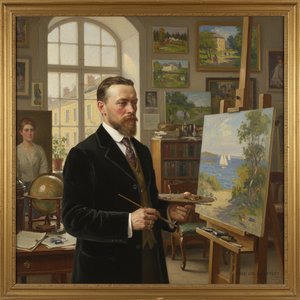
Albert Edelfelt: A Pioneer of Finnish Realism & International Impressionist Circles
Explore the life & work of Albert Edelfelt, a pioneering Finnish Realist painter who bridged Impressionism & national identity. Discover his masterpieces and lasting influence on art history.
