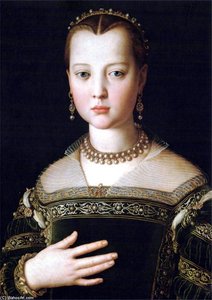
Se i rommet
 Del som digitalt kort
 Del
Del
 Detaljer
 Studentguide

 Last ned
 Liknende objekter
 Røntgen
 Lysbildefremvisning
 Besøksstatistikk
Resurrection


 Les mer
Giclée / Kunsttrykk
Giclée- eller lerretsprint av museumskvalitet med rask produksjon og fleksible valgmuligheter for etterbehandling. ( Bestill håndmalt reproduksjon Gå til digitalt bilde)




P118B Nkr10

P118H Nkr10

P118W Nkr10

P438Z Nkr10

P508JH Nkr12

P508YH Nkr12

P805H Nkr10

P805Z Nkr10

P919BZ Nkr10

P919G Nkr10

P919XJ Nkr10

P959ZH Nkr10

P968JZ Nkr12

W106C Nkr8

W218G Nkr10

W218JH Nkr8

W218Y Nkr10

W307PJ Nkr10

W316G Nkr10

W316PJ Nkr8

W316Y Nkr10

W398PJ Nkr8

W4111J Nkr10

W500HY Nkr15

W500JH Nkr15

W692G Nkr12

W849H Nkr8

W940BG Nkr15

W953PJ Nkr8




Velg mellom våre forhåndsdefinerte størrelser som bevarer kunstverkets opprinnelige proporsjoner.

Skriv inn bredden og høyden du trenger, slik at den passer til din ramme eller vegg. Et trykk kan kun beskjæres, aldri gjøres større enn bildet, så et format med en annen form vil miste en del av motivet. Vi sender deg en digital mockup for godkjenning før vi trykker noe som helst. Bildet som vises på denne siden viser ikke den faktiske beskjæringen — det er kun mockuppen som gjør det.
Verdensomspennende levering () på 2 uker i stedet for standard 4/5 uker. (23 October)

Gratis ekspressfrakt over hele verden

Lerretsduk av høykvalitets lin

Full transportforsikring

Garanti for refusjon av toll og importavgifter

Garantert fargeekthet

100 dagers returrett ved fabrikasjonsfeil

100% pengene tilbake-garanti

Mengderabatt
 Glassalternativet er kun tilgjengelig i størrelser under 110 cm

Resurrection
Giclée / Kunsttrykk
Format på reproduksjon
-


Totalpris
Nkr 758
Agnolo Bronzino’s Resurrection: A Study in Mannerist Elegance
The Florentine Renaissance witnessed an explosion of artistic innovation, yet amidst the grandeur and dynamism of figures like Michelangelo and Leonardo da Vinci resided a quieter, more contemplative aesthetic – Mannerism. Agnolo Bronzino embodies this sensibility perfectly, producing works that prioritize refined detail and psychological subtlety over exuberant emotion. His masterpiece, “Resurrection,” completed in 1552, stands as a testament to the artist’s mastery of technique and his profound understanding of humanist ideals.- Subject Matter & Composition: The painting depicts a pivotal biblical scene – the Resurrection of Christ – capturing the moment when Jesus ascends from the tomb, surrounded by grieving mourners who express astonishment and reverence. Bronzino eschews dramatic narrative flourishes typical of earlier Renaissance art; instead, he presents a carefully orchestrated tableau designed to convey spiritual contemplation rather than visceral emotion.
- Style & Technique: Bronzino’s Mannerist style distinguishes itself from its predecessors through elongated figures, stylized poses, and an unsettling sense of artificiality. He employs meticulous anatomical precision—a hallmark of Leonardo da Vinci’s influence—but applies it with a deliberate coolness that prioritizes idealized beauty over naturalism. The artist utilizes sfumato – the subtle blending of colors to create soft transitions – particularly evident in the drapery folds, enhancing the painting's ethereal quality.
Historical Context: Florence Under Medici Patronage
Florence during Bronzino’s lifetime was ruled by Cosimo I de’ Medici, a shrewd diplomat and ambitious ruler who fostered an environment of artistic excellence. The Medicis actively commissioned artists to decorate palaces and churches, elevating Florence to the cultural capital of Europe. This patronage fueled creativity and encouraged experimentation, resulting in a diverse range of artistic styles—from Raphael's harmonious idealism to Michelangelo's monumental grandeur. Bronzino’s “Resurrection” reflects this prevailing spirit of refined taste and intellectual curiosity.- Symbolism: The painting is laden with symbolic significance. The central figure embodies divine grace and triumph over death, while the mourners represent humanity grappling with faith and sorrow. Bronzino’s masterful use of color—primarily earthy tones accented by luminous highlights—contributes to the overall mood of solemn reverence. Notably, the positioning of Christ's body emphasizes his ascension, symbolizing spiritual rebirth and eternal life.
Emotional Impact & Artistic Legacy
Despite its lack of overt emotional expression, “Resurrection” possesses a remarkable ability to evoke contemplation and wonder. Bronzino’s meticulous attention to detail—the subtle nuances of facial expressions, the drapery folds rendered with breathtaking realism—draws viewers into the scene, inviting them to consider profound questions about faith and mortality. The painting's enduring influence can be seen in subsequent Mannerist artists who sought to emulate Bronzino’s stylistic innovations. “Resurrection” remains a cornerstone of Renaissance art history, demonstrating that beauty and intellectual depth could coexist—a testament to Bronzino’s unparalleled artistic vision.Spørsmål og svar
Hvordan møtes kunstretning og epoke i "Resurrection" av Agnolo Bronzino?
"Resurrection" av Agnolo Bronzino tilhører Mannerist Style-retningen, innenfor skaperens Renessansen-epoke.
Hvem skapte "Resurrection", og når?
Kunstneren bak "Resurrection" er Agnolo Bronzino, og verket er datert 1552.
Er "Resurrection" et kjent kunstverk innen Mannerist Style?
"Resurrection" av Agnolo Bronzino er klassifisert som Recognized og tilhører Mannerist Style-retningen.
Kunstnerbiografi
Agnolo Bronzino: The Sculptor's Touch in Florentine Mannerism
Agnolo di Cosimo, known to history as Bronzino, emerged from the vibrant artistic landscape of Renaissance Florence in 1503, a period already brimming with genius. Born the son of a butcher, his path diverged sharply from familial trade, guided instead by an innate talent that would see him become one of the most sought-after portraitists of his era and a defining figure of Mannerism. His early training began with Raffaellino del Garbo, but it was under the tutelage of Jacopo da Pontormo that Bronzino’s artistic sensibilities truly took shape. While absorbing Pontormo's innovative style—characterized by expressive distortions and dramatic lighting—he ultimately forged his own distinct voice—one characterized by a cool composure and refined detail markedly different from his teacher’s often emotionally charged works. This early period was also influenced by studies with Andrea del Sarto, exposing him to the legacies of Michelangelo and Leonardo da Vinci, foundational influences that would subtly permeate his mature style. The young Bronzino quickly demonstrated an aptitude for capturing not just physical likeness but a certain psychological depth, even in his earliest commissions.Early Influences and Artistic Formation
Pontormo’s impact on Bronzino was profound. Unlike Pontormo's emotionally turbulent compositions—often imbued with sorrowful expressions and swirling draperies—Bronzino favored a deliberate restraint, prioritizing clarity of line and meticulous rendering of surface textures. This stylistic preference reflected a broader trend within Mannerism—a rejection of High Renaissance ideals of harmony and balance in favor of stylized forms and unsettling perspectives. Bronzino’s apprenticeship under Pontormo instilled in him a fascination with sculptural techniques, evident in his approach to portraiture where he sought to achieve an almost three-dimensional effect through careful manipulation of volume and contour. Furthermore, the influence of Michelangelo—particularly his monumental sculptures—shaped Bronzino's understanding of anatomical precision and dramatic gesture. Leonardo da Vinci’s scientific observation and artistic experimentation similarly contributed to Bronzino’s intellectual curiosity and commitment to mastering the complexities of visual representation.Ascension at the Medici Court: Patronage and Artistic Output
Bronzino’s career ascended dramatically with the patronage of Cosimo I de’ Medici, Duke of Tuscany. This relationship—established after Bronzino contributed to the lavish decorations celebrating Cosimo’s wedding to Eleonora di Toledo in 1539—cemented his position as the official court painter for much of his life. It was a role he fulfilled with unwavering dedication and remarkable skill. The portraits emanating from this period are not merely likenesses; they are carefully constructed statements of power, status, and dynastic ambition. Cosimo and Eleonora themselves became frequent subjects—immortalized in paintings that exude an aristocratic aloofness and polished elegance. These works weren’t simply about capturing physical resemblance but crafting enduring symbols of Medici authority. Bronzino's meticulous attention to detail—the textures of fabrics, the gleam of jewels, the subtle nuances of expression—all rendered with an almost enamel-like precision—became hallmarks of aristocratic representation. He was entrusted with decorating the chapel dedicated to Eleonora, a project spanning two decades and showcasing his versatility as a fresco painter. The resulting images are testament to Bronzino’s technical prowess and artistic vision.The Mannerist Style: Cool Composure and Sculptural Precision
Bronzino's distinctive style—characterized by cool composure and sculptural precision—represented a radical departure from the prevailing aesthetic sensibilities of his time. Unlike the emotionally charged compositions favored by artists like Raphael or Michelangelo, Bronzino’s paintings eschewed dramatic gestures and expressive coloration in favor of deliberate restraint and meticulous rendering of surface textures. His figures are often posed in stiff, stylized positions—almost as if sculpted—creating an illusion of three-dimensionality that defied conventional artistic conventions. This stylistic preference reflected a broader trend within Mannerism—a rejection of High Renaissance ideals of harmony and balance in favor of distorted perspectives and unsettling spatial arrangements. Bronzino’s mastery of line—particularly his use of hatching and crosshatching—produced velvety surfaces that conveyed an uncanny sense of depth and luminosity. He achieved this effect by carefully controlling the interplay of light and shadow, creating a visual experience that was both intellectually stimulating and aesthetically captivating.Legacy and Influence: Shaping European Portraiture
Bronzino’s influence extended far beyond Florence, shaping the visual language of aristocratic representation throughout Europe for generations to come. His cool elegance and refined technique became hallmarks of court portraiture—inspiring artists across the continent to adopt a similar stylistic approach. Scholars now recognize Bronzino's contribution to Mannerist art as pivotal in establishing a new aesthetic standard—one that prioritized intellectual complexity and stylistic control over emotional expression. Despite criticisms leveled against Mannerism during the Romantic era, Bronzino’s work has experienced a resurgence of appreciation in recent decades—demonstrating its enduring power to fascinate and inspire viewers centuries after his death in 1572. His legacy as one of the most important Mannerist painters—a master of reserved elegance whose portraits continue to captivate and intrigue—ensures his place among the titans of Renaissance art history.
Agnolo Bronzino
1503 - 1572 , Italia
Kort om kunstneren
- Artistic Movement Or Style: Mannerism
- Artists Who Influenced This Artist:
- Pontormo
- Michelangelo
- Leonardo da Vinci
- Date Of Birth: 17 november 1503
- Full Name: Agnolo di Cosimo
- Nationality: Italian
- Notable Artworks:
- Venus, Cupid, Folly & Time
- Ugolino Martelli
- The Holy Family
- Place Of Birth: Florence, Italy
Relaterte artikler
Beyond Perfection: The Dramatic Elegance and Intellectual Tension of Renaissance Mannerism
Explore the captivating world of Renaissance Mannerism. Discover how artists moved beyond High Renaissance harmony into a realm of elegant distortion, psychological tension, and dramatic beauty that bridged the gap to the Baroque era.

Northern Mannerism: The Dramatic Evolution of European Art through Elegant Distortion and Tension
Explore the dramatic evolution of Northern Mannerism. Discover how 16th-century artists moved from Renaissance harmony to elegant distortion, tension, and complex symbolism in European art history.

Mannerism: Bridging Renaissance Harmony & Baroque Drama – A Study of Style & Affectation
Explore the fascinating world of Mannerism! Discover its key characteristics, pioneering artists like Pontormo & Bronzino, and its pivotal role in bridging Renaissance harmony to Baroque drama. A comprehensive guide for art enthusiasts.

The Enduring Legacy of Formal Portraiture: Power, Identity & Artistic Exploration
Explore the rich history of formal portraiture & its enduring power to capture identity and shape perception. Discover investment-worthy artworks, expert appraisals, and custom reproduction services at OriginalUniqueArt.
Agnolo Bronzino: Mastering Courtly Portraiture & the Enigmatic Gaze of Renaissance Florence
Explore the captivating world of Agnolo Bronzino, Renaissance master portraitist. Discover his elegant style, symbolic depth & lasting influence on art history. Expert insights for collectors.