Tekststørrelse

() ·

Et maleri laget til deg, med håndverk

Lucrezia di Cosimo

Håndlaget oljereproduksjon

Håndmalt olje på lerret i din valgte størrelse og ramme, laget på bestilling av våre kunstnere. ( Bytt til trykk Bytt til digitalt bilde)

Beskrivelse av objektet

Agnolo Di Domenico, Del Mazziere, Agnolo, Agnolo Di Domenico, Called Del Mazziere, Agnolo Di Domenico, Called Del Mazziere (Master Of Santo Spirito)

Om kunstneren

Utforsk Agnolo Bronzinos raffinert eleganse – Florentinsk Mannerist mester og hoffmaler til Medici-familien. Oppdag hans ikoniske portretter og allegoriske verk.

fra ·

Kapittel 1

Hvor stor bør den være?

Skyv for å endre størrelsen; bildet til venstre viser rammen i sin faktiske bredde. Originalens proporsjoner er bevart.

Standardformat
skreddersydd
CM
INCH

Velg mellom våre forhåndsdefinerte størrelser som bevarer kunstverkets opprinnelige proporsjoner.

bredde
høyde

Skriv inn ønsket bredde og høyde for å tilpasse bildet til din ramme eller vegg. Siden dette er håndmalt, kan kunstneren male litt mer rundt motivet eller beskjære det noe dersom du velger et annet format — valget er ditt. Vi sender deg en digital mockup til godkjenning før maleriet påbegynnes. Bildet som vises på denne siden representerer ikke det faktiske resultatet — kun mockuppen viser det endelige uttrykket.

Kapittel 2

Hvordan skal det leveres?

Velg kantutførelse på lerretet

Velg din ramme

Corner sample of the WhiteWrap canvas edge finish, stretched on massivt tre bars
Hvit kant Nkr1
Corner sample of the BlurSideWrap canvas edge finish, stretched on massivt tre bars
Uskarp kantfinish Nkr1
Corner sample of the ExtendedWrap canvas edge finish, stretched on massivt tre bars
Fortsatt motiv Nkr1
Corner sample of the P118B picture frame: støpt polystyren, 5 cm wide and 3 cm thick
P118B Nkr10
Corner sample of the P118H picture frame: støpt polystyren, 5 cm wide and 3 cm thick
P118H Nkr10
Corner sample of the P118W picture frame: støpt polystyren, 5 cm wide and 3 cm thick
P118W Nkr10
Corner sample of the P438Z picture frame: støpt polystyren, 5.5 cm wide and 3.5 cm thick
P438Z Nkr10
Corner sample of the P508JH picture frame: støpt polystyren, 7 cm wide and 3.5 cm thick
P508JH Nkr12
Corner sample of the P508YH picture frame: støpt polystyren, 7 cm wide and 3.5 cm thick
P508YH Nkr12
Corner sample of the P805H picture frame: støpt polystyren, 5 cm wide and 3.5 cm thick
P805H Nkr10
Corner sample of the P805Z picture frame: støpt polystyren, 5 cm wide and 3.5 cm thick
P805Z Nkr10
Corner sample of the P919BZ picture frame: støpt polystyren, 7 cm wide and 3.5 cm thick
P919BZ Nkr10
Corner sample of the P919G picture frame: støpt polystyren, 7 cm wide and 3.5 cm thick
P919G Nkr10
Corner sample of the P919XJ picture frame: støpt polystyren, 7 cm wide and 3.5 cm thick
P919XJ Nkr10
Corner sample of the P959ZH picture frame: støpt polystyren, 5 cm wide and 3 cm thick
P959ZH Nkr10
Corner sample of the P968JZ picture frame: støpt polystyren, 6 cm wide and 4 cm thick
P968JZ Nkr12
Corner sample of the W106C picture frame: massivt tre, 5 cm wide and 3 cm thick
W106C Nkr8
Corner sample of the W218G picture frame: massivt tre, 5 cm wide and 3 cm thick
W218G Nkr10
Corner sample of the W218JH picture frame: massivt tre, 5 cm wide and 3 cm thick
W218JH Nkr8
Corner sample of the W218Y picture frame: massivt tre, 5 cm wide and 3 cm thick
W218Y Nkr10
Corner sample of the W307PJ picture frame: massivt tre, 6 cm wide and 3 cm thick
W307PJ Nkr10
Corner sample of the W316G picture frame: massivt tre, 6 cm wide and 3 cm thick
W316G Nkr10
Corner sample of the W316PJ picture frame: massivt tre, 6 cm wide and 3 cm thick
W316PJ Nkr8
Corner sample of the W316Y picture frame: massivt tre, 6 cm wide and 3 cm thick
W316Y Nkr10
Corner sample of the W398PJ picture frame: massivt tre, 5 cm wide and 3 cm thick
W398PJ Nkr8
Corner sample of the W4111J picture frame: massivt tre, 6.5 cm wide and 3.5 cm thick
W4111J Nkr10
Corner sample of the W500HY picture frame: massivt tre, 7 cm wide and 5 cm thick
W500HY Nkr15
Corner sample of the W500JH picture frame: massivt tre, 7 cm wide and 5 cm thick
W500JH Nkr15
Corner sample of the W692G picture frame: massivt tre, 8 cm wide and 4 cm thick
W692G Nkr12
Corner sample of the W849H picture frame: massivt tre, 5 cm wide and 3 cm thick
W849H Nkr8
Corner sample of the W940BG picture frame: massivt tre, 7.5 cm wide and 4.5 cm thick
W940BG Nkr15
Corner sample of the W953PJ picture frame: massivt tre, 6 cm wide and 3.5 cm thick
W953PJ Nkr8
Corner sample of the H24-GOLD picture frame: utskåret tre med gesso, 10 cm wide and 6 cm thick
H24-GOLD Nkr30
Corner sample of the H24-SILVER picture frame: utskåret tre med gesso, 10 cm wide and 6 cm thick
H24-SILVER Nkr30
Corner sample of the H36-GOLD picture frame: utskåret tre med gesso, 15 cm wide and 6.5 cm thick
H36-GOLD Nkr45
Corner sample of the H36-SILVER picture frame: utskåret tre med gesso, 15 cm wide and 6.5 cm thick
H36-SILVER Nkr45

Profil: . Total størrelse med ramme: .

Kapittel 3

Hvem maler det, og bør noe endres?

Eksempler på hva som kan endres: Erstatt ansikt med kundens eget bilde; Legg til kjæledyr (f.eks. bytt ut katt med hund); Inkluder en skjult melding i bakgrunnen; Endre landskap eller elementer i bakgrunnen.
Etter bestilling vil OriginalUniqueArt.com-teamet sende e-post til kunden for instruksjoner og sende et utkast som forhåndsvisning

Verdensomspennende levering () på 3–4 uker i stedet for standard 5 uker. (8 November). Ingen kompromisser med kvaliteten.

Kapittel 4

De siste detaljene

En navneplate, som på et museum?

Detaljer om gravert bronseplate

This elegant plaque features the artist's name and the title of the artwork, finely engraved for a timeless presentation.

It is made from bronze with a refined, elegant finish. The text is precisely laser-engraved for a sharp and permanent result. Measuring 9x2 cm, the plaque is compact yet easy to read. It's built to be durable and scratch-resistant, offering a professional, museum-quality look. Mounting is simple thanks to the included adhesive backing.

Detaljer om gjennomsiktig akrylplate

The plaque includes essential engraved details such as the artist's name, the title of the artwork, the date it was created, the type of media used-like oil on canvas or watercolor-a brief description of the piece, and a QR code that links to the complete artwork information.

It is crafted from clear acrylic, offering a sleek, modern appearance. The text is UV-engraved in black to ensure strong visual contrast. With a size of 10x15 cm, it ensures optimal readability. It comes equipped with two metal hooks for secure wall mounting. The plaque is designed to be weather-resistant, making it suitable for various environments, and it includes interactive features that work seamlessly with smartphone scanning.

Detaljer om plakett i svart akryl

This elegant plaque includes engraved information such as the artist's name, the title of the artwork, the date it was created, the type of media used (like oil on canvas or watercolor), a short description of the artwork, and a QR code for quick access to more information.

The plaque itself is made from refined black acrylic with a premium finish. The text is laser-engraved in white for high contrast and readability. Its size is 10x15 cm, designed to be easy to read. It comes with two metal hooks for professional mounting. The design is sleek and fits any interior style. It is also weather-resistant and durable, with built-in digital integration for mobile compatibility.

En beskyttende lakk?

Når trenger du det?

Kapittel 5

Ditt maleri, slik du bestilte det

Lucrezia di Cosimo

Trykkmetode

Størrelse på reproduksjon

-

Utvalgte mesterkunstnere

Mer detaljrikdom, finesse og ekstra produksjonstid

-

Innramming av reproduksjon

-

-

For kunstverk eller reproduksjoner som er større enn 105 cm (ca. 41 tommer) på noen side, vil rammen bli sendt som et sett som må monteres. Denne metoden sikrer trygg levering og forhindrer skader under transport.

Krever profesjonell montering – dette er ikke et DIY-produkt.
Settet må monteres og lerretet strammes av en erfaren profesjonell rammelegger, ved bruk av trelim (følger ikke med), en lerretstang og klemmer for å holde rammelisten vinkelrett mens limet tørker. Feilaktig montering eller ujevn stramming av lerretet kan påføre kunstverket permanente skader og er ikke dekket av vår garanti.

  • Alle massive trelister er inkludert, presist tilpasset i størrelse.

  • Monteres med de medfølgende skruene, samt trelim til hjørnene, som ikke er inkludert og må anskaffes av din rammehandler.

  • Profesjonelt verktøy er nødvendig og er ikke inkludert: en lerretstang (strammer) og klemmer for å holde rammene vinkelrette mens limet tørker.

Viktig:
Hjørnene krever trelim, listene må holdes på plass med tvinger til limet er helt tørt, og stramming av lerretet på den ferdige rammen krever en lerretstang. Ingen av disse produktene er inkludert i settet. Vennligst sørg for tilgang til en erfaren profesjonell rammehandler før du bestiller denne størrelsen.

Navneskilt

-

-

Beskyttende ferniss

Blank lakk (forsterker farger, beskytter mot lys og fuktighet)

-

Tilpass mitt kunstverk

Eksempler på hva som kan endres: Erstatt ansikt med bilde av kunden; Legg til kjæledyr (f.eks. bytt ut katt med hund); Inkluder en skjult melding i bakgrunnen; Endre bakgrunnslandskap eller elementer.

-

Ekspresslevering

Verdensomspennende levering () på 3–4 uker i stedet for standard 5 uker. (8 November). Ingen kompromisser med kvaliteten.

-

Ekspresslevering

Verdensomspennende levering til innen 5 uker. (15 November).

Inkludert frakt

Totalpris for valgte alternativer

Nkr 2869

Totalpris Nkr 2869

Glassalternativet er kun tilgjengelig i størrelser under 110 cm

Inkludert med hver bestilling

  • Gratis ekspressfrakt over hele verden
  • Lerretsduk av lin av høy kvalitet
  • Full transportforsikring
  • Garanti for refusjon av toll og importavgifter
  • Garantert fargegjengivelse
  • 100 dagers returrett ved fabrikasjonsfeil
  • 100% pengene tilbake-garanti
  • Rabatt ved flere kjøp

A Portrait of Regal Grace: Agnolo Bronzino’s Lucrezia di Cosimo

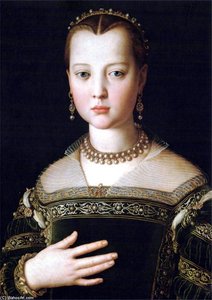
Agnolo Bronzino's “Lucrezia di Cosimo,” completed in 1555, stands as a quintessential emblem of Florentine Mannerism—a style characterized by refined elegance, stylized forms, and an unsettling stillness that transcends mere representation. More than just a depiction of a young woman, it’s a carefully constructed tableau designed to convey status, piety, and the pervasive influence of humanist ideals within the opulent court of Florence under Cosimo I.

  • Subject Matter: The portrait portrays Lucrezia di Cosimo, daughter of Eleonora Gonzaga and Cosimo I de’ Medici—a prominent figure in Florentine aristocratic society. Her youthful beauty is rendered with meticulous detail, emphasizing her delicate features and serene gaze.
  • Style & Technique: Bronzino's mastery lies in his ability to achieve an almost sculptural quality through precise modeling and subtle shading. The artist eschews the expressive dynamism favored by earlier Renaissance painters like Raphael or Michelangelo, opting instead for a cool composure that reflects the Mannerist preoccupation with intellectual contemplation rather than emotional fervor.
  • Composition & Color Palette: The dark background serves to heighten the luminosity of Lucrezia’s face and gown—a deliberate tactic employed to draw the viewer's eye directly to her expression. Bronzino utilizes a restrained palette dominated by muted golds, browns, and creams, reflecting the aristocratic taste for understated grandeur.

Historical Context: The Medici Patronage of Art

Florence during Cosimo I’s reign was at the zenith of its artistic prowess—fueled by immense wealth derived from trade and shrewd political maneuvering. Bronzino benefited enormously from this patronage, becoming one of the most prolific portraitists of his time and securing commissions from influential families like the Medici themselves. This commission reflects the broader humanist movement that championed reason and observation alongside classical ideals – a trend powerfully evident in Lucrezia’s pose and attire.

  • Influence of Raphael: Bronzino's style bears unmistakable traces of Raphael, whom he admired greatly—particularly his mastery of illusionistic perspective and idealized beauty. However, unlike Raphael’s harmonious compositions, Bronzino deliberately disrupts visual conventions to convey a sense of psychological complexity.
  • Symbolism & Iconography: The crown or adornment atop Lucrezia's head symbolizes her royal lineage and signifies the importance of piety within Florentine aristocratic culture. The pearl necklace—a common motif in portraits of noblewomen—represents purity and virtue, reinforcing the idealized image presented by Bronzino.

Emotional Impact & Legacy

“Lucrezia di Cosimo” transcends mere visual representation; it communicates a profound stillness that invites contemplation. The woman’s gaze—directed outwards but seemingly unfocused—suggests an inner life preoccupied with thought and reflection—a characteristic trait of Mannerist portraiture. Bronzino's work continues to fascinate art historians and collectors alike, lauded for its technical brilliance and its ability to capture the elusive essence of Renaissance aristocratic identity. It remains a testament to Bronzino’s enduring legacy as one of Florence’s most influential artists.

Spørsmål og svar

Hvilken farge dominerer komposisjonen i "Lucrezia di Cosimo" av Agnolo Bronzino?

Den dominerende fargen i "Lucrezia di Cosimo" av Agnolo Bronzino er Black (#161215).

Hvilket rom komplementerer fargene i "Lucrezia di Cosimo" av Agnolo Bronzino?

Med sine Earthy farger anbefales "Lucrezia di Cosimo" for et Living Room.

Hvordan forenes kunstretning og epoke i "Lucrezia di Cosimo" av Agnolo Bronzino?

"Lucrezia di Cosimo" tilhører Renaissance Mannerism-retningen, og kunstneren virket i Renessansen-epoken.

Les mer om dette maleriet

Forhåndsvisning Se i AR Bytt til trykk Bytt til digitalt bilde Send
Vis detaljer Utskriftsvennlig guide Legg til i favoritter Last ned bilde Liknende objekter Røntgenundersøkelse Lysbildefremvisning Spørsmål og svar Statistikk

I tall

  • 1555året det ble malt
  • 29rammer å velge mellom
  • standardstørrelser, i sine egne proporsjoner
  • 5uker å male og levere
Agnolo Bronzino

Agnolo Bronzino

1503 - 1572, Italia

Kort om Agnolo Bronzino

  • Artistic Movement Or Style: Mannerism
  • Artists Who Influenced This Artist:
    • Pontormo
    • Michelangelo
    • Leonardo da Vinci
  • Date Of Birth: 17 november 1503
  • Full Name: Agnolo di Cosimo
  • Nationality: Italian
  • Notable Artworks:
    • Venus, Cupid, Folly & Time
    • Ugolino Martelli
    • The Holy Family
  • Place Of Birth: Florence, Italy

Om kunstneren

Agnolo Bronzino: The Sculptor's Touch in Florentine Mannerism

Agnolo di Cosimo, known to history as Bronzino, emerged from the vibrant artistic landscape of Renaissance Florence in 1503, a period already brimming with genius. Born the son of a butcher, his path diverged sharply from familial trade, guided instead by an innate talent that would see him become one of the most sought-after portraitists of his era and a defining figure of Mannerism. His early training began with Raffaellino del Garbo, but it was under the tutelage of Jacopo da Pontormo that Bronzino’s artistic sensibilities truly took shape. While absorbing Pontormo's innovative style—characterized by expressive distortions and dramatic lighting—he ultimately forged his own distinct voice—one characterized by a cool composure and refined detail markedly different from his teacher’s often emotionally charged works. This early period was also influenced by studies with Andrea del Sarto, exposing him to the legacies of Michelangelo and Leonardo da Vinci, foundational influences that would subtly permeate his mature style. The young Bronzino quickly demonstrated an aptitude for capturing not just physical likeness but a certain psychological depth, even in his earliest commissions.

Early Influences and Artistic Formation

Pontormo’s impact on Bronzino was profound. Unlike Pontormo's emotionally turbulent compositions—often imbued with sorrowful expressions and swirling draperies—Bronzino favored a deliberate restraint, prioritizing clarity of line and meticulous rendering of surface textures. This stylistic preference reflected a broader trend within Mannerism—a rejection of High Renaissance ideals of harmony and balance in favor of stylized forms and unsettling perspectives. Bronzino’s apprenticeship under Pontormo instilled in him a fascination with sculptural techniques, evident in his approach to portraiture where he sought to achieve an almost three-dimensional effect through careful manipulation of volume and contour. Furthermore, the influence of Michelangelo—particularly his monumental sculptures—shaped Bronzino's understanding of anatomical precision and dramatic gesture. Leonardo da Vinci’s scientific observation and artistic experimentation similarly contributed to Bronzino’s intellectual curiosity and commitment to mastering the complexities of visual representation.

Ascension at the Medici Court: Patronage and Artistic Output

Bronzino’s career ascended dramatically with the patronage of Cosimo I de’ Medici, Duke of Tuscany. This relationship—established after Bronzino contributed to the lavish decorations celebrating Cosimo’s wedding to Eleonora di Toledo in 1539—cemented his position as the official court painter for much of his life. It was a role he fulfilled with unwavering dedication and remarkable skill. The portraits emanating from this period are not merely likenesses; they are carefully constructed statements of power, status, and dynastic ambition. Cosimo and Eleonora themselves became frequent subjects—immortalized in paintings that exude an aristocratic aloofness and polished elegance. These works weren’t simply about capturing physical resemblance but crafting enduring symbols of Medici authority. Bronzino's meticulous attention to detail—the textures of fabrics, the gleam of jewels, the subtle nuances of expression—all rendered with an almost enamel-like precision—became hallmarks of aristocratic representation. He was entrusted with decorating the chapel dedicated to Eleonora, a project spanning two decades and showcasing his versatility as a fresco painter. The resulting images are testament to Bronzino’s technical prowess and artistic vision.

The Mannerist Style: Cool Composure and Sculptural Precision

Bronzino's distinctive style—characterized by cool composure and sculptural precision—represented a radical departure from the prevailing aesthetic sensibilities of his time. Unlike the emotionally charged compositions favored by artists like Raphael or Michelangelo, Bronzino’s paintings eschewed dramatic gestures and expressive coloration in favor of deliberate restraint and meticulous rendering of surface textures. His figures are often posed in stiff, stylized positions—almost as if sculpted—creating an illusion of three-dimensionality that defied conventional artistic conventions. This stylistic preference reflected a broader trend within Mannerism—a rejection of High Renaissance ideals of harmony and balance in favor of distorted perspectives and unsettling spatial arrangements. Bronzino’s mastery of line—particularly his use of hatching and crosshatching—produced velvety surfaces that conveyed an uncanny sense of depth and luminosity. He achieved this effect by carefully controlling the interplay of light and shadow, creating a visual experience that was both intellectually stimulating and aesthetically captivating.

Legacy and Influence: Shaping European Portraiture

Bronzino’s influence extended far beyond Florence, shaping the visual language of aristocratic representation throughout Europe for generations to come. His cool elegance and refined technique became hallmarks of court portraiture—inspiring artists across the continent to adopt a similar stylistic approach. Scholars now recognize Bronzino's contribution to Mannerist art as pivotal in establishing a new aesthetic standard—one that prioritized intellectual complexity and stylistic control over emotional expression. Despite criticisms leveled against Mannerism during the Romantic era, Bronzino’s work has experienced a resurgence of appreciation in recent decades—demonstrating its enduring power to fascinate and inspire viewers centuries after his death in 1572. His legacy as one of the most important Mannerist painters—a master of reserved elegance whose portraits continue to captivate and intrigue—ensures his place among the titans of Renaissance art history.

Kort om verket

  • Medium: Oil on Canvas
  • Influences:
    • Michelangelo
    • Leonardo da Vinci
  • Subject or theme: Portraiture
  • Year: 1555
  • Title: Lucrezia di Cosimo
  • Notable elements or techniques: Elegant drapery, stylized gaze