

 Se i rommet
 Del som digitalt kort
 Del
Del
 Detaljer
 Studentguide

 Last ned
 Liknende objekter
 Røntgen
 Lysbildefremvisning
 Besøksstatistikk
The Ladies
 Oil On Canvas
- WallArt
- Figurative Expressionism
 Modern
 75.0 x 75.0 cm
 Kerala Museum
 Les mer
Kunstverket som vises på denne siden er beskyttet av opphavsretten, noe som betyr at vi ikke har juridisk tillatelse til å lage eller selge identiske reproduksjoner. Denne beskyttelsen håndheves i henhold til internasjonale avtaler som for eksempel Bernerkonvensjonen og av nasjonale lover, inkludert de som er fastsatt i Amerikansk opphavsrettslov – Tittel 17.
Som et respektfullt og lovlig alternativ tilbyr vi skreddersydde, håndmalte kunstverk inspirert av originalen. Våre dyktige og profesjonelle kunstnere studerer nøye originalens stil, stemning og kunstneriske essens for å skape et nytt og unikt verk som vekker den samme følelsen – samtidig som det forblir en original skapelse i seg selv.
Denne metoden er i fullt samsvar med opphavsrettslige regler, da den ikke innebærer kopiering eller duplisering av det beskyttede kunstverket. I stedet er det snakk om en kreativ nytolkning – et nytt maleri som er inspirert av originalen, men ikke identisk med den.
Håndlaget oljereproduksjon
Håndmalt olje på lerret i din valgte størrelse og ramme, laget på bestilling av våre kunstnere. ( Bytt til trykkversjon Gå til digitalt bilde)




P118B Nkr10

P118H Nkr10

P118W Nkr10

P438Z Nkr10

P508JH Nkr12

P508YH Nkr12

P805H Nkr10

P805Z Nkr10

P919BZ Nkr10

P919G Nkr10

P919XJ Nkr10

P959ZH Nkr10

P968JZ Nkr12

W106C Nkr8

W218G Nkr10

W218JH Nkr8

W218Y Nkr10

W307PJ Nkr10

W316G Nkr10

W316PJ Nkr8

W316Y Nkr10

W398PJ Nkr8

W4111J Nkr10

W500HY Nkr15

W500JH Nkr15

W692G Nkr12

W849H Nkr8

W940BG Nkr15

W953PJ Nkr8




Velg mellom våre forhåndsdefinerte størrelser som bevarer kunstverkets opprinnelige proporsjoner.

Skriv inn bredden og høyden du trenger, slik at den passer til din ramme eller vegg. Dette er håndmalt, så for en størrelse med en annen form kan kunstneren male litt mer rundt bildet, eller beskjære det noe — du velger selv. Vi sender deg en digital mockup for godkjenning før maleriet påbegynnes. Bildet som vises på denne siden viser ikke det faktiske resultatet — kun mockuppen gjør det.
Etter bestilling vil OriginalUniqueArt.com-teamet sende e-post til kunden for instruksjoner og sende et utkast (mockup) som forhåndsvisning.
Verdensomspennende levering () på 3–4 uker i stedet for standard 5 uker. (26 October). Ingen kompromisser med kvaliteten.

Gratis ekspressfrakt over hele verden

Lerretsduk av høykvalitets lin

Full transportforsikring

Garanti for refusjon av toll og importavgifter

Garantert fargeekthet

100 dagers returrett ved fabrikasjonsfeil

100% pengene tilbake-garanti

Mengderabatt
 Glassalternativet er kun tilgjengelig i størrelser under 110 cm

The Ladies
Reproduksjonsmetode
Format på reproduksjon
-


Totalpris
Nkr 3802
A Study in Quiet Contemplation: Unveiling ‘The Ladies’ by a. selvaraj
a. selvaraj's “The Ladies” is more than just a depiction of five women; it’s an immersive exploration of emotion, movement, and the enduring power of storytelling – themes deeply rooted in his origins within the vibrant world of classical Indian dance. Born in 1943 in Gudiyattam, Tamil Nadu, Selvaraj's artistic journey began not with formal training but with a profound connection to the rhythmic grace and expressive narratives of traditional dance forms. This early immersion profoundly shaped his approach to art, influencing his deliberate use of angular lines, simplified forms, and a flattened perspective – hallmarks that resonate within this compelling work.
- Stylistic Influences: The artwork’s style draws heavily from figurative expressionism and cubism, evident in the abstracted representation of the figures. Selvaraj skillfully manipulates geometric shapes—rectangles and curves—to convey a sense of dynamic movement and volume, creating an almost sculptural quality within the composition.
- Color Palette & Technique: The dark background dramatically highlights the vibrant hues employed for the women’s clothing and skin tones – yellows, reds, and blues – adding to the painting's emotional intensity. Selvaraj masterfully utilizes oil paint on canvas, achieving a smooth surface with subtle shading that enhances the figures’ form and depth.
Decoding the Enigmatic Figures
The composition centers around these five women, arranged closely together in a manner that suggests both intimacy and restrained emotion. Their postures and expressions evoke a sense of quiet contemplation, hinting at unspoken narratives and perhaps a shared experience of melancholy. The limited perspective creates a shallow space where elements appear close together, intensifying the viewer’s engagement with the figures and their emotional state. It's not a portrait in the traditional sense; rather, it’s an evocative study of human feeling.
The artist’s deliberate use of angular lines and geometric shapes contributes to this enigmatic quality. They don’t simply depict the women; they capture a fleeting moment of intense emotion, frozen in time. The overall effect is one of profound stillness punctuated by subtle gestures that speak volumes about the inner lives of these figures.
Historical Context & Artistic Intent
Created by a. selvaraj around 1980, “The Ladies” reflects a significant shift in artistic sensibilities – a move away from purely representational art towards more subjective and emotionally driven expressions. While rooted in the traditions of Indian dance, Selvaraj’s work transcends cultural boundaries, tapping into universal themes of human experience. His background as a farmer's son informs his perspective, lending a quiet dignity and groundedness to his artistic vision.
The painting’s enduring appeal lies not only in its technical skill but also in its ability to resonate with viewers on an emotional level. It invites contemplation about the complexities of human relationships, the nature of emotion, and the power of movement – all themes central to Selvaraj's artistic practice.
Dimensions & Reproduction
This striking artwork is presented as a 75 x 75 cm canvas reproduction, meticulously crafted to capture every nuance of the original. OriginalUniqueArt offers this piece as a hand-painted replica, ensuring unparalleled quality and authenticity. Perfect for collectors seeking a unique statement piece or interior designers looking to infuse their spaces with a touch of evocative beauty.
Spørsmål og svar
Hvilke farger dominerer "The Ladies" av A. Selvaraj?
"The Ladies" er definert av en Earthy-palett med Espresso (#363128) som dominerende farge.
Hvilken stemning og følelse uttrykker "The Ladies" av A. Selvaraj?
Den registrerte stemningen i "The Ladies" av A. Selvaraj er Dramatic, og den emosjonelle tonen er Melancholic.
Hvordan møtes kunstretning og epoke i "The Ladies" av A. Selvaraj?
"The Ladies" tilhører Figurative Expressionism-retningen, og skaperen arbeidet i Modern-epoken.
Kunstnerbiografi
A Life Immersed in Rhythm and Hue
Born in the Tamil Nadu town of Gudiyattam in 1943, a. selvaraj’s artistic path was not predetermined but discovered through a passionate surrender to the expressive power of classical Indian dance. Initially destined for an engineering career—a pragmatic choice reflecting his family's background as humble farmers—Selvaraj found himself irresistibly drawn to the sensuous movements and profound storytelling inherent in traditional dance forms. This burgeoning fascination proved transformative, leading him to abandon his technical studies and wholeheartedly dedicate himself to the pursuit of drawing and painting. It was a bold decision, one that signaled the beginning of a lifelong exploration into translating the ephemeral beauty of movement onto the enduring surface of canvas. His early years were marked by this quiet rebellion, secretly honing his skills while immersed in the world of dance, absorbing its rhythms and emotional nuances.The Cholamandal Embrace and Artistic Development
A pivotal moment arrived with Selvaraj’s acceptance as a life member of the prestigious Cholamandal Artists' Village in Madras (now Chennai) in 1966. This community, founded on principles of artistic freedom and collaborative spirit, proved to be an invaluable crucible for his development. Surrounded by fellow artists, he was exposed to diverse perspectives and encouraged to refine his unique voice. The Cholamandal provided not just a physical space but also a nurturing environment where experimentation flourished and individual styles were forged. Selvaraj’s work began to coalesce around a central theme: the depiction of classical Indian dance. He wasn't merely illustrating poses; he was striving to capture the very *essence* of movement, the underlying emotions, and the spiritual narratives conveyed through this ancient art form. His early training at the Government School of Arts and Crafts provided him with a solid technical foundation, but it was within the Cholamandal that his artistic identity truly began to emerge.Figurative Expressionism and the Language of Color
Selvaraj’s style is best described as figurative expressionism, characterized by stylized forms, angular lines, and a rich, vibrant palette. He employs oil as his primary medium, skillfully manipulating its texture and color to evoke a sense of fluidity and dynamism. His figures are not rendered with photographic realism but rather simplified and imbued with expressive power. The elongation of limbs, the dramatic use of light and shadow, and the bold application of color all contribute to a visual language that is both captivating and emotionally resonant. He doesn’t simply paint what he *sees* in dance; he paints what he *feels*. Works like “The Ladies,” “Krishna,” and “Queen” exemplify his ability to distill complex emotions into striking visual statements. "Lady with Veena" showcases his graceful rendering of the human form, highlighting the elegance inherent in Indian artistic traditions. His paintings are not static representations but rather frozen moments of energy, capturing the fleeting grace of a dancer mid-performance.Recognition and Enduring Legacy
Throughout his career, a. selvaraj has received significant recognition for his contributions to contemporary Indian art. He was honored with the Progressive Painters Association Award in 1986 and the National Painting Award in 1987—testaments to the quality and originality of his work. His paintings have been widely exhibited both within India and internationally, finding their way into prestigious collections such as the National Gallery of Modern Art (NGMA) in New Delhi. Beyond exhibitions, Selvaraj has actively shared his knowledge and expertise through workshops at institutions like the National Institute of Design, Ahmedabad, and Gandhigramam Rural Arts and Crafts Centre, Tamil Nadu, nurturing a new generation of artists. His influence extends beyond his immediate circle, inspiring others to explore the intersection of art and cultural heritage. a. selvaraj stands as an important figure in the Cholamandal Artists’ Village legacy, representing a significant contribution to the development of contemporary Indian art through his unique exploration of classical dance as a central theme. His work continues to resonate with audiences, offering a powerful visual celebration of India's rich artistic traditions and the enduring beauty of human expression. His paintings are not merely images; they are poems written in color and movement.
A. Selvaraj
1943 - , India
Kort om kunstneren
- Artistic Movement Or Style: Figurative Expressionism
- Date Of Birth: 1943
- Full Name: A. Selvaraj
- Nationality: Indian
- Notable Artworks:
- The Ladies
- Krishna
- Queen
- Lady with Veena
- Place Of Birth: Gudiyattam, India
Relaterte artikler
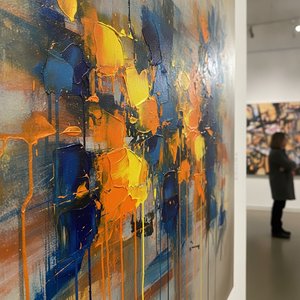
Beyond the Lines: Mastering the High-Impact World of Contemporary Abstraction
Master the high-impact world of contemporary abstraction. Discover how bold colors, textures, and modern movements like Abstract Expressionism can transform your space with premium, high-energy art curated for the design-conscious professional.

Kandinskys 25 Mesterverk: En Reise i Abstrakt Kunst og Fargeharmoni | OriginalUniqueArt.no
Utforsk Wassily Kandinskys 25 mest ikoniske malerier! Oppdag historien bak abstrakt kunst, ekspresjonisme og fargeharmoni. Finn inspirasjon til interiøret – museumskvalitet reproduksjoner på OriginalUniqueArt.com.

Topp 10 mesterverk fra abstrakt ekspresjonisme – Kunst for ditt hjem | OriginalUniqueArt.no
Oppdag de 10 mest ikoniske verkene fra abstrakt ekspresjonisme! Lær historien bak Jackson Pollock, Mark Rothko og andre mestere. Finn kunsttrykk av høy kvalitet for ditt hjem på OriginalUniqueArt.com – museumskvalitet & inspirasjon.

Geometrisk Abstraksjon: Topp 10 Mesterverk for Kunstelskere – OriginalUniqueArt.com
Utforsk de 10 mest innflytelsesrike verkene innen geometrisk abstraksjon! Oppdag historiene bak Mondrian, Kandinsky og Malevich. Finn inspirasjon til interiøret med OriginalUniqueArt.coms eksklusive reproduksjoner – museumskvalitet for ditt hjem. Utforsk samlingen online!
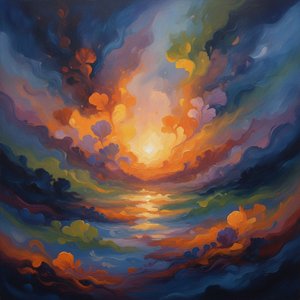
The Soul of Color: A Journey into the Emotional Resonance of Lyrical Abstraction
Embark on a cultural journey through Lyrical Abstraction. Explore how masters like Kandinsky used color and motion to translate emotion into visual poetry. Discover the profound beauty of abstract expressionism and learn to curate emotional resonance in your own art collection.