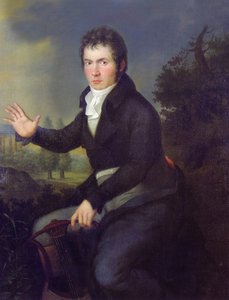
Ontdek het leven & de muziek van Ludwig van Beethoven (1770-1827), een cruciale componist in de overgang van Klassiek naar Romantiek. Ontdek iconische symfonieën zoals nr. 9, Moonlight Sonata en zijn blijvende nalatenschap. #Beethoven
Joseph Karl Stieler (1781-1858) was a German Neoclassical portrait painter renowned for his work at the Bavarian court, including the Gallery of Beauties & iconic portraits like Beethoven. Explore his refined style and historical significance.
A master of Neoclassical portraiture, Joseph Willibrord Mähler is renowned for his profound depictions of Ludwig van Beethoven, capturing the very essence of musical genius through a lens of remarkable sensitivity.
Nestled within the cobblestone heart of Bonn, a city steeped in Prussian grandeur and Rhineland charm, lies the Beethoven-Haus – more than just a museum, it's an immersive journey into the genesis of one of music’s most enduring legacies. This isn’t merely a collection of portraits and manuscripts; it’s a palpable encounter with Ludwig van Beethoven himself, a chance to breathe the same air he breathed as a young boy grappling with genius and tragedy. The building itself, originally constructed in the mid-1700s as a modest townhouse for Johann Baptist Cramer, Bonn’s court organist, whispers stories of aristocratic pasts and quiet reverence – a grounding element that underscores the revolutionary spirit contained within its walls. Careful preservation efforts have meticulously recreated the domestic life surrounding Beethoven's childhood, allowing visitors to almost hear the echoes of his formative years, a crucial context often overlooked in accounts of his later triumphs. The understated elegance of the sandstone façade belies the extraordinary concentration of artistic energy held within, a testament to the city’s role as the cradle of a musical giant. The house, a surprisingly modest structure considering its historical significance, stands as a poignant reminder that even the most monumental legacies often begin in humble surroundings.
A Historical Foundation:
The Beethoven-Haus occupies a building dating back to the mid-18th century, originally serving as a residence for Cramer, Bonn’s court organist. This unassuming townhouse provides a fascinating contrast to the legendary status of its future occupant – a testament to the fact that greatness can emerge from unexpected places.
Architectural Charm:
The building's design reflects the architectural style of the era, characterized by its classical proportions and elegant façade. The sandstone walls, meticulously restored, evoke a sense of timelessness, transporting visitors back to Bonn’s aristocratic past.
A Family Home:
More than just a museum, the Beethoven-Haus strives to recreate the atmosphere of a typical family home during Beethoven's childhood. Details like furniture, textiles, and everyday objects offer a glimpse into the daily life of the young composer and his relatives.
Treasures of a Boyhood: Unveiling Beethoven’s Legacy
The museum’s collection is a breathtaking tapestry woven from the threads of Beethoven’s prodigious talent and intellectual curiosity. Dominating the space are original manuscripts – drafts of symphonies like No. 5 (“Fate”) and No. 9 (“Ode to Joy”), sketches for piano sonatas, and handwritten letters documenting his correspondence with fellow musicians and friends. These documents aren't simply historical relics; they’re intimate windows into Beethoven’s creative mind, revealing the painstaking process of transforming musical concepts into masterpieces. Alongside these manuscripts are reproductions of portraits depicting Beethoven at various stages of his life – a young man brimming with ambition, a celebrated composer commanding respect, and an aging artist battling deafness—each image capturing a facet of his complex personality. A particular highlight is the collection of educational materials used by Beethoven himself during his early years, offering a rare glimpse into the rigorous training that shaped his extraordinary abilities. The museum also showcases works by Nikolaus Lauer, a renowned portrait painter who captured the essence of Bonn’s aristocratic society and whose depictions of Beethoven's family provide invaluable insights into the boy's upbringing. The sheer volume and intimacy of these early creations offer an unparalleled opportunity to understand the roots of his revolutionary style.
Early Manuscripts:
The museum boasts a remarkable collection of Beethoven’s handwritten manuscripts, including drafts of some of his most famous works. These documents provide invaluable insight into his creative process.
Portraiture:
A series of portraits depicting Beethoven at different stages of his life offers a compelling visual narrative of the composer's evolution.
Educational Materials:
The inclusion of Beethoven’s childhood learning materials provides a unique perspective on the development of his musical talent.
The Chamber Music Hall: A Sonic Time Machine
What truly distinguishes the Beethoven-Haus from other museums is its commitment to bringing Beethoven’s music to life within the very space where it originated. The chamber music hall—a beautifully restored room furnished with instruments reminiscent of those Beethoven would have known—hosts regular concerts featuring historic keyboards, recreating the sonic landscape of Beethoven's Bonn. Listening to Schubert’s Piano Trio No. 8 in E-flat Major or Schumann's Piano Quartet No. 1 in C minor performed on instruments crafted during Beethoven’s lifetime is an immersive experience unlike any other – a chance to connect with Beethoven’s music on a visceral level and understand its intended soundscape within the intimate setting of his birthplace. The hall isn’t just a performance space; it's a portal, transporting visitors back in time to witness the birth of musical innovation. The acoustics are carefully calibrated to mimic the conditions of the period, creating an authentic and deeply moving experience for both performers and audience members.
Historical Instruments:
The chamber music hall is equipped with instruments that closely resemble those used by Beethoven during his early years.
Authentic Performances:
Regular concerts featuring historically informed performances bring Beethoven’s music to life in its original context.
Immersive Experience:
The combination of historical instruments, authentic performance practices, and the intimate setting of the hall creates a truly immersive experience for visitors.
Beyond the Walls: Research and Digital Engagement
The Beethoven Archive, housed adjacent to the museum, represents a cornerstone of Beethoven scholarship worldwide. Researchers meticulously analyze manuscripts, decipher musical notations, and reconstruct Beethoven’s life story through biographical accounts and correspondence—a collaborative effort ensuring that Beethoven’s legacy continues to inspire generations of music lovers. Recognizing the importance of accessibility in preserving cultural heritage, Beethoven-Haus Bonn actively engages in digital archiving and research, making its vast collection available online and fostering dialogue between scholars and enthusiasts across geographical boundaries. The museum's website offers a wealth of resources, including high-resolution images of manuscripts, scholarly articles, and interactive exhibits that bring Beethoven’s world to life for a global audience. The ongoing digitization project ensures that future generations will have access to this invaluable collection, furthering our understanding of one of music’s most influential figures.
Beethoven Archive:
The adjacent archive houses an extensive collection of documents related to Beethoven's life and work.
Digital Resources:
The museum’s website provides access to a wealth of digital resources, including images, articles, and interactive exhibits.
Scholarly Collaboration:
The museum actively collaborates with scholars around the world to promote research and understanding of Beethoven's legacy.
A Singular Resonance: Why Visit Beethoven-Haus Bonn?
A visit to Beethoven-Haus Bonn transcends mere sightseeing; it’s an encounter with the genesis of musical innovation—a pilgrimage to the birthplace of one of history’s most revered composers. The museum’s deliberate focus on Beethoven’s early life and influences – often overshadowed by accounts of his later triumphs – provides crucial insight into the foundations upon which his genius was built. As you wander through its rooms, surrounded by echoes of Bonn’s past and bathed in the glow of musical remembrance, you'll grasp why Beethoven-Haus Bonn remains a beacon for those captivated by art, history, and the enduring power of human creativity—a place where Beethoven’s spirit continues to resonate powerfully into the 21st century.
Door de redactie van OriginalUniqueArt.com
Kunstquiz
Per vraag is er slechts één goed antwoord.
Vraag 1:
Wat is de primaire focus van het Beethoven-Haus Bonn?
Vraag 2:
In welke stad is het Beethoven-Haus Bonn gevestigd?
Vraag 3:
Welke van de volgende beschrijft het best het gebouw dat huisvesting biedt voor het Beethoven-Haus?
Vraag 4:
Wat biedt de kamerzaal aan?
Vraag 5:
Welke aspect van Beethoven’s ontwikkeling wordt in het museum benadrukt?
Discover the technical excellence of OriginalUniqueArt.com's premium Giclée prints. Featuring 12-color archival pigments and museum-grade canvas, our prints offer unparalleled vivid detail and longevity for the discerning art collector seeking world-class reproductions.
OStudio-assistentOnline · reageert binnen een minuut
Hoi! Ik kan je helpen bij het kiezen van een kunstwerk, het volgen van een bestelling of het beantwoorden van vragen over de garantie. Waarmee kan ik je van dienst zijn?