Portret van Gerard van Spaendonck

Schilderijen van Gerard van Spaendonck: De 17 bekendste, door de ogen van een galerie

Bijgewerkt in november 2026 · gerangschikt op basis van onze populariteitsscore (zoekopdrachten, bezoeken en bestellingen per kunstwerk) · 18 werken van Gerard van Spaendonck in onze catalogus

Kortom

In het oog van de galerie is het beroemdste schilderij van Gerard van Spaendonck Miniature still life with flowers in a stone vase on a carved pedestal, with a basket of flowers and a nest. Grapes with Insects on a Marble Top (1791) en Flower Still-life with an Alabaster Vase (1783) maken het trio compleet dat elk oog herkent. Van de 18 werken van Gerard van Spaendonck in onze catalogus presenteert de galerie hieronder de 17 bekendste werken, elk een origineel met de jaartal, het museum en wat het uniek maakt.

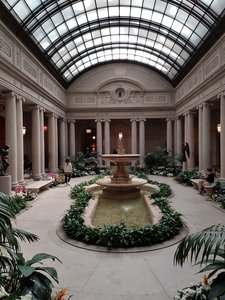
1746 – 1822, Tilburg Rococo Meeste werken: The Frick Collection

De top 10 schilderijen van Gerard van Spaendonck in de galerie

2
Grapes with Insects on a Marble Top (1791) door Gerard van Spaendonck

Grapes with Insects on a Marble Top

1791 · Oil · The Frick Collection, New York City

To gaze upon Gerard van Spaendonck's "Grapes with Insects on a Marble Top" is to step into a moment suspended between lush abundance and the quiet drama of natural life. This exquisite still life, dating from 1791, transcends a mere depiction of fruit; it is a vibrant meditation on the cycle of growth, decay, and enduring beauty. The composition immediately draws the eye to the generous clusters of grapes, rendered…

3
Flower Still-life with an Alabaster Vase (1783) door Gerard van Spaendonck

Flower Still-life with an Alabaster Vase

1783 · Oil On Canvas · Rijksmuseum, Amsterdam

Flower Still-life with an Alabaster Vase is a notable oil on canvas by Gerard van Spaendonck. Created in 1783, this work is also recognized by the title Still Life of Flowers and Alabaster Vase. The artist, Gerard van Spaendonck, was a figure of significant standing in the Parisian art world, having been appointed as a miniature painter at the court of Louis XVI. His ability to render botanical forms with…

Schilderijen van Gerard van Spaendonck, gerangschikt van 11 tot 17

De onderwerpen die de aandacht van Gerard van Spaendonck troffen

De vier onderwerpen die het meest voorkomen in deze originelen, elk met zijn mooiste voorbeeld.

De musea waar de originele werken van Gerard van Spaendonck worden bewaard

De 7 musea met de meeste schilderijen op deze pagina.

Museum Stad Werken van Gerard van Spaendonck Schilderijen uit deze lijst
The Frick Collection, New York CityThe Frick Collection New York City 1 Grapes with Insects on a Marble Top
Rijksmuseum, AmsterdamRijksmuseum Amsterdam 1 Flower Still-life with an Alabaster Vase
Noordbrabants Museum, 's-HertogenboschNoordbrabants Museum 's-Hertogenbosch 1 Des fleurs dans un vase en albâtre avec des fruits posés sur un plateau en marbre
Het Prinsenhof, DelftHet Prinsenhof Delft 1 Still Life with Fruit
Bowes Museum, Barnard CastleBowes Museum Barnard Castle 1 Flowers And Fruit
Fitzwilliam MuseumFitzwilliam Museum 1 A Vase Of Flowers
Ashmolean Museum, OxfordAshmolean Museum Oxford 1 Vase of Flowers

Gerard van Spaendonck, één iconisch schilderij per decennium

Werken per decennium

Kies een decennium om het origineel te zien dat dit tijdperk definieert.

Schilderijen van Gerard van Spaendonck: de galerie geeft antwoord

Welk schilderij van Gerard van Spaendonck is het beroemdste van allemaal?Onthul het antwoord

Miniature still life with flowers in a stone vase on a carved pedestal, with a basket of flowers and a nest. Grapes with Insects on a Marble Top (1791) en Flower Still-life with an Alabaster Vase (1783) volgen.

Wat zijn de top 10 schilderijen van Gerard van Spaendonck?Onthul het antwoord

Miniature still life with flowers in a stone vase on a carved pedestal, with a basket of flowers and a nest, Grapes with Insects on a Marble Top, Flower Still-life with an Alabaster Vase, Still-life With Flowers And Insects On Marble Plinth, Des fleurs dans un vase en albâtre avec des fruits posés sur un plateau en marbre, Still Life with Fruit, Tulip gardens, Flowers And Fruit, Bouquet en A Vase Of Flowers. De bovenstaande ranglijst vermeldt het jaar en het museum van elk werk.

Hoeveel werken heeft Gerard van Spaendonck gemaakt?Onthul het antwoord

Onze catalogus bevat 18 werken van Gerard van Spaendonck, daterend van 1781 tot 1820.

Waar hangen de beroemdste originele werken van Gerard van Spaendonck?Onthul het antwoord

Voornamelijk in The Frick Collection (New York City), Rijksmuseum (Amsterdam) en Noordbrabants Museum ('s-Hertogenbosch). De bovenstaande museumtabel bevat een volledig overzicht.

Wanneer creëerde Gerard van Spaendonck de beroemdste schilderijen?Onthul het antwoord

In 1780s: 2 van de 17 werken op deze pagina werden toen gemaakt, waaronder Flower Still-life with an Alabaster Vase.

Wat zijn de vroegste en laatste beroemde werken van Gerard van Spaendonck?Onthul het antwoord

Op deze pagina is het vroegste Des fleurs dans un vase en albâtre avec des fruits posés sur un plateau en marbre (1781) en het laatste Still Life with Fruit (1820).

Welke onderwerpen keerde Gerard van Spaendonck het vaakst naar terug?Onthul het antwoord

Flowers (11), Vase (4) en Life (4), verspreid over de 17 werken op deze pagina.

In welk medium werkte Gerard van Spaendonck het meest?Onthul het antwoord

Oil, voor 2 van de 17 werken op deze pagina.

Bij welke stroming wordt Gerard van Spaendonck gerekend?Onthul het antwoord

Rococo, te oordelen aan de originelen op deze pagina.

Gerard van Spaendonck: de kunstenaar

Gerard van Spaendonck: A Life in Bloom

Early Life and Education

  • Born: 1746 in Tilburg, Netherlands.
  • Van Spaendonck came from an artistic family; his younger brother, Cornelis van Spaendonck, also became a successful painter.
  • In the 1760s, he began his formal training with decorative painter Willem Jacob Herreyns (also known as Guillaume-Jacques Herreyns) in Antwerp. This early exposure shaped his meticulous attention to detail and refined technique.

Move to Paris and Royal Appointment

  • In 1769, Van Spaendonck relocated to Paris, a pivotal move that launched his international career.
  • 1774: He was appointed as a miniature painter at the court of Louis XVI, marking a significant step in his recognition and patronage.
  • This position allowed him access to aristocratic circles and further refined his skills in delicate floral depictions.

Professor at Jardin des Plantes & Académie Membership

  • 1780: Van Spaendonck succeeded Madeleine Françoise Basseporte as professor of floral painting at the prestigious Jardin des Plantes.
  • Shortly after, he was elected a member of the Académie des Beaux-Arts, solidifying his status within the French art establishment.
  • He became an influential teacher, mentoring notable artists like Pierre-Joseph Redouté and Henriette Vincent.

Artistic Style & Major Works

  • Van Spaendonck excelled in both oil painting and watercolor techniques.
  • He contributed over fifty works to Les Vélins du Roi, a renowned collection of botanical watercolors commissioned by the French royal family. These pieces demonstrate his exceptional skill in capturing the nuances of floral forms.
  • Fleurs Dessinees d'apres Nature (Flowers Drawn from Life): Published between 1799 and 1801, this series of twenty-four engraved plates served as a valuable resource for students of floral painting. It remains a highly treasured book on the subject today.
  • His paintings often feature intricate details of flowers alongside insects, adding another layer of naturalism to his compositions.

Recognition and Legacy

  • 1788: Appointed as an advisor to the Académie.
  • 1795: Became a founding member of the Institut de France.
  • 1804: Received the Légion d'honneur and was ennobled by Napoleon Bonaparte, acknowledging his contributions to French art and culture.
  • Van Spaendonck died in Paris in 1822 and is buried in Père Lachaise Cemetery.
  • Historical Significance: Gerard van Spaendonck’s meticulous botanical illustrations and refined floral paintings played a crucial role in the development of botanical art. His work bridged the gap between scientific accuracy and artistic beauty, influencing generations of artists and botanists alike.