Portrait of Donatello

Donatello Paintings: The 100 Most Famous, Through a Gallery's Eye

Updated oktober 2026 · ranked by our popularity score (searches, visits and orders for each work) · 148 works by Donatello in our catalogue

In short

To the gallery's eye, Donatello's most famous painting is Madonna and Child between St Francis and St Anthony (1448), whose original hangs in the Basiliek van Sint-Antonius, Padua. Cantoria (1439) and Entombment (1447) complete the trio every eye recognises. Of the 148 works by Donatello in our catalog, the gallery presents the 100 most famous below, each original with its year, its museum and what makes it unique.

1386 – 1466, Florence Vroege renaissance Most works: Museo dell'Opera del Duomo

The gallery's top 10 Donatello paintings

1
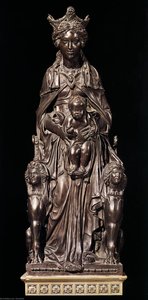
Madonna and Child between St Francis and St Anthony (1448) by Donatello

Madonna and Child between St Francis and St Anthony

1448 · Bronze · Basiliek van Sint-Antonius, Padua

In the heart of the Italian Renaissance, where the shadows of antiquity met the burgeoning light of humanism, Donatello breathed life into metal with his masterpiece, Madonna and Child between St Francis and St Anthony. Created around 1448, this profound bronze sculpture serves as a window into a period of unparalleled spiritual and artistic transformation. The composition is a masterclass in symmetrical grace; at its center, the Virgin Mary cradles…

2
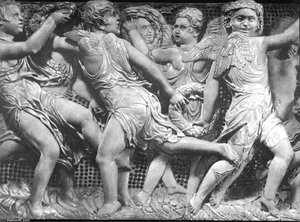
Cantoria (1439) by Donatello

Cantoria

1439 · Marble · Museo dell'Opera del Duomo, Florence

To stand before Donatello’s Cantoria is to witness the very moment the Renaissance found its pulse. Completed around 1439 for the Cathedral of Santa Maria del Fiore in Florence, this monumental marble relief is far more than a functional singers' gallery; it is a breathtaking explosion of movement and spiritual ecstasy. While much of the era’s sculpture remained tethered to the static, formal traditions of the Byzantine style, Donatello broke…

3
Entombment (1447) by Donatello

Entombment

1447 · Oil On Canvas · Basiliek van Sint-Antonius, Padua

To stand before Donatello's depiction of the Entombment is to be enveloped in an atmosphere so thick with grief, it feels almost palpable. This scene transcends mere narrative illustration; it is a profound meditation on loss, sacrifice, and the solemn weight of human devotion. The composition draws the viewer into the immediate aftermath of unimaginable tragedy. Jesus Christ lies within the tomb, not merely as a subject, but as the…

4
Miracle of the Repentant Son (1447) by Donatello

Miracle of the Repentant Son

1447 · Acrylic · Basiliek van Sint-Antonius, Padua

Donatello’s bronze sculpture, "Miracle of the Repentant Son," transcends mere representation; it's a profound meditation on faith, remorse, and divine grace. Created in 1447 during the apex of his artistic maturity, this work embodies the burgeoning humanism and emotional depth that defined the Early Renaissance in Florence. More than just a depiction of a biblical miracle – the restoration of a severed limb by St. Anthony – it’s a study…

5
Crucifix (1412) by Donatello

Crucifix

1412 · Acrylic On Canvas · Santa Croce, Florence

Donatello's 1412 Crucifix, housed within the Basilica of Santa Croce in Florence, isn’t merely a depiction of Christ on the cross; it’s a visceral experience. This early Renaissance masterpiece transcends simple representation, plunging the viewer into the heart of Christian theology and embodying the profound tension between suffering and redemption. Crafted from richly-toned pearwood, the sculpture immediately commands attention with its remarkably realistic portrayal of the human form – a…

6
Annunciation (1435) by Donatello

Annunciation

1435 · Acrylic On Canvas · Santa Croce, Florence

Donatello’s 1435 Annunciation, housed within the Basilica di Santa Croce in Florence, isn’t merely a depiction of a biblical moment; it’s a profound meditation on grace, humility, and the transformative power of faith. Commissioned during a pivotal period of artistic innovation – bridging the Gothic and Renaissance eras – this sculpture embodies Donatello's revolutionary approach to humanism and his masterful command of classical forms. The scene unfolds with an arresting…

7
St George (detail) (1416) by Donatello

St George (detail)

1416 · Marble · Museo Nazionale del Bargello, Florence

The marble figure of St. George, sculpted by Donatello around 1416, stands as more than just a depiction of a saint; it's a pivotal moment in the evolution of Renaissance sculpture – a testament to the artist’s innovative spirit and his profound understanding of human form and narrative. Originally gracing the north wall of Orsanmichele, Florence’s imposing guildhall, this statue immediately captivated viewers with its dynamic energy and strikingly realistic…

8
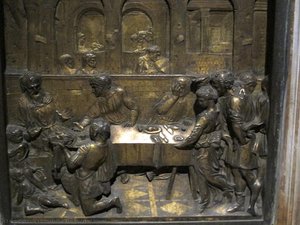
Herod's Banquet (1427) by Donatello

Herod's Banquet

1427 · Bronze · Baptisterium, Siena

Donatello's Herod’s Banquet, crafted around 1427 for the baptismal font of Siena’s San Giovanni Baptistery, isn’t merely a depiction of a biblical episode; it’s a profound meditation on power, betrayal, and the chilling consequences of unchecked ambition. Commissioned amidst the competitive fervor of Renaissance Florence and Siena, this bronze relief stands as a testament to Donatello's burgeoning mastery – a pivotal work that showcases his innovative approach to sculpture and…

9
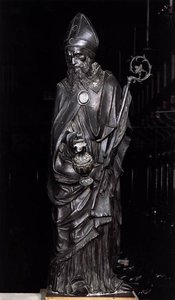
Bearded Prophet (1418) by Donatello

Bearded Prophet

1418 · Bronze · Museo dell'Opera del Duomo, Florence

In the heart of the Florentine Renaissance, where the shadows of antiquity began to dance with the light of new humanism, Donatello breathed life into bronze with his Bearded Prophet. Created around 1418, this monumental figure is far more than a mere sculpture; it is a profound meditation on the weight of divine knowledge and the solemnity of faith. As one gazes upon the weathered surface of the bronze, there…

10
St. John the Evangelist (1415) by Donatello

St. John the Evangelist

1415 · Marble

St. John the Evangelist is a marble sculpture created by the artist Donatello. Dated 1410, this work depicts one of the twelve apostles of Jesus. The subject is rendered as an elderly man, presented with a face etched with lines and a gaze that suggests a state of contemplation and wisdom. This choice of representation presents the figure as a philosopher-like individual.

Donatello paintings, ranked 11 to 100

11St Mark (1411) by DonatelloSt Mark1411 · Orsanmichele 12Prophet with Scroll (detail) (1418) by DonatelloProphet with Scroll (detail)1418 · Museo dell'Opera del Duomo 13St John on Patmos (1428) by DonatelloSt John on Patmos1428 14David (detail) (1409) by DonatelloDavid (detail)1409 · Museo Nazionale del Bargello 15Pietà (1447) by DonatelloPietà1447 · Basiliek van Sint-Antonius 16Pulpit (on the right) (1465) by DonatelloPulpit (on the right)1465 · Basilica di San Lorenzo 17Prophet Jeremiah (1423) by DonatelloProphet Jeremiah1423 · Museo dell'Opera del Duomo 18Prophet Habakkuk (1427) by DonatelloProphet Habakkuk1427 · Museo dell'Opera del Duomo 19Pulpit (1438) by DonatelloPulpit1438 · Museum of the Cathedral 20Miracle of the New-born Child (detail) (1447) by DonatelloMiracle of the New-born Child (detail)1447 · Basiliek van Sint-Antonius 21Miracle of the Ass (1447) by DonatelloMiracle of the Ass1447 · Basiliek van Sint-Antonius 22Cantoria (detail) (1439) by DonatelloCantoria (detail)1439 · Museo dell'Opera del Duomo 23Evangelist Luke (1428) by DonatelloEvangelist Luke1428 24Pulpit (detail) (1438) by DonatelloPulpit (detail)1438 · Museo dell'Opera del Duomo 25Christ before Pilate and Caiaphas (1460) by DonatelloChrist before Pilate and Caiaphas1460 · Basilica di San Lorenzo 26David (1409) by DonatelloDavid1409 · Museo Nazionale del Bargello 27St George and the Dragon (1416) by DonatelloSt George and the Dragon1416 · Museo Nazionale del Bargello 28Saint George (1417) by DonatelloSaint George1417 · Museo Nazionale del Bargello 29St John the Evangelist (detail) (1410) by DonatelloSt John the Evangelist (detail)1410 · Museo dell'Opera del Duomo 30St John the Evangelist (1410) by DonatelloSt John the Evangelist1410 · Museo dell'Opera del Duomo 31Deposition (detail) (1465) by DonatelloDeposition (detail)1465 · Basilica di San Lorenzo 32Equestrian Statue of Gattamelata (8) (1447) by DonatelloEquestrian Statue of Gattamelata (8)1447 · Piazza del Santo 33North pulpit (1460) by DonatelloNorth pulpit1460 · Basilica di San Lorenzo 34Prophet (left of the Porta della Mandorla) (1406) by DonatelloProphet (left of the Porta della Mandorla)1406 · Duomo di Firenze 35David (1430) by DonatelloDavid1430 · Museo Nazionale del Bargello 36Tombstone of Bishop Giovanni Pecci (1426) by DonatelloTombstone of Bishop Giovanni Pecci1426 · Duomo 37Miracle of the Avaricious Man's Heart (1447) by DonatelloMiracle of the Avaricious Man's Heart1447 · Basiliek van Sint-Antonius 38Allegoric Figure of a Boy (Atys), rear view (1430) by DonatelloAllegoric Figure of a Boy (Atys), rear view1430 · Museo Nazionale del Bargello 39St George (detail) (1416) by DonatelloSt George (detail)1416 · Museo Nazionale del Bargello 40Cantoria (detail) (1439) by DonatelloCantoria (detail)1439 · Museo dell'Opera del Duomo 41Het beeld van Gattamelata (1447) by DonatelloHet beeld van Gattamelata1447 · Piazza del Santo 42Equestrian Statue of Gattamelata (1447) by DonatelloEquestrian Statue of Gattamelata1447 · Piazza del Santo 43Marzocco (1419) by DonatelloMarzocco1419 · Museo Nazionale del Bargello 44Prophet Jeremiah (detail) (1423) by DonatelloProphet Jeremiah (detail)1423 · Museo dell'Opera del Duomo 45Cantoria (detail) (1439) by DonatelloCantoria (detail)1439 · Museo dell'Opera del Duomo 46Herod's Banquet (detail) (1427) by DonatelloHerod's Banquet (detail)1427 · Baptisterium 47Miracle of the Avaricious Man's Heart (detail) (1447) by DonatelloMiracle of the Avaricious Man's Heart (detail)1447 · Basiliek van Sint-Antonius 48Bearded Prophet (detail) (1418) by DonatelloBearded Prophet (detail)1418 · Museo dell'Opera del Duomo 49Cantoria (detail) (1439) by DonatelloCantoria (detail)1439 · Museo dell'Opera del Duomo 50Prophet Jeremiah (1423) by DonatelloProphet Jeremiah1423 · Museo dell'Opera del Duomo 51South pulpit (1460) by DonatelloSouth pulpit1460 · Basilica di San Lorenzo 52Deposition (1465) by DonatelloDeposition1465 · Basilica di San Lorenzo 53St George (1416) by DonatelloSt George1416 · Museo Nazionale del Bargello 54Cantoria (1439) by DonatelloCantoria1439 · Museo dell'Opera del Duomo 55Faith (1427) by DonatelloFaith1427 · Baptisterium 56Old Sacristy (1428) by DonatelloOld Sacristy1428 · Basilica di San Lorenzo 57Annunciation (detail) (1435) by DonatelloAnnunciation (detail)1435 · Santa Croce 58Pulpit (on the left) (1465) by DonatelloPulpit (on the left)1465 · Basilica di San Lorenzo 59Prophet with Scroll (1418) by DonatelloProphet with Scroll1418 · Museo dell'Opera del Duomo 60St John the Evangelist (1410) by DonatelloSt John the Evangelist1410 · Museo dell'Opera del Duomo 61Prophet Habakkuk (1427) by DonatelloProphet Habakkuk1427 · Museo dell'Opera del Duomo 62Entombment (1465) by DonatelloEntombment1465 · Basilica di San Lorenzo 63Cantoria (9) (1439) by DonatelloCantoria (9)1439 · Museo dell'Opera del Duomo 64Lamentation over the Dead Christ by DonatelloLamentation over the Dead ChristVictoria and Albert Museum 65St George (1416) by DonatelloSt George1416 · Museo Nazionale del Bargello 66St John the Baptist (1438) by DonatelloSt John the Baptist1438 · Basilica di Santa Maria Gloriosa dei Frari 67Madonna with the Child (1448) by DonatelloMadonna with the Child1448 · Basiliek van Sint-Antonius 68Chellini Madonna, verso by DonatelloChellini Madonna, versoVictoria and Albert Museum 69St Cosmas and St Damian (1428) by DonatelloSt Cosmas and St Damian1428 70St Mary Magdalen (1457) by DonatelloSt Mary Magdalen1457 · Museo dell'Opera del Duomo 71Bust of Niccolo da Uzzano (1430) by DonatelloBust of Niccolo da Uzzano1430 · Museo Nazionale del Bargello 72Crucifixion (1465) by DonatelloCrucifixion1465 · Museo Nazionale del Bargello 73Delivery of the Keys to St Peter and the Ascension of Christ (1430) by DonatelloDelivery of the Keys to St Peter and the Ascension of Christ1430 74Prophet Habbakuk (1426) by DonatelloProphet Habbakuk1426 75The Feast of Herod (1427) by DonatelloThe Feast of Herod1427 76St Stephen and St Lawrence (1428) by DonatelloSt Stephen and St Lawrence1428 77Evangelist Mark (1428) by DonatelloEvangelist Mark1428 78Herod's Banquet (1435) by DonatelloHerod's Banquet1435 · Palais des Beaux-Arts de Lille 79Pulpit (1438) by DonatelloPulpit1438 · Cathedral 80Agony in the Garden (1465) by DonatelloAgony in the Garden1465 · Basilica di San Lorenzo 81Funeral Monument to John XXIII (detail) (1435) by DonatelloFuneral Monument to John XXIII (detail)1435 · Baptistery van San Giovanni 82Chellini Madonna, recto by DonatelloChellini Madonna, rectoVictoria and Albert Museum 83Hope (1427) by DonatelloHope1427 · Baptisterium 84St Mark (1411) by DonatelloSt Mark1411 · Orsanmichele 85St Louis (1413) by DonatelloSt Louis1413 · Museo dell'Opera di Santa Croce 86St Rossore (1425) by DonatelloSt Rossore1425 · Museo Nazionale di San Matteo 87Putti of the trabeation (1428) by DonatelloPutti of the trabeation1428 88The Sacrifice of Isaac (1418) by DonatelloThe Sacrifice of Isaac1418 · Museo dell'Opera del Duomo 89Candelabra Angels (1430) by DonatelloCandelabra Angels1430 90Musician Angels (1447) by DonatelloMusician Angels1447 · Basiliek van Sint-Antonius 91Virgin and Child (1420) by DonatelloVirgin and Child1420 · Museo Bardini 92Door with the representation of Apostles (1440) by DonatelloDoor with the representation of Apostles1440 93Door with the representation of Martyrs (1440) by DonatelloDoor with the representation of Martyrs1440 94Funeral Monument to John XXIII (detail) (1435) by DonatelloFuneral Monument to John XXIII (detail)1435 · Baptistery van San Giovanni 95Miracle of the Ass (detail) (1447) by DonatelloMiracle of the Ass (detail)1447 · Basiliek van Sint-Antonius 96Funeral Monument to John XXIII (detail) (1435) by DonatelloFuneral Monument to John XXIII (detail)1435 · Baptistery van San Giovanni 97Equestrian Statue of Gattamelata (9) (1447) by DonatelloEquestrian Statue of Gattamelata (9)1447 · Piazza del Santo 98Equestrian Statue of Gattamelata (detail) (1447) by DonatelloEquestrian Statue of Gattamelata (detail)1447 · Piazza del Santo 99Equestrian Statue of Gattamelata (detail) (1447) by DonatelloEquestrian Statue of Gattamelata (detail)1447 · Piazza del Santo 100Protome Carafa (1465) by DonatelloProtome Carafa1465

Donatello's famous paintings, period by period

The subjects that held Donatello's eye

The four subjects that come back most often in these originals, each with its finest example.

The museums that keep Donatello's originals

The 8 museums that hold the most of the paintings on this page.

Museum City Works by Donatello Paintings from this list
Museo dell'Opera del Duomo, FlorenceMuseo dell'Opera del Duomo Florence 22 Cantoria, Bearded Prophet, Prophet with Scroll (detail)
Museo Nazionale del Bargello, FlorenceMuseo Nazionale del Bargello Florence 13 St George (detail), David (detail), David
Basiliek van Sint-Antonius, PaduaBasiliek van Sint-Antonius Padua 12 Madonna and Child between St Francis and St Anthony, Entombment, Miracle of the Repentant Son
Basilica di San Lorenzo, FlorenceBasilica di San Lorenzo Florence 12 Pulpit (on the right), Christ before Pilate and Caiaphas, Deposition (detail)
Piazza del Santo, PaduaPiazza del Santo Padua 6 Equestrian Statue of Gattamelata (8), Het beeld van Gattamelata, Equestrian Statue of Gattamelata
Baptisterium, SienaBaptisterium Siena 4 Herod's Banquet, Herod's Banquet (detail), Faith
Baptistery van San Giovanni, FlorenceBaptistery van San Giovanni Florence 4 Funeral Monument to John XXIII (detail), Funeral Monument to John XXIII (detail), Funeral Monument to John XXIII (detail)
Santa Croce, FlorenceSanta Croce Florence 3 Crucifix, Annunciation, Annunciation (detail)

Donatello, one signature painting per decade

Works per decade

Pick a decade to see the original that defines it.

Donatello's paintings: the gallery answers

Which Donatello painting is the most famous of all?Reveal the answer

Madonna and Child between St Francis and St Anthony (1448), Basiliek van Sint-Antonius, Padua. Cantoria (1439) and Entombment (1447) come next.

How old was Donatello on completing Madonna and Child between St Francis and St Anthony?Reveal the answer

62 years old: Madonna and Child between St Francis and St Anthony dates from 1448, and Donatello was born in 1386.

Which are Donatello's top 10 paintings?Reveal the answer

Madonna and Child between St Francis and St Anthony, Cantoria, Entombment, Miracle of the Repentant Son, Crucifix, Annunciation, St George (detail), Herod's Banquet, Bearded Prophet and St. John the Evangelist. The ranking above gives each one's year and museum.

How many works did Donatello create?Reveal the answer

Our catalog holds 148 works by Donatello, dated from 1406 to 1465.

Where do Donatello's most famous originals hang?Reveal the answer

Mostly in Museo dell'Opera del Duomo (Florence), Museo Nazionale del Bargello (Florence) and Basiliek van Sint-Antonius (Padua). The museum table above lists them all.

When did Donatello create the most famous paintings?Reveal the answer

In 1430s: 22 of the 100 works on this page were made then, Cantoria among them.

Which are Donatello's earliest and latest famous works?Reveal the answer

On this page, the earliest is Prophet (left of the Porta della Mandorla) (1406) and the latest Pulpit (on the right) (1465).

Which subjects did Donatello return to most?Reveal the answer

Sculpture (34), Marble (17) and Florence (12), across the 100 works on this page.

Which medium did Donatello work in most?Reveal the answer

Marble, for 27 of the 100 works on this page.

Which movement is Donatello associated with?Reveal the answer

Vroege renaissance, judging by the originals on this page.

Which Donatello originals does the Museo dell'Opera del Duomo hold?Reveal the answer

Cantoria, Bearded Prophet and Prophet with Scroll (detail): the Museo dell'Opera del Duomo, Florence holds 21 of the works on this page.

Can I have a Donatello painting reproduced by hand?Reveal the answer

Yes, as a reproduction: the original stays in its museum, but any painting on this page can be painted by hand for you, made to order one at a time, from the painting's own page.

Donatello: the artist

Het Leven en de Identiteit van Donatello

Geboren als Donato di Niccolò di Betto Bardi, bracht de man die de geschiedenis kent als Donatello zijn leven door binnen de muren van Florence, Italië. Hij kwam de wereld binnen rond 1386, een tijdperk waarin de stad begon haar eigen imago te herontwerpen door middel van steen en brons. Zijn aanwezigheid in het Florentijnse landschap was constant, gekenmerkt door een vaste hand en een focus op de fysieke realiteit van zijn onderwerpen. Hij was een beeldhouwer uit de Italiaanse Renaissance die de zwaarte van de materialen die hij hanteerde volledig begreep, van de onverzettelijkheid van marmer tot de vloeibaarheid van was.

Zijn werk was geen eenzame zoektocht naar perfectie, maar eerder een reeks reacties op de behoeften van zijn tijd. Hij bewoog zich door de straten van Florence, werkte in diverse media en liet een spoor na van figuren die een specifieke, menselijke aanwezigheid vingen. Hoewel hij bekend stond als een vriendelijk man die geliefd was bij zijn naasten, had hij moeite met de praktische kant van het runnen van een onderneming. Hij nam vaak meer werk aan dan zijn handen tijdig konden voltooien, waarbij hij de laatste hand soms aan anderen overliet of stukken later leverde dan verwacht. Deze neiging tot overmatige toewijding suggereert een man die meer bezorgd was door de daad van het creëren dan door het beheer van een atelier.

Donatello overleed in Florence op 13 december 1466. Hij liet een oeuvre na dat de manier waarop beeldhouwers de menselijke vorm benaderden fundamenteel veranderde, door weg te bewegen van de rigide tradities uit het verleden naar iets dat aardsder en expressiever was. Zijn leven was onlosmakelijk verbonden met de stad, en zijn identiteit blijft onscheidbaar van de Florentijnse bodem waar hij leefde en werkte.

Het Vroege Leven en de Artistieke Vorming

Geboren in het hart van Florence, Italië, groeide Donatello op in een stad die fungeerde als het kloppende epicentrum van de ontluikende Renaissance. Deze omgeving bood de essentiële culturele energie die nodig was voor zijn artistieke ontwikkeling. Hij bracht zijn vroege jaren door, volledig ondergedompeld in de lokale sfeer, waarin de verschuiving weg van de rigide middeleeuwse tradities al langzaam vorm begon te krijgen. Zijn verbondenheid met het Florentijnse landschap was diepgaand; de evoluerende waarden van de stad zouden zijn vroege benadering van vorm en figuur onherroepelijk vormgeven.

Zijn opleiding omvatte een nauwgezette studie van de klassieke beeldhouwkunst. Deze focus op de oudheid hielp hem bij het ontwikkelen van een nieuwe stijl die de nadruk legde op realisme en humanisme. Voordat hij zijn eigen unieke stem vond, leerde hij de Internationale Gotische stijl van Lorenzo Ghiberti. Deze leerperiode stelde hem in staat om de technische vaardigheden van zijn ambacht volledig te beheersen, nog voordat hij begon af te wijken van die gevestigde tradities. Hij experimenteerde met diverse materialen, waaronder steen, brons, hout, klei, stucco en was, waarbij hij vaak op inventieve wijze glas gebruikte om specifieke, suggestieve effecten te bereiken.

Mecenassen, Atelier en Opdrachten

De handen van Donatello waren zelden leeg. Hij had de neiging om meer werk aan te nemen dan zijn agenda kon bijhouden, een eigenschap die er soms toe leidde dat projecten te laat werden voltooid of dat hij ze moest uitbesteden aan anderen om ze af te maken. Deze enorme werkdruk vereiste een constante aanwezigheid in zijn atelier, waar hij zij aan zij werkte met verschillende assistenten. Een groep van vier was een gebruikelijk aantal voor zijn studio, een noodzakelijke ondersteuning om de fysieke eisen van het bewerken van steen, brons en klei te kunnen beheersen.

De familie Medici bood hem een gestage steun en bood het soort mecenaat dat hem in staat stelde om de verschillende fasen van zijn leven artistiek te doorlopen. Zijn invloed reikte echter veel verder dan de straten van Florence; hij reisde naar Rome, Padua en Siena om daar aan prestigieuze opdrachten te werken. Deze constante beweging tussen steden betekende dat zijn artistieke praktijk nooit beperkt bleef tot één enkele plek, aangezien hij zijn unieke methoden en zijn assistenten meenam naar de diverse culturele centra van die tijd.

Innovatieve Technieken en Artistieke Stijl

De benadering van Donatello ten aanzien van de beeldhouwkunst markeerde een radicale breuk met de rigide tradities van de Internationale Gotiek. Hij ontwierp een stijl die de vroege Renaissance zou definiëren, een stijl die de voorkeur gaf aan een geheel nieuwe vorm van realisme. Dit werd vaak bereikt door een diepgaand begrip van de menselijke anatomie en de subtiele manier waarop licht op een oppervlak valt. Hij liet zich niet beperken door één enkel medium, maar experimenteerde met steen, brons, hout, klei, stucco en was. Hij vond zelfs inventieve manieren om glas te gebruiken om een verfijnd detail aan zijn figuren toe te voegen.

Een van zijn meest specifieke technische bijdragen aan de kunstgeschiedenis was de ontwikkeling van het rilievo stiacciato. Dit is een zeer ondiep type bas-reliëf, waarbij het snijwerk zo subtiel is dat het een illusie van diepte creëert door middel van minuscule variaties in dikte. Door deze methode te hanteren, slaagde hij erin om perspectief en afstand te suggereren op een vrijwel vlak oppervlak. Zijn werk toont vaak een fascinerende spanning tussen het fysieke gewicht van het materiaal en de expressieve beweging van het onderwerp; hij kon marmer doen lijken op de zachtheid van de menselijke huid, of brons een gevoel van zware, gespierde energie verlenen.

  • David (brons)
  • Equestriaal monument van Gattamelata
  • Sint-Joris (marmer)

Meesterwerken in Beeldhouwkunst

In 1416 voltooide hij Sint-Joris, een marmeren figuur die een gevoel van vastberaden moed in zich draagt. Het beeldhouwwerk toont de ridder in harnas, die op de bal van zijn voet balanceert in plaats van in een traditionele contrapposto te staan. Er is een tastbaar besef van het gespierde lichaam dat onder het oppervlak van de steen werkt. Dit werk was een van de vele opdrachten van de Florentijnse gilden om de externe nissen van de Orsanmichele kerk te versieren.

Zijn bronzen David blijft een cruciaal moment in de geschiedenis van de beeldhouwkunst. Het is het eerste vrijstaande naakte mannelijke beeldhouwwerk dat sinds de oudheid is vervaardigd. De figuur wordt afgebeeld met een raadselachtige glimlach, terwijl hij met één voet op het afgehakte hoofd van Goliath staat. Hoewel de marmeren versie van dit onderwerp een vroege opdracht was, staat de bronzen versie bekend om haar delicate, androgyne fysiek en de manier waarop de naaktheid van de jongeling contrasteert met het zware zwaard in zijn hand.

Later in zijn carrière bewoog hij zich richting andere materialen en schaalvergrotingen. Het Ruiterstandbeeld van Gattamelata, vervaardigd in 1453, is een massief bronzen werk in Padua. Rond 1440 creëerde hij de Boetvaardige Magdalena, een houten sculptuur gesneden uit witte populier. Deze figuur is mager en uitgeput, een breuk met de typische afbeeldingen van een mooie jonge vrouw. Het snijwerk is rauw en uiterst gedetailleerd, wat een heel andere kant van zijn technische meesterschap laat zien.

  • Sint-Joris, 1416
  • David (brons), ca. 1440
  • Boetvaardige Magdalena, ca. 1440
  • Ruiterstandbeeld van Gattamelata, 1453

Erfenis en Artistieke Invloed

De vernieuwende benadering van Donatello met betrekking tot vorm vond in zijn eigen tijd geen onmiddellijke volledige acceptatie binnen zijn gemeenschap. Zijn artistieke oeuvre ontwikkelde zich via uitgesproken fasen, beginnend met een focus op klassieke monumentaliteit die langzaam maar zeker overging in een groeiend besef van expressiviteit. Naarmate zijn carrière vorderde, kreeg deze stijl steeds meer aanhang en werd het uiteindelijk de meest dominante stroming in de regio. De invloed van de meester reikte echter veel verder dan de grenzen van Florence; zijn visie verspreidde zich naar andere Italiaanse hoven en liet een blijvende indruk achter op kunstenaars in heel Europa.

De meesterlijke wijze waarop hij met verschillende materialen omging, stelde hem in staat om een ongekende emotionele diepgang te bereiken. Hij bewoog zich van de zware, solide aanwezigheid van zijn vroege marmeren beelden naar de meer rauwe, bijna brute werken uit zijn latere jaren. Deze verschuiving getuigt van een diepe bereidheid om de menselijke conditie te verkennen door middel van uiteenlopende texturen: van de gladde, perfecte oppervlakken van steen tot het getextureerde, uitgemagerde hout van zijn latere religieuze snijwerken. Zijn unieke vermogen om zowel beweging als psychologisch gewicht te vangen, heeft de manier waarop beeldhouwers de menselijke figuur benaderden fundamenteel veranderd.

  • David (brons)
  • Equestrian Statue of Gattamelata
  • Saint George
  • Penitent Magdalene

All 148 works by Donatello →