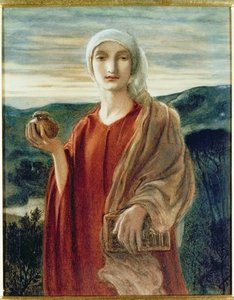
Portret van Simeon Solomon

De 73 beroemdste schilderijen van Simeon Solomon, elk uniek

Bijgewerkt in november 2026 · gerangschikt op basis van onze populariteitsscore (zoekopdrachten, bezoeken en bestellingen per kunstwerk) · 75 werken van Simeon Solomon in onze catalogus

Kortom

The Magic Crystal (Study: Male Figure) (1878) is het schilderij van Simeon Solomon dat de meeste aandacht trekt; het origineel bevindt zich in het Manchester Art Gallery, Manchester. Daarna gaat de blik naar A Deacon (1863) en Mother of Moses (1860). Van de 75 werken van Simeon Solomon in onze catalogus zijn dit de 73 bekendste, elk een uniek origineel gepresenteerd met het jaar, het museum en de reden waarom het blijft voortbestaan.

1840 – 1905, City of London Pre-raphaelite Meeste werken: Tate Britain

Top 10 schilderijen van Simeon Solomon, door de ogen van de galerie

1
The Magic Crystal (Study: Male Figure) (1878) door Simeon Solomon

The Magic Crystal (Study: Male Figure)

1878 · Oil · Manchester Art Gallery, Manchester

The Magic Crystal (Study: Male Figure) is an oil painting by Simeon Solomon, completed in 1878. The work presents a nude male figure, appearing as an angel or a saint, set against a dark and textured surface. This figure rests near a small bowl and a crimson object, suggesting a scene of sacrifice or solemnity. Above the central form, a faint depiction of a starry night sky breaks the shadows.

2
A Deacon (1863) door Simeon Solomon

A Deacon

1863 · Oil On Canvas · Birmingham Museum and Art Gallery, Birmingham

In 1863, Simeon Solomon painted A Deacon. The work presents a young man, likely a religious figure, captured in a medium close-up profile view. He is positioned slightly off-center to the left, his gaze directed upward and toward the right. This orientation creates a sense of quiet devotion or spiritual longing.

3
Mother of Moses (1860) door Simeon Solomon

Mother of Moses

1860 · Oil On Canvas · Delaware Art Museum

In Mother of Moses by Simeon Solomon, the frame tightens around a dimly lit interior. Two vertical figures dominate the space, creating a shallow perspective that pulls the viewer into a sense of enclosure. The composition focuses on the intimate proximity of the subjects, where the figure of Jochebed simply stares in love and tenderness at her infant son. This closeness transforms the room into a private sanctuary of maternal…

4
Dawn (1871) door Simeon Solomon

Dawn

1871 · Oil On Canvas · Birmingham Museum and Art Gallery, Birmingham

Created in 1871, Dawn by Simeon Solomon presents a winged, semi-nude figure seated within a desolate landscape. The subject occupies much of the midground, positioned against a vast, somber seascape and a heavy sky. This setting, caught in the dim light of twilight or dawn, places the figure in a state of repose or contemplation. The composition centers on the solitary being, emphasizing a sense of isolation against the receding…

5
Bacchus (1867) door Simeon Solomon

Bacchus

1867 · Oil On Canvas · Birmingham Museum and Art Gallery, Birmingham

This oil on canvas work is titled Bacchus. It was executed by the British painter Simeon Solomon in 1867. The subject is a youthful male figure, depicted in a medium close-up that focuses on the head and upper torso. The figure is positioned slightly off-center against a landscape of distant hills under a twilight sky.

6
A Youth Relating Tales to Ladies (1870) door Simeon Solomon

A Youth Relating Tales to Ladies

1870 · Oil · Tate Britain, Londen

The oil painting titled A Youth Relating Tales to Ladies was executed by the artist Simeon Solomon. This work dates to about 1870. The composition depicts a seated man gesturing toward a group of five women arranged in various poses of listening and repose. The scene is set against a background of dark, heavy wood paneling.

7
A Prelude by Bach (1868) door Simeon Solomon

A Prelude by Bach

1868 · Oil

A Prelude by Bach is an oil painting by Simeon Solomon, executed in 1868. The artist, born in the City of London, United Kingdom, in 1840, captures a moment of heavy stillness. The canvas holds a group of figures gathered around a prone person, their bodies pressed together in a crowded, intimate arrangement. A patterned rug lies beneath them, anchoring the scene in a space of sudden urgency.

8
King Solomon (1874) door Simeon Solomon

King Solomon

1874 · Oil On Canvas

This oil on canvas painting, titled King Solomon, was executed by the British artist Simeon Solomon around 1874. The work presents a formal portrait of a seated figure, identified through the subject matter as the biblical King Solomon. The figure occupies a central position within the frame, positioned upon an ornate chair against a backdrop of draped fabric. Through an opening in the background, a distant landscape is visible, providing…

9
The Moon and Sleep (1894) door Simeon Solomon

The Moon and Sleep

1894 · Oil

The Moon and Sleep is a Symbolist painting by Simeon Solomon. Created about 1894, the work captures a quiet, nocturnal landscape. Two figures occupy the center of this dark, celestial space. They exist in a moment of stillness under a pale crescent moon.

10
Leonora D'este (1894) door Simeon Solomon

Leonora D'este

1894 · Charcoal

In the portrait Leonora D'este by Simeon Solomon, the artist presents a bust-length depiction of the subject. The figure is centered within the frame, with the head turned slightly to the right. This tilt of the head creates a slight diagonal line across the composition. The subject gazes directly towards the viewer. The background remains largely undefined, which directs all visual attention toward the face and upper body of the…

De beroemde schilderijen van Simeon Solomon, nummer 11 tot 73

11Study of Sappho (1862) door Simeon SolomonStudy of Sappho1862 · Tate Britain 12Faust and Marguerite (1856) door Simeon SolomonFaust and Marguerite1856 · Tate Britain 13Self-Portrait (1859) door Simeon SolomonSelf-Portrait1859 · Tate Britain 14Pastoral Lovers (1869) door Simeon SolomonPastoral Lovers1869 15The Annunciation (1877) door Simeon SolomonThe Annunciation1877 · Russell-Cotes Art Gallery - Museum 16Day door Simeon SolomonDay 17Night door Simeon SolomonNight 18For The Night Must Pass Before The Coming Day door Simeon SolomonFor The Night Must Pass Before The Coming Day 19Medusa erotica door Simeon SolomonMedusa erotica 20Romeo and Juliet, Overlooked by Friar Lawrence door Simeon SolomonRomeo and Juliet, Overlooked by Friar Lawrence 21Mercury And Persephone door Simeon SolomonMercury And Persephone 22David door Simeon SolomonDavid 23Shadrach, Meshach And Abednego In The Fiery Furnace door Simeon SolomonShadrach, Meshach And Abednego In The Fiery Furnace 24Judith And Her Attendant - door Simeon SolomonJudith And Her Attendant - 25Perseus - door Simeon SolomonPerseus - 26The Lovers door Simeon SolomonThe Lovers 27Isaac ^ rebecca door Simeon SolomonIsaac ^ rebecca 28The Book Of Ruth door Simeon SolomonThe Book Of Ruth 29The Song Of Miriam - door Simeon SolomonThe Song Of Miriam - 30Simeon Solomon's and Henry Holiday's Artistic Heroes door Simeon SolomonSimeon Solomon's and Henry Holiday's Artistic Heroes 31in the Temple of Venus door Simeon Solomonin the Temple of Venus 32Day and Night door Simeon SolomonDay and Night 33Head (1895) door Simeon SolomonHead1895 · Te Papa 34Terra (1895) door Simeon SolomonTerra1895 · Ben Uri Gallery and Museum 35The virgin knight door Simeon SolomonThe virgin knight 36The Head Of Medusa door Simeon SolomonThe Head Of Medusa 37The Mystery of Faith door Simeon SolomonThe Mystery of Faith 38Ecce Ancilla Domini door Simeon SolomonEcce Ancilla Domini 39The First Offering Of Aaron door Simeon SolomonThe First Offering Of Aaron 40A Deacon door Simeon SolomonA Deacon 41Rabbi Carrying The Torah door Simeon SolomonRabbi Carrying The Torah 42Night door Simeon SolomonNight 43A Protecting Angel door Simeon SolomonA Protecting Angel 44The Building Of Solomon's Temple door Simeon SolomonThe Building Of Solomon's Temple 45Aaron with the Scroll of the Law door Simeon SolomonAaron with the Scroll of the Law 46Bacchus door Simeon SolomonBacchus 47Illustration to the Song of Solomon door Simeon SolomonIllustration to the Song of Solomon 48Delphike door Simeon SolomonDelphike 49Head Of A Man door Simeon SolomonHead Of A Man 50Classical Lady door Simeon SolomonClassical Lady 51Perseus door Simeon SolomonPerseus 52Heliogabalus, High Priest of the Sun door Simeon SolomonHeliogabalus, High Priest of the Sun 53Head Of A Gir door Simeon SolomonHead Of A Gir 54Night And Her Child Sleep door Simeon SolomonNight And Her Child Sleep 55Coptic baptismal procession door Simeon SolomonCoptic baptismal procession 56The Lover Proud door Simeon SolomonThe Lover Proud 57St Michael Of Good Children door Simeon SolomonSt Michael Of Good Children 58Shadrach, Meshach And Abednego door Simeon SolomonShadrach, Meshach And Abednego 59Mercury - door Simeon SolomonMercury - 60Classical Lady - door Simeon SolomonClassical Lady - 61The Toilet Of A Roman Lady - door Simeon SolomonThe Toilet Of A Roman Lady - 62The Greek Festival door Simeon SolomonThe Greek Festival 63Angel Boy door Simeon SolomonAngel Boy 64In the Temple of Venus door Simeon SolomonIn the Temple of Venus 65Two Acolytes Censing door Simeon SolomonTwo Acolytes Censing 66Portrait of Mrs Fanny door Simeon SolomonPortrait of Mrs Fanny 67A rabbi holding the torah door Simeon SolomonA rabbi holding the torah 68A Young Musician Employed In The Temple Service During The Feast Of The Tabernacles door Simeon SolomonA Young Musician Employed In The Temple Service During The Feast Of The Tabernacles 69Shadrach meschach and abednego preserved from the burning fiery furnace door Simeon SolomonShadrach meschach and abednego preserved from the burning fiery furnace 70The Toilet Of A Roman Lady door Simeon SolomonThe Toilet Of A Roman Lady 71Babylon hath been a golden cup door Simeon SolomonBabylon hath been a golden cup 72A Young Musician Employed In The Temple Service door Simeon SolomonA Young Musician Employed In The Temple Service 73Sappho and Erinna in a Garden at Mytilene (1864) door Simeon SolomonSappho and Erinna in a Garden at Mytilene1864 · Tate Britain

De beroemde schilderijen van Simeon Solomon, periode voor periode

Mature Victorian

1868 · 3 werken in deze lijst

De onderwerpen die de aandacht van Simeon Solomon troffen

De vier onderwerpen die het meest voorkomen in deze originelen, elk met zijn mooiste voorbeeld.

De musea waar de originele werken van Simeon Solomon worden bewaard

De 7 musea met de meeste schilderijen op deze pagina.

Museum Stad Werken van Simeon Solomon Schilderijen uit deze lijst
Tate Britain, LondenTate Britain Londen 5 A Youth Relating Tales to Ladies, Study of Sappho, Faust and Marguerite
Birmingham Museum and Art Gallery, BirminghamBirmingham Museum and Art Gallery Birmingham 3 A Deacon, Dawn, Bacchus
Manchester Art Gallery, ManchesterManchester Art Gallery Manchester 1 The Magic Crystal (Study: Male Figure)
Delaware Art MuseumDelaware Art Museum 1 Mother of Moses
Russell-Cotes Art Gallery - Museum, BournemouthRussell-Cotes Art Gallery - Museum Bournemouth 1 The Annunciation
Te Papa, WellingtonTe Papa Wellington 1 Head
Ben Uri Gallery and Museum, LondenBen Uri Gallery and Museum Londen 1 Terra

Simeon Solomon door de decennia heen: elk een uniek origineel

Werken per decennium

Kies een decennium om het origineel te zien dat dit tijdperk definieert.

Schilderijen van Simeon Solomon: vragen voor de galerie

Wat is het bekendste werk van Simeon Solomon?Onthul het antwoord

The Magic Crystal (Study: Male Figure) (1878), Manchester Art Gallery, Manchester. A Deacon (1863) en Mother of Moses (1860) volgen.

Op welke leeftijd creëerde Simeon Solomon The Magic Crystal (Study: Male Figure)?Onthul het antwoord

38 jaar oud: The Magic Crystal (Study: Male Figure) dateert uit 1878, en Simeon Solomon werd geboren in 1840.

Welke tien schilderijen van Simeon Solomon zijn het meest bekend?Onthul het antwoord

The Magic Crystal (Study: Male Figure), A Deacon, Mother of Moses, Dawn, Bacchus, A Youth Relating Tales to Ladies, A Prelude by Bach, King Solomon, The Moon and Sleep en Leonora D'este. De bovenstaande ranglijst vermeldt het jaar en het museum van elk werk.

Hoeveel werken van Simeon Solomon zijn er bekend?Onthul het antwoord

Onze catalogus bevat 75 werken van Simeon Solomon, daterend van 1856 tot 1895.

Waar kunnen de beroemdste originelen van Simeon Solomon worden bekeken?Onthul het antwoord

Voornamelijk in Tate Britain (Londen), Birmingham Museum and Art Gallery (Birmingham) en Manchester Art Gallery (Manchester). De bovenstaande museumtabel bevat een volledig overzicht.

In welke periode creëerde Simeon Solomon de bekendste schilderijen?Onthul het antwoord

In 1860s: 7 van de 73 werken op deze pagina werden toen gemaakt, waaronder A Deacon.

Welk beroemd schilderij van Simeon Solomon is de vroegste, en welke de laatste?Onthul het antwoord

Op deze pagina is het vroegste Faust and Marguerite (1856) en het laatste Head (1895).

Welke onderwerpen had Simeon Solomon de voorkeur?Onthul het antwoord

Victorian art (10), Victorian era (6) en Portrait (5), verspreid over de 73 werken op deze pagina.

Met welke materialen schilderde Simeon Solomon het meest?Onthul het antwoord

Oil On Canvas, voor 5 van de 73 werken op deze pagina.

Bij welke stroming behoort het werk van Simeon Solomon?Onthul het antwoord

Pre-raphaelite en Romanticism, te oordelen aan de originelen op deze pagina.

Welke originele werken van Simeon Solomon kan ik zien in het Tate Britain?Onthul het antwoord

A Youth Relating Tales to Ladies, Study of Sappho en Faust and Marguerite: het Tate Britain, Londen herbergt 5 van de werken op deze pagina.

Simeon Solomon: een portret van de kunstenaar

A Life Shrouded in Beauty and Scandal: The World of Simeon Solomon

Simeon Solomon, a name whispered with both reverence and regret within the annals of Victorian art, occupies a unique and often tragic position amongst the Pre-Raphaelites. Born in London in 1840 into a prominent Jewish family – the eighth and final child of merchant Michael (Meyer) Solomon and artist Catherine (Kate) Levy – his life was one of remarkable artistic promise tragically curtailed by societal prejudice and personal demons. Unlike many of his contemporaries who enjoyed long and celebrated careers, Solomon’s trajectory was abruptly altered by scandal, yet his work continues to captivate with its delicate beauty, evocative symbolism, and poignant exploration of themes often considered taboo for the era. He wasn't merely a painter; he was a cultural mirror reflecting the complexities of Victorian England, grappling with faith, desire, and identity in a rapidly changing world.

Early Influences and Artistic Development

Solomon’s artistic education began within his own family circle. His mother possessed an amateur talent for miniature painting, while his elder siblings, Abraham and Rebecca Solomon, were both established artists exhibiting at the Royal Academy. It was from them, particularly his brother Abraham, that Simeon received his initial training, learning the fundamentals of draftsmanship and composition. He formally studied at Carey’s Art Academy in 1852 before entering the prestigious Royal Academy Schools in 1856. This period proved pivotal, as it introduced him to the burgeoning Pre-Raphaelite Brotherhood through Dante Gabriel Rossetti. The encounter with Rossetti, along with friendships forged with Edward Burne-Jones and Algernon Charles Swinburne, profoundly shaped Solomon’s artistic sensibilities. He embraced their commitment to detailed realism, vibrant color palettes, and a fascination with literature, mythology, and religious narratives. Early works like *Isaac Offered* (1858) demonstrate this initial influence, showcasing a meticulous attention to detail and a dramatic narrative style characteristic of the Pre-Raphaelites. However, Solomon quickly began to forge his own path, infusing his paintings with a distinctly personal vision.
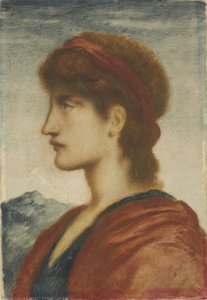
Themes of Faith, Desire, and Identity

Solomon’s artistic output was remarkably diverse, encompassing biblical scenes, classical mythology, and genre paintings depicting Jewish life and rituals. He found particular inspiration in the Hebrew Bible, creating works such as *Moses* (1860) and *Shadrach, Meshach, and Abednego* (1863), which resonated with his own cultural heritage. Yet, it was his exploration of classical themes that truly set him apart. Paintings like *In the Temple of Venus* (1863) and *Bacchus* (1867) reveal a fascination with sensuality and beauty, often imbued with an undercurrent of melancholy and longing. These works also hint at Solomon’s growing interest in same-sex desire, a theme he would explore more explicitly – and dangerously – throughout his career. His association with Algernon Charles Swinburne, whose poetry celebrated unconventional love and challenged Victorian morality, undoubtedly fueled this exploration. Solomon's art became a subtle yet powerful commentary on the constraints of Victorian society, hinting at hidden passions and unspoken desires. He was one of the first artists to openly depict homoerotic themes, albeit often veiled in classical allegory or biblical narrative.

Scandal, Decline, and Lasting Legacy

The year 1873 marked a devastating turning point in Solomon’s life. His arrest in a public urinal for attempting to commit sodomy brought swift and brutal consequences. Though he received a relatively light fine, the scandal shattered his reputation and effectively ended his career as a publicly exhibited artist. A subsequent arrest in Paris in 1874 led to a three-month prison sentence. Shunned by much of the art establishment, Solomon descended into alcoholism and poverty. However, despite his ostracization, he continued to create art, albeit often under difficult circumstances. He found support from a small circle of admirers – including Oscar Wilde, John Addington Symonds, and Walter Pater – who recognized his talent and collected his works in private. He spent time in the St Giles Workhouse, continuing to paint even amidst hardship. His death in 1905, resulting from complications related to alcoholism, went largely unnoticed by the wider public. In recent decades, however, there has been a growing reassessment of Solomon’s work and life. Retrospectives at the Birmingham Museum & Art Gallery (2005-6) and the Ben Uri Gallery in London (2006) have brought his art to a new audience, recognizing him as a significant figure within the Pre-Raphaelite movement and a pioneering artist who dared to challenge Victorian conventions. His paintings now reside in prominent collections such as the Victoria and Albert Museum, Wightwick Manor, and Leighton House, ensuring that his unique vision continues to inspire and provoke thought for generations to come. His story serves as a poignant reminder of the fragility of artistic freedom and the enduring power of art to transcend societal boundaries.