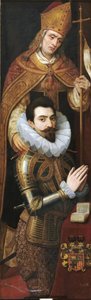
Portret van Otto van Veen

De 73 beroemdste schilderijen van Otto van Veen, elk uniek

Bijgewerkt in november 2026 · gerangschikt op basis van onze populariteitsscore (zoekopdrachten, bezoeken en bestellingen per kunstwerk) · 74 werken van Otto van Veen in onze catalogus

Kortom

The Last Supper (1592) is het schilderij van Otto van Veen dat de meeste aandacht trekt; het origineel bevindt zich in het Onze-Lieve-Vrouwekathedraal, Antwerpen. Daarna gaat de blik naar Portrait of Alessandro Farnese (1545-1592) (1585) en Portrait of Alexander Farnese (1545-1592) (1592). Van de 74 werken van Otto van Veen in onze catalogus zijn dit de 73 bekendste, elk een uniek origineel gepresenteerd met het jaar, het museum en de reden waarom het blijft voortbestaan.

1556 – 1629, Leiden Baroque Meeste werken: Bayerische Staatsgemäldesammlungen

Top 10 schilderijen van Otto van Veen, door de ogen van de galerie

1
The Last Supper (1592) door Otto van Veen

The Last Supper

1592 · Oil On Canvas · Onze-Lieve-Vrouwekathedraal, Antwerpen

To stand before this monumental depiction of The Last Supper is to be enveloped in an atmosphere thick with profound significance and hushed drama. It is more than merely a painting; it is a frozen moment of ultimate human reckoning, a tableau vivant capturing the solemnity of Christ’s final meal with his apostles. The sheer scale of the work, measuring an imposing 350 by 2247 centimeters, speaks to its monumental…

2
Portrait of Alessandro Farnese (1545-1592) (1585) door Otto van Veen

Portrait of Alessandro Farnese (1545-1592)

1585 · Oil On Copper · Los Angeles County Museum of Art, Los Angeles

The portrait of Alessandro Farnese is a highly ornate Mannerist miniature, rendered in oil heightened with gold on a copper support. The composition is hierarchical and symmetrical, centering an oval portrait of the subject within an elaborate, sculptural golden frame. Alessandro is depicted in a three-quarter view, wearing a white ruff collar and detailed armor. Behind him, a dark background is speckled with golden stars, suggesting a celestial or divine…

3
Portrait of Alexander Farnese (1545-1592) (1592) door Otto van Veen

Portrait of Alexander Farnese (1545-1592)

1592 · Oil On Canvas · Koninklijke Musea voor Schone Kunsten van België, Brussel

Alexander Farnese, Duke of Parma, is captured in a formal bust-length portrait that emphasizes his status through the language of military regalia. He faces the viewer's right but directs his gaze forward, establishing a direct connection with the observer. The composition relies on the sharp contrast between a dark, indistinct background and the luminous details of his attire. A bright white lace ruff frames the face, while a crimson silk…

4
The Conspiracy of Claudius Civilis and the Batavians in the Schakerbos (1606) door Otto van Veen

The Conspiracy of Claudius Civilis and the Batavians in the Schakerbos

1606 · Oil · Rijksmuseum, Amsterdam

In The Conspiracy of Claudius Civilis and the Batavians in the Schakerbos, Otto van Veen captures a pivotal moment of insurrection. The scene depicts the revolt of the Batavians against the Romans during AD 69 and 70. Here, Claudius Civilis is gathered with his supporters around a meal in the forest under the cover of night. It is a moment of quiet tension, where the oath of Civilis is taken…

5
After the Fall of Vetera Castra Claudius Civilis has his hair cut while his son shoots some prisoners (1606) door Otto van Veen

After the Fall of Vetera Castra Claudius Civilis has his hair cut while his son shoots some prisoners

1606 · Oil On Panel · Rijksmuseum, Amsterdam

After the Fall of Vetera Castra Claudius Civilis has his hair cut while his son shoots some prisoners by Otto van Veen, executed about 1606, belongs to the series De Bataafse Opstand. This collection of twelve paintings was commissioned by the Dutch parliament, the States General, in 1613. The work functions as a visual record of the Batavian revolt against Roman forces during AD 69 and 70.

6
Saint Paul before proconsul Felix of Caesarea (1602) door Otto van Veen

Saint Paul before proconsul Felix of Caesarea

1602 · Oil On Panel · Koninklijk Museum voor Schone Kunsten Antwerpen, Antwerpen

The oil on panel painting titled Saint Paul before proconsul Felix of Caesarea was executed by the artist Otto van Veen. This work dates to 1602. The composition is presented on a vertical plane with dimensions measuring 253 × 101 cm. The physical surface of the panel supports the layers of pigment that form the figures and the architectural setting.

7
The Charity of Saint Nicholas of Myra (1606) door Otto van Veen

The Charity of Saint Nicholas of Myra

1606 · Oil On Panel · Koninklijk Museum voor Schone Kunsten Antwerpen, Antwerpen

The Charity of Saint Nicholas of Myra is an oil painting by Otto van Veen. Created around 1606, the work captures a moment of divine intervention during a period of scarcity. The scene depicts the saint performing a miracle to aid a suffering population. Specifically, it portrays St. Nicholas miraculously multiplying corn-sacks unloaded from boats in the harbor to provide for the people of Myra during a famine.

8
Amazones and Skythians (1629) door Otto van Veen

Amazones and Skythians

1629 · Oil On Canvas · Kunsthistorisches Museum, Wenen

The oil on panel work titled Amazones and Skythians was executed by Otto van Veen. Born in 1556 in Leiden, Netherlands, the artist lived until 1629. This piece captures a gathering of figures defined by their strength. The subject matter focuses on strong women, specifically the alleged Amazons and Spartans.

9
The Calling of Zacchaeus who is Sitting in a Fig Tree (1606) door Otto van Veen

The Calling of Zacchaeus who is Sitting in a Fig Tree

1606 · Oil On Canvas · Koninklijk Museum voor Schone Kunsten Antwerpen, Antwerpen

In "The Calling of Zacchaeus who is Sitting in a Fig Tree" by Otto van Veen, a profound spiritual encounter unfolds amidst a dense, moving crowd. Painted about 1606, the scene captures the exact moment of divine calling, freezing a pivotal instant of recognition and redemption. The biblical narrative of Zacchaeus comes alive as the viewer witnesses the intersection of the earthly and the divine. High above the bustling assembly,…

10
Jan Miraeus, Bishop of Antwerp (1611) door Otto van Veen

Jan Miraeus, Bishop of Antwerp

1611 · Oil On Panel · Koninklijk Museum voor Schone Kunsten Antwerpen, Antwerpen

A single light source strikes the subject from the upper left, carving a face out of the surrounding gloom. Jan Miraeus sits in a quiet, heavy stillness. His skin possesses the pale, matte texture of fine porcelain, contrasting sharply against the deep, velvety burgundy of his clerical attire. The shadows cling to the right side of his features, tracing the lines of a life spent in contemplation and command. There…

De beroemde schilderijen van Otto van Veen, nummer 11 tot 73

11Portrait of Albrecht VII, Archduke of Austria (1559-1621) (1596) door Otto van VeenPortrait of Albrecht VII, Archduke of Austria (1559-1621)1596 · Kunsthistorisches Museum 12The Mystic Marriage of St. Catherine (1589) door Otto van VeenThe Mystic Marriage of St. Catherine1589 · Koninklijke Musea voor Schone Kunsten van België 13Carrying of the Cross (1592) door Otto van VeenCarrying of the Cross1592 · Bayerische Staatsgemäldesammlungen 14Christ on the Mount of Olives (1592) door Otto van VeenChrist on the Mount of Olives1592 · Bayerische Staatsgemäldesammlungen 15Presentation of Jesus in the Temple (1592) door Otto van VeenPresentation of Jesus in the Temple1592 · Bayerische Staatsgemäldesammlungen 16Triumph of the Catholic Church (1592) door Otto van VeenTriumph of the Catholic Church1592 · Bayerische Staatsgemäldesammlungen 17Justitia and Pax (1592) door Otto van VeenJustitia and Pax1592 · Bayerische Staatsgemäldesammlungen 18Flagellation (1592) door Otto van VeenFlagellation1592 · Bayerische Staatsgemäldesammlungen 19Birth of Christ (1592) door Otto van VeenBirth of Christ1592 · Bayerische Staatsgemäldesammlungen 20Assumption of Mary (1592) door Otto van VeenAssumption of Mary1592 · Bayerische Staatsgemäldesammlungen 21Visitation of Mary (1592) door Otto van VeenVisitation of Mary1592 · Bayerische Staatsgemäldesammlungen 22Pentecost (1592) door Otto van VeenPentecost1592 · Bayerische Staatsgemäldesammlungen 23Crowning with Thorns (1592) door Otto van VeenCrowning with Thorns1592 · Bayerische Staatsgemäldesammlungen 24Martyrdom of Saint Andrew (1592) door Otto van VeenMartyrdom of Saint Andrew1592 · Bayerische Staatsgemäldesammlungen 25Triumph of the Catholic Church (1592) door Otto van VeenTriumph of the Catholic Church1592 · Bayerische Staatsgemäldesammlungen 26Triumph of the Catholic Church (1592) door Otto van VeenTriumph of the Catholic Church1592 · Bayerische Staatsgemäldesammlungen 27Triumph of the Catholic Church (1592) door Otto van VeenTriumph of the Catholic Church1592 · Bayerische Staatsgemäldesammlungen 28Triumph of the Catholic Church (1592) door Otto van VeenTriumph of the Catholic Church1592 · Bayerische Staatsgemäldesammlungen 29Coronation of Mary (1592) door Otto van VeenCoronation of Mary1592 · Bayerische Staatsgemäldesammlungen 30Ascension of Christ (1592) door Otto van VeenAscension of Christ1592 · Bayerische Staatsgemäldesammlungen 31Christ on the Cross (1592) door Otto van VeenChrist on the Cross1592 · Bayerische Staatsgemäldesammlungen 32The Twelve-Year-Old Jesus in the Temple (1592) door Otto van VeenThe Twelve-Year-Old Jesus in the Temple1592 · Bayerische Staatsgemäldesammlungen 33Triumph of the Catholic Church (1592) door Otto van VeenTriumph of the Catholic Church1592 · Bayerische Staatsgemäldesammlungen 34The Resurrection (1592) door Otto van VeenThe Resurrection1592 · Bayerische Staatsgemäldesammlungen 35The Lamentation over Christ (1590) door Otto van VeenThe Lamentation over Christ1590 36The Last Supper (1592) door Otto van VeenThe Last Supper1592 · Real Academia de Bellas Artes de San Fernando 37The Lamentation of Christ with Angels (1589) door Otto van VeenThe Lamentation of Christ with Angels1589 · Augustiner Museum 38During a Famine in Myra Saint Nicholas Saves the People (1606) door Otto van VeenDuring a Famine in Myra Saint Nicholas Saves the People1606 · Koninklijk Museum voor Schone Kunsten Antwerpen 39The Judgement of Zaleucus (1607) door Otto van VeenThe Judgement of Zaleucus1607 · Art Institute of Chicago 40Allegory of the Temptations of Youth (1595) door Otto van VeenAllegory of the Temptations of Youth1595 · Nationalmuseum 41Xantippe Dousing Socrates (1607) door Otto van VeenXantippe Dousing Socrates1607 42Lycurgus Demonstrares the Importance of Education (1607) door Otto van VeenLycurgus Demonstrares the Importance of Education1607 43Portrait of "Count Hendrik van den Bergh (1573-1638)" on canvas by Otto van Veen, circa 1618 (1618) door Otto van VeenPortrait of "Count Hendrik van den Bergh (1573-1638)" on canvas by Otto van Veen, circa 16181618 44Brinno Raised upon the Shield, Otto van Veen, 1600 - 1613 (1613) door Otto van VeenBrinno Raised upon the Shield, Otto van Veen, 1600 - 16131613 · Rijksmuseum 45The Batavians Surround the Romans at Vetera, Otto van Veen, 1600 - 1613 (1613) door Otto van VeenThe Batavians Surround the Romans at Vetera, Otto van Veen, 1600 - 16131613 · Rijksmuseum 46The Batavians Defeating the Romans on the Rhine, Otto van Veen, 1600 - 1613 (1613) door Otto van VeenThe Batavians Defeating the Romans on the Rhine, Otto van Veen, 1600 - 16131613 · Rijksmuseum 47The Peace Negotiations between Julius Civilis and the Roman General Cerialis, Otto van Veen, 1600 - 1613 (1613) door Otto van VeenThe Peace Negotiations between Julius Civilis and the Roman General Cerialis, Otto van Veen, 1600 - 16131613 · Rijksmuseum 48The Adoration of the Magi and The Presentation in the Temple (1624) door Otto van VeenThe Adoration of the Magi and The Presentation in the Temple1624 49The Persian women (1629) door Otto van VeenThe Persian women1629 · Kunsthistorisches Museum 50The Artist Painting, Surrounded by his Family (1584) door Otto van VeenThe Artist Painting, Surrounded by his Family1584 · Louvre 51The Last Supper (1670) door Otto van VeenThe Last Supper1670 · Bayerische Staatsgemäldesammlungen 52The Calling of Matthew (1606) door Otto van VeenThe Calling of Matthew1606 · Koninklijk Museum voor Schone Kunsten Antwerpen 53Emblem (1607) door Otto van VeenEmblem1607 · Koninklijke Bibliotheek 54Distribution of Herring and White Bread during the Siege of Leiden (1574) door Otto van VeenDistribution of Herring and White Bread during the Siege of Leiden1574 · Rijksmuseum 55The Conference of the Gauls at Reims, Otto van Veen, 1600 - 1613 (1613) door Otto van VeenThe Conference of the Gauls at Reims, Otto van Veen, 1600 - 16131613 · Rijksmuseum 56Valentinus Taken Prisoner, Otto van Veen, 1600 - 1613 (1613) door Otto van VeenValentinus Taken Prisoner, Otto van Veen, 1600 - 16131613 · Rijksmuseum 57A Nocturnal Banquet, Otto van Veen, 1600 - 1613 (1613) door Otto van VeenA Nocturnal Banquet, Otto van Veen, 1600 - 16131613 · Rijksmuseum 58The Batavians Besiege the Roman Army Regiments at Vetera, Otto van Veen, 1600 - 1613 (1613) door Otto van VeenThe Batavians Besiege the Roman Army Regiments at Vetera, Otto van Veen, 1600 - 16131613 · Rijksmuseum 59The Romans nearly Overpower the Army of Julius Civilis through the Treachery of a Batavian, Otto van Veen, 1600 - 1613 (1613) door Otto van VeenThe Romans nearly Overpower the Army of Julius Civilis through the Treachery of a Batavian, Otto van Veen, 1600 - 16131613 · Rijksmuseum 60The Beheading of Claudius Paulus and the Capture of Julius Civilis, Otto van Veen, 1600 - 1613 (1613) door Otto van VeenThe Beheading of Claudius Paulus and the Capture of Julius Civilis, Otto van Veen, 1600 - 16131613 · Rijksmuseum 61An unknown Flemish Family (1625) door Otto van VeenAn unknown Flemish Family1625 62Zijluiken van het altaarstuk van de meerseniers door Otto van VeenZijluiken van het altaarstuk van de meerseniersKoninklijk Museum voor Schone Kunsten Antwerpen 63Gemeine Jeuchts Beeldt. Allegori på ungdommens fristelser door Otto van VeenGemeine Jeuchts Beeldt. Allegori på ungdommens fristelserStatens Museum for Kunst 64Alonso de Idiaquez, 1st Duke of Ciudad Real door Otto van VeenAlonso de Idiaquez, 1st Duke of Ciudad Real 65Juana de Robles, Duchess of Ciudad Real door Otto van VeenJuana de Robles, Duchess of Ciudad Real 66Allégorie (le Temps ) door Otto van VeenAllégorie (le Temps ) 67Dispute d'Athéna et de Poséïdon door Otto van VeenDispute d'Athéna et de Poséïdon 68The Dead Christ Supported by Angels door Otto van VeenThe Dead Christ Supported by Angels 69On the Disposal of Wealth Illustration to Horace, Carmina III door Otto van VeenOn the Disposal of Wealth Illustration to Horace, Carmina IIIFitzwilliam Museum 70Putti Enacting a Bacchanalian Scene door Otto van VeenPutti Enacting a Bacchanalian SceneHam House 71Christ in the House of Mary and Martha door Otto van VeenChrist in the House of Mary and Martha 72Portrait of Nicolaas Rockox door Otto van VeenPortrait of Nicolaas RockoxRubenshuis 73Allégorie du Temps (1607) door Otto van VeenAllégorie du Temps1607

De beroemde schilderijen van Otto van Veen, periode voor periode

De onderwerpen die de aandacht van Otto van Veen troffen

De vier onderwerpen die het meest voorkomen in deze originelen, elk met zijn mooiste voorbeeld.

De musea waar de originele werken van Otto van Veen worden bewaard

De 8 musea met de meeste schilderijen op deze pagina.

Museum Stad Werken van Otto van Veen Schilderijen uit deze lijst
Bayerische Staatsgemäldesammlungen, MünchenBayerische Staatsgemäldesammlungen München 23 Carrying of the Cross, Christ on the Mount of Olives, Presentation of Jesus in the Temple
Rijksmuseum, AmsterdamRijksmuseum Amsterdam 13 The Conspiracy of Claudius Civilis and the Batavians in the Schakerbos, After the Fall of Vetera Castra Claudius Civilis has his hair cut while his son shoots some prisoners, Brinno Raised upon the Shield, Otto van Veen, 1600 - 1613
Koninklijk Museum voor Schone Kunsten Antwerpen, AntwerpenKoninklijk Museum voor Schone Kunsten Antwerpen Antwerpen 7 Saint Paul before proconsul Felix of Caesarea, The Charity of Saint Nicholas of Myra, The Calling of Zacchaeus who is Sitting in a Fig Tree
Kunsthistorisches Museum, WenenKunsthistorisches Museum Wenen 3 Amazones and Skythians, Portrait of Albrecht VII, Archduke of Austria (1559-1621), The Persian women
Koninklijke Musea voor Schone Kunsten van België, BrusselKoninklijke Musea voor Schone Kunsten van België Brussel 2 Portrait of Alexander Farnese (1545-1592), The Mystic Marriage of St. Catherine
Onze-Lieve-Vrouwekathedraal, AntwerpenOnze-Lieve-Vrouwekathedraal Antwerpen 1 The Last Supper
Los Angeles County Museum of Art, Los AngelesLos Angeles County Museum of Art Los Angeles 1 Portrait of Alessandro Farnese (1545-1592)
Real Academia de Bellas Artes de San Fernando, MadridReal Academia de Bellas Artes de San Fernando Madrid 1 The Last Supper

Otto van Veen door de decennia heen: elk een uniek origineel

Werken per decennium

Kies een decennium om het origineel te zien dat dit tijdperk definieert.

Schilderijen van Otto van Veen: vragen voor de galerie

Wat is het bekendste werk van Otto van Veen?Onthul het antwoord

The Last Supper (1592), Onze-Lieve-Vrouwekathedraal, Antwerpen. Portrait of Alessandro Farnese (1545-1592) (1585) en Portrait of Alexander Farnese (1545-1592) (1592) volgen.

Op welke leeftijd creëerde Otto van Veen The Last Supper?Onthul het antwoord

36 jaar oud: The Last Supper dateert uit 1592, en Otto van Veen werd geboren in 1556.

Welke tien schilderijen van Otto van Veen zijn het meest bekend?Onthul het antwoord

The Last Supper, Portrait of Alessandro Farnese (1545-1592), Portrait of Alexander Farnese (1545-1592), The Conspiracy of Claudius Civilis and the Batavians in the Schakerbos, After the Fall of Vetera Castra Claudius Civilis has his hair cut while his son shoots some prisoners, Saint Paul before proconsul Felix of Caesarea, The Charity of Saint Nicholas of Myra, Amazones and Skythians, The Calling of Zacchaeus who is Sitting in a Fig Tree en Jan Miraeus, Bishop of Antwerp. De bovenstaande ranglijst vermeldt het jaar en het museum van elk werk.

Hoeveel werken van Otto van Veen zijn er bekend?Onthul het antwoord

Onze catalogus bevat 74 werken van Otto van Veen, daterend van 1574 tot 1629.

Waar kunnen de beroemdste originelen van Otto van Veen worden bekeken?Onthul het antwoord

Voornamelijk in Bayerische Staatsgemäldesammlungen (München), Rijksmuseum (Amsterdam) en Koninklijk Museum voor Schone Kunsten Antwerpen (Antwerpen). De bovenstaande museumtabel bevat een volledig overzicht.

In welke periode creëerde Otto van Veen de bekendste schilderijen?Onthul het antwoord

In 1590s: 28 van de 73 werken op deze pagina werden toen gemaakt, waaronder The Last Supper.

Welk beroemd schilderij van Otto van Veen is de vroegste, en welke de laatste?Onthul het antwoord

Op deze pagina is het vroegste Distribution of Herring and White Bread during the Siege of Leiden (1574) en het laatste Amazones and Skythians (1629).

Welke onderwerpen had Otto van Veen de voorkeur?Onthul het antwoord

People (27), Man (18) en Woman (16), verspreid over de 73 werken op deze pagina.

Met welke materialen schilderde Otto van Veen het meest?Onthul het antwoord

Oil On Canvas, voor 20 van de 73 werken op deze pagina.

Bij welke stroming behoort het werk van Otto van Veen?Onthul het antwoord

Baroque en Mannerism, te oordelen aan de originelen op deze pagina.

Welke originele werken van Otto van Veen kan ik zien in het Bayerische Staatsgemäldesammlungen?Onthul het antwoord

Carrying of the Cross, Christ on the Mount of Olives en Presentation of Jesus in the Temple: het Bayerische Staatsgemäldesammlungen, München herbergt 23 van de werken op deze pagina.

Otto van Veen: een portret van de kunstenaar

A Life Bridging Renaissance and Baroque: The World of Otto van Veen

Otto van Veen, a name resonating with the echoes of late 16th and early 17th-century artistry, occupies a fascinating position in art history. Born around 1556 in Leiden, Netherlands, into a family of prominence—his father served as burgomaster—Van Veen’s life was one of shifting allegiances and artistic evolution. The religious tensions gripping the Low Countries during his youth profoundly shaped his trajectory. The relocation of his family to Antwerp in 1572, driven by their Catholic faith amidst a rising tide of Protestantism, marked not just a geographical shift but also a turning point in his intellectual and artistic formation. This move brought him into contact with influential figures like Dominicus Lampsonius and Jean Ramée, laying the groundwork for a career steeped in humanist ideals and classical learning. His subsequent journey to Rome around 1574 or 1575 proved pivotal; immersing himself in the heart of the Italian Renaissance, he absorbed the stylistic nuances that would define his mature work—the elegance, the refined compositions, and the emphasis on idealized forms characteristic of Mannerism. The precise extent of his Roman tutelage remains debated, with some scholars suggesting a period under Federico Zuccari, but its impact is undeniable.

Patronage, Pedagogy, and the Shaping of a Master

Upon returning from Italy, Van Veen swiftly established himself as a sought-after artist. His talent secured him a position as court painter to Alexander Farnese, Duke of Parma, governor of the Southern Netherlands, in Brussels. This patronage provided not only financial stability but also access to a sophisticated artistic milieu and opportunities for large-scale commissions. He became a master within Antwerp’s Guild of St. Luke in 1593, solidifying his professional standing. However, Van Veen's legacy extends far beyond his own paintings; it is inextricably linked to the career of one of art history’s most celebrated masters: Peter Paul Rubens. From approximately 1594 or 1595 until 1598, Van Veen served as Rubens’ teacher, instilling in the young artist a rigorous classical education and a deep appreciation for humanist principles. This mentorship was crucial in shaping Rubens' intellectual framework and artistic sensibilities, laying the foundation for his future triumphs. Van Veen didn’t merely impart technical skills; he cultivated a worldview that emphasized the integration of art, literature, and philosophy—a hallmark of Rubens’ own prolific output. During this period, Van Veen also undertook numerous religious commissions, adorning churches with altarpieces and chapels, demonstrating his versatility and growing reputation as a skilled and reliable artist.

Mannerist Sensibility and the Language of Emblems

Van Veen’s artistic style is firmly rooted in Mannerism, an aesthetic characterized by elongated figures, graceful poses, sophisticated compositions, and a refined palette. His paintings often exude an air of elegance and intellectual contemplation. He was known as a *pictor doctus* – a learned painter – and this designation reflects his commitment to incorporating humanist themes into his work. Beyond painting, Van Veen made significant contributions to the burgeoning field of emblem books—a popular genre that combined images with text to convey moral and philosophical messages. His *Quinti Horatii Flacci Emblemata* (1607), *Amorum Emblemata* (1608), and *Amoris Divini Emblemata* (1615) are prime examples of this form, showcasing his skill as both an artist and a scholar. The *Amorum Emblemata*, in particular, achieved widespread influence, serving as a model for subsequent emblem books and inspiring artists across various disciplines. Its depictions of putti enacting scenes from classical literature and mythology, accompanied by witty mottos, captured the spirit of Renaissance humanism and its fascination with love—both earthly and divine. The intricate symbolism within these works reveals Van Veen’s deep understanding of classical thought and his ability to translate complex ideas into visually compelling narratives.

Later Years and Enduring Influence

Even as artistic tastes began to shift towards the dynamism of the Baroque, Van Veen continued to thrive. He maintained connections with the Archdukes Albert and Isabella, though without holding a formal court appointment. A significant undertaking during this period was a series of twelve paintings depicting battles between Romans and Batavians, commissioned by the Dutch States General based on earlier engravings he had produced. This project demonstrates his ability to adapt to changing political landscapes and cater to diverse artistic demands. Throughout his career, Van Veen remained actively involved in Antwerp’s artistic community, serving as dean of both the Guild of St. Luke (1602) and the Romanists (1606). He came from a family with considerable artistic talent; his brother Gijsbert was an accomplished engraver, his daughter Gertruid also pursued painting, and several nephews worked as pastel artists. Otto van Veen died in Brussels in 1629, leaving behind a legacy that extended far beyond his own oeuvre. Arnold Houbraken, the renowned Dutch art historian, recognized him as the most impressive artist and scholar of his time, even featuring his portrait on the title page of his influential *De Groote Schouburgh der Nederlantsche Konstschilders en Schildersessen*. His enduring significance lies not only in his own artistic achievements but also in his pivotal role as a teacher and mentor—most notably to Peter Paul Rubens—and his contribution to the intellectual and artistic currents of his era. He stands as a compelling figure, bridging the gap between the Renaissance and Baroque periods, embodying the ideals of the humanist artist, and leaving an indelible mark on the history of Flemish painting.

Useful Links