Portret van Masaccio

De 96 beroemdste schilderijen van Masaccio, elk uniek

Bijgewerkt in oktober 2026 · gerangschikt op basis van onze populariteitsscore (zoekopdrachten, bezoeken en bestellingen per kunstwerk) · 97 werken van Masaccio in onze catalogus

Kortom

De Heilige Drie-eenheid (1428) is het schilderij van Masaccio dat de meeste aandacht trekt. Daarna gaat de blik naar Het Belastinggeld (1425) en De verdrijving uit het paradijs (1426). Van de 97 werken van Masaccio in onze catalogus zijn dit de 96 bekendste, elk een uniek origineel gepresenteerd met het jaar, het museum en de reden waarom het blijft voortbestaan.

1401 – 1428, San Giovanni Valdarno Vroege renaissance Meeste werken: Santa Maria del Carmine

Top 10 schilderijen van Masaccio, door de ogen van de galerie

1
De Heilige Drie-eenheid (1428) door Masaccio

De Heilige Drie-eenheid

1428 · Fresco

De Heilige Drie-eenheid Masaccio's De Heilige Drie-eenheid is een fresco die de weg vrijmaakte voor het begin van de Renaissance in Italië. Dit meesterwerk, vervaardigd in 1425, wordt beschouwd als een van de meest cruciale werken uit de vroege Renaissance. Het schilderij bevindt zich in de Santa Maria Novella-kerk in Florence, Italië, waar het een tijdloze getuige is van artistieke vernieuwing. Artistieke Vernieuwingen De Heilige Drie-eenheid door Masaccio was een…

2
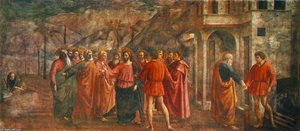
Het Belastinggeld (1425) door Masaccio

Het Belastinggeld

1425 · Fresco

De scène ontvouwt zich binnen de Brancacci-kapel van de basiliek van Santa Maria del Carmine in Florence. Hier brengt de fresco met de titel Het Belastinggeld door Masaccio een bijbels verhaal tot leven op de muren van de kapel. Dit werk, in opdracht gegeven door Felice Brancacci, vormt een essentieel onderdeel van een grotere cyclus die gewijd is aan het leven van Sint-Pieter. De lucht in de kapel lijkt het…

3
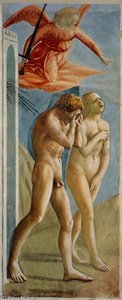
De verdrijving uit het paradijs (1426) door Masaccio

De verdrijving uit het paradijs

1426 · Fresco

De zware stilte van de Brancacci-kapel in de kerk van Santa Maria del Carmine in Florence, Italië, draagt het gewicht van een diepgaande tragedie. Hier ademen de muren met het verhaal van De verdrijving uit het paradijs, een fresco geschilderd door Masaccio rond 1425. De lucht lijkt te dikker te worden rond de figuren terwijl zij hun plotselinge, onomkeerbare vertrek uit het paradijs ondergaan. Deze scène markeert het begin van…

4
Rendering van het Tribute Money (detail) door Masaccio

Rendering van het Tribute Money (detail)

Fresco

Dit boeiende detail vindt zijn oorsprong in Masaccio’s baanbrekende fresco, “Het Geldoffer”, een cruciaal werk binnen de Brancacci Kapel in Florence. Het werk, uitgevoerd rond 1426, vertegenwoordigt een keerpunt in de westerse kunst, waarbij de gestileerde conventies van de gotische periode werden losgelaten ten gunste van een nieuw tijdperk van naturalisme en humanistische expressie.

5
Predella panel from the Pisa Altar (1426) door Masaccio

Predella panel from the Pisa Altar

1426 · Oil On Panel · Staatliche Museen zu Berlin, Berlijn

To stand before this Predella panel from the Pisa Altar is to encounter a moment frozen in time, yet vibrating with raw, undeniable human drama. Dating to 1426, this work captures Masaccio at the zenith of his revolutionary power. It is not merely a depiction of the Crucifixion; it is a profound meditation on sacrifice, community, and the weight of divine narrative rendered with startling immediacy. The composition draws the…

6
The Madonna of Humility (1424) door Masaccio

The Madonna of Humility

1424 · Tempera On Panel

In the quiet, profound stillness of Masaccio’s The Madonna of Humility, we encounter one of the most moving snapshots of the Early Italian Renaissance. Created around 1424, this masterpiece transcends mere religious iconography to offer a window into a moment of raw, maternal intimacy. The scene is set not upon a celestial throne, but on the earth itself, where the Virgin Mary sits upon a blue patterned cushion. This choice…

7
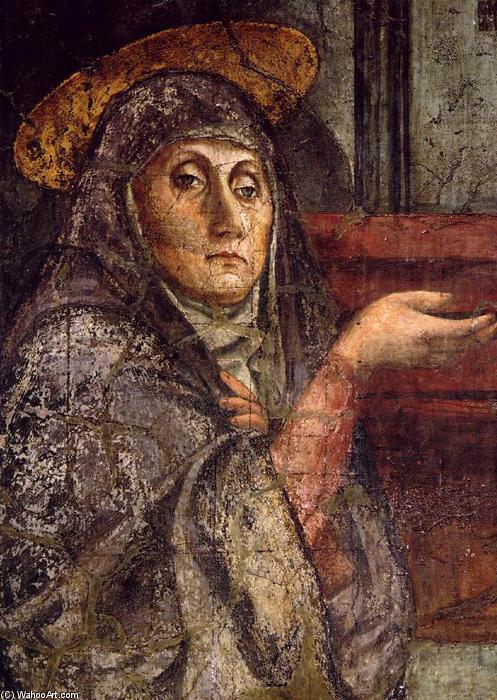
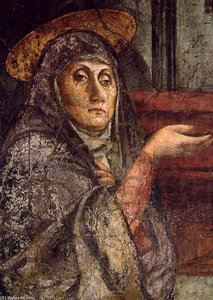
Trinity (detail) (1425) door Masaccio

Trinity (detail)

1425 · Fresco · Santa Maria Novella, Florence

The image presents a detail from a fresco painting created in 1425 by Masaccio. Within this specific view, a figure is depicted that appears to be Mary Magdalene, identified by the traditional iconography of her long hair and a head covering. She possesses a contemplative expression, directing her gaze slightly downwards toward an object held in her right hand, which may be interpreted as a symbol of faith or devotion.

8
Two panels from the Pisa Altarpiece (1426) door Masaccio

Two panels from the Pisa Altarpiece

1426 · Tempera On Panel · Staatliche Museen zu Berlin, Berlijn

In the quiet, hallowed halls of art history, few works capture the dawn of a new era as poignantly as Masaccio’s Two Panels from the Pisa Altarpiece. Completed in 1426, these panels are far more than mere fragments of a lost polyptych; they are windows into a transformative moment when the rigid conventions of the Gothic period began to dissolve, giving way to the profound humanism of the Early Italian…
9
Trinity (1425) door Masaccio

Trinity

1425 · Fresco · Santa Maria Novella, Florence

To step before Masaccio’s Holy Trinity is to witness the exact moment when the flattened, symbolic world of the Middle Ages dissolved into the profound, breathing reality of the Renaissance. Painted between 1425 and 1427 within the hallowed walls of Santa Maria Novella in Florence, this fresco does not merely depict a religious scene; it carves a hole in the very wall of the chapel, inviting the viewer to step…

10
Trinity (detail) (1425) door Masaccio

Trinity (detail)

1425 · Acrylic On Canvas · Santa Maria Novella, Florence

Masaccio’s “Trinity (detail),” housed within the magnificent Santa Maria Novella in Florence, isn't merely a fresco; it’s a pivotal moment in art history – a visual manifesto declaring the arrival of the High Renaissance. Painted between 1425 and 1427, this intimate section captures the essence of Masaccio’s revolutionary approach to depicting reality, a departure from the stylized elegance of the preceding Gothic era and a profound influence on generations of…

De beroemde schilderijen van Masaccio, nummer 11 tot 96

11De Cappella Brancacci (voor restauratie) (1426) door MasaccioDe Cappella Brancacci (voor restauratie)1426 · Santa Maria del Carmine 12Trinity (scheme of the perspective) (1425) door MasaccioTrinity (scheme of the perspective)1425 · Santa Maria Novella 13Raising of the Son of Theophilus and St Peter Enthroned (detail) (1426) door MasaccioRaising of the Son of Theophilus and St Peter Enthroned (detail)1426 14St Peter Healing the Sick with his Shadow (detail) (1426) door MasaccioSt Peter Healing the Sick with his Shadow (detail)1426 15Frescoes in de Cappella Brancacci (rechts bekijkpunt) (1426) door MasaccioFrescoes in de Cappella Brancacci (rechts bekijkpunt)1426 · Santa Maria del Carmine 16Madonna Casini (1426) door MasaccioMadonna Casini1426 17Adam and Eve banished from Paradise (1427) door MasaccioAdam and Eve banished from Paradise1427 18The Distribution of Alms and the Death of Ananias (detail) (1426) door MasaccioThe Distribution of Alms and the Death of Ananias (detail)1426 19Frescoes in de Cappella Brancacci (links uitzicht) (1426) door MasaccioFrescoes in de Cappella Brancacci (links uitzicht)1426 · Santa Maria del Carmine 20Baptism of the Neophytes (1427) door MasaccioBaptism of the Neophytes1427 21Christ in the Garden of Gethsemane (detail) (1424) door MasaccioChrist in the Garden of Gethsemane (detail)1424 · Lindenau-Museum 22Crucifixion (1426) door MasaccioCrucifixion1426 · Museo di Capodimonte 23Tribute Money (detail) (1426) door MasaccioTribute Money (detail)1426 24The Agony in the Garden (1426) door MasaccioThe Agony in the Garden1426 25St Peter Healing the Sick with his Shadow (detail) (1426) door MasaccioSt Peter Healing the Sick with his Shadow (detail)1426 26St. Juvenal Triptych (1422) door MasaccioSt. Juvenal Triptych1422 27Maria and Child (1426) door MasaccioMaria and Child1426 28Tribute Money (detail) (1426) door MasaccioTribute Money (detail)1426 29The Expulsion from the Garden of Eden (detail) (1426) door MasaccioThe Expulsion from the Garden of Eden (detail)1426 30Birth tray (1428) door MasaccioBirth tray1428 31The Baptism of the Neophytes (1426) door MasaccioThe Baptism of the Neophytes1426 32Raising of the Son of Theophilus and St Peter Enthroned (1426) door MasaccioRaising of the Son of Theophilus and St Peter Enthroned1426 33The Distribution of Alms and the Death of Ananias (detail) (1426) door MasaccioThe Distribution of Alms and the Death of Ananias (detail)1426 34Adoration of the Knigs (1428) door MasaccioAdoration of the Knigs1428 35Tribute Money (detail) (1426) door MasaccioTribute Money (detail)1426 36Tribute Money (1426) door MasaccioTribute Money1426 37The Expulsion from the Garden of Eden (1426) door MasaccioThe Expulsion from the Garden of Eden1426 38Tribute Money (detail) (1426) door MasaccioTribute Money (detail)1426 39Raising of the Son of Theophilus and St Peter Enthroned (detail) (9) (1426) door MasaccioRaising of the Son of Theophilus and St Peter Enthroned (detail) (9)1426 40San Giovenale Triptych. Right panel. (1422) door MasaccioSan Giovenale Triptych. Right panel.1422 41Raising of the Son of Theophilus and St Peter Enthroned (detail) (1426) door MasaccioRaising of the Son of Theophilus and St Peter Enthroned (detail)1426 42Raising of the Son of Theophilus and St Peter Enthroned (detail) (1426) door MasaccioRaising of the Son of Theophilus and St Peter Enthroned (detail)1426 43The Raising of the Son of Theophilus and St Peter Enthroned (detail) (1426) door MasaccioThe Raising of the Son of Theophilus and St Peter Enthroned (detail)1426 44Raising of the Son of Theophilus and St Peter Enthroned (detail) (1426) door MasaccioRaising of the Son of Theophilus and St Peter Enthroned (detail)1426 45Christ in the Garden of Gethsemane (detail) (1424) door MasaccioChrist in the Garden of Gethsemane (detail)1424 · Lindenau-Museum 46San Giovenale Triptych. Central panel (1423) door MasaccioSan Giovenale Triptych. Central panel1423 47Distribution of Alms and Death of Ananias (1425) door MasaccioDistribution of Alms and Death of Ananias1425 48Profile Portrait of a Young Man door MasaccioProfile Portrait of a Young Man 49Profile Portrait of a Young Man (1425) door MasaccioProfile Portrait of a Young Man1425 · National Gallery of Art 50Rendering of the Tribute Money door MasaccioRendering of the Tribute Money 51Distribution of the Goods of the Community and the Death of Ananias (detail) door MasaccioDistribution of the Goods of the Community and the Death of Ananias (detail) 52St. Giovenale Triptych door MasaccioSt. Giovenale Triptych 53The Expulsion from Paradise door MasaccioThe Expulsion from Paradise 54The Adoration of the Magi door MasaccioThe Adoration of the Magi 55St. Peter Baptizing the Neophytes door MasaccioSt. Peter Baptizing the Neophytes 56Birth Salver door MasaccioBirth Salver 57Medallion door MasaccioMedallion 58Madonna and Child door MasaccioMadonna and Child 59Madonna Enthroned door MasaccioMadonna Enthroned 60St Jerome and St John the Baptist door MasaccioSt Jerome and St John the Baptist 61Christ in the Garden of Gethsemane (1424) door MasaccioChrist in the Garden of Gethsemane1424 · Lindenau-Museum 62San Giovenale Triptych. Left panel (1422) door MasaccioSan Giovenale Triptych. Left panel1422 63Portrait of a Young Woman (1425) door MasaccioPortrait of a Young Woman1425 64Distribution of the Goods of the Community and the Death of Ananias door MasaccioDistribution of the Goods of the Community and the Death of Ananias 65The Holy Trinity with the Virgin, St. John and Two Donors door MasaccioThe Holy Trinity with the Virgin, St. John and Two Donors 66The Cricifixion of St. Peter. The Beheading of St. John the Baptist door MasaccioThe Cricifixion of St. Peter. The Beheading of St. John the Baptist 67La Consagración door MasaccioLa Consagración 68Crucifixion door MasaccioCrucifixion 69St Jerome and St John the Baptist 1 door MasaccioSt Jerome and St John the Baptist 1 70The Madonna and Child with Saint Anne door MasaccioThe Madonna and Child with Saint Anne 71Two panels from the Pisa Altarpiece door MasaccioTwo panels from the Pisa Altarpiece 72Portrait of a young man door MasaccioPortrait of a young manIsabella Stewart Gardner Museum 73View of the Cappella Brancacci (after restoration) door MasaccioView of the Cappella Brancacci (after restoration) 74Putto and a Small Dog (back side of the Berlin Tondo) door MasaccioPutto and a Small Dog (back side of the Berlin Tondo) 75The Madonna and Child with st.Anna. (1424) door MasaccioThe Madonna and Child with st.Anna.1424 76Plate of Nativity (Berlin Tondo) (1427) door MasaccioPlate of Nativity (Berlin Tondo)1427 · Staatliche Museen zu Berlin 77Madonna with Child and Angels (1426) door MasaccioMadonna with Child and Angels1426 · National Gallery 78The Distribution of Alms and the Death of Ananias (1426) door MasaccioThe Distribution of Alms and the Death of Ananias1426 · Santa Maria del Carmine 79St Peter Healing the Sick with his Shadow (1426) door MasaccioSt Peter Healing the Sick with his Shadow1426 · Santa Maria del Carmine 80San Giovenale Triptych (1422) door MasaccioSan Giovenale Triptych1422 81Raising of the Son of Teophilus and St.Peter Enthroned (1427) door MasaccioRaising of the Son of Teophilus and St.Peter Enthroned1427 · Santa Maria del Carmine 82St Paul (1426) door MasaccioSt Paul1426 · Museo Nazionale di San Matteo 83Carnesecchi Triptych (1423) door MasaccioCarnesecchi Triptych1423 84Adoration of the Magi (1426) door MasaccioAdoration of the Magi1426 · Staatliche Museen zu Berlin 85Martyrdom of San Giovanni Battista (1426) door MasaccioMartyrdom of San Giovanni Battista1426 · Gemäldegalerie 86Predella panel from the Pisa Altar (1426) door MasaccioPredella panel from the Pisa Altar1426 · Staatliche Museen zu Berlin 87A Bearded Carmelite Saint (1426) door MasaccioA Bearded Carmelite Saint1426 · Gemäldegalerie 88Madonna Casini (1426) door MasaccioMadonna Casini1426 89Madonna of Humility (1420) door MasaccioMadonna of Humility1420 · National Gallery of Art 90Repentance of Saint Peter (1425) door MasaccioRepentance of Saint Peter1425 · Santa Maria del Carmine 91San Agustín door MasaccioSan AgustínGemäldegalerie 92St. Andrew (1426) door MasaccioSt. Andrew1426 · J. Paul Getty Museum 93Carmelita door MasaccioCarmelitaGemäldegalerie 94St. Jerome door MasaccioSt. JeromeGemäldegalerie 95St.Girolamo end Giovanni Battista (1428) door MasaccioSt.Girolamo end Giovanni Battista1428 · National Gallery 96Crucifixion of St Peter (1426) door MasaccioCrucifixion of St Peter1426 · Staatliche Museen zu Berlin

De beroemde schilderijen van Masaccio, periode voor periode

De onderwerpen die de aandacht van Masaccio troffen

De vier onderwerpen die het meest voorkomen in deze originelen, elk met zijn mooiste voorbeeld.

De musea waar de originele werken van Masaccio worden bewaard

De 8 musea met de meeste schilderijen op deze pagina.

Museum Stad Werken van Masaccio Schilderijen uit deze lijst
Santa Maria del Carmine, FlorenceSanta Maria del Carmine Florence 7 De Cappella Brancacci (voor restauratie), Frescoes in de Cappella Brancacci (rechts bekijkpunt), Frescoes in de Cappella Brancacci (links uitzicht)
Staatliche Museen zu Berlin, BerlijnStaatliche Museen zu Berlin Berlijn 6 Predella panel from the Pisa Altar, Two panels from the Pisa Altarpiece, Plate of Nativity (Berlin Tondo)
Gemäldegalerie, BerlijnGemäldegalerie Berlijn 5 Martyrdom of San Giovanni Battista, A Bearded Carmelite Saint, San Agustín
Santa Maria Novella, FlorenceSanta Maria Novella Florence 4 Trinity (detail), Trinity, Trinity (detail)
Lindenau-Museum, AltengauLindenau-Museum Altengau 3 Christ in the Garden of Gethsemane (detail), Christ in the Garden of Gethsemane (detail), Christ in the Garden of Gethsemane
National Gallery of Art, WashingtonNational Gallery of Art Washington 2 Profile Portrait of a Young Man, Madonna of Humility
National Gallery, LondenNational Gallery Londen 2 Madonna with Child and Angels, St.Girolamo end Giovanni Battista
Museo di Capodimonte, NapelsMuseo di Capodimonte Napels 1 Crucifixion

Masaccio door de jaren heen: de unieke originelen van elk werk

De gedateerde originele werken van Masaccio die hier worden getoond, beslaan een periode van ongeveer tien jaar, van 1420 tot 1428: het oog volgt ze jaar voor jaar.

Werken per jaar

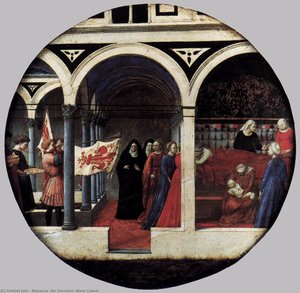
Selecteer een jaar om de originele werken te bekijken.

Schilderijen van Masaccio: vragen voor de galerie

Wat is het bekendste werk van Masaccio?Onthul het antwoord

De Heilige Drie-eenheid (1428). Het Belastinggeld (1425) en De verdrijving uit het paradijs (1426) volgen.

Op welke leeftijd creëerde Masaccio De Heilige Drie-eenheid?Onthul het antwoord

27 jaar oud: De Heilige Drie-eenheid dateert uit 1428, en Masaccio werd geboren in 1401.

Welke tien schilderijen van Masaccio zijn het meest bekend?Onthul het antwoord

De Heilige Drie-eenheid, Het Belastinggeld, De verdrijving uit het paradijs, Rendering van het Tribute Money (detail), Predella panel from the Pisa Altar, The Madonna of Humility, Trinity (detail), Two panels from the Pisa Altarpiece, Trinity en Trinity (detail). De bovenstaande ranglijst vermeldt het jaar en het museum van elk werk.

Hoeveel werken van Masaccio zijn er bekend?Onthul het antwoord

Onze catalogus bevat 97 werken van Masaccio, daterend van 1420 tot 1428.

Waar kunnen de beroemdste originelen van Masaccio worden bekeken?Onthul het antwoord

Voornamelijk in Santa Maria del Carmine (Florence), Staatliche Museen zu Berlin (Berlijn) en Gemäldegalerie (Berlijn). De bovenstaande museumtabel bevat een volledig overzicht.

In welke periode creëerde Masaccio de bekendste schilderijen?Onthul het antwoord

In 1426: 40 van de 96 werken op deze pagina werden toen gemaakt, waaronder De verdrijving uit het paradijs.

Welk beroemd schilderij van Masaccio is de vroegste, en welke de laatste?Onthul het antwoord

Op deze pagina is het vroegste Madonna of Humility (1420) en het laatste De Heilige Drie-eenheid (1428).

Welke onderwerpen had Masaccio de voorkeur?Onthul het antwoord

Saints (28), Religious (22) en Religious art (10), verspreid over de 96 werken op deze pagina.

Met welke materialen schilderde Masaccio het meest?Onthul het antwoord

Fresco, voor 12 van de 96 werken op deze pagina.

Bij welke stroming behoort het werk van Masaccio?Onthul het antwoord

Vroege renaissance, te oordelen aan de originelen op deze pagina.

Welke originele werken van Masaccio kan ik zien in het Santa Maria del Carmine?Onthul het antwoord

De Cappella Brancacci (voor restauratie), Frescoes in de Cappella Brancacci (rechts bekijkpunt) en Frescoes in de Cappella Brancacci (links uitzicht): het Santa Maria del Carmine, Florence herbergt 7 van de werken op deze pagina.

Masaccio: een portret van de kunstenaar

Masaccio (1401-1428): De Ontstaan van Renaissance Realisme

Tommaso di Ser Giovanni di Simone, beter bekend als Masaccio (betekend "sloddervos"), was een baanbrekende figuur in de Vroege Italiaanse Renaissance. Geboren op 21 december 1401, in San Giovanni Valdarno, Italië, en sterven tragisch jong in 1428, zijn korte carrière revolutioneerde schilderkunst met baanbrekende realisme, perspectief en chiaroscuro (het gebruik van sterke lichtschaduwcontrasten). Ondanks zijn korte leven had Masaccio een diepgaande invloed op latere generaties kunstenaars, waardoor hij een nieuwe standaard vestigde voor naturalisme en de looplijn van Westerse kunst beïnvloedde.

Vroege Levensloop en Opleiding

  • Oorsprong: Geboren uit Giovanni di Simone Cassai, een notaris, en Jacopa di Martinozzo. Zijn familienaam, Cassai, werd afgeleid van zijn vaderlijke grootvader's handel als houtbewerker.
  • Jeugd: Orphaned at age five when his father died, he had a brother, Giovanni (Lo Scheggia), who also became a painter.
  • Opleiding: De details van Masaccio’s kunstopleiding blijven grotendeels onbekend, wat uitzonderlijk is voor Renaissance kunstenaars. Het wordt beweerd dat hij waarschijnlijk rond de leeftijd van 12 begon te leren bij een meester, maar er zijn geen definitieve gegevens over zijn meester gevonden. Deze gebrek aan gedocumenteerde opleiding draagt bij aan het mysterie rond zijn snelle ontwikkeling en innovatieve technieken.
  • Guild Lidmaatschap: Hij werd lid van de schildersgilde (Arte de’ Medici e Speziali) in Florence op 7 januari 1422, wat zijn opkomst als een zelfstandige meester kunstenaar betekende.

Artistieke Ontwikkeling en Belangrijke Werken

  • Vroege Invloeden: Initieel beïnvloed door Giotto di Bondone, een voorspreker bekend om zijn naturalisme, overtrof Masaccio hem snel in zijn begrip van perspectief en anatomie. Hij haalde ook inspiratie op uit de architecturale innovaties van Filippo Brunelleschi, vooral Brunelleschi’s herontdekking van lijnperspectief.
  • Belangrijke Innovaties: Masaccio bepaalde verschillende baanbrekende technieken:
    • Lijn Perspectief: Gebruikte vanishing points en mathematische precisie om een overtuigende illusie van diepte te creëren op een tweedimensionale oppervlakte.
    • Chiaroscuro: Laat kunstenaars het licht en de schaduw meesterlijk gebruiken om vormen te modelleren, waardoor een gevoel van volume en realisme ontstond dat eerder in schilderkunst gezien werd.
    • Naturalisme: Depicteerde figuren met anatomische nauwkeurigheid en emotionele expressiviteit, waardoor hij zich afscheid nam van de gestileerde vertegenwoordigingen uit eerdere periodes.
  • Beknopte Werken:
    • San Giovenale Triptych (c. 1422): Een vroeg werk dat zijn ontwikkelende vaardigheid demonstreerde in perspectief en naturalistische vertegenwoordiging.
    • Madonna en Kind met St. Anne (c. 1423-1425): Een samenwerking met Masolino, die Masaccio’s opkomende realisme liet zien naast Masolino’s meer traditionele stijl.
    • Brancacci Kapel Frescoes (c. 1425-1428): Zijn meest beroemde en invloedrijke werken, gelegen in de kerk Santa Maria del Carmine in Florence. Deze fresco's, waaronder "De Tributiemunt," "Verwijdering uit het Paradijs" en "St. Peter Baptizing the Neophytes," worden beschouwd als meesterwerken van Vroege Renaissance kunst.

Historische Betekenis en Erfgoed

Masaccio’s impact op de looplijn van Westerse kunst is immens, ondanks zijn tragisch korte leven. Zijn innovaties in perspectief, chiaroscuro en naturalisme veranderden fundamenteel hoe kunstenaars het wereldbeeld weergeven. Hij bracht de kloof tussen Middeleeuwse kunsttradities en de opkomende idealen van de Renaissance naar een einde.

  • Invloed op Latere Kunstenaars: Masaccio’s werk oefende een diepe invloed uit op latere schilders, waaronder Donatello, Leonardo da Vinci en Michelangelo. Zij bestudeerden zijn fresco's aandachtig en namen zijn technieken over naar hun eigen stijl.
  • Basis voor De Gouden Eeuw: Zijn nadruk op realisme en emotie legde de basis voor de artistieke prestaties van De Gouden Eeuw.
  • Vasari’s Verslag: De biograaf Giorgio Vasari erkende Masaccio’s genie, waarbij hij hem beschouwde als “de beste schilder van zijn tijd” en benadrukte zijn bekwaamheid om de natuur na te bootsen met ongeëvenaarde vaardigheid.
  • Een Tragische Verlazing: Zijn dood op jonge leeftijd werd betreurd door tijdgenoten zoals Filippo Brunelleschi, die verdrietig was over het verlies van een zo bijzondere talent.

    Masaccio’s nalatenschap leeft voort als één van de meest belangrijke en invloedrijke kunstenaars in geschiedenis. Hij staat als een centrale figuur in de transitie van Middeleeuwse kunst naar Renaissance kunst, waardoor hij op een manier verandert hoe wij het wereldbeeld weergeven door middel van schilderkunst. Zijn korte maar briljante carrière dient als een bewijs van kracht natuurlijke innovatie en het blijvende belang artistieke genialiteit.