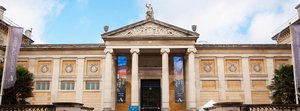
Portret van Luca Carlevaris

Schilderijen van Luca Carlevaris: De 67 bekendste, door de ogen van een galerie

Bijgewerkt in november 2026 · gerangschikt op basis van onze populariteitsscore (zoekopdrachten, bezoeken en bestellingen per kunstwerk) · 67 werken van Luca Carlevaris in onze catalogus

Kortom

In het oog van de galerie is het beroemdste schilderij van Luca Carlevaris Santa Maria della Carità (1703). Santi Giovanni e Paolo and the Scuola di San Marco (1704) en The Rialto Bridge (1703) maken het trio compleet dat elk oog herkent. Van de 67 werken van Luca Carlevaris in onze catalogus presenteert de galerie hieronder de 67 bekendste werken, elk een origineel met de jaartal, het museum en wat het uniek maakt.

1663 – 1730, Udine Baroque Meeste werken: Rijksmuseum

De top 10 schilderijen van Luca Carlevaris in de galerie

1
Santa Maria della Carità (1703) door Luca Carlevaris

Santa Maria della Carità

1703 · Engraving

In this monochrome engraving, the Church of Santa Maria della Carità rises within the urban landscape of Venice, Italy. Created by Luca Carlevaris in 1703, the work captures the architectural presence of the church and its immediate surroundings. The scene focuses on the structural details of the building, presenting a clear view of the facade as it meets the street. Every line works to define the stone and the space…

2
Santi Giovanni e Paolo and the Scuola di San Marco (1704) door Luca Carlevaris

Santi Giovanni e Paolo and the Scuola di San Marco

1704 · Engraving

This 1704 engraving offers a precise view of the Venetian cityscape, focusing on the architectural relationship between the Scuola di San Marco and the church of Santi Giovanni e Paolo. The composition captures the heavy, geometric presence of these structures, which were among the most significant monuments of the city. A sense of urban life is present in the arrangement of the buildings and the space between them, providing a…

3
The Rialto Bridge (1703) door Luca Carlevaris

The Rialto Bridge

1703 · Engraving · Rijksmuseum, Amsterdam

The water of the Grand Canal ripples beneath the shadow of the Rialto Bridge, catching the light in a dance of silver and grey. In this detailed engraving, the air feels thick with the movement of a city that never rests. Pedestrians navigate the stone steps, their forms caught in mid-stride, while gondoliers maneuver their vessels through the narrow channels. The architecture rises with a mathematical precision, every arch and…

4
The Reception of Cardinal César d'Estrées (detail) (1701) door Luca Carlevaris

The Reception of Cardinal César d'Estrées (detail)

1701 · Oil On Canvas · Rijksmuseum, Amsterdam

The oil on canvas depicts a dense crowd gathered in an outdoor setting, likely a public market or a significant social event. Figures are arranged in a crowded composition that emphasizes a mass of people rather than deep spatial recession. The scene is characterized by a variety of period clothing, including men in frock coats and powdered wigs, and women wearing voluminous gowns and headdresses. The perspective is slightly flattened,…

5
A Gondola End View (1710) door Luca Carlevaris

A Gondola End View

1710 · Oil On Canvas

A close-up portrait emerges from a dark, ambiguous field of brown and black. The composition is tightly cropped, focusing on the contours of a head and a helmet. Visible brushstrokes and a rough, uneven texture suggest an aged surface, where light descends from above to define the planes of the face. The palette remains limited, relying on subtle hints of gold to break the heavy shadows. This approach creates a…

6
The Piazzetta and the Library (1720) door Luca Carlevaris

The Piazzetta and the Library

1720 · Oil · Ashmolean Museum, Oxford

The composition centers on a grand palazzo, its facade defined by a rhythmic series of arched windows and balconies that command the viewer's attention. Through a calculated use of linear perspective, the artist creates an exaggerated sense of depth, pulling the eye toward the architectural heart of the scene. The scale of the building dominates the frame, establishing a sense of monumental permanence against the fleeting movements of the figures…

7
The Bacino, Venice, with the Dogana and a Distant View of the Isola di San Giorgio (1709) door Luca Carlevaris

The Bacino, Venice, with the Dogana and a Distant View of the Isola di San Giorgio

1709 · Oil On Canvas · Metropolitan Museum of Art, New York

To gaze upon this magnificent veduta of Venice is to step directly into the golden heart of the eighteenth century. Luca Carlevaris has gifted us more than just a painting; he has preserved a moment—a vibrant, breathing tableau of life unfolding along the Grand Canal. The composition draws the eye deep into the scene, leading it from the immediate foreground where large vessels glide across the water, past the imposing…

8
The Molo, Looking toward the Doge's Palace (1710) door Luca Carlevaris

The Molo, Looking toward the Doge's Palace

1710 · Oil On Canvas · Hermitage Museum, Sint-Petersburg

The scene depicts the Molo in Venice, looking toward the Doge's Palace. In the foreground, the water occupies a significant portion of the lower frame, populated by various vessels. Some boats feature upright sails, while others sit low in the water near the stone edge. Numerous figures are distributed throughout the composition. Some individuals walk along the quay, while others are positioned in the mid-ground or near the boats. A…

9
A Gentleman (1710) door Luca Carlevaris

A Gentleman

1710 · Oil On Canvas

In this 1710 oil on canvas, a male figure is captured in a three-quarter pose, seated with a relaxed yet commanding presence. He wears a blue coat accented with white trim, the texture of which is rendered through meticulous attention to the folds of the fabric and the delicate lace at his shirt. His expression is one of calm confidence, a quiet composure that defines the character of the subject.…

10
Seascape (1690) door Luca Carlevaris

Seascape

1690 · Oil On Canvas

The sea churns with a violent energy, a restless expanse of water that seems to heave against the very canvas. Dark, heavy clouds hang low in a stormy sky, casting a somber mood over the entire scene. Waves crash with immense force against a rugged, rocky coastline, sending spray into the air as they collide with the shore. In the middle ground, the vastness of the ocean dominates, its surface…

Schilderijen van Luca Carlevaris, gerangschikt van 11 tot 67

11The Molo, Venice, Looking West (1709) door Luca CarlevarisThe Molo, Venice, Looking West1709 · Metropolitan Museum of Art 12Palazzo Coccina on the Grand Canal (1703) door Luca CarlevarisPalazzo Coccina on the Grand Canal1703 · Bayerische Staatsbibliothek 13Piazza San Marco, Venice (1709) door Luca CarlevarisPiazza San Marco, Venice1709 · Metropolitan Museum of Art 14The Sea Custom House with San Giorgio Maggiore (1700) door Luca CarlevarisThe Sea Custom House with San Giorgio Maggiore1700 15The Molo with the Ducal Palace (1710) door Luca CarlevarisThe Molo with the Ducal Palace1710 16The Sea Custom House with San Giorgio Maggiore (detail) (1700) door Luca CarlevarisThe Sea Custom House with San Giorgio Maggiore (detail)1700 17A Lady Seen from Behind (1710) door Luca CarlevarisA Lady Seen from Behind1710 18View of a River Port (1710) door Luca CarlevarisView of a River Port1710 19A Lady Holding a Fan (1710) door Luca CarlevarisA Lady Holding a Fan1710 20A Lady Seen in Profile (1710) door Luca CarlevarisA Lady Seen in Profile1710 21The Reception of Cardinal César d'Estrées (1701) door Luca CarlevarisThe Reception of Cardinal César d'Estrées1701 · Rijksmuseum 22The Arrival of the Earl of Manchester in Venice (1710) door Luca CarlevarisThe Arrival of the Earl of Manchester in Venice1710 · Birmingham Museum and Art Gallery 23A Lady Seen in Full Face (1710) door Luca CarlevarisA Lady Seen in Full Face1710 24A Lady Holding a Fan and a Mask (1710) door Luca CarlevarisA Lady Holding a Fan and a Mask1710 25A Hungarian Hussar (1710) door Luca CarlevarisA Hungarian Hussar1710 26A Lady Seen in Profile, Holding a Fan (1710) door Luca CarlevarisA Lady Seen in Profile, Holding a Fan1710 27A Man in a Dark Cloak (1710) door Luca CarlevarisA Man in a Dark Cloak1710 28A Man Seen from Behind (1710) door Luca CarlevarisA Man Seen from Behind1710 29A Seated Man Seen from Behind (1710) door Luca CarlevarisA Seated Man Seen from Behind1710 30Study of Two Gondolas and Figures (1710) door Luca CarlevarisStudy of Two Gondolas and Figures1710 · Birmingham Museum and Art Gallery 31The Upper Section of a Church with a Hexagonal Dome and Two Towers (1710) door Luca CarlevarisThe Upper Section of a Church with a Hexagonal Dome and Two Towers1710 32A Gentleman Wearing a White Coat (1710) door Luca CarlevarisA Gentleman Wearing a White Coat1710 33A Man Wearing an Apron (1710) door Luca CarlevarisA Man Wearing an Apron1710 34A Gondolier (1710) door Luca CarlevarisA Gondolier1710 35Two Studies of a Dog (1710) door Luca CarlevarisTwo Studies of a Dog1710 36A Man in a White Domino Seen from Behind (1710) door Luca CarlevarisA Man in a White Domino Seen from Behind1710 37A Man Wearing a Yellow Coat (1710) door Luca CarlevarisA Man Wearing a Yellow Coat1710 38Study of a Man (1710) door Luca CarlevarisStudy of a Man1710 39Study of a Fish (1710) door Luca CarlevarisStudy of a Fish1710 40A Man Wearing a Green Coat (1710) door Luca CarlevarisA Man Wearing a Green Coat1710 41A Masked Lady (1710) door Luca CarlevarisA Masked Lady1710 42A Man Wearing a Red Jacket (1710) door Luca CarlevarisA Man Wearing a Red Jacket1710 43A Man, Perhaps a Gondolier, Seen from Behind (1710) door Luca CarlevarisA Man, Perhaps a Gondolier, Seen from Behind1710 44A Carpenter (1710) door Luca CarlevarisA Carpenter1710 45A Man Wearing a Red Coat (1710) door Luca CarlevarisA Man Wearing a Red Coat1710 46A Man Wearing a Blue Cloak (1710) door Luca CarlevarisA Man Wearing a Blue Cloak1710 47A Lady Seen from Behind, Holding a Fan (1710) door Luca CarlevarisA Lady Seen from Behind, Holding a Fan1710 48A Man, Perhaps a Lawyer (1710) door Luca CarlevarisA Man, Perhaps a Lawyer1710 49Studies of Two Gentlemen (1710) door Luca CarlevarisStudies of Two Gentlemen1710 50Three Studies of Costume (1710) door Luca CarlevarisThree Studies of Costume1710 51A Seated Man (1710) door Luca CarlevarisA Seated Man1710 52Study of a Horse's Head (1710) door Luca CarlevarisStudy of a Horse's Head1710 53Three Studies of Men (1710) door Luca CarlevarisThree Studies of Men1710 54Two Studies of Men (1710) door Luca CarlevarisTwo Studies of Men1710 55Two Costume Studies (1710) door Luca CarlevarisTwo Costume Studies1710 56View of the Wharf from the Bacino di San Marco (1720) door Luca CarlevarisView of the Wharf from the Bacino di San Marco1720 57Piazza San Marco, Looking East (1722) door Luca CarlevarisPiazza San Marco, Looking East1722 58The Piazzetta, Venice (1729) door Luca CarlevarisThe Piazzetta, Venice1729 · The Ashmolean Museum of Art and Archaeology 59The Bridge for the Feast of the Madonna della Salute (1720) door Luca CarlevarisThe Bridge for the Feast of the Madonna della Salute1720 · Wadsworth Atheneum 60A Gondola (1710) door Luca CarlevarisA Gondola1710 61Seaport (1690) door Luca CarlevarisSeaport1690 · Ca' Zenobio 62A Lawyer (1710) door Luca CarlevarisA Lawyer1710 63A View of the Molo door Luca CarlevarisA View of the Molo 64The Dock Facing the Doge's Palace door Luca CarlevarisThe Dock Facing the Doge's PalaceSanssouci Schildergalerie 65Piazza San Marco with Jugglers door Luca CarlevarisPiazza San Marco with JugglersSchloss Sanssouci 66St. Mark's Square with Charlatans door Luca CarlevarisSt. Mark's Square with CharlatansSanssouci Schildergalerie 67The Wharf, Looking toward the Doge's Palace door Luca CarlevarisThe Wharf, Looking toward the Doge's PalaceSchloss Sanssouci

De onderwerpen die de aandacht van Luca Carlevaris troffen

De vier onderwerpen die het meest voorkomen in deze originelen, elk met zijn mooiste voorbeeld.

De musea waar de originele werken van Luca Carlevaris worden bewaard

De 8 musea met de meeste schilderijen op deze pagina.

Museum Stad Werken van Luca Carlevaris Schilderijen uit deze lijst
Rijksmuseum, AmsterdamRijksmuseum Amsterdam 3 The Rialto Bridge, The Reception of Cardinal César d'Estrées (detail), The Reception of Cardinal César d'Estrées
Metropolitan Museum of Art, New YorkMetropolitan Museum of Art New York 3 The Bacino, Venice, with the Dogana and a Distant View of the Isola di San Giorgio, The Molo, Venice, Looking West, Piazza San Marco, Venice
Birmingham Museum and Art Gallery, BirminghamBirmingham Museum and Art Gallery Birmingham 2 The Arrival of the Earl of Manchester in Venice, Study of Two Gondolas and Figures
Sanssouci Schildergalerie, PotsdamSanssouci Schildergalerie Potsdam 2 The Dock Facing the Doge's Palace, St. Mark's Square with Charlatans
Schloss Sanssouci, PotsdamSchloss Sanssouci Potsdam 2 Piazza San Marco with Jugglers, The Wharf, Looking toward the Doge's Palace
Ashmolean Museum, OxfordAshmolean Museum Oxford 1 The Piazzetta and the Library
Hermitage Museum, Sint-PetersburgHermitage Museum Sint-Petersburg 1 The Molo, Looking toward the Doge's Palace
Bayerische Staatsbibliothek, MünchenBayerische Staatsbibliothek München 1 Palazzo Coccina on the Grand Canal

Luca Carlevaris, één iconisch schilderij per decennium

Werken per decennium

Kies een decennium om het origineel te zien dat dit tijdperk definieert.

Schilderijen van Luca Carlevaris: de galerie geeft antwoord

Welk schilderij van Luca Carlevaris is het beroemdste van allemaal?Onthul het antwoord

Santa Maria della Carità (1703). Santi Giovanni e Paolo and the Scuola di San Marco (1704) en The Rialto Bridge (1703) volgen.

Hoe oud was Luca Carlevaris bij de voltooiing van Santa Maria della Carità?Onthul het antwoord

40 jaar oud: Santa Maria della Carità dateert uit 1703, en Luca Carlevaris werd geboren in 1663.

Wat zijn de top 10 schilderijen van Luca Carlevaris?Onthul het antwoord

Santa Maria della Carità, Santi Giovanni e Paolo and the Scuola di San Marco, The Rialto Bridge, The Reception of Cardinal César d'Estrées (detail), A Gondola End View, The Piazzetta and the Library, The Bacino, Venice, with the Dogana and a Distant View of the Isola di San Giorgio, The Molo, Looking toward the Doge's Palace, A Gentleman en Seascape. De bovenstaande ranglijst vermeldt het jaar en het museum van elk werk.

Hoeveel werken heeft Luca Carlevaris gemaakt?Onthul het antwoord

Onze catalogus bevat 67 werken van Luca Carlevaris, daterend van 1690 tot 1729.

Waar hangen de beroemdste originele werken van Luca Carlevaris?Onthul het antwoord

Voornamelijk in Rijksmuseum (Amsterdam), Metropolitan Museum of Art (New York) en Birmingham Museum and Art Gallery (Birmingham). De bovenstaande museumtabel bevat een volledig overzicht.

Wanneer creëerde Luca Carlevaris de beroemdste schilderijen?Onthul het antwoord

In 1710s: 44 van de 67 werken op deze pagina werden toen gemaakt, waaronder A Gondola End View.

Wat zijn de vroegste en laatste beroemde werken van Luca Carlevaris?Onthul het antwoord

Op deze pagina is het vroegste Seascape (1690) en het laatste The Piazzetta, Venice (1729).

Welke onderwerpen keerde Luca Carlevaris het vaakst naar terug?Onthul het antwoord

Man (18), Architecture (14) en People (12), verspreid over de 67 werken op deze pagina.

In welk medium werkte Luca Carlevaris het meest?Onthul het antwoord

Oil, voor 28 van de 67 werken op deze pagina.

Bij welke stroming wordt Luca Carlevaris gerekend?Onthul het antwoord

Baroque en Venetian renaissance, te oordelen aan de originelen op deze pagina.

Welke originelen van Luca Carlevaris zijn in de collectie van het Rijksmuseum?Onthul het antwoord

The Rialto Bridge, The Reception of Cardinal César d'Estrées (detail) en The Reception of Cardinal César d'Estrées: het Rijksmuseum, Amsterdam herbergt 3 van de werken op deze pagina.

Luca Carlevaris: de kunstenaar

Luca Carlevaris: De Venetiaanse Meester van Licht en Schaduw

Luca Carlevaris (1663-1730), een naam die wellicht minder bekend is dan die van zijn tijdgenoten Canaletto of Guardi, staat als een cruciaal figuur in de ontwikkeling van de Venetiaanse stadsgezichtschilderkunst. Geboren in Udine, Italië, vestigde hij zich als een vooraanstaand kunstenaar in Venetië, waar hij het grootste deel van zijn carrière doorbracht. Hij liet een nalatenschap na van voortreffelijk gedetailleende en atmosferische vergezichten die de essentie van het levendige stadsleven en de subtiele schoonheid van de stad vingen. Zijn werk vormt een essentiële brug tussen de dramatische intensiteit van de Barok en de daaropvolgende opkomst van het topografisch realisme, waarmee hij generaties Venetiaanse kunstenaars diepgaand heeft beïnvloed.

Carlevaris verwierf aanvankelijk erkenning door zijn associatie met de Accademia di San Luca in Rome, een prestigieuze instelling die artistieke innovatie stimuleerde. Daar kwam hij in aanraking met de technieken en filosofieën van de Nederlandse meesters, in het bijzonder Caspar van Wittel, wiens baanbrekende werk in vedute – gedetailleerde stadsgezichten – als een belangrijke inspiratiebron diende. De nadruk van Van Wittel op perspectief, licht en de weergave van de stedelijke ruimte vormde de basis voor Carlevaris' benadering van de Venetiaanse schilderkunst. Deze invloed is duidelijk zichtbaar in zijn eigen reeks etsen en schilderijen van Venetië, waarin hij de complexe architectuur, de drukke straten en de betoverende waterwegen van de stad minutieus reconstrueert.

Een Pionier van de Veduta

Carlevaris onderscheidde zich werkelijk als een pionier van het veduta-genre in Venetië. In tegenstelling tot eerdere afbeeldingen, die vaak de nadruk legden op monumentale bouwwerken of geïdealiseerde uitzichten, streefde Carlevaris ernaar om de dagelijkse realiteit van het Venetiaanse leven vast te leggen – de overvolle markten, de smalle steegjes en de schitterende reflecties op de kanalen. Zijn schilderijen worden gekenmerende door een buitengewone aandacht voor detail, minutieus weergegeven gebouwen en een meesterlijk gebruik van licht en schaduw. Hij maakte gebruik van de techniek die bekendstaat als ‘chiaroscuro’, waarbij hij het contrast tussen licht en donker behendig manipuleerde om diepte, drama en een gevoel van atmosfeer te creëren.

Zijn meest gevierde werken, zoals “De Piazzetta en de Bibliotheek” (1720), zijn schoolvoorbeelden van deze benadering. Het schilderij toont op levendige wijze de bruisende Piazza San Marco, waarbij niet alleen de architecturale grandeur wordt gevangen, maar ook de levendige activiteit van de inwoners – kooplieden, gondeliers en toeristen. Het gebruik van perspectief is bijzonder opmerkelijk; het creëert een overtuigende illusie van diepte die de kijker direct het tafereel in trekt. Carlevaris' vermogen om zowel de fysieke realiteit als de emotionele sfeer van Venetië over te brengen, bezegelde zijn reputatie als een van de belangrijkste landschapsschilders van de stad.

Invloeden en Artistieke Verbindingen

De artistieke reis van Carlevaris werd gevormd door een complex netwerk van invloeden. Zoals eerder vermeld, bood het werk van Van Wittel een fundamenteel model voor zijn benadering van stadsgezichten. Echter, hij putte ook inspiratie uit Luca Signorelli, de meester uit de Hoogrenaissance die bekend stond om zijn dramatische fresco's en innovatieve gebruik van verkorting. De nadruk van Signorelli op anatomische nauwkeurigheid en dynamische compositie is terug te vinden in de figuren van Carlevaris, die vaak een gevoel van beweging en vitaliteit bezitten.

Bovendien onderhield Carlevaris nauwe banden met andere prominente Venetiaanse kunstenaars uit zijn tijd, waaronder Canaletto en Francesco Guardi. Deze samenwerkingen bevorderden de uitwisseling van ideeën en technieken, wat bijdroeg aan de ontwikkeling van de Venetiaanse schilderkunst als geheel. Men gelooft dat deze meesters beïnvloed werden door zijn werk, met name door zijn vernieuwende gebruik van perspectief en licht.

Nalatenschap en Historisch Belang

De bijdrage van Luca Carlevaris aan de Venetiaanse kunst is onmiskenbaar. Hij tilde het veduta-genre naar nieuwe hoogten en stelde een standaard vast voor detail, nauwkeurigheid en atmosferische weergave die door talloze kunstenaars zou worden gevolgd. Zijn minutieuze afbeeldingen van Venetië bieden onschatbare inzichten in de geschiedenis, cultuur en het dagelijks leven van de stad. Zijn werk blijft de kijker tot op de dag van vandaag fascineren met zijn schoonheid, precisie en de evocatieve weergave van een voorbijgegane tijd.

Naast zijn artistieke prestaties strekt de nalatenschap van Carlevaris zich uit via zijn invloed op latere generaties Venetiaanse schilders. Zijn technieken en benaderingen dienden als fundament voor de ontwikkeling van de topografische schilderkunst in Venetië, waardoor hij ervoor zorgde dat zijn visie op de stad nog lang na zijn dood zou voortbestaan. Zijn schilderijen blijven kostbare kunstwerken die een uniek venster bieden op de ziel van het 18e-eeuwse Venetië.