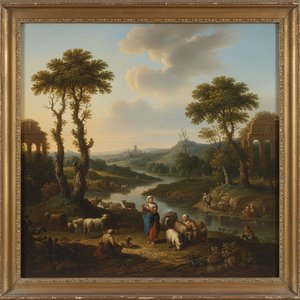
Johan Mari Henri Ten Kate: Een Nederlandse Romantische Landschapsschilder
Johan Mari Henri Ten Kate (1859 – 1896) verrees als een prominente figuur binnen de Nederlandse romantische landschapsstroming, waarbij hij het publiek betoverde met zijn meesterlijke weergaven van het serene Nederlandse platteland en evocatische portretten van menselijke figuren te midden van natuurlijke schoonheid. Hoewel hij tijdens zijn leven werd overschaduwd door tijdgenoten zoals Israëls en Maris, blijft de kenmerkende stijl van Ten Kate — gekenmerkt door lumineuze kleurenpaletten en een minutieuze aandacht voor detail — tot op de dag van vandaag resoneren bij verzamelaars en kunsthistorici.- Geboren in Amsterdam in 1859, ontving Ten Kate een formele artistieke opleiding aan de Koninklijke Academie voor Beeldende Kunsten in Antwerpen, België. Zijn instructeurs omvatten Willem Maris en Anton Mauve, invloedrijke figuren die impressionistische technieken aanmoedigden en studenten stimuleerden om vluchtige momenten van licht en atmosfeer vast te leggen — een cruciaal element dat de artistieke visie van Ten Kate vormgaf.
Een Kenmerkende Romantische Stijl
Het oeuvre van Ten Kate onderscheidt zich van de heersende trends uit zijn tijd door een opmerkelijke gevoeligheid voor kleur en textuur. In tegenstelling tot veel kunstenaars die de voorkeur gaven aan gedempte tonen, omarmde hij levendige tinten — in het bijzonder blauw en groen — om de grootsheid en de rust van het Nederlandse landschap over te brengen. Zijn penseelstreken waren doelbewust maar vloeiend; hij bracht pigmenten met uiterste precisie aan om een ongeëvenaard gevoel van realisme te bereiken, terwijl hij zijn doeken tegelijkertijd voorziet van emotionele diepgang. Met grote vaardigheid wist hij atmosferische effecten zoals mist en nevel weer te geven, waardoor scènes ontstonden die leken te leven met beweging en doordrenkt waren van een tastbaar gevoel voor de natuurlijke wereld.- Onder de meest gevierde werken van Ten Kate behoren “Kite Flying” (1883) en “Seeking Shelter,” die beide de essentie van het Nederlandse landschap vangen. Deze schilderijen zijn een voorbeeld van zijn vermogen om niet alleen visuele nauwkeurigheid over te brengen, maar ook psychologische resonantie — de kijker wordt meegezogen in de stille contemplatie van een winderige middag of de troostende omhelzing van een beschut bosje.
- Naast zijn landschappen produceerde Ten Kate verschillende opvallende portretten, wat zijn veelzijdigheid als kunstenaar bewijst. “The Young Couple” illustreert zijn minutieuze observatievermogen en zijn talent om subtiele emotionele uitdrukkingen te vangen — een getuigenis van zijn artistieke kunde en humanistische gevoeligheid.
Invloeden & Artistieke Ontwikkeling
De artistieke reis van Ten Kate werd diepgaand beïnvloed door de impressionistische beweging, aangevoerd door Claude Monet en Pierre-Auguste Renoir. Hij absorbeerde hun technieken voor het vastleggen van licht en kleur en paste deze aan zijn eigen unieke stijl aan. Bovendien putte hij inspiratie uit romantische schilders zoals Caspar David Friedrich en Eugène Delacroix, wier nadruk op het sublieme landschap en dramatische emotionele verhalen zijn artistieke gevoelens vormgaven. Deze invloeden kwamen samen om een unieke esthetiek te smeden die realisme vermengde met lyrische schoonheid.Nalatenschap & Historisch Belang
Ondanks de relatieve onbekendheid tijdens zijn leven, blijft de nalatenschap van Johan Mari Henri Ten Kate voortbestaan als een schoolvoorbeeld van de Nederlandse romantische landschapsschilderkunst. Zijn doeken blijven kijkers fascineren met hun lichtgevende kleurenpaletten en de meesterlijke weergave van atmosferische effecten — een herinnering aan de blijvende kracht van kunst om emotie op te roepen en de essentie van een specifieke plaats en tijd vast te leggen. Vandaag de dag wordt het werk van Ten Kate gewaardeerd om zijn ingetogen elegantie en diepe verbondenheid met de natuur, waarmee hij zijn positie als belangrijke bijdrager aan de Nederlandse kunstgeschiedenis heeft veiliggesteld.Vraag en antwoord
Waar en wanneer is Johan Mari Henri Ten Kate geboren?
Johan Mari Henri Ten Kate werd geboren in Amsterdam in 1859.
Hoeveel kunstwerken van Johan Mari Henri Ten Kate zijn beschikbaar om te bekijken?
U kunt 47 kunstwerken werken van Johan Mari Henri Ten Kate bekijken op de Alle kunstwerken-pagina.
Waar zijn de kunstwerken van Johan Mari Henri Ten Kate gegroepeerd per kunststroming te vinden?
De stromingen waarin Johan Mari Henri Ten Kate werkte, zijn te vinden op de Alle stromingen-pagina van de kunstenaar, waar de kunstwerken per stroming zijn gegroepeerd.