Portret van Grigory Gagarin

De 58 bekendste schilderijen van Grigory Gagarin, een selectie uit de galerie

Bijgewerkt in november 2026 · gerangschikt op basis van onze populariteitsscore (zoekopdrachten, bezoeken en bestellingen per kunstwerk) · 59 werken van Grigory Gagarin in onze catalogus

Kortom

Van alle originele werken die Grigory Gagarin heeft nagelaten, is Circassian Soldaat (1855) het bekendst, in de collectie van het Art Palace of Georgia - Museum of Cultural History, Tbilisi. Direct daarna volgen Portrait of Major M.L.Dubelt (1850) en Georgian militia in Zaqatala (1855). Onze catalogus bevat 59 werken van Grigory Gagarin; de galerie heeft de 58 meest bewonderde werken ter wereld bewaard, elk voorzien van de datum, het museum en het verhaal erachter.

1810 – 1893, Sint-Petersburg Romantic realism Meeste werken: Art Palace of Georgia - Museum of Cultural History

De top 10 schilderijen van Grigory Gagarin: de selectie van de galerie

1
Circassian Soldaat (1855) door Grigory Gagarin

Circassian Soldaat

Een Pionier van de Russische Kunst: Een Onderzoek naar Grigory Gagarin en Zijn ‘Circassian Soldier’ Grigory Grigorievich Gagarin (1810 – 1893), een Russische schilder, majorgeneraal en diplomaat, staat bekend om zijn prachtige werkstukken die het licht hebben laten zien van de grandeur en schoonheid van het Russische kunstenaarschap tijdens het Gouden Eeuw. Zijn ‘Circassian Soldier’, geschilderd in 1855, is een fascinerende combinatie van historische aandacht voor detail en artistieke innovatie…

2
Portrait of Major M.L.Dubelt (1850) door Grigory Gagarin

Portrait of Major M.L.Dubelt

1850 · Oil On Canvas · Hermitage Museum, Sint-Petersburg

A young officer sits against a backdrop of alpine air. The portrait captures Major M.L. Dubelt in a three-quarter view, his body angled slightly away from the viewer while his gaze remains steady. He wears a heavy military uniform of deep black and rich red. The fabric appears thick, holding the sharp, structured lines of his shoulders. Gold epaulettes catch the light from the upper left, their metallic sheen contrasting…

3
Georgian militia in Zaqatala (1855) door Grigory Gagarin

Georgian militia in Zaqatala

In the 1855 work Georgian militia in Zaqatala, Grigory Gagarin presents a formal composition featuring six Georgian soldiers. The figures are depicted in traditional military attire, standing with a poised and dignified presence. The scene is set against a lush, natural landscape characterized by greenery and a tranquil body of water in the distance. The composition emphasizes the structural silhouettes of the soldiers, specifically through the geometric forms of their…

4
Russian Soldiers During The Caucasian Wars door Grigory Gagarin

Russian Soldiers During The Caucasian Wars

Oil

The scene unfolds within a dense forest, where the soft illumination of early morning or late afternoon casts long, heavy shadows across the earthen floor. Three figures occupy the foreground, their presence anchored by the massive trunks of ancient trees. A soldier stands upright, his posture alert, clutching a rifle. Beside him, another soldier rests against a tree, his firearm laid across his lap in a state of weary repose.…

5
Caucasus Policeman (1855) door Grigory Gagarin

Caucasus Policeman

1855 · Acryl op canvas · Art Palace of Georgia - Museum of Cultural History, Tbilisi

Grigory Grigorievich Gagarin’s “Caucasian Policeman,” painted in 1855, transcends mere depiction; it embodies the spirit of a pivotal moment in Russian imperial history and artistic exploration. This striking canvas captures a young Circassian officer standing proudly amidst the arid landscape of Georgia—a testament to Gagarin's fascination with documenting the diverse cultures inhabiting the Caucasus region during his tenure as administrator for Mikhail Vorontsov.

6
Mingrelian Prins (1855) door Grigory Gagarin

Mingrelian Prins

1855 · Acryl op canvas · Art Palace of Georgia - Museum of Cultural History, Tbilisi

Mingrelian Prince - A Portrait of Caucasus Spirit Grigory Grigorievich Gagarin (1810-1893), a Russian painter, diplomat & administrator, stands as a pivotal figure in 19th-century Russian art. Born in Saint Petersburg to the noble Rurikid princely gagarin family, his artistic journey began with private lessons from Karl Briullov, shaping him into a master of capturing human emotion and regional landscapes. Gagarin’s legacy extends beyond individual canvases; he profoundly influenced the…

De selectie van Grigory Gagarin gaat verder, van 11 tot 58

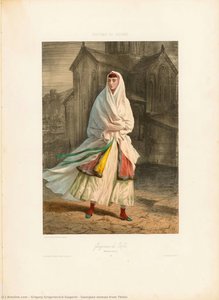
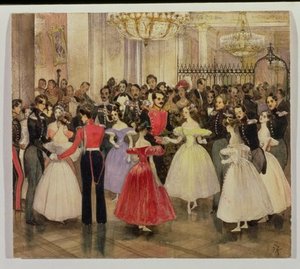
11End Of The Hunt door Grigory GagarinEnd Of The Hunt 12The Meeting Of General Kluke Von Klugenau And Imam Shamil door Grigory GagarinThe Meeting Of General Kluke Von Klugenau And Imam Shamil 13Circassian Vrouw (1855) door Grigory GagarinCircassian Vrouw1855 · Art Palace of Georgia - Museum of Cultural History 14Familie uit Armenië (1855) door Grigory GagarinFamilie uit Armenië1855 · Art Palace of Georgia - Museum of Cultural History 15A prist from Armenia (1855) door Grigory GagarinA prist from Armenia1855 · Art Palace of Georgia - Museum of Cultural History 16Georgisch vrouw uit Tbilisi (1855) door Grigory GagarinGeorgisch vrouw uit Tbilisi1855 · Art Palace of Georgia - Museum of Cultural History 17De Circassian krijger (1855) door Grigory GagarinDe Circassian krijger1855 · Art Palace of Georgia - Museum of Cultural History 18Een man uit Nagorno-Karabach (1855) door Grigory GagarinEen man uit Nagorno-Karabach1855 · Art Palace of Georgia - Museum of Cultural History 19De Prins van Kazachstan (1855) door Grigory GagarinDe Prins van Kazachstan1855 · Art Palace of Georgia - Museum of Cultural History 20Arriving At Tsatanyk door Grigory GagarinArriving At Tsatanyk 21The Bazaar in Maidan Square door Grigory GagarinThe Bazaar in Maidan Square 22Tcherkersseians On A Raid Near The Black Sea, door Grigory GagarinTcherkersseians On A Raid Near The Black Sea, 23Frescoes From The Orthodox Church Of Nekrssi door Grigory GagarinFrescoes From The Orthodox Church Of Nekrssi 24View Of Ghimri And Portrait Of Hadji-mourad, door Grigory GagarinView Of Ghimri And Portrait Of Hadji-mourad, 25Sharia Lecture At Khosrakh door Grigory GagarinSharia Lecture At Khosrakh 26Oriental Scene door Grigory GagarinOriental Scene 27A Falcon Hunt Near Yerevan door Grigory GagarinA Falcon Hunt Near Yerevan 28Caravan Of Armenian Merchants door Grigory GagarinCaravan Of Armenian Merchants 29Costumes of Baku door Grigory GagarinCostumes of Baku 30Kurdish And Tatar Warriors At Sadar Abbat door Grigory GagarinKurdish And Tatar Warriors At Sadar Abbat 31Dancing Party At Kagha-choura door Grigory GagarinDancing Party At Kagha-choura 32Military Meal In The Ruins At Sioukh door Grigory GagarinMilitary Meal In The Ruins At Sioukh 33Skirmish Of Persians And Kurds In Armenia door Grigory GagarinSkirmish Of Persians And Kurds In Armenia 34Costumes Of The 17th And 18th Centurie door Grigory GagarinCostumes Of The 17th And 18th Centurie 35The Sevang Or Cockcha Lake door Grigory GagarinThe Sevang Or Cockcha Lake 36Rest Room Beside The Baths At Shemakha door Grigory GagarinRest Room Beside The Baths At Shemakha 37Reunion Of Tcherkesse Princes door Grigory GagarinReunion Of Tcherkesse Princes 38Garden Near Tiflis door Grigory GagarinGarden Near Tiflis 39Frescoes From The Gelati Monastery door Grigory GagarinFrescoes From The Gelati Monastery 40Landing Of A Military Leader At Redout-kale door Grigory GagarinLanding Of A Military Leader At Redout-kale 41King Alexander I door Grigory GagarinKing Alexander I 42Frescoes From The Orthodox Church Of Nekrssi Near Dido door Grigory GagarinFrescoes From The Orthodox Church Of Nekrssi Near Dido 43The Hall Of Mirrors In The Palace Of The Sardar door Grigory GagarinThe Hall Of Mirrors In The Palace Of The Sardar 44Princess Baryatinskaya's Ball door Grigory GagarinPrincess Baryatinskaya's Ball 45The Palace Of The Khan Of Baku door Grigory GagarinThe Palace Of The Khan Of Baku 46Outdoor Fete In Turkey door Grigory GagarinOutdoor Fete In Turkey 47Funeral Ceremony In The Ruins door Grigory GagarinFuneral Ceremony In The Ruins 48Outdoor Fete In Turkey door Grigory GagarinOutdoor Fete In Turkey 49Ateseh-gah door Grigory GagarinAteseh-gah 50The Rest Room Near The Baths At Shemakha door Grigory GagarinThe Rest Room Near The Baths At Shemakha 51Portrait Of Chota Rustaveli After A Miniature door Grigory GagarinPortrait Of Chota Rustaveli After A Miniature 52Circassian Genocide (1855) door Grigory GagarinCircassian Genocide1855 · Art Palace of Georgia - Museum of Cultural History 53Patriarch van Armenië (1855) door Grigory GagarinPatriarch van Armenië1855 · Art Palace of Georgia - Museum of Cultural History 54Circassian Soldaat (1855) door Grigory GagarinCircassian Soldaat1855 · Art Palace of Georgia - Museum of Cultural History 55De Prins van Noord Caucasussen met zijn Vader (1855) door Grigory GagarinDe Prins van Noord Caucasussen met zijn Vader1855 · Art Palace of Georgia - Museum of Cultural History 56Georgische prins in bewakersuniform (1855) door Grigory GagarinGeorgische prins in bewakersuniform1855 · Art Palace of Georgia - Museum of Cultural History 57Georgische Man (1855) door Grigory GagarinGeorgische Man1855 · Art Palace of Georgia - Museum of Cultural History 58Kurd uit Ararat (1855) door Grigory GagarinKurd uit Ararat1855 · Art Palace of Georgia - Museum of Cultural History

De onderwerpen die de aandacht van Grigory Gagarin troffen

De vier onderwerpen die het meest voorkomen in deze originelen, elk met zijn mooiste voorbeeld.

De musea waar de originele werken van Grigory Gagarin worden bewaard

De 2 musea met de meeste schilderijen op deze pagina.

Museum Stad Werken van Grigory Gagarin Schilderijen uit deze lijst
Art Palace of Georgia - Museum of Cultural History, TbilisiArt Palace of Georgia - Museum of Cultural History Tbilisi 18 Circassian Soldaat, Georgian militia in Zaqatala, Caucasus Policeman
Hermitage Museum, Sint-PetersburgHermitage Museum Sint-Petersburg 1 Portrait of Major M.L.Dubelt

Grigory Gagarin jaar voor jaar: de originelen die elk jaar definiëren

De gedateerde werken van Grigory Gagarin in deze selectie beslaan slechts 6 jaar, van 1850 tot 1855: een korte carrière, hier jaar voor jaar weergegeven.

Werken per jaar

Selecteer een jaar om de originele werken te bekijken.

Vragen van verzamelaars over de schilderijen van Grigory Gagarin

Waar is Grigory Gagarin het meest bekend om?Onthul het antwoord

Circassian Soldaat (1855), Art Palace of Georgia - Museum of Cultural History, Tbilisi. Portrait of Major M.L.Dubelt (1850) en Georgian militia in Zaqatala (1855) volgen.

Hoe oud was Grigory Gagarin toen Circassian Soldaat werd gemaakt?Onthul het antwoord

45 jaar oud: Circassian Soldaat dateert uit 1855, en Grigory Gagarin werd geboren in 1810.

Wat zijn de tien beroemdste schilderijen van Grigory Gagarin?Onthul het antwoord

Circassian Soldaat, Portrait of Major M.L.Dubelt, Georgian militia in Zaqatala, Russian Soldiers During The Caucasian Wars, Caucasus Policeman, Mingrelian Prins, The Terraces Of Tiflis, Winemaking In Kahetie, Grape Harvest In Kakhetie en Persian Mosque At Yerevan. De bovenstaande ranglijst vermeldt het jaar en het museum van elk werk.

Hoeveel schilderijen heeft Grigory Gagarin nagelaten?Onthul het antwoord

Onze catalogus bevat 59 werken van Grigory Gagarin, daterend van 1850 tot 1855.

In welke musea hangen de meesterwerken van Grigory Gagarin?Onthul het antwoord

Voornamelijk in Art Palace of Georgia - Museum of Cultural History (Tbilisi) en Hermitage Museum (Sint-Petersburg). De bovenstaande museumtabel bevat een volledig overzicht.

In welke jaren schilderde Grigory Gagarin de beroemdste werken?Onthul het antwoord

In 1855: 18 van de 58 werken op deze pagina werden toen gemaakt, waaronder Circassian Soldaat.

Wat zijn de eerste en de laatste beroemde originelen van Grigory Gagarin?Onthul het antwoord

Op deze pagina is het vroegste Portrait of Major M.L.Dubelt (1850) en het laatste Circassian Soldaat (1855).

Welke onderwerpen koos Grigory Gagarin het vaakst?Onthul het antwoord

Georgian art (10), Tbilisi cathedral (6) en Caucasus (5), verspreid over de 58 werken op deze pagina.

Welke techniek gebruikte Grigory Gagarin het meest?Onthul het antwoord

Acryl op canvas, voor 13 van de 58 werken op deze pagina.

Bij welke kunststroming behoort Grigory Gagarin?Onthul het antwoord

Romantic realism, te oordelen aan de originelen op deze pagina.

Welke werken van Grigory Gagarin hangen in het Art Palace of Georgia - Museum of Cultural History?Onthul het antwoord

Circassian Soldaat, Georgian militia in Zaqatala en Caucasus Policeman: het Art Palace of Georgia - Museum of Cultural History, Tbilisi herbergt 18 van de werken op deze pagina.

Grigory Gagarin: leven en werk

Early Life and Education

Grigory Grigorievich Gagarin (1810 – 1893) was a Russian painter, Major General, and administrator whose artistic endeavors intertwined seamlessly with his distinguished diplomatic career. Born in Saint Petersburg to the noble Rurikid princely Gagarin family—his father, Prince Grigory Ivanovich Gagarin, served as Russia’s ambassador to Italy—Gagarin's upbringing instilled within him a profound appreciation for culture and intellectual pursuits. Despite lacking formal artistic training, he benefited immensely from private lessons imparted by Karl Briullov, arguably Saint Petersburg’s foremost painter at the time, fostering an early connection with Romantic ideals and techniques. This formative influence would shape his subsequent artistic vision.

Artistic Career and Notable Works

Gagarin's artistic trajectory was inextricably linked to literary luminaries of his era, notably Alexander Pushkin and Mikhail Lermontov. He undertook the monumental task of illustrating Pushkin’s celebrated poems “The Queen of Spades” and “The Tale of Tsar Saltan,” capturing the dramatic spirit and vivid imagery of these iconic narratives. Furthermore, he cultivated close relationships with figures like Lermontov, contributing to the vibrant intellectual milieu of Moscow during his formative years. His artistic output encompassed a diverse range of subjects—primarily portraits of Caucasian peoples—reflecting his fascination with ethnographic studies and documenting the cultural tapestry of the Russian Empire. Among his most enduring masterpieces are “Caucasian Prince” (59 x 42 cm), “Circassian Woman” (59 x 42 cm), "A Priest from Armenia" (59 x 42 cm), “Kurds from Ararat” (59 x 42 cm), and “Georgian Man” (59 x 42 cm)—each meticulously rendered in watercolor, embodying the Romantic aesthetic’s emphasis on emotion and observation. These paintings stand as testament to Gagarin's artistic skill and his commitment to portraying the beauty of diverse cultures.

Military Service and Diplomatic Engagement

Beyond his artistic pursuits, Gagarin distinguished himself as a soldier and diplomat, serving with distinction in Paris, Rome, and Constantinople—roles that exposed him to European intellectual currents and broadened his worldview. His tenure in Munich further enriched his understanding of Germanic art and society. Notably, he returned to Russia in 1839, embarking on a multifaceted administrative career that spanned decades. He played a pivotal role in revitalizing the Russian Academy of Arts, fostering artistic innovation and promoting scholarly research. Gagarin’s unwavering dedication to cultural preservation cemented his legacy as a champion of Russian heritage.

Legacy and Recognition

Grigory Gagarin's contribution to Russian art is undeniable—his paintings continue to inspire admiration for their stylistic elegance and psychological depth. His work aligns perfectly with the Romantic movement, characterized by its passion for emotion, imagination, and exploration of the human condition. Moreover, his diplomatic accomplishments underscored his commitment to fostering international understanding and strengthening Russia’s position on the global stage. Gagarin's legacy persists in museums across Europe and Russia, where his paintings are treasured as emblems of artistic excellence and cultural heritage—a lasting testament to a remarkable life devoted to both art and service.