Portret van Félicien Rops

De 46 bekendste schilderijen van Félicien Rops, een selectie uit de galerie

Bijgewerkt in oktober 2026 · gerangschikt op basis van onze populariteitsscore (zoekopdrachten, bezoeken en bestellingen per kunstwerk) · 46 werken van Félicien Rops in onze catalogus

Kortom

Van alle originele werken die Félicien Rops heeft nagelaten, is The Entrance to the Ball (1858) het bekendst, in de collectie van het musée provincial Félicien Rops, Namur. Direct daarna volgen Satanic Self-Portrait (1860) en Head of an Old Antwerp Woman (1873). Onze catalogus bevat 46 werken van Félicien Rops; de galerie heeft de 46 meest bewonderde werken ter wereld bewaard, elk voorzien van de datum, het museum en het verhaal erachter.

1833 – 1898, Namen Symbolism Meeste werken: musée provincial Félicien Rops

De top 10 schilderijen van Félicien Rops: de selectie van de galerie

De selectie van Félicien Rops gaat verder, van 11 tot 46

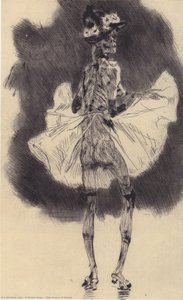
11The Sphinx (1882) door Félicien RopsThe Sphinx1882 12The Slag (1882) door Félicien RopsThe Slag1882 · musée provincial Félicien Rops 13The Temptation of Saint Anthony door Félicien RopsThe Temptation of Saint Anthony 14A Gentleman and a Lady (Aurelien Scholl and Marie Colombier) (1891) door Félicien RopsA Gentleman and a Lady (Aurelien Scholl and Marie Colombier)1891 15Tranformism door Félicien RopsTranformism 16Death at the Ball door Félicien RopsDeath at the BallKröller-Müller Museum 17Untitled (868) door Félicien RopsUntitled (868) 18The Werewolf (1868) door Félicien RopsThe Werewolf1868 19The Hanged Man (1868) door Félicien RopsThe Hanged Man1868 20Landscape in Sweden (1871) door Félicien RopsLandscape in Sweden1871 · Museum voor Schone Kunsten Gent 21Cupid with a Tambourine door Félicien RopsCupid with a TambourineHammer Museum 22Landscape in the Ardennes (1882) door Félicien RopsLandscape in the Ardennes1882 · Koninklijk Museum voor Schone Kunsten Antwerpen 23Pears and Apple on a Plate (1882) door Félicien RopsPears and Apple on a Plate1882 · musée provincial Félicien Rops 24Heyst, 1881 (1881) door Félicien RopsHeyst, 18811881 25The Satanic. Removal (1882) door Félicien RopsThe Satanic. Removal1882 26The Sacrifice, from The Satanic Ones (1882) door Félicien RopsThe Sacrifice, from The Satanic Ones1882 27'The Hidden Side of a Whist Party', illustration from 'Les Diaboliques' by Jules Amedee Barbey d'Aurevilly (1808-89) 1886 (engraving) (b/w photo) (1886) door Félicien Rops'The Hidden Side of a Whist Party', illustration from 'Les Diaboliques' by Jules Amedee Barbey d'Aurevilly (1808-89) 1886 (engraving) (b/w photo)1886 28Snow at Thozée (1898) door Félicien RopsSnow at Thozée1898 29The Physician of Fevers door Félicien RopsThe Physician of Fevers 30The Man with the Wild Woman door Félicien RopsThe Man with the Wild Woman 31A Nude door Félicien RopsA Nude 32Louis Namêche door Félicien RopsLouis Namêche 33Coquette in front of a mirror door Félicien RopsCoquette in front of a mirror 34Study For The Temptation Of St. Anthony door Félicien RopsStudy For The Temptation Of St. Anthony 35The Dance of Death door Félicien RopsThe Dance of Death 36The Social Revolution door Félicien RopsThe Social Revolutionmusée provincial Félicien Rops 37Beach door Félicien RopsBeachKoninklijk Museum voor Schone Kunsten Antwerpen 38Bridge over the River Lesse door Félicien RopsBridge over the River LesseKoninklijk Museum voor Schone Kunsten Antwerpen 39Barges in Dinant door Félicien RopsBarges in DinantKoninklijk Museum voor Schone Kunsten Antwerpen 40The Fishing Port of Blankenberge door Félicien RopsThe Fishing Port of BlankenbergeKoninklijk Museum voor Schone Kunsten Antwerpen 41After Midnight (The Return to Love the Lack of It) door Félicien RopsAfter Midnight (The Return to Love the Lack of It) 42Woman With A Trapeze door Félicien RopsWoman With A Trapeze 43The Row door Félicien RopsThe Row 44Poster For An Exhibition door Félicien RopsPoster For An Exhibition 45Woman With A Mask door Félicien RopsWoman With A Mask 46The lady with the puppet (1885) door Félicien RopsThe lady with the puppet1885 · musée provincial Félicien Rops

De onderwerpen die de aandacht van Félicien Rops troffen

De vier onderwerpen die het meest voorkomen in deze originelen, elk met zijn mooiste voorbeeld.

De musea waar de originele werken van Félicien Rops worden bewaard

De 5 musea met de meeste schilderijen op deze pagina.

Museum Stad Werken van Félicien Rops Schilderijen uit deze lijst
musée provincial Félicien Rops, Namurmusée provincial Félicien Rops Namur 11 The Entrance to the Ball, Head of an Old Antwerp Woman, The Lady with the Puppet and the Fan
Koninklijk Museum voor Schone Kunsten Antwerpen, AntwerpenKoninklijk Museum voor Schone Kunsten Antwerpen Antwerpen 5 Landscape in the Ardennes, Beach, Bridge over the River Lesse
Kröller-Müller Museum, OtterloKröller-Müller Museum Otterlo 1 Death at the Ball
Museum voor Schone Kunsten Gent, GentMuseum voor Schone Kunsten Gent Gent 1 Landscape in Sweden
Hammer Museum, Los AngelesHammer Museum Los Angeles 1 Cupid with a Tambourine

Félicien Rops decennium voor decennium: het origineel dat elk tijdperk definieert

Werken per decennium

Kies een decennium om het origineel te zien dat dit tijdperk definieert.

Vragen van verzamelaars over de schilderijen van Félicien Rops

Waar is Félicien Rops het meest bekend om?Onthul het antwoord

The Entrance to the Ball (1858), musée provincial Félicien Rops, Namur. Satanic Self-Portrait (1860) en Head of an Old Antwerp Woman (1873) volgen.

Hoe oud was Félicien Rops toen The Entrance to the Ball werd gemaakt?Onthul het antwoord

25 jaar oud: The Entrance to the Ball dateert uit 1858, en Félicien Rops werd geboren in 1833.

Wat zijn de tien beroemdste schilderijen van Félicien Rops?Onthul het antwoord

The Entrance to the Ball, Satanic Self-Portrait, Head of an Old Antwerp Woman, The Lady with the Puppet and the Fan, In the Wings, The incantation, The Lady with the Puppet, Eggnog, The Farewells of Madness - Better to Bear Laughter Than Tears en Cherubim's Song. De bovenstaande ranglijst vermeldt het jaar en het museum van elk werk.

Hoeveel schilderijen heeft Félicien Rops nagelaten?Onthul het antwoord

Onze catalogus bevat 46 werken van Félicien Rops, daterend van 1858 tot 1898.

In welke musea hangen de meesterwerken van Félicien Rops?Onthul het antwoord

Voornamelijk in musée provincial Félicien Rops (Namur), Koninklijk Museum voor Schone Kunsten Antwerpen (Antwerpen) en Kröller-Müller Museum (Otterlo). De bovenstaande museumtabel bevat een volledig overzicht.

In welke jaren schilderde Félicien Rops de beroemdste werken?Onthul het antwoord

In 1880s: 10 van de 46 werken op deze pagina werden toen gemaakt, waaronder The Lady with the Puppet.

Wat zijn de eerste en de laatste beroemde originelen van Félicien Rops?Onthul het antwoord

Op deze pagina is het vroegste The Entrance to the Ball (1858) en het laatste Snow at Thozée (1898).

Welke onderwerpen koos Félicien Rops het vaakst?Onthul het antwoord

Melancholy (3), Dark art (2) en Mythology (2), verspreid over de 46 werken op deze pagina.

Bij welke kunststroming behoort Félicien Rops?Onthul het antwoord

Symbolism, te oordelen aan de originelen op deze pagina.

Welke werken van Félicien Rops hangen in het musée provincial Félicien Rops?Onthul het antwoord

The Entrance to the Ball, Head of an Old Antwerp Woman en The Lady with the Puppet and the Fan: het musée provincial Félicien Rops, Namur herbergt 11 van de werken op deze pagina.

Félicien Rops: leven en werk

A Shadowy Visionary: The Life and Art of Félicien Rops

Félicien Victor Joseph Rops, born in 1833 in Namur, Belgium, emerged as a pivotal figure bridging the gap between Realism, Symbolism, and the burgeoning world of modern graphic storytelling. His life, steeped in both bourgeois comfort – his father was a prosperous textile manufacturer – and a restless artistic spirit, unfolded against a backdrop of rapid social and intellectual change. Early training at local academies provided a foundation, but it was his move to Brussels at twenty that truly ignited his creative trajectory. Though briefly enrolled at the Université Libre de Bruxelles, Rops found himself drawn inexorably towards the Académie de Saint-Luc, where he honed his skills not just in painting and drawing, but also in the art of satire through lithography. His early work quickly gained recognition in student magazines like *Le Crocodile* and *L'Uylenspiegel*, establishing him as a gifted caricaturist with a keen eye for societal foibles. These formative years weren’t merely about developing technical proficiency; they were about finding his voice, a voice that would soon become synonymous with challenging conventions and exploring the darker recesses of the human psyche.

Early Years and Artistic Foundations

Rops's childhood was marked by privilege—a secure upbringing fostered by his father’s textile business—yet it was also imbued with an innate curiosity for the world beyond his immediate surroundings. He received excellent schooling in both visual and literary arts through private tutoring and attendance at Notre Dame de la Paix de Namur, the Athénée Royal de Namur, and the Académie de Namur. These formative experiences instilled in him a lifelong appreciation for observation and detail—qualities that would become central to his artistic practice. Recognizing his talent early on, Rops’s family encouraged his pursuit of artistic endeavors, providing him with resources unavailable to many aspiring artists of his time. His initial training encompassed drawing and painting techniques, equipping him with the fundamental tools necessary for mastering various mediums. Simultaneously, he cultivated a passion for literature and intellectual discourse—interests that would inform his worldview and contribute to his distinctive artistic vision.

Parisian Encounters and Artistic Transformation

The year 1862 proved decisive in shaping Rops’s artistic path when he relocated to Paris, a city brimming with artistic innovation and intellectual ferment. This move coincided with the arrival of Félix Bracquemond and Jules Ferdinand Jacquemart—influential printmakers who profoundly impacted his experimentation with intaglio techniques – etching and aquatint. Recognizing the limitations of lithography as a medium for conveying complex psychological states, Rops largely abandoned it around 1865, dedicating himself to mastering these more nuanced methods of printmaking. It was during this Parisian period that he encountered Charles Baudelaire—a meeting that would resonate deeply with his artistic sensibilities and propel him toward exploring themes of beauty within decay and transgression. Baudelaire’s poetic vision captivated Rops's imagination, inspiring him to delve into the darker corners of human experience—a preoccupation that would characterize much of his subsequent oeuvre. This encounter solidified Rops’s commitment to Symbolism as an artistic movement, aligning him with fellow artists who sought to express inner emotions and psychological complexities through evocative imagery.

The Symbolist Aesthetic: Darkness and Beauty

Rops's artistic style is immediately recognizable for its meticulous detail, dramatic chiaroscuro—the interplay of light and shadow—and a haunting atmosphere that permeates his work. He wasn’t simply depicting scenes; he was conveying psychological states, emotional intensities often veiled in ambiguity. His prints and drawings exemplify the Symbolist aesthetic—characterized by an obsession with dreamlike imagery, mythological references, and explorations of subconscious desires. Unlike Impressionists who captured fleeting moments of sensory experience, Rops aimed to penetrate beneath the surface of reality, revealing hidden truths about human nature and confronting taboo subjects. He skillfully employed soft-ground etching, a technique rarely utilized by his contemporaries, combining it with mezzotint or aquatint—sometimes adding hand-coloring to further enhance the mood and texture of his plates. This masterful manipulation of printmaking techniques allowed him to achieve unparalleled expressive power—a hallmark of his artistic legacy.

Notable Works and Legacy

Rops’s oeuvre encompasses a remarkable range of subjects—from erotic fantasies to satirical critiques of societal institutions—demonstrating his unwavering commitment to challenging conventions and pushing creative boundaries. His iconic prints, such as “Pornokratès” (1878)—a powerfully unsettling depiction of female power and transgression—and “Satan Sowing Seeds” (from *Les Sataniques*, 1882)—capture the anxieties of a fin de siècle obsessed with decadence and moral decay. Illustrations for Jules Barbey d’Aurevilly's *Les Diaboliques* exemplify his fascination with psychological darkness—a preoccupation that would define much of his artistic output. Beyond these celebrated images, Rops also produced text comics—making him one of the first modern printmakers to pioneer this emerging art form. His contributions to Belgian student magazines showcased his ability to blend humor and social commentary—reflecting a broader engagement with intellectual currents of his time. Furthermore, Rops’s unwavering dedication to Symbolism cemented his place as a pivotal figure in artistic history—inspiring subsequent generations of artists to explore the complexities of human psychology and confront societal prejudices. His legacy continues to resonate today—a testament to his visionary artistry and enduring influence on the visual arts.
  • Key Prints: Pornokratès, Satan Sowing Seeds
  • Illustrator Collaborations: Baudelaire, Barbey d’Aurevilly
  • Printmaking Technique: Soft-ground etching
  • Artistic Movement: Symbolism
Félicien Rops's art remains a haunting reminder of the power of imagination and the importance of confronting uncomfortable truths—a testament to his enduring artistic vision.