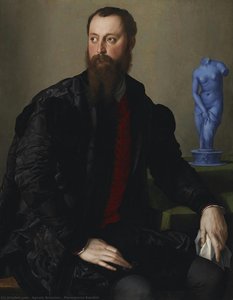
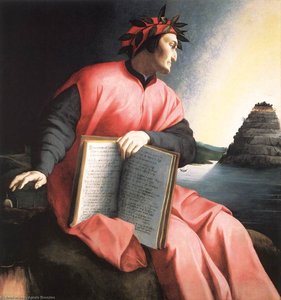
Portret van Agnolo Bronzino

De 100 beroemdste schilderijen van Agnolo Bronzino, elk uniek

Bijgewerkt in oktober 2026 · gerangschikt op basis van onze populariteitsscore (zoekopdrachten, bezoeken en bestellingen per kunstwerk) · 189 werken van Agnolo Bronzino in onze catalogus

Kortom

Venus, Cupid en Tijd (Allegorie van Verlangen) (1540) is het schilderij van Agnolo Bronzino dat de meeste aandacht trekt; het origineel bevindt zich in het National Gallery, Londen. Daarna gaat de blik naar Portret van Eleonora da Toledo (1555) en Venus, Cupido and Satyr. Van de 189 werken van Agnolo Bronzino in onze catalogus zijn dit de 100 bekendste, elk een uniek origineel gepresenteerd met het jaar, het museum en de reden waarom het blijft voortbestaan.

1503 – 1572, Florence Maniërisme Meeste werken: Galleria degli Uffizi

Top 10 schilderijen van Agnolo Bronzino, door de ogen van de galerie

1
Venus, Cupid en Tijd (Allegorie van Verlangen) (1540) door Agnolo Bronzino

Venus, Cupid en Tijd (Allegorie van Verlangen)

1540 · Olieverf op canvas · National Gallery, Londen

Stap binnen in de fascinerende wereld van Agnolo Bronzino's "Venus, Cupid en Tijd (Allegorie van Verlangen)", een meesterwerk uit de 16e eeuw dat mythologische vertellingen naadloos combineert met artistieke innovatie. Dit prachtige kunstwerk nodigt de kijker uit om de rijke symboliek, levendige kleuren en dynamische compositie te verkennen, waardoor het een tijdloze toevoegende waarde vormt aan elke kunstcollectie of verfijnd interieur.

2
Portret van Eleonora da Toledo (1555) door Agnolo Bronzino

Portret van Eleonora da Toledo

1555 · Olieverf op paneel

Het aanschouwen van Agnolo Bronzino's Portret van Eleonora da Toledo is als een directe stap in de verfijnde atmosfeer van de Hoogrenaissance in Florence. Dit schilderij, vervaardigd in 1555, overstijgt een loutere gelijkenis; het is een zorgvuldig geconstrueerd monument voor status, macht en exquisite verfijning. Het onderwerp, Eleonora da Toledo, straalt een bijna tastbare aura van aristocratische waardigheid uit. Bronzino vangt haar niet slechts als een vrouw, maar als een…

3
Venus, Cupido and Satyr door Agnolo Bronzino

Venus, Cupido and Satyr

Oil

A pale, reclining figure occupies the center of the frame, her skin possessing the cool, polished sheen of marble. This is Venus, the goddess of love, draped in a way that emphasizes the tension between soft flesh and the hard edges of the composition. Beside her, Cupid clings to her form, a small, fleshy presence that embodies the sudden, sharp sting of passion. Their limbs are elongated, stretching toward one…

4
Portrait of Andrea Doria as Neptune (1550) door Agnolo Bronzino

Portrait of Andrea Doria as Neptune

1550 · Oil On Canvas · Pinacoteca di Brera, Milaan

In the grand theater of the Italian Mannerist period, few images command the eye with such authoritative grace as Agnolo Bronzino’s Portrait of Andrea Doria as Neptune. This is not merely a portrait of a man, but a profound exercise in political allegory and divine projection. The subject, the legendary Genoese admiral Andrea Doria, is stripped of the heavy silks and velvet doublets typical of sixteenth-century aristocratic portraiture. Instead, Bronzino…

5
St. John the Baptist (1542) door Agnolo Bronzino

St. John the Baptist

1542 · Oil On Panel · J. Paul Getty Museum, Los Angeles

The figure of St. John the Baptist emerges from the shadows, rendered with a muscular intensity by the Florentine master Bronzino. This depiction captures the patron saint of Florence in a moment of profound spiritual tension. Created about 1542 - 1545, the work possesses a striking verticality that speaks to its original purpose. It does not exist in isolation but remains a fragment of a larger sacred narrative, having once…

6
Deposition (1565) door Agnolo Bronzino

Deposition

1565 · Oil On Canvas · Galleria dell'Accademia di Firenze, Florence

“Deposition,” painted in 1565 by the Florentine master Agnolo Bronzino, is not merely a religious scene; it's a meticulously crafted tableau of restrained emotion and profound psychological depth. Commissioned for the Observant Monastery in Cosmopoli, this work transcends simple narrative to become a meditation on grief, loss, and the delicate balance between earthly sorrow and divine grace. Bronzino, renowned for his “reserved elegance,” achieved this through an almost unnervingly controlled…

7
Portrait of a Young Man (1555) door Agnolo Bronzino

Portrait of a Young Man

1555 · Oil On Canvas · Nelson-Atkins Museum of Art, Kansas City

To gaze upon this portrait is to step directly into the rarefied atmosphere of mid-sixteenth-century Florence, a world governed by the subtle power plays and exquisite tastes of the Medici court. Agnolo Bronzino, the master chronicler of such elite circles, captured not merely a likeness, but an entire social stratum. The sitter, though anonymous to us today, embodies the controlled elegance expected of those who moved within the gilded cage…

8
Cosimo de Medici in Armour (1545) door Agnolo Bronzino

Cosimo de Medici in Armour

1545 · Oil On Panel · Thyssen-Bornemisza Museum, Madrid

The gaze of the Grand Duke of Tuscany, Cosimo I de' Medici, meets the viewer through the work titled Cosimo de Medici in Armour. Created by the Florentine artist Bronzino, this portrait captures the ruler in a moment of poised authority. The image emerges from the mid-16th century, dated about 1545, and presents a commanding presence through its structured composition. It exists as a significant version of the painting held…

9
Portrait of Cosimo I de' Medici as Orpheus (1537) door Agnolo Bronzino

Portrait of Cosimo I de' Medici as Orpheus

1537 · Oil On Panel · Philadelphia Museum of Art, Philadelphia

In this portrait, we encounter Cosimo I de' Medici, not merely as a ruler, but as the mythological musician Orpheus. He is positioned in a three-quarter view from behind, turning his gaze back toward us with a sense of psychological alertness. His body, rendered with a polished, marble-like texture, possesses an idealized beauty that speaks to the High Mannerist style. A single splash of crimson red drapery provides a sharp…

10
Portrait of Eleonora of Toledo and Her Son, Francesco de'Medici (1549) door Agnolo Bronzino

Portrait of Eleonora of Toledo and Her Son, Francesco de'Medici

1549 · Oil On Panel · Cincinnati Art Museum, Cincinnati

In this vertical half-length portrait, we encounter the Duchess of Florence, Eleonora of Toledo, and her son, Francesco de' Medici. The composition is defined by a controlled, almost sculptural stillness. Eleonora stands slightly behind the young boy, her hand resting upon his shoulder in a gesture that is both protective and formal. There is a certain aristocratic detachment in their expressions, a cool composure that characterizes the Florentine Mannerist style.…

De beroemde schilderijen van Agnolo Bronzino, nummer 11 tot 100

11Portrait of Eleonora di Toledo, Bust (1560) door Agnolo BronzinoPortrait of Eleonora di Toledo, Bust1560 · Staatliche Kunstsammlungen Dresden 12Eleonora di Toledo (1560) door Agnolo BronzinoEleonora di Toledo1560 · National Gallery of Art 13Venus cupid time door Agnolo BronzinoVenus cupid timeNational Gallery 14Pierantonio Bandini (1555) door Agnolo BronzinoPierantonio Bandini1555 · National Gallery of Canada 15Deposition from the Cross (1545) door Agnolo BronzinoDeposition from the Cross1545 16Holy Family (1540) door Agnolo BronzinoHoly Family1540 · Galleria degli Uffizi 17Eleonora di Toledo (1543) door Agnolo BronzinoEleonora di Toledo1543 · Národní galerie Praha 18Portrait of Lucrezia Panciatichi (1540) door Agnolo BronzinoPortrait of Lucrezia Panciatichi1540 · Galleria degli Uffizi 19Allegorical Portrait of Dante (1530) door Agnolo BronzinoAllegorical Portrait of Dante1530 20Cosimo I de' Medici in Armour (1550) door Agnolo BronzinoCosimo I de' Medici in Armour1550 · Museo degli Argenti 21Pope Leo X (1555) door Agnolo BronzinoPope Leo X1555 · Galleria degli Uffizi 22Saint Sebastian (1533) door Agnolo BronzinoSaint Sebastian1533 · The Salvador Dalí Museum 23Venus, Cupid and Jealousy (1550) door Agnolo BronzinoVenus, Cupid and Jealousy1550 · Szépművészeti Múzeum 24Eleonora of Toledo with her son Giovanni de' Medici (1544) door Agnolo BronzinoEleonora of Toledo with her son Giovanni de' Medici1544 · Galleria degli Uffizi 25Venus, Cupid and Time (detail) (1540) door Agnolo BronzinoVenus, Cupid and Time (detail)1540 · National Gallery 26Don Garcia de' Medici (1550) door Agnolo BronzinoDon Garcia de' Medici1550 · Museo del Prado 27Eleonora da Toledo (1543) door Agnolo BronzinoEleonora da Toledo1543 · National Gallery Prague 28Portrait of Eleanora di Toledo (1560) door Agnolo BronzinoPortrait of Eleanora di Toledo1560 · National Gallery of Art 29Miracle of the Brazen Serpent (1542) door Agnolo BronzinoMiracle of the Brazen Serpent1542 · Palazzo Vecchio 30Portrait of Lucrezia Panciatichi (detail) (1540) door Agnolo BronzinoPortrait of Lucrezia Panciatichi (detail)1540 · Galleria degli Uffizi 31Portrait of a Young Man (1540) door Agnolo BronzinoPortrait of a Young Man1540 · Metropolitan Museum of Art 32Martyrdom of St Lawrence (1569) door Agnolo BronzinoMartyrdom of St Lawrence1569 · Basilica di San Lorenzo 33Adoration of the Shepherds (1539) door Agnolo BronzinoAdoration of the Shepherds1539 · Szépművészeti Múzeum 34Eleonora da Toledo (1562) door Agnolo BronzinoEleonora da Toledo1562 35The Miracle of the Spring (1543) door Agnolo BronzinoThe Miracle of the Spring1543 · Palazzo Vecchio 36Gathering of the Manna (1543) door Agnolo BronzinoGathering of the Manna1543 · Palazzo Vecchio 37Galatea and Pygmalion (1530) door Agnolo BronzinoGalatea and Pygmalion1530 38Portrait of Ludovico Capponi (1551) door Agnolo BronzinoPortrait of Ludovico Capponi1551 · The Frick Collection 39Portrait of Cosimo I de' Medici (1545) door Agnolo BronzinoPortrait of Cosimo I de' Medici1545 · Galleria degli Uffizi 40Costanza da Sommaia (1540) door Agnolo BronzinoCostanza da Sommaia1540 · Detroit Institute of Arts 41Crossing of the Red Sea (1542) door Agnolo BronzinoCrossing of the Red Sea1542 · Palazzo Vecchio 42St John the Baptist (1550) door Agnolo BronzinoSt John the Baptist1550 · Galleria Borghese 43Portrait of a Lady in Red (detail) (1530) door Agnolo BronzinoPortrait of a Lady in Red (detail)1530 · Städelsche Kunstinstitut Und Städtische Galerie 44Portrait of a boy (1540) door Agnolo BronzinoPortrait of a boy1540 · Bode-Museum 45The Feast Given by Joseph for His Brothers (1550) door Agnolo BronzinoThe Feast Given by Joseph for His Brothers1550 · Walters Art Museum 46Portrait of a Man, presumably a member of the Medici Family (1545) door Agnolo BronzinoPortrait of a Man, presumably a member of the Medici Family1545 · Statens Museum for Kunst 47Portrait of a Lady with a Puppy (1534) door Agnolo BronzinoPortrait of a Lady with a Puppy1534 48Don Giovanni de’Medici (1551) door Agnolo BronzinoDon Giovanni de’Medici1551 · Toledo Museum of Art 49Portrait of an Elderly Lady (1540) door Agnolo BronzinoPortrait of an Elderly Lady1540 · Fine Arts Museums of San Francisco 50Portrait of Lorenzo the Magnificent (1560) door Agnolo BronzinoPortrait of Lorenzo the Magnificent1560 51Portrait of a Young Man (1550) door Agnolo BronzinoPortrait of a Young Man1550 · National Gallery 52Madonna and Child with Saint John the Baptist (1540) door Agnolo BronzinoMadonna and Child with Saint John the Baptist1540 · Detroit Institute of Arts 53Portrait of a Lady in Green (1530) door Agnolo BronzinoPortrait of a Lady in Green1530 · Royal Collection 54Virgin and Child with the Young Saint John the Baptist (1528) door Agnolo BronzinoVirgin and Child with the Young Saint John the Baptist1528 · Art Institute of Chicago 55Portrait of a young Man in black with a book (1526) door Agnolo BronzinoPortrait of a young Man in black with a book1526 56portrait of a gentleman with his dog (1527) door Agnolo Bronzinoportrait of a gentleman with his dog1527 57Portrait of Francesco I de Medici (1527) door Agnolo BronzinoPortrait of Francesco I de Medici1527 58Madonna and Child with St. John the Baptist (1530) door Agnolo BronzinoMadonna and Child with St. John the Baptist1530 · National Museum in Wrocław 59Guidobaldo della Rovere (1531) door Agnolo BronzinoGuidobaldo della Rovere1531 60Eleonora di Toledo with her son Francesco (1549) door Agnolo BronzinoEleonora di Toledo with her son Francesco1549 61Portrait of a Baby Boy (1540) door Agnolo BronzinoPortrait of a Baby Boy1540 · Walters Art Museum 62Portrait of Cosimo I de' Medici in armour (1545) door Agnolo BronzinoPortrait of Cosimo I de' Medici in armour1545 · The National Museum in Poznań 63View of the Chapel of Eleonora da Toledo (1440) door Agnolo BronzinoView of the Chapel of Eleonora da Toledo1440 · Palazzo Vecchio 64Portrait of Giovanna Chevara and Giovanni Montalvo (1562) door Agnolo BronzinoPortrait of Giovanna Chevara and Giovanni Montalvo1562 · Worcester Art Museum 65Portrait of the dwarf Nano Morgantе (Back) (1552) door Agnolo BronzinoPortrait of the dwarf Nano Morgantе (Back)1552 66Descent of Christ Into Limbo (1552) door Agnolo BronzinoDescent of Christ Into Limbo1552 67Portrait of a Woman (1550) door Agnolo BronzinoPortrait of a Woman1550 · Cleveland Museum of Art 68Portrait of Cosimo I de' Medici, Grand Duke of Tuscany (1550) door Agnolo BronzinoPortrait of Cosimo I de' Medici, Grand Duke of Tuscany1550 · Gemäldegalerie Alte Meister im Schloss Wilhelmshöhe 69Portrait of a Young Man (1560) door Agnolo BronzinoPortrait of a Young Man1560 · Gemäldegalerie 70Piero de Medici il Gottoso (1560) door Agnolo BronzinoPiero de Medici il Gottoso1560 · National Gallery 71Portrait of Bartolomeo Panciatichi (1540) door Agnolo BronzinoPortrait of Bartolomeo Panciatichi1540 · Galleria degli Uffizi 72Portrait of a man (copy) (1700) door Agnolo BronzinoPortrait of a man (copy)1700 · Amsterdam Museum 73Moses strikes water from the wall rocks (1544) door Agnolo BronzinoMoses strikes water from the wall rocks1544 74Altarpiece (1540) door Agnolo BronzinoAltarpiece1540 · Palazzo Vecchio 75The Dead Christ with the Virgin and St. Mary Magdalene (1530) door Agnolo BronzinoThe Dead Christ with the Virgin and St. Mary Magdalene1530 76Portrait of a Lady in Green (1530) door Agnolo BronzinoPortrait of a Lady in Green1530 · Royal Collection 77Portrait of Pope Clement VII (1564) door Agnolo BronzinoPortrait of Pope Clement VII1564 · Galleria degli Uffizi 78untitled (4490) (1532) door Agnolo Bronzinountitled (4490)1532 79The Holy Family (1545) door Agnolo BronzinoThe Holy Family1545 80Portrait of Francesco de’ Medici (1560) door Agnolo BronzinoPortrait of Francesco de’ Medici1560 · USC Fisher Museum of Art 81Lucrezia Panciatichi (1540) door Agnolo BronzinoLucrezia Panciatichi1540 82Adoration of the Shepherds (detail) (1539) door Agnolo BronzinoAdoration of the Shepherds (detail)1539 · Szépművészeti Múzeum 83A Young Woman and Her Little Boy (1540) door Agnolo BronzinoA Young Woman and Her Little Boy1540 · National Gallery of Art 84The Holy Family (1528) door Agnolo BronzinoThe Holy Family1528 · National Gallery of Art 85St Matthew (1525) door Agnolo BronzinoSt Matthew1525 86Portrait of Lorenzo Lenzi (1528) door Agnolo BronzinoPortrait of Lorenzo Lenzi1528 87St Mark (1525) door Agnolo BronzinoSt Mark1525 88Scenes of allegories of the cardinal virtues (1544) door Agnolo BronzinoScenes of allegories of the cardinal virtues1544 89Adoration of the Shepherds (detail) (11) (1539) door Agnolo BronzinoAdoration of the Shepherds (detail) (11)1539 · Szépművészeti Múzeum 90The Israelites crossing the Red Sea (1542) door Agnolo BronzinoThe Israelites crossing the Red Sea1542 91Christ in Limbo (1552) door Agnolo BronzinoChrist in Limbo1552 92Portrait of Nano Morgante (1552) door Agnolo BronzinoPortrait of Nano Morgante1552 93The Crossing of the Red Sea (1555) door Agnolo BronzinoThe Crossing of the Red Sea1555 94The Panciatichi Holy Family (detail) door Agnolo BronzinoThe Panciatichi Holy Family (detail) 95Portrait of Guidubaldo della Rovere (1532) door Agnolo BronzinoPortrait of Guidubaldo della Rovere1532 · Galleria Palatina 96Stigmatization of St. Francis (1544) door Agnolo BronzinoStigmatization of St. Francis1544 97Portrait of a Lady (1550) door Agnolo BronzinoPortrait of a Lady1550 · Galleria Sabauda 98Garcia de' Medici (1555) door Agnolo BronzinoGarcia de' Medici1555 · Galleria degli Uffizi 99Scenes of allegories of the cardinal virtues (1544) door Agnolo BronzinoScenes of allegories of the cardinal virtues1544 100Crossing of the Red Sea (detail) (1540) door Agnolo BronzinoCrossing of the Red Sea (detail)1540 · Palazzo Vecchio

De beroemde schilderijen van Agnolo Bronzino, periode voor periode

De onderwerpen die de aandacht van Agnolo Bronzino troffen

De vier onderwerpen die het meest voorkomen in deze originelen, elk met zijn mooiste voorbeeld.

De musea waar de originele werken van Agnolo Bronzino worden bewaard

De 8 musea met de meeste schilderijen op deze pagina.

Museum Stad Werken van Agnolo Bronzino Schilderijen uit deze lijst
Galleria degli Uffizi, FlorenceGalleria degli Uffizi Florence 18 Holy Family, Portrait of Lucrezia Panciatichi, Pope Leo X
Palazzo Vecchio, FlorencePalazzo Vecchio Florence 11 Miracle of the Brazen Serpent, The Miracle of the Spring, Gathering of the Manna
National Gallery, LondenNational Gallery Londen 5 Venus, Cupid en Tijd (Allegorie van Verlangen), Venus cupid time, Venus, Cupid and Time (detail)
Szépművészeti Múzeum, BoedapestSzépművészeti Múzeum Boedapest 6 Venus, Cupid and Jealousy, Adoration of the Shepherds, Adoration of the Shepherds (detail)
National Gallery of Art, WashingtonNational Gallery of Art Washington 4 Eleonora di Toledo, Portrait of Eleanora di Toledo, A Young Woman and Her Little Boy
Detroit Institute of Arts, DetroitDetroit Institute of Arts Detroit 2 Costanza da Sommaia, Madonna and Child with Saint John the Baptist
Walters Art Museum, BaltimoreWalters Art Museum Baltimore 2 The Feast Given by Joseph for His Brothers, Portrait of a Baby Boy
Royal Collection, LondenRoyal Collection Londen 2 Portrait of a Lady in Green, Portrait of a Lady in Green

Agnolo Bronzino door de decennia heen: elk een uniek origineel

Werken per decennium

Kies een decennium om het origineel te zien dat dit tijdperk definieert.

Schilderijen van Agnolo Bronzino: vragen voor de galerie

Wat is het bekendste werk van Agnolo Bronzino?Onthul het antwoord

Venus, Cupid en Tijd (Allegorie van Verlangen) (1540), National Gallery, Londen. Portret van Eleonora da Toledo (1555) en Venus, Cupido and Satyr volgen.

Op welke leeftijd creëerde Agnolo Bronzino Venus, Cupid en Tijd (Allegorie van Verlangen)?Onthul het antwoord

37 jaar oud: Venus, Cupid en Tijd (Allegorie van Verlangen) dateert uit 1540, en Agnolo Bronzino werd geboren in 1503.

Welke tien schilderijen van Agnolo Bronzino zijn het meest bekend?Onthul het antwoord

Venus, Cupid en Tijd (Allegorie van Verlangen), Portret van Eleonora da Toledo, Venus, Cupido and Satyr, Portrait of Andrea Doria as Neptune, St. John the Baptist, Deposition, Portrait of a Young Man, Cosimo de Medici in Armour, Portrait of Cosimo I de' Medici as Orpheus en Portrait of Eleonora of Toledo and Her Son, Francesco de'Medici. De bovenstaande ranglijst vermeldt het jaar en het museum van elk werk.

Hoeveel werken van Agnolo Bronzino zijn er bekend?Onthul het antwoord

Onze catalogus bevat 189 werken van Agnolo Bronzino, daterend van 1525 tot 1569.

Waar kunnen de beroemdste originelen van Agnolo Bronzino worden bekeken?Onthul het antwoord

Voornamelijk in Galleria degli Uffizi (Florence), Palazzo Vecchio (Florence) en National Gallery (Londen). De bovenstaande museumtabel bevat een volledig overzicht.

In welke periode creëerde Agnolo Bronzino de bekendste schilderijen?Onthul het antwoord

In 1540s: 37 van de 100 werken op deze pagina werden toen gemaakt, waaronder Venus, Cupid en Tijd (Allegorie van Verlangen).

Welk beroemd schilderij van Agnolo Bronzino is de vroegste, en welke de laatste?Onthul het antwoord

Op deze pagina is het vroegste St Matthew (1525) en het laatste Martyrdom of St Lawrence (1569).

Welke onderwerpen had Agnolo Bronzino de voorkeur?Onthul het antwoord

Renaissance (36), Woman (16) en Man (14), verspreid over de 100 werken op deze pagina.

Met welke materialen schilderde Agnolo Bronzino het meest?Onthul het antwoord

Oil On Panel, voor 32 van de 100 werken op deze pagina.

Bij welke stroming behoort het werk van Agnolo Bronzino?Onthul het antwoord

Maniërisme, te oordelen aan de originelen op deze pagina.

Welke originele werken van Agnolo Bronzino kan ik zien in het Galleria degli Uffizi?Onthul het antwoord

Holy Family, Portrait of Lucrezia Panciatichi en Pope Leo X: het Galleria degli Uffizi, Florence herbergt 9 van de werken op deze pagina.

Agnolo Bronzino: een portret van de kunstenaar

Agnolo Bronzino: The Sculptor's Touch in Florentine Portraiture

Agnolo di Cosimo, known to history as Bronzino, emerged from the vibrant artistic landscape of Renaissance Florence in 1503, a period already brimming with genius. Born the son of a butcher, his path diverged sharply from familial trade, guided instead by an innate talent that would see him become one of the most sought-after portraitists of his era and a defining figure of Mannerism. His early training began with Raffaellino del Garbo, but it was under the tutelage of Jacopo da Pontormo that Bronzino’s artistic sensibilities truly took shape. While absorbing Pontormo's innovative style—characterized by expressive distortions and dramatic lighting—he ultimately forged his own distinct voice—one characterized by a cool composure and refined detail markedly different from his teacher’s often emotionally charged works. This early period was also influenced by studies with Andrea del Sarto, exposing him to the legacies of Michelangelo and Leonardo da Vinci, foundational influences that would subtly permeate his mature style. The young Bronzino quickly demonstrated an aptitude for capturing not just physical likeness but a certain psychological depth, even in his earliest commissions.

Early Influences and Artistic Formation

Pontormo’s impact on Bronzino's artistic development was profound. Recognizing Pontormo’s pioneering use of expressive distortion—a technique that would become synonymous with Mannerism—Bronzino skillfully adapted it to create a brilliant, precisely linear style of his own. This stylistic choice wasn’t merely an imitation; it represented a deliberate rejection of the prevailing humanist aesthetic of the High Renaissance, favoring instead a more cerebral and emotionally restrained approach. Furthermore, Bronzino's exposure to Michelangelo’s monumental sculptures—particularly *David*—and Leonardo da Vinci’s meticulous anatomical studies instilled in him a deep understanding of human form and perspective. These influences shaped his artistic vision and informed his technique throughout his career. He wasn’t interested in portraying emotion; rather, he sought to convey an idealized sense of dignity and composure—a hallmark of Mannerist portraiture.

The Medici Patronage and Artistic Flourishing

Bronzino's ascent to prominence coincided with the ascendancy of Cosimo I de’ Medici, Duke of Tuscany, who recognized his exceptional talent and bestowed upon him the prestigious role of court painter. This patronage provided Bronzino with unparalleled access to resources and opportunities—allowing him to undertake ambitious commissions that solidified his reputation as Florence’s foremost artistic innovator. The wedding celebrations of Cosimo and Eleonora di Toledo in 1539 served as a catalyst for Bronzino's creative output, resulting in lavish decorations that showcased his mastery of fresco painting and sculptural modeling. These projects demanded meticulous attention to detail—reflecting Bronzino’s unwavering commitment to stylistic perfection. He skillfully employed Pontormo’s expressive distortions alongside Leonardo da Vinci’s anatomical precision—creating a visual language that was both intellectually stimulating and aesthetically captivating.

Venus, Cupid, Folly & Time: A Symbol of Florentine Idealism

Perhaps Bronzino's most iconic work is *Venus, Cupid, Folly and Time* (c. 1544–45), now housed in London’s National Gallery. This allegorical masterpiece exemplifies the core tenets of Mannerist art—characterized by stylized poses, flattened perspective, and a deliberate avoidance of naturalistic representation. Bronzino skillfully employed Pontormo's expressive distortions to convey an idealized vision of beauty and desire—a reflection of Florentine humanist ideals during Cosimo’s reign. The painting’s composition is meticulously balanced—creating a harmonious visual experience despite its inherent complexity. Furthermore, the incorporation of mythological symbolism—drawing upon classical traditions—elevates *Venus, Cupid, Folly & Time* beyond mere portraiture—transforming it into a profound meditation on human nature and artistic aspiration.

Legacy and Enduring Influence

Bronzino’s influence extended far beyond his own lifetime, shaping the trajectory of European art for decades to come. His cool composure and refined technique became models for subsequent generations of portraitists—establishing Mannerist aesthetics as dominant in aristocratic circles across Europe. He championed a stylistic approach that prioritized intellectual rigor over emotional expression—challenging the prevailing humanist conventions of the time. Despite criticisms leveled against Mannerism during the Romantic era, Bronzino’s work has experienced a resurgence in appreciation in recent decades—scholars recognizing his innovative technique and profound artistic vision. His legacy as Florence's premier portraitist continues to inspire artists today—demonstrating the enduring power of stylistic refinement and intellectual complexity. He passed away in Florence in 1572, leaving behind a body of work that embodies the spirit of Mannerism—a testament to his singular genius and lasting contribution to art history.