


1


Bijgewerkt in november 2026 · gerangschikt op basis van onze populariteitsscore (zoekopdrachten, bezoeken en bestellingen per kunstwerk) · 4 werken van Bernard Vaillant in onze catalogus
Kortom
In het oog van de galerie is het beroemdste schilderij van Bernard Vaillant Portrait of vice-admiral Isaac Sweers (1673). Portrait of Johan Larsson Paulin Olivecrantz, 1633-1707 (1679) en Portrait of Michiel Adriaansz. de Ruyter (1695) maken het trio compleet dat elk oog herkent. Van de 4 werken van Bernard Vaillant in onze catalogus presenteert de galerie hieronder de 4 bekendste werken, elk een origineel met de jaartal, het museum en wat het uniek maakt.


Portrait of Johannes Parker (1632-95), ships and council of Middelburg. Bust in oval, three quarters to the right.
De 2 musea met de meeste schilderijen op deze pagina.
| Museum | Stad | Werken van Bernard Vaillant | Schilderijen uit deze lijst |
|---|---|---|---|
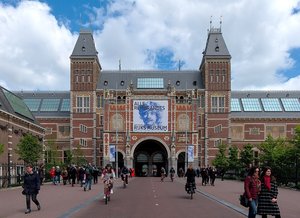 Rijksmuseum |
Amsterdam | 2 | Portrait of Michiel Adriaansz. de Ruyter, Johannes Parker, Alderman and Councilor of Middelburg, Bernard Vaillant, 1670 |
 National Portrait Gallery of Sweden |
Strängnäs | 1 | Portrait of Johan Larsson Paulin Olivecrantz, 1633-1707 |
26 jaar aan kunst van Bernard Vaillant, van 1670 tot 1695: de galerie volgt hen jaar voor jaar, via de meest beroemde originelen van elk jaar.
Selecteer een jaar om de originele werken te bekijken.
Portrait of Johannes Parker (1632-95), ships and council of Middelburg. Bust in oval, three quarters to the right.
Portrait of vice-admiral Isaac Sweers (1673). Portrait of Johan Larsson Paulin Olivecrantz, 1633-1707 (1679) en Portrait of Michiel Adriaansz. de Ruyter (1695) volgen.
41 jaar oud: Portrait of vice-admiral Isaac Sweers dateert uit 1673, en Bernard Vaillant werd geboren in 1632.
Onze catalogus bevat 4 werken van Bernard Vaillant, daterend van 1670 tot 1695.
Voornamelijk in Rijksmuseum (Amsterdam) en National Portrait Gallery of Sweden (Strängnäs). De bovenstaande museumtabel bevat een volledig overzicht.
Op deze pagina is het vroegste Johannes Parker, Alderman and Councilor of Middelburg, Bernard Vaillant, 1670 (1670) en het laatste Portrait of Michiel Adriaansz. de Ruyter (1695).
Portrait of Michiel Adriaansz. de Ruyter en Johannes Parker, Alderman and Councilor of Middelburg, Bernard Vaillant, 1670: het Rijksmuseum, Amsterdam herbergt 2 van de werken op deze pagina.
Bernard Vaillant (1632 in Lille – 1698 in Leiden) emerges from the rich tapestry of the Dutch Golden Age as a skilled and somewhat enigmatic painter. While often overshadowed by his more celebrated brother, Wallerant Vaillant, Bernard’s contributions to portraiture—particularly his engravings and oil paintings—offer a compelling glimpse into the artistic landscape of 17th-century Europe. His life story is intertwined with that of his family, marked by travel, religious transitions, and ultimately, an untimely death in Leiden, leaving behind a legacy of understated elegance and technical precision.
Born in Lille, France, Bernard’s early years were deeply connected to the artistic world through his brother Wallerant. Houbraken's *Kunstboek*, a seminal work documenting Dutch artists, recounts how Bernard accompanied Wallerant on all his journeys, absorbing techniques and experiences along the way. This close association undoubtedly shaped his artistic development, providing him with invaluable exposure to diverse styles and patrons. The RKD (Rijksdagvoorlichtingsdienst), the Netherlands’ Royal Library, confirms this familial link, solidifying Bernard's position as Wallerant’s younger half-brother – a detail that subtly complicates our understanding of his individual identity within the Vaillant artistic lineage.
Initially drawn to Rotterdam, Bernard found work as a deacon at the Walloon church. This period likely provided him with opportunities to observe and document the community he served, informing his later portraiture. However, Rotterdam wasn’t to be his final destination. Records indicate a move to Amsterdam in 1670, where he betrothed himself to Agneta Menton and established residence on the Fluwelen Burgwal – a prestigious location reflecting his growing standing within the artistic community. Throughout his career, Vaillant maintained connections across multiple cities, including Paris and Rotterdam, suggesting a fluid existence shaped by professional opportunities and personal circumstances.
Bernard Vaillant's artistic style is characterized by a refined realism tempered with an appreciation for detail. He was primarily known for his engravings, a medium he mastered with remarkable skill. His portraits demonstrate a keen eye for capturing subtle nuances of expression – the furrowed brow, the slight turn of the head, the fleeting emotion in the eyes. These are not grand, theatrical displays of personality but rather intimate studies of individual character.
Beyond engravings, Vaillant also produced oil paintings and pastels, showcasing a versatility within his chosen medium. His use of light and shadow is particularly noteworthy, creating a sense of depth and volume that lends realism to his subjects. While not as flamboyant as some of his contemporaries, Vaillant’s work possesses a quiet dignity and understated beauty – hallmarks of the Dutch Golden Age aesthetic. The meticulous attention to detail evident in his portraits suggests a dedication to craft and a desire to faithfully represent his subjects.
The influence of Wallerant Vaillant is undeniable, yet Bernard developed a distinct artistic voice. Wallerant’s broader scope – encompassing landscapes, history paintings, and allegorical scenes – likely provided a contrasting framework for Bernard's more focused work in portraiture. However, the shared familial connection undoubtedly fostered an understanding of artistic principles and techniques that underpinned both their careers.
Furthermore, Vaillant’s time spent in Rotterdam exposed him to the vibrant artistic scene of the city, which was a hub for printmaking and portraiture during this period. The demand for portraits among the merchant class and wealthy citizens fueled the growth of the profession, providing Vaillant with ample opportunities to hone his skills and establish himself as a respected artist.
Bernard Vaillant’s contribution to Dutch Golden Age portraiture may not be as widely recognized as that of some of his more famous contemporaries, but his work holds significant value. His engravings, in particular, are prized for their technical precision and subtle depictions of human character. They offer a valuable window into the social and cultural dynamics of 17th-century Europe, reflecting the aspirations and values of a society undergoing rapid transformation.
His untimely death in Leiden at the age of 66 – as documented by historical records – underscores the fragility of life during this era. Despite his relatively short career, Bernard Vaillant left behind a body of work that continues to be appreciated for its quiet elegance and technical mastery. Further research, drawing upon sources like the Getty Research Institute’s ULAN record and the RKD's biographical database, promises to shed further light on this intriguing artist and his place within the broader context of Dutch art history.