
 Voorvertoning
 Verstuur
 Delen
Delen
 Details bekijken

 Download
 Vergelijkbare items
 Röntgenonderzoek
 Diavoorstelling
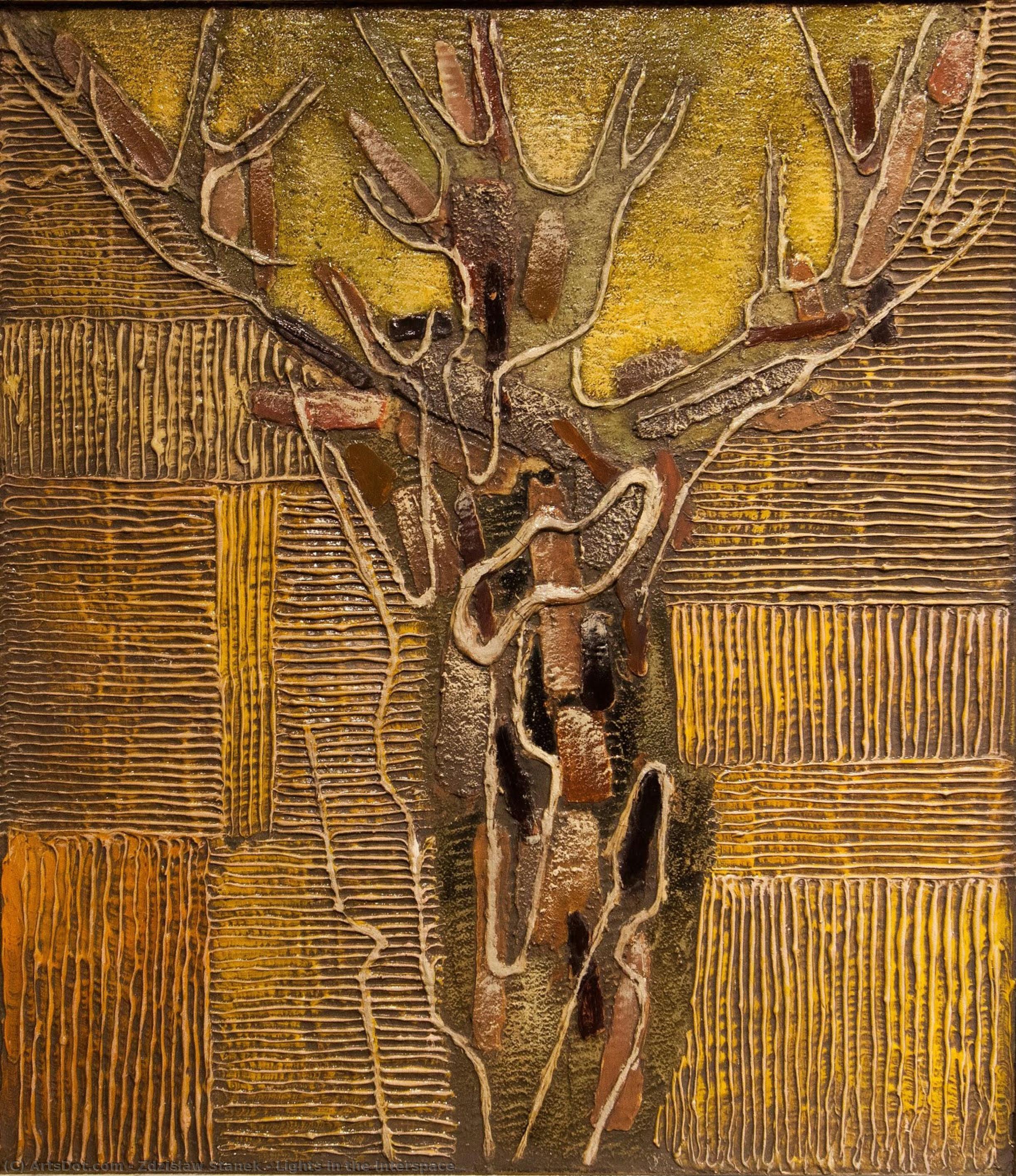
Lights in the Interspace
 Geometric Abstraction
 1960
1960- Modern
 62.0 x 54.0 cm
 The Museum of Katowice History
 Lees meer
Koop een digitale afbeelding in hoge resolutie met verbeterde kwaliteit, die veel superieur is aan de online voorvertoning.
Elk bestand wordt met uiterste precisie voorbereid door onze interne specialisten, met behulp van geavanceerde tools en deskundige handmatige retouche. Wij garanderen dat elke afbeelding een uitzonderlijke helderheid, nauwkeurige kleurweergave en verfijnde details bezit.
Het uiteindelijke bestand wordt binnen 72 uur per e-mail geleverd, geoptimaliseerd voor direct gebruik in professionele, redactionele en printomgevingen. Dit is dezelfde kwaliteit waarop vooraanstaande designstudio's, uitgevers en galerieën vertrouwen.
Digitale afbeeldingen
Download een bestand met hoge resolutie voor persoonlijke weergave, afdrukken en creatieve projecten. ( Bestel print Bestel handgeschilderde reproductie)
Inbegrepen bij elke bestelling van een digitale afbeelding
Professionele digitale levering, gegarandeerd
Wanneer u kiest voor OriginalUniqueArt.com, ontvangt u niet alleen een afbeelding – u krijgt een professioneel verbeterd digitaal kunstwerk, met precisie vervaardigd en voorzien van een tevredenheidsgarantie. Dit is alles wat automatisch bij uw bestelling is inbegrepen:

Snelle levering per e-mail
Uw hoogwaardige digitale afbeeldingsbestand wordt binnen 72 uur na bestelling naar u gemaild – klaar voor direct gebruik.

AI-verbeterd digitaal bestand
Uw kunstwerk wordt professioneel geoptimaliseerd met behulp van geavanceerde AI-tools en handmatige bewerkingen, waardoor maximale details, helderheid en kleurnauwkeurigheid worden gegarandeerd.

Gratis levenslange herlevering van digitale afbeeldingen
Je bestand per ongeluk verwijderd of kwijtgeraakt? Geen zorgen – we sturen het u op elk gewenst moment gratis opnieuw toe.

Geen invoerkosten – nooit
Geniet direct van uw kunstwerk zonder invoerrechten, belastingen of verzendkosten – digitale downloads zijn altijd belastingvrij.

Garantie op kleurgetrouwheid
Met behulp van professionele hulpmiddelen en kleurbeheer zorgen wij ervoor dat uw digitale afbeelding de originele kleuren zo nauwkeurig mogelijk weergeeft.

60 dagen tevredenheidsgarantie
Als u niet tevreden bent met uw digitale afbeelding, passen wij deze aan of storten wij 100% terug binnen 60 dagen – zonder vragen gesteld.

100% Geld-terug-garantie
Niet tevreden? Ontvang binnen 60 dagen na ontvangst van uw digitale bestand uw volledige aankoopbedrag terug – zonder vragen te stellen.

Korting bij grote bestellingen
Koop 3 afbeeldingen, bespaar 10% - Koop 5, bespaar 15% - Koop 10+, bespaar 20%. Ideaal voor creatieve projecten, galerieën en bureaus.
Beschrijving verzamelobject
A Symphony of Light and Nature
In the evocative masterpiece Lights in the Interspace, created in 1960, the Polish visionary Zdzisław Stanek invites us into a realm where the boundaries between the physical world and the ethereal plane begin to dissolve. At first glance, the viewer is greeted by the familiar silhouette of a tree, its sturdy trunk anchoring the composition amidst a delicate network of reaching branches and soft foliage. Yet, beneath this naturalistic surface lies a profound exploration of space and luminosity. The painting captures a moment of quiet vitality, where the presence of two small birds—one perched near the upper left and another drifting toward the right—infuses the stillness with a rhythmic pulse of life. These avian figures act as silent witnesses to the interplay of light, transforming a simple landscape into a meditative study of movement within a frozen moment.
The technique employed by Stanek reflects his deep-seated connection to the avant-garde theories of Wład::adysław Strzemiński, particularly the concept of light as an active, transformative force. Rather than merely illuminating the scene, the light in this work seems to emerge from the "interspace" itself, weaving through the leaves and defining the edges of the branches with a spectral glow. The artist utilizes a delicate balance of form and atmosphere, where the organic textures of the bark and leaves are softened by an almost atmospheric haze. This creates a sense of depth that is not merely perspectival but emotional, drawing the collector into a space that feels both intimate and infinitely expansive.
The Legacy of Polish Abstraction
To understand the profound impact of Lights in the Interspace, one must consider Stanek’s position within the mid-20th-century Polish art movement. Emerging from the intellectual crucible of Łódź, Stanek was a pioneer who resisted the easy comforts of prevailing trends to pursue a more rigorous, geometric, and light-centric language. This particular work serves as a beautiful bridge between representational nature and abstract experimentation. While the subject matter remains grounded in the organic world, the way the light interacts with the structural elements of the tree hints at the artist's fascination with how perception is shaped by luminosity. It is a piece that embodies the tension between what we see with our eyes and what we feel through the subtle shifts in shadow and radiance.
For the discerning collector or interior designer, this painting offers more than just aesthetic beauty; it provides a sophisticated focal point that commands attention through subtlety rather than noise. The muted yet luminous palette allows it to integrate seamlessly into high-end contemporary spaces, adding a layer of intellectual depth and historical significance. Whether placed in a minimalist gallery setting or a richly textured study, the artwork acts as a window into a contemplative era of art history. Owning a reproduction of such a significant work means bringing a piece of Poland's modernist soul into one's environment—a constant reminder of the beauty found in the delicate balance between light, life, and the spaces that connect them.
Kunstenaarsbiografie
The Luminous Legacy of Zdzisław Stanek
In the storied landscape of mid-20th-century Polish art, few names resonate with the same quiet intensity as Zdzisław Stanek. Born in 1925 in the industrial heart of Łódź, Stanek emerged not merely as a painter, but as a profound investigator of the very mechanics of sight. His life’s work was a continuous dialogue between the tangible and the ethereal, a pursuit driven by an almost scientific curiosity regarding how light interacts with form to shape human perception. To encounter a Stanek canvas is to step into a world where the boundaries between matter and radiance begin to dissolve, leaving the viewer suspended in a state of luminous contemplation.
The foundation of Stanek’s artistic identity was deeply rooted in the revolutionary theoretical frameworks established by Władmentsław Strzemiński. From his earliest years, Stanek was captivated by Strzemiński’s radical notion that light should not be treated as a mere external source of illumination, but as an active, transformative force capable of sculpting space and evoking deep psychological resonance. This intellectual lineage became the heartbeat of his practice. He embraced the idea that light could breathe life into geometric structures, turning static shapes into dynamic participants in a cosmic dance of color and shadow.
A Synthesis of Geometry and Light
As his career progressed, Stanek’s aesthetic language underwent a fascinating evolution, characterized by a refusal to be tethered to any single passing trend. While he drew significant inspiration from the structural rigor of Cubism, he infused these geometric foundations with an experimental spirit that bordered on the futuristic. His compositions frequently utilized the stark, clean lines of cubes and spheres, yet these were never cold or clinical. Instead, through a masterful application of vibrant pigments and layered textures, he achieved a sense of depth and dimensionality that felt almost organic.
His later explorations into Cyber Art and more abstract geometric forms demonstrated his ability to bridge the gap between classical painterly traditions and the burgeoning technological consciousness of the era. In these works, the interplay of form and color becomes a complex puzzle of light:
- The Role of Form: The use of spheres and cubes serves as an anchor for the eye, providing a structural stability that allows the more fluid elements of the painting to roam freely.
- Chromatic Vibrancy: Stanek utilized color not just for decoration, but as a tool to generate heat, coolness, and movement within the frame.
- Atmospheric Depth: Through subtle gradations, he created an illusion of infinite space, where light seems to emerge from deep within the canvas itself.
Historical Significance and Artistic Spirit
The historical importance of Zdzisław Stanek lies in his role as a bridge between the avant-garde traditions of early 20th-century Poland and the experimental movements that followed. In an era often defined by political and social upheaval, Stanek remained steadfast in his commitment to pure visual experimentation. He resisted the pressure to conform to more literal or propagandistic styles, choosing instead to focus on the universal language of light and geometry. This dedication ensured that his work remained timeless, transcending the specific historical moment of its creation.
Today, Stanek is remembered as a pioneer who dared to treat the canvas as a laboratory for perception. His ability to synthesize the rigid logic of geometric abstraction with the emotive power of light continues to inspire those who seek beauty in the intersection of science and art. His legacy remains etched in the luminous glow of his masterpieces, reminding us that even the most structured forms can be imbued with an eternal, breathing soul.

zdzisław stanek
1925 - 1996 , Poland
Belangrijkste feiten
- Artistic Movement Or Style: Cubism, Cyber art, Surrealism
- Artists Or Movements Influenced By This Artist: ['Cyber art']
- Artists Who Influenced This Artist: ['Władysław Strzemiński']
- Date Of Death: 1996
- Full Name: zdzisław stanek
- Nationality: Polish
- Notable Artworks:
- Still life with leeks bunch,
- Apples and cheese
- Lightnude II
- Place Of Birth: Poland

