Contemporary Art · 1985
Mask (Yi Eungro, 1985)
Yi Eungro (1904–1989) maakte Mask. Het dateert uit 1985. Het behoort tot de Contemporary Art-stroming. Het is gemaakt van Wood. Het is te vinden in Lee Ungno Museum in Daegu, Zuid-Korea. De afmetingen zijn 30 × 4 cm.
- 1985
- Wood
- 30 × 4 cm
- Lee Ungno Museum, Daegu

 Met de hand geschilderd olieverfwerk
 Verstuur
 Delen
 Informatieblad


 Download
 Vergelijkbare items
 Diavoorstelling
 Vraag & antwoord

 Statistieken
Mask, in het kort
- Titel
- Mask
- Kunstenaar
- Yi Eungro (1904–1989)
- Geboren in [jaar]
- Seoul, Zuid-Korea
- Datum
- 1985
- Medium
- Wood
- Afmetingen
- 30 × 4 cm
- Te zien in
- Lee Ungno Museum, Daegu, Zuid-Korea
- Beweging
- Contemporary Art
- Periode
- Modern
- Onderwerp
- mask, sculpture, face, wood carving, portrait, distorted face
Wat stelt Mask voor?
The Soul Within the Wood: A Glimpse into Yi Eungro’s Mask
In the quiet intimacy of Mask, we encounter a profound dialogue between form and raw material. Created in 1985, this evocative sculpture serves as a hauntingly beautiful testament to the late-career explorations of the master Korean-French artist, Yi Eungro. While much of his legacy is anchored in the fluid grace of ink wash landscapes and the delicate precision of traditional Korean motifs, this piece reveals a more visceral, tactile dimension of his creative spirit. The work presents a face carved with an almost primal intensity, where the grain of the wood meets the deliberate, distorted contours of a human expression. It is a piece that does not merely sit in a space; it commands it, inviting the viewer to peer into the very essence of identity and the masks we wear in the theater of existence.
The technique employed here speaks to a mastery of texture and volume. The artist has manipulated the medium to create a striking interplay of light and shadow, particularly within the hollowed recesses of the eyes and the jagged, rhythmic placement of the teeth. There is a deliberate roughness to the surface that honors the organic nature of the wood, yet the anatomical distortions suggest a sophisticated understanding of movement and emotion. This sculptural approach allows the piece to transcend the two-dimensional plane, offering a physical presence that feels both ancient and strikingly modern. For the discerning collector or interior designer, such a work offers a centerpiece of immense character, providing a grounding, earthy element that pairs exquisitely with contemporary minimalist settings or more traditional, curated galleries.
Beyond its physical attributes, Mask carries a heavy symbolic weight. The concept of the mask is universal—a symbol of protection, deception, and the multifaceted nature of the human psyche. By rendering this face with such raw, unpolished features, Yi Eungro strips away the veneer of social artifice to reveal something more fundamental and perhaps more unsettling. The visible teeth and the asymmetrical gaze evoke a sense of primal vulnerability, reminding us of the wilder, untamed aspects of our shared humanity. It is an artwork that resonates on an emotional level, stirring feelings of curiosity, introspection, and even a touch of melancholy.
Integrating a high-quality reproduction of this masterpiece into a collection allows for the preservation of this profound emotional experience within a domestic or professional environment. Whether placed under soft gallery lighting to highlight its carved depths or positioned as a focal point in a study, Mask serves as a constant source of inspiration. It is more than a mere object; it is a window into the historical intersection of Korean tradition and French modernism, captured through the hands of an artist who spent his life bridging two worlds to find a singular, universal truth.
In welk museum bevindt Mask zich?
Lee Ungno Museum
Daegu, Zuid-Korea
Een Symfonie van Inkt en Moderniteit: De Nalatenschap van Lee Ungno In het hart van het culturele landschap van Daejeon staat het Lee Ungno Museum als een diepgaand getuigenis van de transformerende kracht van artistieke visie. Deze instelling fungeert als een brug tussen tijdperken en biedt een zeldzame blik in de ziel van een man die erin slaagde de meditatieve zwaarte van de Oost-Aziatische inktwaschilderkunst te verenigen met de gedurfde, experimentele grenzen van het Westerse modernisme. Een voet in dit museum zetten is het betreden van een ruimte waar de eeuwenoude tradities van de Koreaanse kalligrafie de elektrische energie van het Europees abstract expressionisme ontmoeten, wat een dialoog creëert die generaties overstijgt.
Hoogwaardige afbeeldingen van Mask

Auteursrechtelijk beschermd: deze bestanden zijn uitsluitend voor persoonlijk gebruik en vormen geen licentie voor herpublicatie.
Yi Eungro, Mask (1985).
Yi Eungro (1904–1989), Mask, 1985, wood, Lee Ungno Museum, Daegu, Zuid-Korea. Afbeelding: OriginalUniqueArt.com.
Veelgestelde vragen over Mask
Waar kan ik het originele werk "Mask" door Yi Eungro bewonderen?
Het originele "Mask" door Yi Eungro wordt bewaard in Lee Ungno Museum, Daegu, Zuid-Korea. Een reproductie maakt het mogelijk om het werk thuis tentoon te stellen.
In welk jaar werd "Mask" gemaakt?
Met welk medium is "Mask" door Yi Eungro uitgevoerd?
Wat zijn de afmetingen van het originele "Mask"?
"Mask" heeft in zijn originele vorm de afmetingen 4 x 30 cm. De originele afmetingen dienen als een handig referentiepunt bij het kiezen van de juiste afmeting voor een reproductie.
Wat stelt "Mask" door Yi Eungro voor?
Behoort "Mask" door Yi Eungro tot het publiek domein?
Wie heeft "Mask" gemaakt?
Bij welke kunststroming behoort "Mask" door Yi Eungro?
"Mask" is een werk uit de Contemporary Art. De stroming geeft de artistieke traditie aan waartoe het werk behoort.
Over de kunstenaar, Yi Eungro

1904–1989, Zuid-Korea
Yi Eungro
**vroege jaren en opleiding** lee ungno, ook wel bekend als yi eungro, was een in Korea geboren Franse schilder en graficus die in 1904 werd geboren in Seoel, Zuid-Korea. Zijn vroege jaren werden gekenmerkt door een korte periode aan de hongseong botong hakyo (홍성보통학교, 홍城초등학교, 洪城普通學校), waarna hij zich vanaf 1920 volledig toelegde op het bestuderen van de schilderkunst onder de meester yeomjae song tae-hoe. **artistieke carrière in Korea en Japan** De artistieke loopbaan van lee ungno begon pas echt toen hij in 1922 naar Seoel verhuisde, waar hij leermeester werd van de gevierde kalligraaf, schilder en fotograaf haegang kim gyu-jin. In deze periode leerde hij voornamelijk de 'vier edelen' te schilderen in de karakteristieke 'haegang-stijl'.
Ook van Yi Eungro
 Untitled1969
 Composition1970
 I Ching 64 Hexagrams Sequence(山風蠱)1974
 People1979
Essays over Mask
 Unveiling the Raw Emotion: The Top 25 Masterpieces by Francis BaconBorn in Dublin and shaped by post-war London, Bacon’s brushstrokes capture the weight of existence through the shadows of the human psyche.
 Unmasking the Grotesque: The Top 25 Masterpieces by James EnsorBorn in the coastal air of Ostend in 1860, Ensor used carnival masks and the grotesque to unmask the human condition through a fever dream …
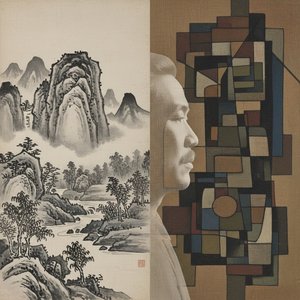 Yi Eungro: Bridging East & West in the Landscape of Korean ModernismExplore the captivating world of Yi Eungro (Lee Ungno), a pivotal figure in Korean modernism. Discover his unique fusion of Eastern and Wes…