
 Voorvertoning
 Verstuur
 Delen
Delen
 Details bekijken

 Download
 Vergelijkbare werken
 Röntgenonderzoek
 Diavoorstelling
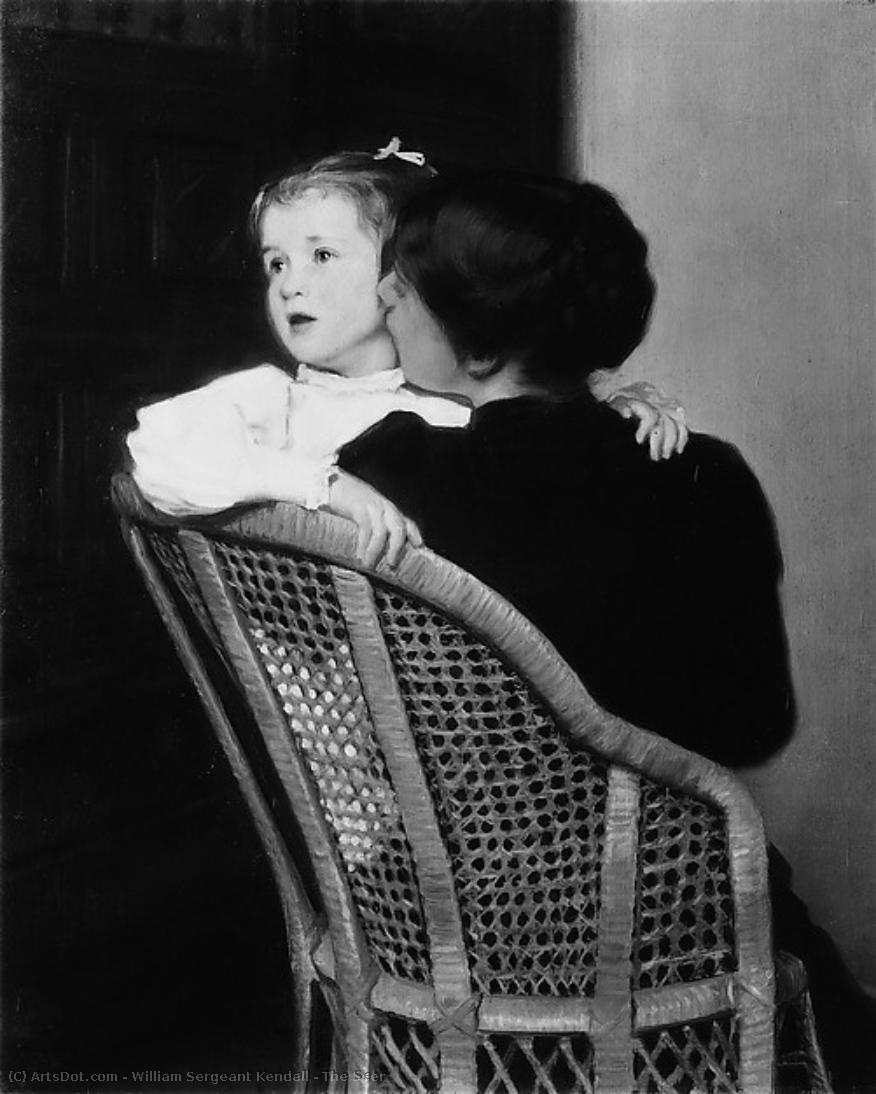
The Seer
 Oil On Canvas
- WallArt
- Contemporary Realism
 1906
1906- 19th Century
 94.0 x 79.0 cm
 Metropolitan Museum of Art
 Lees meer
Koop een digitale afbeelding met hoge resolutie en verbeterde kwaliteit, die veel superieur is aan de online voorvertoning.
Elk bestand wordt met uiterste precisie voorbereid door onze interne specialisten, met behulp van geavanceerde tools en deskundige handmatige retouche. Wij garanderen dat elke afbeelding een uitzonderlijke helderheid, nauwkeurige kleurweergave en verfijnde details bezit.
Het uiteindelijke bestand wordt binnen 72 uur per e-mail geleverd, geoptimaliseerd voor direct gebruik in professionele, redactionele en printomgevingen. Dit is dezelfde kwaliteit waarop topontwerpstudio's, uitgevers en galerieën vertrouwen.
Digitale afbeeldingen
Download een bestand met hoge resolutie voor persoonlijke weergave, afdrukken en creatieve projecten. ( Schakel over naar print Schakel over naar handgeschilderd kunstwerk)
Inbegrepen bij elke bestelling van een digitale afbeelding
Professionele digitale levering, gegarandeerd
Wanneer u kiest voor OriginalUniqueArt.com, ontvangt u niet alleen een afbeelding – u krijgt een professioneel verbeterd digitaal kunstwerk, met precisie vervaardigd en voorzien van een tevredenheidsgarantie. Dit is alles wat automatisch bij uw bestelling is inbegrepen:

Snelle digitale levering
Uw hoogwaardige digitale afbeeldingsbestand wordt binnen 72 uur na bestelling naar u gemaild – klaar voor direct gebruik.

Met AI verbeterd digitaal bestand
Uw kunstwerk wordt professioneel geoptimaliseerd met behulp van geavanceerde AI-tools en handmatige bewerkingen, waardoor maximale details, helderheid en kleurnauwkeurigheid worden gegarandeerd.

Gratis levenslange herlevering van digitale afbeeldingen
Je bestand per ongeluk verwijderd of kwijtgeraakt? Geen zorgen – we sturen het u op elk gewenst moment gratis opnieuw toe.

Geen invoerkosten - Altijd
Geniet direct van uw kunstwerk zonder invoerrechten, belastingen of verzendkosten – digitale downloads zijn altijd belastingvrij.

Garantie op kleurgetrouwheid
Met behulp van professionele hulpmiddelen en kleurbeheer zorgen wij ervoor dat uw digitale afbeelding de originele kleuren zo nauwkeurig mogelijk weergeeft.

60 dagen tevredenheidsgarantie
Als u niet tevreden bent met uw digitale afbeelding, passen wij deze aan of storten wij 100% terug binnen 60 dagen – zonder vragen gesteld.

100% Geld-terug-garantie
Niet tevreden? Ontvang binnen 60 dagen na ontvangst van uw digitale bestand uw volledige aankoopbedrag terug – zonder vragen te stellen.

Korting bij grote bestellingen
Koop 3 afbeeldingen, bespaar 10% - Koop 5, bespaar 15% - Koop 10+, bespaar 20%. Ideaal voor creatieve projecten, galerieën en bureaus.
Beschrijving verzamelobject
A Portrait of Quiet Contemplation: William Sergeant Kendall’s “The Seer”
William Sergeant Kendall (1869 – 1938) stands as a pivotal figure in American Impressionism, capturing the serene beauty of rural life with an unwavering dedication to observation and tonal subtlety. His masterpiece, “The Seer,” painted in 1906, exemplifies this approach—a tender depiction of a woman cradling her child that transcends mere representation, delving into themes of maternal love and spiritual introspection. Located within The Metropolitan Museum of Art’s collection (access link: https://www.metmuseum.org/art/collection/search/11304), the painting offers a glimpse into Kendall's distinctive artistic vision and reflects the broader currents of Impressionist aesthetics during its time.- Subject Matter & Context: Kendall’s fascination with the American countryside stemmed from his desire to portray the dignity and simplicity of rural existence—a reaction against the increasingly urbanized landscape of the late Victorian era. The scene depicts a woman seated in wicker chair, her gaze directed towards the viewer, accompanied by a young child nestled securely in her arms. This intimate portrayal aligns perfectly with the Impressionist preoccupation with capturing fleeting moments of everyday life and conveying emotional resonance.
- Style & Technique: Kendall’s style is firmly rooted in Academic Realism—a deliberate departure from the expressive liberties championed by Monet and Renoir. However, he skillfully employs tonal variations to achieve remarkable depth and texture. The artist meticulously renders form through subtle gradations of gray, prioritizing accuracy and capturing the nuances of light and shadow. This technique underscores Kendall’s commitment to portraying reality with unwavering fidelity.
- Composition: The composition centers around the figures—the woman and child—positioned slightly off-center to create visual balance and draw attention to their expressive faces. The simple background serves as a canvas for highlighting these central subjects, emphasizing their importance within the artwork’s narrative.
- Color Palette & Texture: Kendall eschews vibrant hues in favor of a grayscale palette—a conscious decision that prioritizes tonal harmony and contributes to the painting's contemplative mood. Textures are skillfully depicted through careful attention to detail, contrasting the smooth skin of the child with the rougher surfaces of the wicker chair and the woman’s hair.
Kunstenaarsbiografie
Henri Matisse: A Revolutionary of Color
Henri Matisse, born December 31st, 1869, in Le Cateau, France, wasn’t initially destined for a life immersed in art. His early years were marked by a quiet, almost reluctant interest, a stark contrast to the vibrant and expressive world he would ultimately create. Initially pursuing a legal career, Matisse only turned to painting at the age of twenty-one, a pivotal shift that would forever alter the course of 20th-century art. His journey began with traditional academic training – attending the École Quentin-Latour in Saint-Quentin and later enrolling in the prestigious École des Beaux-Arts in Paris, under the guidance of Gustave Moreau. However, it was through these early experiences that Matisse began to question established norms, seeking a new language for visual expression.
Matisse’s artistic development unfolded during a period of immense change within the Parisian art world. He absorbed influences from a diverse range of movements – Neoclassicism, Impressionism, and even Neo-Impressionism – each contributing to his evolving style. Crucially, he encountered the groundbreaking work of Paul Signac and Henri-Edmond Cross in Saint-Tropez, where they experimented with pointillist techniques, utilizing small dots of color to create luminous effects. This exposure proved transformative, laying the groundwork for Matisse’s own revolutionary approach to color.
The Fauvist Breakthrough
Around 1905, Matisse spearheaded the movement known as Fauvism – a name derived from the French word “fauves,” meaning “wild beasts.” This radical style was characterized by an unrestrained use of bold, non-naturalistic colors, applied with loose, arbitrary brushstrokes. Matisse’s paintings during this period, such as *Woman with a Hat* (1905) and *The Dessert*, abandoned traditional perspective and realistic representation in favor of heightened emotional impact and pure visual sensation. The vibrant hues – fiery reds, intense blues, and shocking yellows – were deliberately divorced from their natural associations, creating a dazzling and often unsettling effect.
This departure from convention wasn’t met with universal acclaim initially. Critics found the Fauves' work jarring and chaotic, but Matisse remained steadfast in his pursuit of color as the primary means of artistic expression. He believed that color possessed an inherent power to evoke emotion and communicate directly with the viewer, bypassing the need for detailed representation.
Mature Style & Mediterranean Influence
Following the Fauvist period, Matisse’s style underwent a significant evolution. In 1917, he relocated to Nice on the French Riviera, seeking respite from Parisian artistic pressures and embracing the warm light and vibrant atmosphere of the Mediterranean landscape. This move profoundly influenced his work, leading to a more relaxed and decorative aesthetic. He began to simplify forms, emphasizing flat planes of color and creating a sense of rhythmic harmony. Works like *Blue Nude* (1908) and *Dance* (1910) demonstrate this shift towards a more stylized and elegant approach.
Despite the stylistic changes, Matisse never abandoned his core principles – the expressive power of color remained central to his art. He continued to explore themes of domesticity, nature, and the human figure, often imbuing them with a sense of joy and serenity. His later works, particularly those created in the 1930s and 40s, are characterized by a remarkable clarity and precision, reflecting a deep understanding of composition and color theory.
Collage & The Late Years
As his physical health declined in his later years, Matisse turned to the medium of paper collage. This innovative technique allowed him to explore new possibilities for texture, pattern, and spatial arrangement. His *Jazz* series (1947), created using brightly colored cutouts from various sources – newspapers, magazines, and wallpaper – is a testament to his enduring creativity and playful spirit. These works are not merely decorative; they represent a sophisticated exploration of form, color, and composition.
Henri Matisse died on November 3rd, 1954, in Nice, leaving behind an extraordinary legacy. His influence on subsequent generations of artists is undeniable, and his bold experimentation with color continues to inspire awe and admiration. He remains a pivotal figure in the history of modern art, celebrated for his revolutionary approach to painting, printmaking, and collage – a testament to the transformative power of artistic vision.

william sergeant kendall
1869 - 1938 , United States of America
Belangrijkste feiten
- Artistic Movement Or Style:
- Fauvism
- Modernism
- Artists Or Movements Influenced By This Artist: ['Pablo Picasso']
- Artists Who Influenced This Artist:
- William-Adolphe Bouguereau
- Paul Cézanne
- Date Of Birth: December 31, 1869
- Date Of Death: November 3, 1954
- Full Name: Henri-Émile-Benoît Matisse
- Nationality: French
- Notable Artworks:
- The Red Studio
- Dance (Matisse)
- Blue Nude
- Place Of Birth: Le Cateau, Picardy, France

