
 Voorvertoning
 Verstuur
 Delen
Delen
 Details bekijken
 Gids
Gids

 Download
 Vergelijkbare items
 Röntgenonderzoek
 Diavoorstelling
 Vraag & antwoord
 Statistieken
The Golden Lady


 Lees meer
Giclée / Kunstafdrukken
Giclée- of canvasafdruk van museumkwaliteit met een snelle productie en flexibele afwerkingsmogelijkheden. ( Bestel handgeschilderde reproductie Schakel over naar digitale afbeeldingen)




P118B €10

P118H €10

P118W €10

P438Z €10

P508JH €12

P508YH €12

P805H €10

P805Z €10

P919BZ €10

P919G €10

P919XJ €10

P959ZH €10

P968JZ €12

W106C €8

W218G €10

W218JH €8

W218Y €10

W307PJ €10

W316G €10

W316PJ €8

W316Y €10

W398PJ €8

W4111J €10

W500HY €15

W500JH €15

W692G €12

W849H €8

W940BG €15

W953PJ €8




Kies uit onze vooraf ingestelde maten die overeenkomen met de originele verhoudingen van het kunstwerk.

Voer de gewenste breedte en hoogte in, passend bij uw lijst of muur. Een afdruk kan alleen worden ingekort en nooit groter worden gemaakt dan het origineel; een formaat met andere verhoudingen zal daarom een deel van de afbeelding verliezen. Wij sturen u een digitaal mockup ter goedkeuring voordat we tot drukwerk overgaan. De afbeelding op deze pagina toont niet de werkelijke uitsnede — dit is alleen te zien op het mockup.
Wereldwijde levering () binnen 2 weken in plaats van de standaard 4/5 weken. (6 november)

Gratis wereldwijde expressverzending

Hoogwaardig linnen canvas

Volledige verzendverzekering

Garantie op terugbetaling van invoerrechten

Garantie op exacte kleurweergave

Retourbeleid van 100 dagen (alleen bij defecten)

100% Geld-terug-garantie

Korting bij meerdere afnames
 De optie voor glas is alleen beschikbaar bij een formaat kleiner dan 110 cm.

The Golden Lady
Giclée / Kunstafdrukken
Afmetingen reproductie
-


Eindtotaal
€ 72
The Golden Lady: A Glimpse of American Impressionism
“The Golden Lady,” painted by William Merritt Chase in 1896, stands as a captivating example of American Impressionism. Housed within the esteemed Parrish Art Museum in Water Mill, New York, this oil on canvas painting offers a serene portrait imbued with subtle symbolism and masterful technique.
Artist's Vision and Context
William Merritt Chase (1849-1916) was a pivotal figure in American art during the late 19th and early 20th centuries. Known for his versatility, he explored various styles throughout his career, ultimately embracing Impressionism with characteristic vibrancy. Chase’s work reflected the burgeoning artistic scene of America at the time, moving away from traditional academic painting towards a more modern approach that captured fleeting moments and emphasized light and color. His travels in Europe significantly influenced his style, bringing back a fresh perspective to American art.
Composition, Symbolism, and Technique
The portrait depicts a woman seated gracefully, enveloped in a striking yellow dress – the source of the painting’s title. A cross adorns her neck, suggesting spirituality or religious devotion. She holds a book, hinting at intellectual pursuits and a love for literature. The composition is carefully balanced; two chairs are subtly visible in the background, creating a sense of quiet intimacy. Chase's Impressionistic technique shines through his use of soft, blurred brushstrokes that capture the play of light on the woman’s dress and skin. The dominant yellow palette evokes feelings of warmth, sophistication, and optimism. The artist skillfully uses contrasts between light and shadow to create depth and dimension, drawing the viewer's eye to the subject's face.
Emotional Impact and Legacy
“The Golden Lady” is more than just a beautiful portrait; it’s an evocative representation of a specific moment in time. The painting exudes a sense of tranquility and quiet contemplation, inviting viewers to step into the woman’s world. Chase's ability to blend traditional portraiture with modern Impressionistic techniques makes this work significant within American art history. It exemplifies his skill in capturing not only physical likeness but also conveying an emotional depth through color and light. For those seeking a piece that embodies elegance, serenity, and artistic innovation, “The Golden Lady” offers a timeless appeal.
Further Exploration of William Merritt Chase's Work
- Ring Toss: Explore Chase’s playful side with this depiction of a summer pastime.
- Still Life with Cockatoo: Witness his mastery of color and composition in a vibrant still life arrangement.
The Parrish Art Museum, home to “The Golden Lady,” is a treasure trove of American art from the 19th and early 20th centuries, founded by Samuel Parrish in 1898.
Veelgestelde vragen
Is "The Golden Lady" door William Merritt Chase een schilderij, een tekening of een prent?
"The Golden Lady" door William Merritt Chase wordt geclassificeerd als WallArt. Deze categorie beschrijft het type kunstwerk dat het origineel is.
Is "The Golden Lady" een beroemd kunstwerk uit de Impressionism-stroming?
Binnen de Impressionism-stroming heeft "The Golden Lady" een Recognized populariteitsniveau.
Wat is de luminantie van "The Golden Lady" door William Merritt Chase?
De kleuren van "The Golden Lady" hebben een luminantie van Gentle Luminance.
Biografie kunstenaar
A Life Painted in Light: The World of William Merritt Chase
William Merritt Chase, a name synonymous with the blossoming of American Impressionism, was more than just a painter; he was a pivotal force in shaping the nation’s artistic identity at the turn of the 20th century. Born on November 1, 1849, in the humble surroundings of Williamsburg (later Nineveh), Indiana, Chase's journey from rural beginnings to becoming a celebrated artist and influential educator is a testament to his unwavering dedication and innate talent. His early life was marked by a familial relocation to Indianapolis in 1861, where he initially assisted in his father’s business ventures. However, even amidst these practical obligations, the seeds of artistic passion were sown, nurtured by studies with local instructors Barton S. Hays and Jacob Cox. This foundational training ignited a desire for further exploration, leading him briefly into naval service before ultimately gravitating towards the vibrant art scene of New York City in 1869. There, under the tutelage of Joseph Oriel Eaton at the National Academy of Design, and later Lemuell Wilmarth, a student of Jean-Léon Gérôme, Chase began to hone his skills, laying the groundwork for a career that would redefine American painting. A temporary financial setback forced a move to Saint Louis in 1870, but even this challenge proved fruitful, allowing him to establish himself within the local art community and gain recognition for his burgeoning talent.From Academic Roots to Impressionistic Brilliance
Chase’s artistic development was not a sudden leap into Impressionism, but rather a gradual evolution informed by rigorous academic training and extensive travels abroad. A crucial turning point came with his extended sojourn in Munich beginning in 1872, where he studied at the Academy of Fine Arts under Alexander von Wagner and Karl von Piloty. This period instilled in him a mastery of traditional techniques and a penchant for dramatic compositions, yet it was during a subsequent visit to Venice with fellow American artists Frank Duveneck and John Twachtman that Chase began to embrace a more liberated approach to painting. Inspired by the luminous light and vibrant colors of the Italian landscape, he started experimenting with looser brushwork and a heightened sensitivity to atmospheric effects. He found himself drawn to the works of the Old Masters, particularly those of Peter Paul Rubens and Frans Hals, appreciating their dynamic compositions and masterful use of color. His time in Munich wasn’t solely focused on formal training; he actively sought out opportunities to observe contemporary artists, absorbing influences from figures like Wilhelm Leibl, whose realistic style resonated with Chase's own desire for direct observation. The support of wealthy St. Louis businessmen, who had previously commissioned him to paint portraits, enabled this extended European sojourn – a significant investment in his artistic development.The Educator: Shaping a Generation of Artists
Beyond his accomplishments as a painter, William Merritt Chase left an indelible mark on American art through his dedication to teaching. Recognizing the need for innovative art education, he founded the Chase School in New York City in 1896, which later evolved into Parsons The New School for Design. This institution became a breeding ground for artistic talent, emphasizing direct observation, technical proficiency, and creative experimentation. Unlike many of his contemporaries who favored rigid academic instruction, Chase encouraged his students to develop their individual voices and explore diverse styles. He held teaching positions at the Pennsylvania Academy of the Fine Arts, the Art Students League, and the Brooklyn Art Association, disseminating his artistic philosophy far and wide. His influence extended to numerous artists, including Wayman Elbridge Adams, who openly acknowledged Chase as a mentor. The emphasis on *plein air* painting—painting outdoors directly from nature—became a cornerstone of his pedagogical approach, fostering a deeper connection between students and their subjects. He believed that true artistic understanding came not from studying finished works in a studio, but from experiencing the world firsthand.Notable Works and Artistic Style
Chase’s oeuvre is remarkably diverse, encompassing portraits, landscapes, still lifes, and scenes of urban life. His paintings are characterized by a vibrant palette, loose brushwork, and an ability to capture fleeting moments of light and atmosphere. He was particularly adept at portraying the effects of sunlight on surfaces—the shimmering reflections on water, the dappled shadows in a forest, the warm glow of a city street. Key works such as Keying Up – The Court Jester (1876), exhibited to critical acclaim at the Boston Art Club and Philadelphia Centennial Exposition, showcased his ability to convey movement and personality through bold brushstrokes and a dynamic composition. Other significant paintings include Gowanus Bay (aka Misty Day, Gowanus Bay), a captivating depiction of the New York harbor, and numerous portraits of prominent figures from the Gilded Age, including Virginia Gerson. His style evolved over time, moving away from the more rigid academic traditions of his early training towards a freer, more expressive approach that aligned with the principles of Impressionism.Legacy and Historical Significance
William Merritt Chase’s place in American art history is secure. He bridged the gap between established academic traditions and the burgeoning Impressionist movement, contributing significantly to the development of a distinctly American artistic identity. His commitment to capturing the essence of modern life—the bustling cityscapes, intimate domestic interiors, and leisurely pursuits of his time—resonated with audiences eager for a new visual language. While his later years saw a temporary eclipse in critical recognition, his work has experienced a resurgence in recent decades, solidifying his reputation as one of America’s most important and influential artists. He wasn't merely documenting scenes; he was interpreting the spirit of an evolving nation through the vibrant lens of Impressionism. His legacy extends beyond his canvases to the countless artists he inspired, ensuring that his innovative approach to painting continues to shape the landscape of American art for generations to come.
William Merritt Chase
1849 - 1916 , Verenigde Staten van Amerika
Belangrijkste feiten
- Artistic Movement Or Style: Impressionisme
- Artists Or Movements Influenced By This Artist: ['Wayman Elbridge Adams']
- Artists Who Influenced This Artist: ['Jean-Léon Gérôme']
- Date Of Birth: 1 november 1849
- Date Of Death: 25 oktober 1916
- Full Name: William Merritt Chase
- Nationality: Amerikaans
- Notable Artworks:
- Keying Up
- Idle Hours
- A Study in Curves
- Place Of Birth: Nineveh, USA
Gerelateerde artikelen
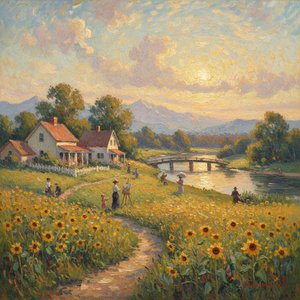
Capturing a Nation's Light: Exploring the American Impressionist Movement
Explore the captivating world of American Impressionism! Discover key artists, techniques & its lasting impact on art history. Find museum-quality reproductions and expert guidance at OriginalUniqueArt.

Grant Wood & American Regionalism: Identity, Myth & the Rural Landscape
Explore the world of Grant Wood & American Regionalism with OriginalUniqueArt. Discover the symbolism behind 'American Gothic', recurring themes, and the movement's lasting impact on art history. High-quality reproductions available.
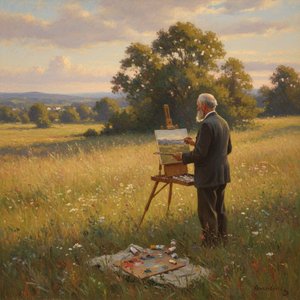
William Herbert Allen: Capturing Atmospheric Light & the Essence of American Impressionism
Explore the evocative landscapes of William Herbert Allen, a master of American Impressionism. Discover his unique brushwork, atmospheric techniques & legacy through OriginalUniqueArt's curated collection.

William Merritt Chase: A Study in American Impressionism & Artistic Luminosity
Explore the life & work of William Merritt Chase, a leading American Impressionist painter and influential art educator. Discover his vibrant portraits, landscapes, and lasting legacy with OriginalUniqueArt.

Frederick Childe Hassam: American Impressionism's Chronicler of Light & Modern Life
Explore the captivating world of Frederick Childe Hassam, a pioneer of American Impressionism. Discover his iconic paintings capturing light, urban life & coastal beauty. Learn about his legacy and influence on American art history.


