
 Voorvertoning
 Verstuur
 Delen
Delen
 Details bekijken

 Download
 Vergelijkbare items
 Röntgenonderzoek
 Diavoorstelling
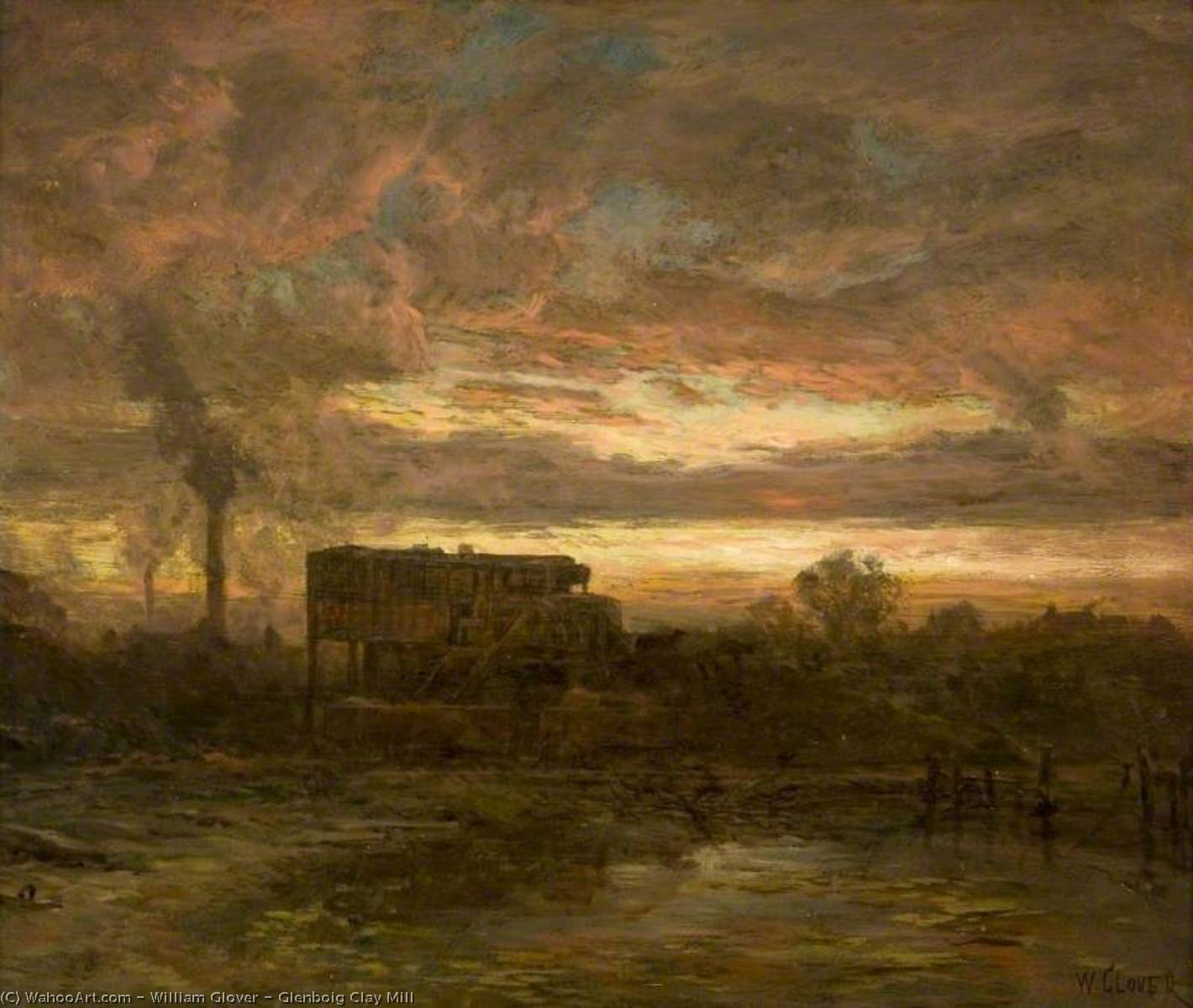
Glenboig Clay Mill
 46.0 x 53.0 cm
 Lees meer
Koop een digitale afbeelding in hoge resolutie met verbeterde kwaliteit, die veel superieur is aan de online voorvertoning.
Elk bestand wordt met uiterste precisie voorbereid door onze interne specialisten, met behulp van geavanceerde tools en deskundige handmatige retouche. Wij garanderen dat elke afbeelding een uitzonderlijke helderheid, nauwkeurige kleurweergave en verfijnde details bezit.
Het uiteindelijke bestand wordt binnen 72 uur per e-mail geleverd, geoptimaliseerd voor direct gebruik in professionele, redactionele en printomgevingen. Dit is dezelfde kwaliteit waarop vooraanstaande designstudio's, uitgevers en galerieën vertrouwen.
Digitale afbeeldingen
Download een bestand met hoge resolutie voor persoonlijke weergave, afdrukken en creatieve projecten. ( Bestel print Bestel handgeschilderde reproductie)
Inbegrepen bij elke bestelling van een digitale afbeelding
Professionele digitale levering, gegarandeerd
Wanneer u kiest voor OriginalUniqueArt.com, ontvangt u niet alleen een afbeelding – u krijgt een professioneel verbeterd digitaal kunstwerk, met precisie vervaardigd en voorzien van een tevredenheidsgarantie. Dit is alles wat automatisch bij uw bestelling is inbegrepen:

Snelle levering per e-mail
Uw hoogwaardige digitale afbeeldingsbestand wordt binnen 72 uur na bestelling naar u gemaild – klaar voor direct gebruik.

AI-verbeterd digitaal bestand
Uw kunstwerk wordt professioneel geoptimaliseerd met behulp van geavanceerde AI-tools en handmatige bewerkingen, waardoor maximale details, helderheid en kleurnauwkeurigheid worden gegarandeerd.

Gratis levenslange herlevering van digitale afbeeldingen
Je bestand per ongeluk verwijderd of kwijtgeraakt? Geen zorgen – we sturen het u op elk gewenst moment gratis opnieuw toe.

Geen invoerkosten – nooit
Geniet direct van uw kunstwerk zonder invoerrechten, belastingen of verzendkosten – digitale downloads zijn altijd belastingvrij.

Garantie op kleurgetrouwheid
Met behulp van professionele hulpmiddelen en kleurbeheer zorgen wij ervoor dat uw digitale afbeelding de originele kleuren zo nauwkeurig mogelijk weergeeft.

60 dagen tevredenheidsgarantie
Als u niet tevreden bent met uw digitale afbeelding, passen wij deze aan of storten wij 100% terug binnen 60 dagen – zonder vragen gesteld.

100% Geld-terug-garantie
Niet tevreden? Ontvang binnen 60 dagen na ontvangst van uw digitale bestand uw volledige aankoopbedrag terug – zonder vragen te stellen.

Korting bij grote bestellingen
Koop 3 afbeeldingen, bespaar 10% - Koop 5, bespaar 15% - Koop 10+, bespaar 20%. Ideaal voor creatieve projecten, galerieën en bureaus.
Kunstenaarsbiografie
A Highland Visionary: The Life and Legacy of William Glover
The history of Victorian Scotland is often told through the lens of industrial progress, yet there exists a parallel narrative written in the luminous oils and dramatic vistas of William Glover. Born on November 4, 1836, in Croydon, South London, to a family deeply rooted in the theatrical arts, Glover’s life was an intricate tapestry woven from the threads of stagecraft and fine art. Though his beginnings were in England, his soul became inextricably linked to the Scottish landscape. As the son of the esteemed actor and theatre manager Edmund Glover, William was raised amidst the magic of the footlights, a heritage that would later inform his unique ability to transform a flat canvas into a breathing, theatrical world.
Glover’s artistic journey was marked by a profound transition from the ephemeral beauty of the stage to the enduring permanence of landscape painting. After honing his skills through rigorous self-study and formal training at the Glasgow School of Art in 1859, he emerged as a master of visual storytelling. His early years were defined by an apprenticeship to light and shadow, a skill set perfected while working as a scenic painter. In this role, he learned to manipulate scale and perspective to create immersive environments for the theatre, a technique that would eventually breathe life into his most celebrated landscape works. His professional ascent in Glasgow’s theatrical scene was nothing short of meteoric; he became a pivotal figure in the management of the Glasgow Theatre Royal, helping to establish it as a cornerstone of British entertainment.
The Intersection of Stagecraft and Scenery
What distinguishes Glover from his contemporaries is the unmistakable presence of the theatrical within his naturalism. To gaze upon a Glover landscape is to witness a carefully composed drama where nature itself takes center stage. His experience as a stage manager allowed him to approach the Scottish Highlands not merely as a topographical subject, but as a set designed to evoke profound emotional responses. He possessed an uncanny ability to use color and light to direct the viewer's eye, much like a spotlight illuminating a protagonist in a darkened theatre.
His mastery of scenic painting provided him with a unique technical vocabulary. He understood how to create depth through atmospheric perspective, using soft, hazy tones to suggest distant mountains and sharp, vibrant details to ground the foreground. This duality—the ability to capture both the grand, sweeping vistas of the Highlands and the intimate, fleeting moments of light—allowed him to bridge the gap between the monumental and the mundane. His works often feature:
- Luminous Atmospheres: A signature use of light that suggests the shifting weather of the Scottish climate.
- Dramatic Composition: Landscapes structured with a sense of movement and narrative tension.
- Textural Richness: An emphasis on the tactile qualities of earth, water, and foliage, reminiscent of the Impressionist movement.
A Lasting Impression on the Scottish Landscape
As his career progressed, Glover’s reputation as a landscape painter solidified, moving beyond the confines of the theatre into the prestigious galleries of Scotland. His paintings, such as The River Kelvin from the North at the Botanic Gardens and Meikle Earnock Village, serve as vital historical documents of a bygone era. Through his brush, we see the rural rhythms of the late 19th century—the horse-drawn carriages, the bustling village streets, and the serene, untouched beauty of the Scottish countryside before the full weight of industrialization took hold.
The significance of William Glover lies in his ability to have captured the sublime. He did not merely paint what he saw; he painted how it felt to stand amidst the grandeur of the Highlands. His work remains a testament to the Victorian era's fascination with nature and its romanticized connection to heritage. Though he passed away in 1916, his legacy persists in the collections of museums like the Low Parks Museum, where his canvases continue to invite viewers into a world of theatrical beauty and enduring Scottish spirit. He remains a singular figure—an artist who brought the drama of the stage to the quiet majesty of the earth.

william glover
1836 - 1916
Belangrijkste feiten
- Artistic Movement Or Style: Victorian Painting
- Artists Or Movements Influenced By This Artist: ['Romanticism']
- Artists Who Influenced This Artist: ['Thomas William Glover']
- Date Of Birth: 1836
- Date Of Death: 1916
- Full Name: William Glover
- Nationality: Scottish
- Notable Artworks:
- Meikle Earnock Village
- Mountainous Lake
- Boat on Lake in the Mountains,
- THE CLYDE
- Place Of Birth: Glasgow, Scotland

