
 Bekijk op ware grootte
 Verstuur
 Delen
Delen
 Details bekijken
 Gids voor studentenkunstwerken

 Download
 Vergelijkbare items
 Röntgenonderzoek
 Diavoorstelling
 Statistieken
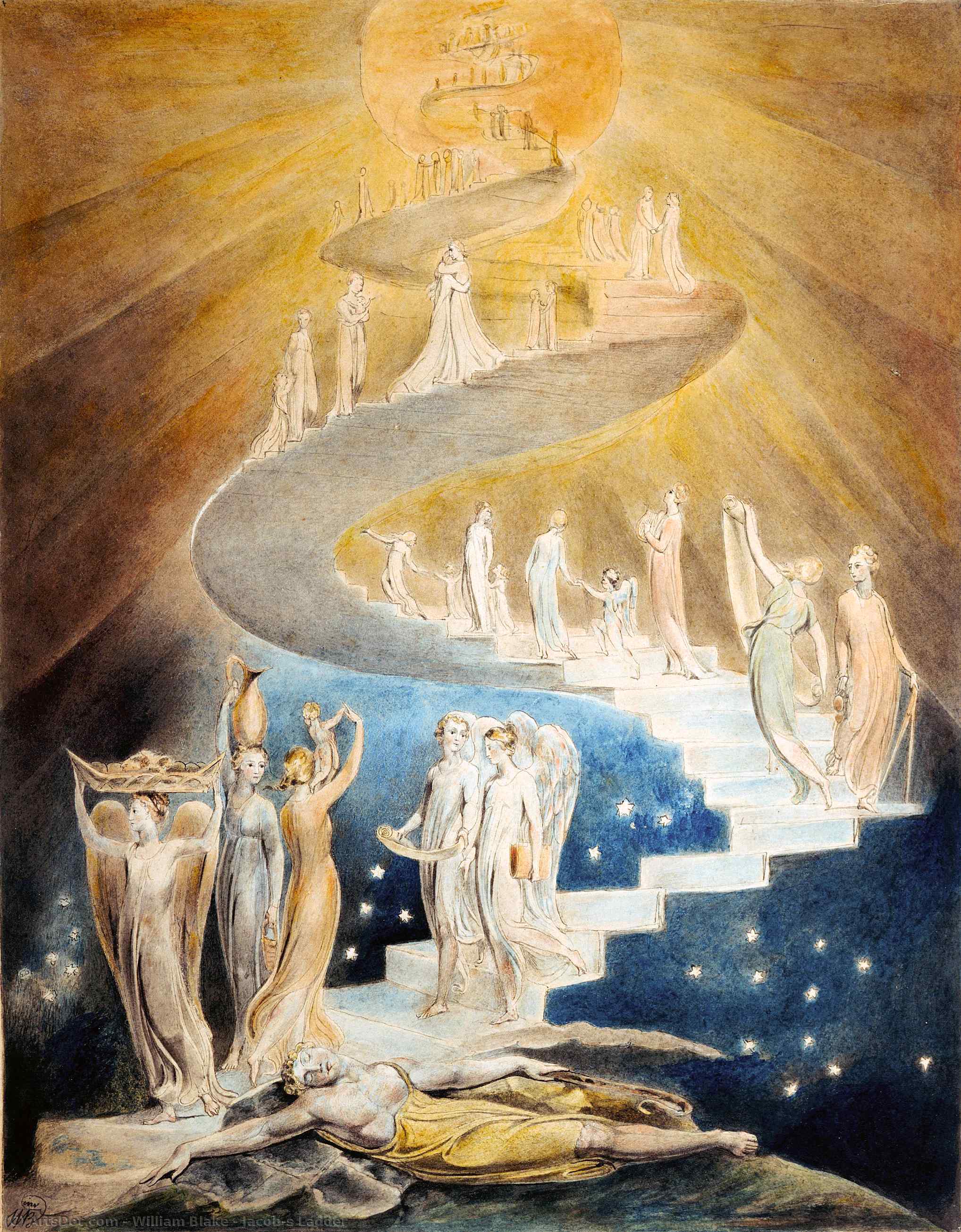
Jacob's Ladder


 Lees meer
Koop een digitale afbeelding in hoge resolutie met verbeterde kwaliteit, die veel superieur is aan de online voorvertoning.
Elk bestand wordt met uiterste precisie voorbereid door onze interne specialisten, met behulp van geavanceerde tools en deskundige handmatige retouche. Wij garanderen dat elke afbeelding een uitzonderlijke helderheid, nauwkeurige kleurweergave en verfijnde details bezit.
Het uiteindelijke bestand wordt binnen 72 uur per e-mail geleverd, geoptimaliseerd voor direct gebruik in professionele, redactionele en printomgevingen. Dit is dezelfde kwaliteit waarop vooraanstaande designstudio's, uitgevers en galerieën vertrouwen.
Digitale afbeeldingen
Download een bestand met hoge resolutie voor persoonlijke weergave, afdrukken en creatieve projecten. ( Schakel over naar print Koop handgeschilderd kunstwerk)
Inbegrepen bij elke bestelling van een digitale afbeelding
Professionele digitale levering, gegarandeerd
Wanneer u kiest voor OriginalUniqueArt.com, ontvangt u niet alleen een afbeelding – u krijgt een professioneel verbeterd digitaal kunstwerk, met precisie vervaardigd en voorzien van een tevredenheidsgarantie. Dit is alles wat automatisch bij uw bestelling is inbegrepen:

Directe levering per e-mail
Uw hoogwaardige digitale afbeeldingsbestand wordt binnen 72 uur na bestelling naar u gemaild – klaar voor direct gebruik.

AI-geoptimaliseerd digitaal bestand
Uw kunstwerk wordt professioneel geoptimaliseerd met behulp van geavanceerde AI-tools en handmatige bewerkingen, waardoor maximale details, helderheid en kleurnauwkeurigheid worden gegarandeerd.

Gratis levenslange herlevering
Je bestand per ongeluk verwijderd of kwijtgeraakt? Geen zorgen – we sturen het u op elk gewenst moment gratis opnieuw toe.

Geen invoerkosten – nooit
Geniet direct van uw kunstwerk zonder invoerrechten, belastingen of verzendkosten – digitale downloads zijn altijd belastingvrij.

Garantie op kleurgetrouwheid
Met behulp van professionele hulpmiddelen en kleurbeheer zorgen wij ervoor dat uw digitale afbeelding de originele kleuren zo nauwkeurig mogelijk weergeeft.

100 dagen tevredenheidsgarantie
Als u niet tevreden bent met uw digitale afbeelding, passen wij deze aan of storten wij 100% terug binnen 100 dagen - zonder vragen te stellen.

100% Geld-terug-garantie
Niet tevreden? Ontvang een volledige terugbetaling binnen 100 dagen na ontvangst van uw digitale bestand – zonder vragen te stellen.

Korting bij grote bestellingen
Koop 3 afbeeldingen, bespaar 10% - Koop 5, bespaar 15% - Koop 10+, bespaar 20%. Ideaal voor creatieve projecten, galerieën en bureaus.
Jacob's Ladder: A Stairway to Spiritual Revelation
William Blake, a visionary artist and poet whose spirit defied the conventions of his era, gifted us with Jacob’s Ladder (circa 1799-1806), an artwork that transcends mere visual representation—it embodies a profound exploration of faith, mysticism, and the human yearning for transcendence. Created during the tumultuous Romantic period, Blake's masterpiece stands as a testament to his singular artistic vision and continues to resonate with audiences today.Composition and Technique: An Illuminated Dreamscape
The painting’s central motif is undeniably striking: a spiraling staircase ascending towards a radiant celestial realm. Executed in watercolor and pencil on paper, Blake skillfully employs delicate washes of color—primarily golds and blues—to evoke an ethereal luminescence that permeates the entire composition. The meticulous detail achieved through pencil rendering lends texture and depth to the architectural elements of the ladder itself, emphasizing its monumental scale against the expansive backdrop of a sunlit sky. Notably, Blake’s use of illuminated printing techniques – a method he pioneered – further enhances the artwork's symbolic power, layering translucent inks over the watercolor base to create an otherworldly glow reminiscent of biblical manuscripts.Symbolism and Biblical Inspiration
Blake’s Jacob’s Ladder draws directly from Genesis 28:12-22, recounting Jacob’s prophetic dream wherein he envisions a ladder reaching heaven, populated by angels descending and ascending. Blake interprets this narrative not merely as a retelling of scripture but as an allegory for the soul's journey towards divine grace. The staircase itself symbolizes the arduous ascent from earthly limitations to spiritual enlightenment, while the angelic figures represent messengers of God guiding humanity toward salvation. Furthermore, the luminous sky serves as a visual representation of paradise—a realm of purity and illumination unattainable through mundane experience.Influence Beyond Art: Echoes in Literature and Culture
Blake’s Jacob’s Ladder exerted considerable influence on subsequent artistic movements and thinkers. Sigmund Freud recognized Blake's preoccupation with unconscious symbolism and psychological depth, mirroring his own explorations into the subconscious mind. Bob Dylan and Jim Morrison similarly embraced Blake’s poetic language and mystical imagery as inspiration for their songwriting endeavors. More broadly, Blake’s work continues to inspire artists and art enthusiasts alike, prompting contemplation on themes of spirituality, imagination, and the transformative potential of artistic expression. Its enduring legacy speaks to a timeless fascination with the intersection of faith and visual storytelling.A Timeless Reflection: Jacob's Ladder Today
Even centuries after its creation, Jacob’s Ladder retains an undeniable emotional impact. The painting invites viewers to contemplate questions of belief, purpose, and the human desire for connection with something greater than oneself. Its luminous palette and intricate detail capture the essence of Romantic idealism—a conviction that art possesses the capacity to elevate consciousness and illuminate the hidden realities of existence. Owning a high-quality reproduction allows you to experience this captivating artwork's beauty and symbolism firsthand, bringing Blake’s visionary spirit into your home or studio.Vragen & Antwoorden
Waar kan ik een gids vinden voor "Jacob's Ladder"?
Er is een Gids pagina beschikbaar voor "Jacob's Ladder" door William Blake: een printbaar informatieblad over het kunstwerk, ontworpen voor studenten en gebruik in de klas.
Welke stemming straalt "Jacob's Ladder" door William Blake uit binnen Romanticism?
Binnen de Romanticism-stroming is "Jacob's Ladder" vastgelegd met een Mysterious toon.
Welke techniek is gebruikt voor "Jacob's Ladder" en wanneer is het gemaakt?
"Jacob's Ladder" werd gemaakt in 1806, in Watercolor.
Biografie van de kunstenaar
A Visionary’s Journey: The Life and Art of William Blake
William Blake, born in London on November 28, 1757, was a figure perpetually out of step with his time, yet destined to become one of the most celebrated artists and poets of the Romantic Age. His life unfolded against the backdrop of a rapidly changing England—a world grappling with industrialization, political upheaval, and shifting spiritual beliefs. From humble beginnings as the son of a hosier, Blake’s early years were marked by an intensely vivid imagination and a propensity for visionary experiences that would profoundly shape his artistic trajectory. Though largely self-taught in formal academics, he received drawing instruction at a young age, quickly revealing a talent that hinted at the extraordinary path ahead. His apprenticeship with engraver James Basire proved pivotal, providing him not only with technical mastery but also an understanding of printmaking techniques he would later revolutionize. These early influences—the Gothic grandeur of Westminster Abbey, the classical forms of Raphael and Michelangelo—served as foundational elements in his developing aesthetic, though Blake was never one to remain bound by convention.The Illuminated World: Technique and Innovation
Blake’s artistic innovation wasn't merely about subject matter; it resided fundamentally in *how* he created. Dissatisfied with conventional engraving methods, he developed a unique process known as “illuminated printing.” This involved etching both text and illustrations onto copper plates, then hand-coloring the resulting prints—a laborious but deeply personal approach that allowed for complete artistic control. This wasn’t simply illustration accompanying poetry; it was an integrated art form where image and verse were inextricably linked, each enhancing the meaning of the other. His relief etching technique, born from a claimed visionary experience following his brother's death, further distinguished his work, granting it- A distinctive textural quality
- Greater artistic freedom than traditional methods
Themes of Innocence, Experience, and Rebellion
The core of Blake’s artistic output lies in its exploration of profound themes: the duality of innocence and experience, the constraints of reason versus the liberating power of imagination, and a fierce critique of societal norms.- Songs of Innocence and of Experience (1794), perhaps his most accessible work, presents a contrasting vision of childhood—one idyllic and untainted, the other marked by hardship and corruption.
- The Marriage of Heaven & Hell (1793) is a provocative prose poem that challenges conventional morality, celebrating energy, desire, and rebellion against restrictive doctrines.
- His illustrations for Dante’s *Divine Comedy* showcase his dramatic vision and ability to translate complex narratives into powerful visual imagery.
A Legacy Rediscovered: Blake's Enduring Influence
During his lifetime, William Blake remained largely marginalized, misunderstood by many of his contemporaries. His work was often dismissed as eccentric or even mad. He struggled financially throughout much of his life, relying on commissions and the support of a small circle of patrons like Thomas Butts. However, in the decades following his death on August 12, 1827, Blake’s reputation began to grow steadily. The Pre-Raphaelites, captivated by his visionary style and symbolic imagery, embraced him as a kindred spirit. Later movements—Symbolism and Modernism—found resonance in his emphasis on imagination, subjective experience, and spiritual themes. Blake's influence extends far beyond the realm of art; he inspired writers like Dylan Thomas and poets such as Ted Hughes. Today, William Blake is recognized as a pivotal figure in the Romantic movement, an artist whose work continues to provoke contemplation and inspire creativity—a testament to the enduring power of visionary imagination in confronting societal conventions and exploring the deepest recesses of human consciousness. His unwavering commitment to artistic freedom cemented his place as one of the most original voices of his era.
William Blake
1757 - 1827 , Verenigd Koninkrijk
Kerngegevens
- Artistic Movement Or Style: Romantiek
- Artists Who Influenced This Artist:
- Raphael
- Michelangelo
- Date Of Birth: November 28, 1757
- Date Of Death: August 12, 1827
- Full Name: William Blake
- Nationality: Britse kunstenaar
- Notable Artworks:
- Songs of Innocence & Exp.
- The Tyger
- Jerusalem
- Place Of Birth: London, UK