Voorvertoning
 Verstuur
 Delen
Delen
 Details bekijken
 Gids
Gids

 Download
 Vergelijkbare items
 Röntgenonderzoek
 Diavoorstelling
 Vraag & antwoord
 Statistieken
In The Forest

- 26.0 x 19.0 cm


 Lees meer
Giclée / Kunstafdrukken
Giclée- of canvasafdruk van museumkwaliteit met een snelle productie en flexibele afwerkingsmogelijkheden. ( Bestel handgeschilderde reproductie Schakel over naar digitale afbeeldingen)




P118B €10

P118H €10

P118W €10

P438Z €10

P508JH €12

P508YH €12

P805H €10

P805Z €10

P919BZ €10

P919G €10

P919XJ €10

P959ZH €10

P968JZ €12

W106C €8

W218G €10

W218JH €8

W218Y €10

W307PJ €10

W316G €10

W316PJ €8

W316Y €10

W398PJ €8

W4111J €10

W500HY €15

W500JH €15

W692G €12

W849H €8

W940BG €15

W953PJ €8




Kies uit onze vooraf ingestelde maten die overeenkomen met de originele verhoudingen van het kunstwerk.

Voer de gewenste breedte en hoogte in, passend bij uw lijst of muur. Een afdruk kan alleen worden ingekort en nooit groter worden gemaakt dan het origineel; een formaat met andere verhoudingen zal daarom een deel van de afbeelding verliezen. Wij sturen u een digitaal mockup ter goedkeuring voordat we tot drukwerk overgaan. De afbeelding op deze pagina toont niet de werkelijke uitsnede — dit is alleen te zien op het mockup.
Wereldwijde levering () binnen 2 weken in plaats van de standaard 4/5 weken. (8 november)

Gratis wereldwijde expressverzending

Hoogwaardig linnen canvas

Volledige verzendverzekering

Garantie op terugbetaling van invoerrechten

Garantie op exacte kleurweergave

Retourbeleid van 100 dagen (alleen bij defecten)

100% Geld-terug-garantie

Korting bij meerdere afnames
 De optie voor glas is alleen beschikbaar bij een formaat kleiner dan 110 cm.

In The Forest
Giclée / Kunstafdrukken
Afmetingen reproductie
-


Eindtotaal
€ 72
A Journey Into Color and Emotion: Wassily Kandinsky’s “In The Forest”
Wassily Kandinsky's "In The Forest," painted in 1904, isn’t merely a depiction of a woodland scene; it’s an immersive experience—a vibrant portal into the artist’s burgeoning world of abstract expression. Born in Moscow and initially pursuing a career in law, Kandinsky’s artistic awakening arrived later in life, fueled by a profound encounter with Monet's "Haystacks." This pivotal moment ignited a lifelong quest to translate inner emotions onto canvas, a journey culminating in works like “In The Forest,” which stands as a crucial stepping stone toward his groundbreaking abstract style. The painting, measuring a modest 26 x 19 cm, belies the monumental impact it would have on the course of modern art.
At first glance, the composition presents a familiar landscape: a man and horse traversing a mountainous terrain beneath a cloudy sky. However, Kandinsky deliberately strips away representational accuracy, prioritizing instead the raw power of color and form. The figures are rendered with simplified shapes—the man’s hat a distinct geometric element, the horse’s body a blocky structure—while the mountains dissolve into swirling masses of blues, greens, and browns. This deliberate ambiguity invites the viewer to engage not just with what *is* depicted, but with what *feels* depicted – a sense of movement, energy, and perhaps even a hint of unease.
The Language of Form and Color
Kandinsky’s technique in “In The Forest” is characterized by bold, expressive brushstrokes and an almost obsessive attention to color relationships. He employed a technique he termed ‘psychological coloring,’ believing that colors possessed inherent emotional qualities. Deep blues evoke feelings of melancholy and introspection, while vibrant greens suggest vitality and growth. The use of contrasting hues creates visual tension, mirroring the internal struggles and aspirations represented within the painting. Kandinsky’s layering of pigments—often applied in thick impasto—adds a tactile dimension to the work, inviting closer inspection and encouraging the viewer to lose themselves in its textured surface.
Influenced by movements like Expressionism and Fauvism, which prioritized emotional impact over strict realism, Kandinsky sought to create paintings that communicated directly with the subconscious. He famously wrote about his artistic philosophy, stating that “the artist must not depict what he sees, but what he feels.” This sentiment is powerfully realized in "In The Forest," where recognizable forms are subsumed by a swirling vortex of color and shape—a visual embodiment of inner experience.
Symbolism and the Journey Within
The central image – the man on horseback – carries significant symbolic weight. It represents an individual embarking on a journey, confronting challenges and navigating uncertain terrain. The horse itself symbolizes strength, power, and perhaps even a primal instinct. The mountainous landscape serves as a metaphor for obstacles and difficulties, while the cloudy sky hints at both hope and apprehension. Kandinsky wasn’t simply painting a forest; he was exploring the complexities of human existence—the interplay between ambition, vulnerability, and the search for meaning.
Interestingly, Kandinsky's work during this period reflects his own personal journey – a transition from a structured academic life to one dedicated entirely to art. The painting can be interpreted as an allegory for this transformation, a visual representation of shedding old identities and embracing new possibilities. The influence of figures like Pablo Picasso, particularly in his exploration of form and perspective, is subtly present, yet Kandinsky ultimately forged his own unique path toward abstraction.
A Legacy of Innovation
"In The Forest" stands as a pivotal work in the development of abstract art, demonstrating Kandinsky’s pioneering approach to non-representational painting. Its influence can be seen in countless artists who followed, shaping the trajectory of 20th-century art and beyond. As documented by Wikipedia and other historical sources, Kandinsky's exploration of color and form continues to resonate with audiences today, reminding us of the power of art to evoke emotion, stimulate imagination, and transcend the boundaries of conventional representation. OriginalUniqueArt.com offers meticulously crafted oil painting reproductions of “In The Forest,” allowing you to bring this iconic masterpiece into your own space and experience its captivating beauty firsthand.
OriginalUniqueArt.com is your premier destination for high-quality, handmade oil painting reproductions. Explore our collection today and discover the beauty of art in its finest form. In The Forest by Wassily Kandinsky (1904) | Improvisation XIV by Wassily Kandinsky | Seated man (Self-portrait) by Pablo Picasso
In The Forest by Wassily Kandinsky (1904)
Improvisation XIV by Wassily Kandinsky
Seated man (Self-portrait) by Pablo Picasso
- In The Forest by Wassily Kandinsky (1904)
- Improvisation XIV by Wassily Kandinsky
- Seated man (Self-portrait) by Pablo Picasso
Veelgestelde vragen
Aan welke kunstenaar wordt "In The Forest" toegeschreven?
"In The Forest" wordt toegeschreven aan Wassily Wassilyevich Kandinsky.
Welke afdrukinstellingen worden aanbevolen voor "In The Forest" door Wassily Wassilyevich Kandinsky?
Formaat Medium, Portrait oriëntatie: dit is de aanbevolen printinstelling voor "In The Forest" door Wassily Wassilyevich Kandinsky.
Zijn de kleuren van "In The Forest" door Wassily Wassilyevich Kandinsky verzadigd of gedempt?
De kleuren van "In The Forest" door Wassily Wassilyevich Kandinsky hebben een Balanced Soft verzadiging. Verzadiging beschrijft hoe levendig of gedempt de kleuren zijn.
Biografie kunstenaar
A Life Immersed in Color and Spirit
Wassily Wassilyevich Kandinsky, geboren in Moskou in 1866, was een revolutionaire figuur die de koers van moderne kunst onherstelbaar heeft veranderd. Zijn reis was geen directe artistieke roeping; aanvankelijk was hij bestemd voor een carrière in de rechten en economie aan de Universiteit van Moskou, maar het was een diepgaande ontmoeting met impressionistische schilderkunst – specifiek Claude Monet’s “Haystacks” – en een aangrijpend ervaring tijdens het bijwonen van Wagners opera "Lohengrin" die in hem een onweerstaanbare drang ontstond om kunst te beoefenen. Dit cruciale moment, rond de leeftijd van dertig, markeerde niet alleen een carrièreverandering, maar ook een complete verschuiving in perspectief, waardoor hij op weg werd gesteld naar het pionierswerk van abstractie. Kort daarna verhuisde hij naar München en meldde zich aan bij de prestigieuze Academie voor Beeldende Kunsten en studeerde daar onder Franz von Stuck, hoewel zelfs binnen formele training Kandinsky’s geest hunkerde naar exploratie buiten conventionele grenzen.
Vroege invloeden omvatten Russische volkskunst, verkregen tijdens een etnografische expeditie naar de Vologda-regio in 1889, wat een fascinatie wekte voor levendige kleurenpaletten en symbolische beelden. Deze basis zou cruciaal blijken te zijn terwijl hij begon zijn unieke artistieke taal te ontwikkelen. Deze vroege verkenningsreizen waren niet alleen gebaseerd op esthetische voorkeuren; ze waren geworteld in een diepe culturele verbinding en een groeiend begrip van hoe kunst kan communiceren buiten de letterlijke betekenis. De invloed van Wagner’s opera's was bijzonder belangrijk, omdat het Kandinsky’s verlangen naar expressie en spiritualiteit stimuleerde.
The Dawn of Abstraction: From Expressionism to Inner Necessity
Kandinsky’s vroege werken tonen een sterke expressionistische neiging, gekenmerkt door felle kleuren en emotionele intensiteit – schilderijen zoals “Papeln (Poplars)” uit 1902 illustreren deze periode. Echter, hij was niet tevreden om de buitenwereld te representeren; hij zocht naar het uiten van innerlijke realiteiten, spirituele waarheden die verder gingen dan eenvoudige visuele weergave. Deze zoektocht leidde hem geleidelijk weg van representatiekunst en richting een revolutionaire verkenning van kleur, vorm en hun emotionele resonans. Hij geloofde dat kleuren inherent psychologische effecten hadden, in staat om specifieke gevoelens en zintuiglijke ervaringen bij de kijker op te roepen.
Hij begon te geloven dat kleuren een intrinsieke betekenis hadden, die verband hield met zijn toenemende interesse in de Theosophie, een spirituele beweging die esoterische kennis en universele broederschap benadrukte. Door zich verder te verdiepen in deze ideeën, werden Kandinsky’s schilderijen steeds meer niet-objectief, waarbij herkenbare vormen werden losgelaten ten gunste van abstracte composities gedreven door een “innerlijke noodzaak”. Dit was niet alleen het opgeven van representatie; het was het ontdekken van een nieuwe visuele taal die in staat was om de ongrijpbare rijkdommen van emotie en spiritualiteit uit te drukken. Hij streefde ernaar om een visueel equivalent te creëren voor muziek, waarbij kleur en vorm harmonieerden om diepgaande emotionele reacties op te wekken.
Geometric Harmony and Spiritual Resonance
De periode na zijn betrokkenheid bij de invloedrijke kunstenaarsgroep Der Blaue Reiter (De Blauwe Reiter), die hij in 1911 in München mede-stigde, zag een verdere evolutie in Kandinsky’s stijl. Hoewel eerdere werken vaak vloeiende, organische vormen vertoonden, begon hij te experimenteren met abstracte geometrie, waarbij de nadruk lag op het samenspel van cirkels, driehoeken en vierkanten. “Several Circles” (140 x 140 cm) is een voorbeeld van deze fase – een dynamische compositie waarin kleur en vorm in een harmonieus maar energiek dansje interageren. De kleuren werden zorgvuldig gekozen om specifieke emoties en ideeën te oproepen, wat de essentie van Kandinsky’s artistieke visie weerspiegelt.
Deze geometrie was niet koud of steril; het was doordrenkt met spirituele betekenis. Kandinsky geloofde dat geometrische vormen inherente symbolische betekenissen hadden, en hun arrangement binnen de doek kon specifieke emotionele reacties oproepen. Zijn theoretische geschriften, waaronder “Concerning the Spiritual in Art” (1911), legden deze overtuigingen vast, waardoor een nieuwe benadering van abstracte kunst als een middel tot expressie van diepgaande spirituele waarheden werd gecreëerd. Hij betoogde dat kunst niet de bedoeling had om de natuur na te bootsen, maar eerder om de innerlijke wereld van de kunstenaar te onthullen en verbinding te maken met de kijker op een dieper, intuïtiever niveau.
Bauhaus Influence and Lasting Legacy
De uitbraak van de Eerste Wereldoorlog dwingde Kandinsky in 1914 terug naar Rusland, maar na de Russische Revolutie bevond hij zich steeds meer op tegenstrijdige wijze met het heersende artistieke klimaat. In 1920 accepteerde hij een lespost aan de Bauhaus school in Duitsland, waar hij generaties kunstenaars beïnvloedde met zijn theorieën over kleur, vorm en abstractie. De Bauhaus bood een ideale omgeving voor Kandinsky om zijn ideeën verder te ontwikkelen en nieuwe creatieve paden te verkennen.
Hij bleef experimenteren met geometrische vormen en levendige kleuren, waarbij hij vaak ingewikkelde impasto-technieken gebruikte om texturen te creëren die de diepte en complexiteit van zijn composities verhoogden – zoals blijkt uit latere werken zoals “An Intimate Party” (1942). Na het sluiten van de Bauhaus door het Nazi-regime in 1933, verhuisde Kandinsky naar Frankrijk, waar hij zijn leven beëindigde. Zijn impact op moderne kunst is onmiskenbaar; hij wordt algemeen beschouwd als een pionier van abstract expressionisme en een sleutelfiguur in de ontwikkeling van niet-representatieve schilderkunst. Zijn werken worden in belangrijke musea over de hele wereld tentoongesteld, waaronder de Tretyakov Gallery in Moskou, die zijn monumentale “Composition VII” herbergt – een getuigenis van zijn artistieke visie en blijvende nalatenschap.
Kandinsky’s verkenning van kleur, vorm en spiritualiteit inspireert kunstenaars tot op de dag van vandaag, waardoor hij zijn plaats als een van de meest belangrijke figuren in de 20e-eeuwse kunstgeschiedenis wordt bevestigd. Hij schilderde niet alleen plaatjes; hij schilderde emoties, ideeën en de essentie van het menselijk spirituele.

Wassily Wassilyevich Kandinsky
1866 - 1944 , Rusland
Belangrijkste feiten
- Artistic Movement Or Style: Abstract kunst, Expressionisme
- Artists Or Movements Influenced By This Artist:
- Expressionisme
- Der Blaue Reiter
- Artists Who Influenced This Artist:
- Claude Monet
- Richard Wagner
- Date Of Birth: 1866
- Full Name: Wassily Wassilyevich Kandinsky
- Nationality: Russisch, Frans
- Notable Artworks:
- Murnau met Regenboog
- Tempered Elan
- An Intieme Party
- Meerdere Cirkels
- Place Of Birth: Moskou, Rusland
Gerelateerde artikelen

Top 10 Abstract Expressionisme Meesterwerken: Kunst voor uw Interieur | OriginalUniqueArt.com
Ontdek de 10 meest invloedrijke werken van Abstract Expressionisme! Leer over Jackson Pollock, Mark Rothko & meer. Museumkwaliteit kunst reproducties voor uw interieur. Bekijk de collectie op OriginalUniqueArt.com.
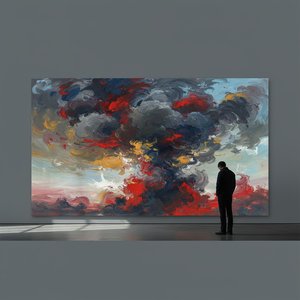
Beyond Representation: Exploring the Emotional Landscape of Abstract Expressionism
Explore the profound emotional world of Abstract Expressionism with OriginalUniqueArt. Discover key artists like Pollock & Rothko, learn about collecting, and find museum-quality reproductions to inspire your space.
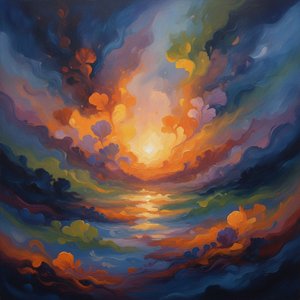
The Soul of Color: A Journey into the Emotional Resonance of Lyrical Abstraction
Embark on a cultural journey through Lyrical Abstraction. Explore how masters like Kandinsky used color and motion to translate emotion into visual poetry. Discover the profound beauty of abstract expressionism and learn to curate emotional resonance in your own art collection.

Top 10 Meesterwerken van de Geometrische Abstractie | OriginalUniqueArt.nl
Ontdek de 10 meest invloedrijke meesterwerken van de geometrische abstractie! Van Mondriaan tot Malevich, leer over kunstenaars, technieken & kleuren. Museumkwaliteit reproducties op OriginalUniqueArt.com – voor een unieke interieurstijl.

Kandinsky's Meesterwerken: 25 Abstracte Kunstparels voor uw Interieur | OriginalUniqueArt
Ontdek de 25 meest iconische werken van Wassily Kandinsky! Duik in zijn abstracte wereld vol kleur, expressionisme & spirituele diepgang. Vind museumkwaliteit reproducties en interieurinspiratie op OriginalUniqueArt.com.