

 Voorvertoning
 Verstuur
 Delen
Delen
 Details bekijken

 Download
 Vergelijkbare items
 Röntgenonderzoek
 Diavoorstelling
 Statistieken
St Stephen is Consecrated Deacon
 Acrylic On Canvas
- WallArt
- Venetian Renaissance
 1511
1511 148.0 x 231.0 cm
 Staatliche Museen zu Berlin
 Lees meer
Handgemaakte olieverfreproductie
Met de hand geschilderd in olieverf op canvas in uw gewenste maat en lijst, op bestelling gemaakt door onze kunstenaars. ( Schakel over naar print Schakel over naar digitale afbeelding)




P118B $10

P118H $10

P118W $10

P438Z $10

P508JH $12

P508YH $12

P805H $10

P805Z $10

P919BZ $10

P919G $10

P919XJ $10

P959ZH $10

P968JZ $12

W106C $8

W218G $10

W218JH $8

W218Y $10

W307PJ $10

W316G $10

W316PJ $8

W316Y $10

W398PJ $8

W4111J $10

W500HY $15

W500JH $15

W692G $12

W849H $8

W940BG $15

W953PJ $8




Kies uit onze vooraf ingestelde maten die overeenkomen met de originele verhoudingen van het kunstwerk.

U kunt uw eigen afmetingen invoeren om in een specifieke lijst of ruimte te passen. Als de door u gekozen maat niet overeenkomt met de verhoudingen van het originele beeld, zullen we het kunstwerk bijsnijden of het schilderij uitbreiden met extra handgeschilderde elementen. Een digitale mockup wordt ter goedkeuring naar u verzonden voordat de productie begint.
Houd er rekening mee dat de preview op het scherm niet de werkelijke uitsnede of uitbreiding weergeeft. Alleen de mockup toont de uiteindelijke compositie nauwkeurig.
Hoewel aangepaste afmetingen mogelijk zijn, raden we aan een maat uit de vooraf gedefinieerde lijst te selecteren om de originele verhoudingen te behouden.
Na de bestelling zal het team van OriginalUniqueArt.com per e-mail contact opnemen met de klant voor instructies en een mockup-voorbeeld sturen.
Wereldwijde levering () binnen 3 tot 4 weken in plaats van de standaard 5 weken. (14 september). Zonder concessies aan de kwaliteit.

Gratis wereldwijde expressverzending

Hoogwaardig linnen canvas

Volledige verzendverzekering

Garantie op terugbetaling van invoerrechten

Garantie op exacte kleurweergave

Retourbeleid van 100 dagen (alleen bij defecten)

100% Geld-terug-garantie

Korting bij meerdere afnames
 De optie voor glas is alleen beschikbaar bij een formaat kleiner dan 110 cm.

St Stephen is Consecrated Deacon
Druktechniek
Afmetingen reproductie
-


Eindtotaal
$ 300
The Sacred Narrative of Vittore Carpaccio’s “St Stephen is Consecrated Deacon”
Vittore Carpaccio's "St Stephen is Consecrated Deacon," painted in 1511, isn’t merely a depiction of a biblical event; it’s a vibrant tableau brimming with Venetian artistry and profound spiritual resonance. This tempera on panel masterpiece, now residing within the Staatliche Museen in Berlin, transports us to a bustling Roman street scene, meticulously rendered with an almost photographic realism that was revolutionary for its time. Carpaccio, deeply influenced by the early Italian Renaissance – particularly Antonello da Messina’s mastery of perspective and detail – eschewed the prevailing humanist trends, instead embracing a more conservative style rooted in Byzantine iconography and the meticulous observation of the world around him. The painting captures not just a moment in St Stephen's life, but also the very essence of Venetian civic pride and religious fervor.A Scene of Ceremony and Community
The heart of the composition is undoubtedly St. Stephen himself, kneeling before St. Peter, who bestows upon him the sacred mantle of deacon. Carpaccio masterfully orchestrates a complex arrangement of figures – at least fourteen individuals are visible within the frame – creating a dynamic sense of movement and engagement. The scene unfolds against a backdrop of an identifiable Roman street, complete with architectural details that hint at the grandeur of the city. A striking horse stands to the left, adding a touch of theatricality and emphasizing the importance of this momentous occasion. The crowd is diverse, reflecting the cosmopolitan nature of Venice itself – merchants in their finery mingle with ordinary citizens, all drawn together by the spectacle unfolding before them. Carpaccio’s skill lies not just in depicting individual faces but in conveying the collective energy of a community witnessing a pivotal religious event.Technique and Symbolism: A Venetian Masterpiece
Carpaccio's technique is characterized by its meticulous detail and rich, layered colors. The tempera medium allowed for incredible luminosity and depth, particularly evident in the rendering of fabrics, textures, and architectural elements. Notice the subtle gradations of color used to depict the folds of clothing, the sheen of metal, and the varied surfaces of the buildings. The painting’s composition is carefully balanced, drawing the eye from St. Stephen's kneeling posture towards St. Peter and then outwards to encompass the entire scene. The use of perspective, though not entirely groundbreaking for its time, is remarkably sophisticated, creating a convincing illusion of depth and space. Symbolically, the painting is rich with meaning. The presence of the horse could represent Christ’s sacrifice, while the diverse crowd symbolizes the universal appeal of St. Stephen's message. The act of consecration itself signifies a transition – from earthly concerns to divine service – a central theme in Christian theology.Historical Context and Artistic Legacy
“St Stephen is Consecrated Deacon” was created during a period of significant artistic innovation in Venice, where the influence of Northern European painting—particularly the meticulous detail and realism of Flemish artists—was increasingly felt. Carpaccio skillfully blended these influences with his own distinctive style, creating a unique and compelling visual language. The painting’s subject matter – a biblical narrative – was also highly popular during this period, reflecting the growing importance of religious imagery in Venetian society. It's fascinating to consider that Carpaccio painted this work shortly before the completion of his monumental “Legend of St. Ursula,” demonstrating his continued engagement with large-scale narrative cycles. The painting’s enduring appeal lies not only in its technical brilliance but also in its ability to evoke a sense of immediacy and emotional connection, transporting us back to a vibrant moment in Christian history.A Timeless Reflection on Faith and Community
Ultimately, “St Stephen is Consecrated Deacon” transcends the boundaries of mere historical documentation. It’s a powerful meditation on faith, community, and the transformative power of belief. The painting's enduring legacy lies in its ability to capture the spirit of a pivotal moment – the consecration of St. Stephen as a deacon – with remarkable clarity and emotional depth. Reproductions of this masterpiece offer an opportunity to bring this extraordinary work into any setting, allowing viewers to experience firsthand the artistry and spiritual resonance that have captivated audiences for centuries.Biografie van de kunstenaar
Early Life and Training
Vittore Carpaccio, a Venetian painter of considerable renown, was born around 1465 in Venice itself—a city steeped in artistic tradition and brimming with burgeoning humanist thought. His origins were humble; he descended from a family engaged in the trade of fishing and boat building, reflecting the pervasive maritime character of Venetian society at the time. Remarkably little is known about Carpaccio’s formative years beyond this basic biographical detail. However, it is established that he received his artistic education under the tutelage of Gentile Bellini—a titan amongst Venetian painters and a pivotal figure in establishing the Venetian Renaissance style. This apprenticeship proved invaluable, equipping Carpaccio with foundational skills and introducing him to the stylistic precepts that would define his oeuvre. Furthermore, he studied alongside Lazzaro Bastiani, cementing his grounding in artistic principles.Artistic Style and Influences
Carpaccio’s artistic approach distinguished itself from the prevailing currents of humanist painting circulating throughout Italy during his lifetime—a movement characterized by intellectual curiosity and a renewed interest in classical antiquity. Unlike many of his contemporaries who embraced bold experimentation with new techniques or sought inspiration from philosophical treatises, Carpaccio adhered to a remarkably conservative aesthetic. His style was profoundly shaped by Antonello da Messina’s distinctive visual language and, crucially, by the burgeoning influence of Early Netherlandish painting. This confluence of stylistic elements resulted in a singular Venetian idiom—one marked by meticulous detail, subdued color palettes dominated by reds and whites, and an unwavering commitment to narrative storytelling. The resulting images possessed a solemn beauty, reflecting a deep reverence for religious iconography and conveying profound emotional resonance.Notable Works
Carpaccio’s artistic output spanned roughly from 1490 to 1519—establishing him as one of the foremost masters of the Venetian Renaissance. His most celebrated achievement remains undoubtedly “The Legend of Saint Ursula,” a monumental cycle of nine paintings housed in the Gallerie dell'Accademia in Florence. This ambitious undertaking exemplifies Carpaccio’s mastery of narrative painting, meticulously depicting scenes from the biblical tale of Saint Ursula and her companions—a story replete with symbolism and moral contemplation. Equally impressive is “Glory of St. Ursula,” an altarpiece showcasing Carpaccio’s exceptional skill in capturing light and color—a technique reminiscent of Giovanni Bellini's luminous style. The depiction of “Miracle of the Relic of the Cross at the Ponte di Rialto” further underscores Carpaccio’s ability to synthesize compositional balance with evocative storytelling, cementing his reputation as a visionary artist.Career Highlights and Legacy
Carpaccio’s artistic career unfolded against the backdrop of Venice's ascendancy as a commercial and cultural powerhouse—a city actively engaged in fostering artistic innovation while simultaneously preserving its venerable traditions. He produced numerous commissions throughout his life, reflecting the patronage system prevalent during the Renaissance. Notably, Carpaccio demonstrated an interest in Orientalist motifs—particularly evident in “St. George Baptizing the Selenites,” where he skillfully blended Venetian stylistic conventions with exotic imagery drawn from the Levant. Despite being somewhat overshadowed by luminaries such as Giovanni Bellini and Giorgione, Vittore Carpaccio’s enduring legacy persists—primarily due to the sheer grandeur of his “Saint Ursula” cycle and its profound impact on Venetian art history. His meticulous attention to detail and unwavering devotion to narrative storytelling continue to inspire admiration among scholars and connoisseurs alike.References and Further Reading
- Vittore Carpaccio on OriginalUniqueArt
- Vittore Carpaccio on Wikipedia
- The Italian Renaissance Art Movement on OriginalUniqueArt

Vittore Carpaccio
1465 - 1526 , Italië
Belangrijkste feiten
- Artistic Movement Or Style: Vroege Venetiaanse Renaissance
- Artists Who Influenced This Artist:
- Gentile Bellini
- Antonello da Messina
- Date Of Birth: Venetië, Italië (c. 1465)
- Date Of Death: Capodistria, 1526/1527
- Full Name: Vittore Carpaccio
- Nationality: Italiaans
- Notable Artworks:
- De Legende van Sint Ursula
- Glorie van Sint Ursula Altarpiece
- Mirakel van het Relikwie van het Kruis bij Ponte Rialto
- Place Of Birth: Venetië
Gerelateerde artikelen

El Greco's Top 25 Meesterwerken: Kunst, Geschiedenis & Decoratie voor Uw Huis
Ontdek de top 25 meesterwerken van El Greco! Duik in het leven en werk van deze renaissance schilder, zijn spirituele kunst & dramatische stijl. Vind museumkwaliteit reproducties voor uw interieur op OriginalUniqueArt.com.
Illuminating Surfaces: A Comprehensive Exploration of Tempera on Panel Painting Techniques & Historical Significance
Explore the rich history & techniques of tempera painting! Discover Renaissance masters like Botticelli & Fra Angelico, conservation insights, and the enduring legacy of this captivating art form. Learn more now!
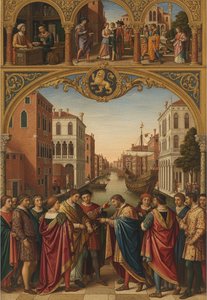
Vittore Carpaccio: Venetian Renaissance Narrative & the Poetics of Detail
Explore the captivating world of Vittore Carpaccio, a master storyteller of the Venetian Renaissance. Discover his intricate details, narrative cycles like 'The Legend of St. Ursula,' and unique artistic style.
Illuminating History: A Comprehensive Exploration of Tempera Painting Techniques & Artistic Legacy
Explore the rich history & techniques of tempera painting! Discover Renaissance masters like Botticelli & Fra Angelico, conservation insights, and the enduring legacy of this captivating art form.
Giotto di Bondone's 25 Meesterwerken: Renaissance Kunst voor uw Interieur | OriginalUniqueArt
Ontdek de 25 meesterwerken van Giotto di Bondone, pionier van de Renaissance. Verlies u in zijn fresco's & religieuze kunst. Museumkwaliteit reproducties voor uw interieur op OriginalUniqueArt.com.


