

 Voorvertoning
 Verstuur
 Delen
Delen
 Details bekijken

 Download
 Vergelijkbare items
 Röntgenonderzoek
 Diavoorstelling
Saint John the Baptist


 Lees meer
Giclée / Kunstafdrukken
Giclée- of canvasafdruk van museumkwaliteit met een snelle productie en flexibele afwerkingsmogelijkheden. ( Bestel handgeschilderde reproductie Koop afbeelding)




P118B $10

P118H $10

P118W $10

P438Z $10

P508JH $12

P508YH $12

P805H $10

P805Z $10

P919BZ $10

P919G $10

P919XJ $10

P959ZH $10

P968JZ $12

W106C $8

W218G $10

W218JH $8

W218Y $10

W307PJ $10

W316G $10

W316PJ $8

W316Y $10

W398PJ $8

W4111J $10

W500HY $15

W500JH $15

W692G $12

W849H $8

W940BG $15

W953PJ $8




Kies uit onze vooraf ingestelde maten die overeenkomen met de originele verhoudingen van het kunstwerk.

U kunt uw eigen afmetingen opgeven om in een specifieke lijst of ruimte te passen. Als de door u gekozen maat niet overeenkomt met de proporties van het originele kunstwerk, zullen wij de afbeelding bijsnijden of uitbreiden met een gespiegelde of effen rand. Een digitaal mockup wordt ter goedkeuring naar u verzonden voordat de productie begint.
Houd er rekening mee dat de preview op het scherm de werkelijke bijsneding of uitbreiding niet weergeeft. Alleen de mockup toont de uiteindelijke compositie nauwkeurig.
Hoewel aangepaste maten beschikbaar zijn, raden wij aan een afmeting uit de vooraf bepaalde lijst te kiezen om de originele proporties te behouden.
Wereldwijde levering () binnen 2 weken in plaats van de standaard 4/5 weken. (6 september)

Gratis wereldwijde expressverzending

Hoogwaardig linnen canvas

Volledige verzendverzekering

Garantie op terugbetaling van invoerrechten

Garantie op exacte kleurweergave

Retourbeleid van 100 dagen (alleen bij defecten)

100% Geld-terug-garantie

Korting bij meerdere afnames
 De optie voor glas is alleen beschikbaar bij een formaat kleiner dan 110 cm.

Saint John the Baptist
Giclée / Kunstafdrukken
Afmetingen reproductie
-


Eindtotaal
$ 81
A Vision of Devotion: Encountering Carpaccio’s Saint John
In the quiet, contemplative atmosphere of the Philbrook Museum of Art, there exists a window into the soul of the Venetian Renaissance. Vittore Carpaccio’s Saint John the Baptist, painted in 1505, is not merely a portrait but a profound spiritual encounter. The young saint stands with a poised, almost ethereal grace, draped in vibrant red robes that command the viewer's attention against the soft, atmospheric backdrop of a cloud-swept sky. Through his masterful use of oil on panel, Carpaccio captures a moment of divine stillness, inviting anyone who gazes upon it to pause and reflect on the intersection of the earthly and the divine.
The composition is a masterclass in the delicate balance of light and texture characteristic of the Venetian school. While Carpaccio’s training under the legendary Gentile Bellini provided him with a foundation in luminous color, his unique stylistic voice—deeply influenced by the meticulous detail of Netherlandish art and the structural clarity of Antonello da Messina—is on full display here. The way the light catches the folds of the crimson fabric and illuminates the saint's youthful features creates a sense of tangible presence. This technique breathes life into the figure, making him feel less like a distant icon and more like a living, breathing witness to faith.
Symbolism and the Renaissance Spirit
Every element within this frame serves a higher narrative purpose. The cross held firmly in Saint John's hand acts as a poignant symbol of his future mission and the weight of his prophetic calling. As he stands upon a pedestal, separated from the viewer by a thin veil of sanctity, the window behind him offers a glimpse into a world that feels both vast and intimate. This interplay between the interiority of the saint’s devotion and the expansive sky suggests the omnipresence of the spiritual realm within our daily existence.
For the discerning collector or interior designer, this piece offers more than just aesthetic beauty; it provides a focal point of profound emotional depth. The painting's conservative yet strikingly beautiful approach to the Renaissance style makes it a timeless addition to any curated space. Whether placed in a sunlit gallery or a sophisticated study, the Saint John the Baptist brings with it an aura of historical prestige and a sense of tranquil permanence. It is a work that does not merely decorate a room but elevates its very atmosphere, turning a house into a sanctuary of art and thought.
Biografie van de kunstenaar
Early Life and Training
Vittore Carpaccio, a Venetian painter of considerable renown, was born around 1465 in Venice itself—a city steeped in artistic tradition and brimming with burgeoning humanist thought. His origins were humble; he descended from a family engaged in the trade of fishing and boat building, reflecting the pervasive maritime character of Venetian society at the time. Remarkably little is known about Carpaccio’s formative years beyond this basic biographical detail. However, it is established that he received his artistic education under the tutelage of Gentile Bellini—a titan amongst Venetian painters and a pivotal figure in establishing the Venetian Renaissance style. This apprenticeship proved invaluable, equipping Carpaccio with foundational skills and introducing him to the stylistic precepts that would define his oeuvre. Furthermore, he studied alongside Lazzaro Bastiani, cementing his grounding in artistic principles.Artistic Style and Influences
Carpaccio’s artistic approach distinguished itself from the prevailing currents of humanist painting circulating throughout Italy during his lifetime—a movement characterized by intellectual curiosity and a renewed interest in classical antiquity. Unlike many of his contemporaries who embraced bold experimentation with new techniques or sought inspiration from philosophical treatises, Carpaccio adhered to a remarkably conservative aesthetic. His style was profoundly shaped by Antonello da Messina’s distinctive visual language and, crucially, by the burgeoning influence of Early Netherlandish painting. This confluence of stylistic elements resulted in a singular Venetian idiom—one marked by meticulous detail, subdued color palettes dominated by reds and whites, and an unwavering commitment to narrative storytelling. The resulting images possessed a solemn beauty, reflecting a deep reverence for religious iconography and conveying profound emotional resonance.Notable Works
Carpaccio’s artistic output spanned roughly from 1490 to 1519—establishing him as one of the foremost masters of the Venetian Renaissance. His most celebrated achievement remains undoubtedly “The Legend of Saint Ursula,” a monumental cycle of nine paintings housed in the Gallerie dell'Accademia in Florence. This ambitious undertaking exemplifies Carpaccio’s mastery of narrative painting, meticulously depicting scenes from the biblical tale of Saint Ursula and her companions—a story replete with symbolism and moral contemplation. Equally impressive is “Glory of St. Ursula,” an altarpiece showcasing Carpaccio’s exceptional skill in capturing light and color—a technique reminiscent of Giovanni Bellini's luminous style. The depiction of “Miracle of the Relic of the Cross at the Ponte di Rialto” further underscores Carpaccio’s ability to synthesize compositional balance with evocative storytelling, cementing his reputation as a visionary artist.Career Highlights and Legacy
Carpaccio’s artistic career unfolded against the backdrop of Venice's ascendancy as a commercial and cultural powerhouse—a city actively engaged in fostering artistic innovation while simultaneously preserving its venerable traditions. He produced numerous commissions throughout his life, reflecting the patronage system prevalent during the Renaissance. Notably, Carpaccio demonstrated an interest in Orientalist motifs—particularly evident in “St. George Baptizing the Selenites,” where he skillfully blended Venetian stylistic conventions with exotic imagery drawn from the Levant. Despite being somewhat overshadowed by luminaries such as Giovanni Bellini and Giorgione, Vittore Carpaccio’s enduring legacy persists—primarily due to the sheer grandeur of his “Saint Ursula” cycle and its profound impact on Venetian art history. His meticulous attention to detail and unwavering devotion to narrative storytelling continue to inspire admiration among scholars and connoisseurs alike.References and Further Reading
- Vittore Carpaccio on OriginalUniqueArt
- Vittore Carpaccio on Wikipedia
- The Italian Renaissance Art Movement on OriginalUniqueArt

Vittore Carpaccio
1465 - 1526 , Italië
Belangrijkste feiten
- Artistic Movement Or Style: Vroege Venetiaanse Renaissance
- Artists Who Influenced This Artist:
- Gentile Bellini
- Antonello da Messina
- Date Of Birth: Venetië, Italië (c. 1465)
- Date Of Death: Capodistria, 1526/1527
- Full Name: Vittore Carpaccio
- Nationality: Italiaans
- Notable Artworks:
- De Legende van Sint Ursula
- Glorie van Sint Ursula Altarpiece
- Mirakel van het Relikwie van het Kruis bij Ponte Rialto
- Place Of Birth: Venetië
Gerelateerde artikelen

John Singer Sargent's Top 25 Meesterwerken: Portretten & Schilderijen voor uw Interieur | OriginalUniqueArt
Ontdek de 25 mooiste meesterwerken van John Singer Sargent! Van elegante portretten tot impressionistische schilderijen – leer over zijn leven, techniek & impact. Museumkwaliteit reproducties voor uw interieur op OriginalUniqueArt.com.

John Constable's Top 25 Meesterwerken: Landschappen die de Ziel Raaken | OriginalUniqueArt
Ontdek de 25 mooiste schilderijen van John Constable, meester van de Engelse Romantiek. Van idyllische landschappen tot iconische Hay Wain – bewonder zijn techniek en emotie. Museumkwaliteit reproducties & decoratie op OriginalUniqueArt.com.

Crimson Threads of Narrative: Exploring Symbolism & Representation in Artworks Featuring the Red Dress
Explore the rich symbolism of the red dress in art history! From ancient power displays to iconic portraits like Cézanne’s 'Madame Cezanne', discover the cultural and artistic significance behind this captivating color. Expert analysis & insights.
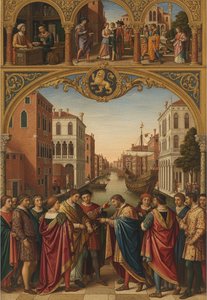
Vittore Carpaccio: Venetian Renaissance Narrative & the Poetics of Detail
Explore the captivating world of Vittore Carpaccio, a master storyteller of the Venetian Renaissance. Discover his intricate details, narrative cycles like 'The Legend of St. Ursula,' and unique artistic style.

Jacopo Tintoretto's Meesterwerken: 25 Schilderijen die de Renaissance Definieerden | OriginalUniqueArt
Ontdek de 25 meest indrukwekkende schilderijen van Jacopo Tintoretto, de meester van het Venetiaanse Renaissance. Duik in zijn dramatische stijl, religieuze thema's & techniek. Vind museumkwaliteit reproducties en decoratie-inspiratie op OriginalUniqueArt.com.


