

 Verstuur
 Delen
Delen
 Details bekijken
 Gids voor studentenkunstwerken

 Download
 Vergelijkbare items
 Diavoorstelling
 Statistieken
Apollo
 Marble
- Sculpture
- Neoclassical
 1783
1783- Early Modern
 120.0 x 142.0 cm
 Galleria Borghese
 Lees meer
Handgemaakte olieverfreproductie
Met de hand geschilderd in olieverf op canvas in uw gewenste maat en lijst, op bestelling gemaakt door onze kunstenaars. ( Schakel over naar print Schakel over naar digitale afbeeldingen)




































Kies uit onze vooraf ingestelde maten die overeenkomen met de originele verhoudingen van het kunstwerk.

Voer de breedte en de hoogte in die u nodig heeft, passend bij uw lijst of uw muur. Dit is handgeschilderd, dus bij een afmeting met een andere vormverhouding kan de kunstenaar iets meer rondom het schilderij schilderen of juist iets meer weglaten — u kiest zelf. Wij sturen u een digitaal mockup ter goedkeuring voordat het schilderwerk begint. De afbeelding die op deze pagina wordt getoond, is niet het uiteindelijke resultaat — alleen de mockup geeft dit weer.
Na de bestelling zal het team van OriginalUniqueArt.com per e-mail contact opnemen met de klant voor instructies en een mockup-voorbeeld sturen.
Wereldwijde levering () binnen 3 tot 4 weken in plaats van de standaard 5 weken. (21 oktober). Zonder concessies aan de kwaliteit.

Gratis wereldwijde expressverzending

Hoogwaardig linnen canvas

Volledige verzendverzekering

Garantie op terugbetaling van invoerrechten

Garantie op exacte kleurweergave

Retourbeleid van 100 dagen (alleen bij defecten)

100% Geld-terug-garantie

Korting bij meerdere afnames
 De optie voor glas is alleen beschikbaar bij een formaat kleiner dan 110 cm.

Apollo
Reproductiemethode
Formaat reproductie
-


Totaalprijs
€ 262
A Vision of Neoclassical Serenity
In the quiet halls of the Museo Vela in Switzerland, there exists a marble masterpiece that captures the very essence of the late Enlightenment era. Attributed to the skilled hands of Vincenzo Pacetti, the sculpture Apollo serves as a profound testament to the Classical Revival. Executed in 1783, this work is far more than a mere depiction of a deity; it is an embodiment of Neoclassical ideals, seeking to resurrect the grandeur, rationality, and grace of ancient Greece and Rome. As one approaches the sculpture, the serene presence of the figure commands immediate attention, inviting the viewer into a state of deep contemplation regarding themes of divine beauty and intellectual pursuit.
The composition centers on Apollo, the revered Greek god of music, poetry, healing, and prophecy. Rather than portraying him in a moment of athletic prowess or divine intervention, Pacetti presents him in a state of profound introspection. Seated upon a simple bench, Apollo gazes upward, his expression lost in thought. This posture creates an emotional resonance that transcends the stone itself, evoking a sense of peace and scholarly devotion. The sculpture’s arrangement is rich with symbolic weight: beside the god rests a book, representing the vastness of knowledge and erudition, while a scale sits nearby to signify balance and precision—virtues held in the highest regard by the artists of this era.
Mastery of Form and Material
The technical execution of Apollo showcases Pacetti’s remarkable ability to breathe life into cold marble. The artist employs classical proportions and idealized forms, drawing upon the monumental sculptural traditions established by masters such as Michelangelo and Bernini. Every detail is meticulously rendered, from the intricate carvings that adorn the figure to the soft, lifelike textures of the stone. The choice of marble is particularly significant; its inherent ability to reflect light beautifully lends a luminous quality to the sculpture, enhancing the sense of solidity and permanence that defines the work.
For the discerning collector or interior designer, this piece offers an unparalleled opportunity to introduce an element of timeless elegance into a space. The interplay of light upon the polished surfaces and the dignified posture of the figure provide a focal point that is both intellectually stimulating and aesthetically soothing. Whether viewed as a study in Neoclassical technique or as a symbolic representation of the pursuit of virtue through reasoned observation, Apollo remains an enduring icon of artistic excellence, perfect for those seeking to surround themselves with the profound beauty of history.
Vragen & Antwoorden
Voor welke kamer wordt "Apollo" door Vincenzo Pacetti aanbevolen?
"Apollo" door Vincenzo Pacetti wordt aanbevolen voor een Living Room. Deze suggestie is gebaseerd op het onderwerp, de kleuren en de sfeer van het werk.
Waar bevindt "Apollo" door Vincenzo Pacetti zich binnen de kunstgeschiedenis?
"Apollo" door Vincenzo Pacetti behoort tot de Neoclassical-stroming, binnen de Early Modern-periode. Samen geven zij het werk zijn plaats in de kunstgeschiedenis.
In welke periode van de carrière van Vincenzo Pacetti valt "Apollo"?
Binnen de carrière van Vincenzo Pacetti valt "Apollo" in de Mature Period. Deze fase helpt om het werk te vergelijken met andere werken van de kunstenaar.
Biografie van de kunstenaar
Vincenzo Pacetti: Life and Legacy
Early Life and Training
- Born: Rome, Italy in 1746.
- Vincenzo Pacetti began his artistic journey at the Accademia del Nudo, honing his skills in anatomical study and figure drawing.
- He furthered his training from 1766 to 1772 under the tutelage of sculptor-restorer Pietro Pacili. Upon Pacili’s death, Vincenzo took over his studio.
Career and Artistic Development
- Pacetti quickly established himself as an independent sculptor and was accepted into the Accademia di San Luca, serving as its director – a testament to his growing reputation.
- Bartolomeo Cavaceppi, another prominent sculptor-restorer, held Pacetti in high regard, even naming him as executor of his will.
- Pacetti’s work evolved around the intersection of sculpture and restoration. He wasn't merely a copier; he actively *completed* fragmented classical works, sometimes adding significant portions based on his artistic judgment.
Major Achievements & Notable Works
- The Barberini Faun (1799): Perhaps Pacetti’s most celebrated work. He restored and completed this iconic sculpture, adding a new right leg, now housed in the Glyptothek, Munich.
- Hope Dionysus: Currently residing in the Metropolitan Museum of Art, this piece exemplifies Pacetti's skill in completing ancient fragments.
- Athena of Velletri (1797): Now located in the Louvre, this sculpture showcases his ability to bring classical forms back to life.
- Extensive work at the Galleria Borghese, including reliefs and stucchi for the Sala degli Imperatori – notably “The Goat Amanthea” and “Perseus freeing Andromeda”. He also contributed to rooms housing Bernini’s masterpieces.
- Other works can be found in churches like San Salvatore in Lauro, Santo Spirito in Sassia, Santi Michele e Magno, and the Palazzo Carpegna.
Patronage and Later Life
- Lucien Bonaparte became a significant patron later in Pacetti’s career. He commissioned numerous plaster casts of famous antique sculptures for his villa at Canino.
- Pacetti's diary, covering the years 1773–1803, and his correspondence provide invaluable insights into the Roman art market during that period.
- Died: Rome in 1820.
Historical Significance & Legacy
- Vincenzo Pacetti occupies a unique position in art history as both a sculptor and a restorer. His work raises questions about authenticity, artistic intervention, and the interpretation of classical forms.
- He played a crucial role in shaping the understanding and appreciation of ancient sculpture during the Neoclassical period.
- His diaries remain an essential resource for scholars studying the art market and restoration practices of 18th and 19th-century Rome.

Vincenzo Pacetti
1746 - 1820 , Italy
Snelle feiten
- Name: Vincenzo Pacetti
- Movement: Neoclassical
- Birth Date: 1746
- Death Date: 1820
- Birth Place: Rome, Italy
- Nationality: Italian
- Date Of Birth: 1746
- Date Of Death: 1820
- Influenced By: Pietro Pacili, Bartolomeo Cavaceppi
- Notable Works:
- Barberini Faun
- Hope Dionysus
- Athena of Velletri
- Place Of Birth: Rome, Italy
Gerelateerde artikelen
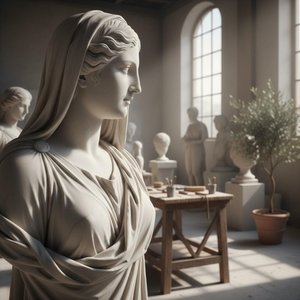
Timeless Elegance: A Complete Guide to the Sublime Beauty and Artistry of Marble Sculpture
Discover the sublime beauty of marble art through an expert exploration of Renaissance and Neoclassical masterpieces. From the delicate textures of Carpeaux to the grandeur of Sansovino, immerse yourself in a guide to timeless elegance and sculptural perfection.

Top 10 Legendarische Bronzen Meesterwerken die de Kunst Veranderden | OriginalUniqueArt
Ontdek de 10 meest legendarische bronzen meesterwerken die de kunstgeschiedenis veranderden! Van Rodin tot Michelangelo, leer over techniek & betekenis. Museumkwaliteit reproducties voor uw interieur op OriginalUniqueArt.com. Exploreer de collectie online!

The Enduring Form: Exploring Themes & Techniques in Sculpture Across Historical Periods
Explore the rich history of sculpture from ancient masterpieces to contemporary innovations. Discover key techniques, influential artists & investment potential for discerning art collectors.

Top 10 Bronzen Beeldhouwwerken die de Kunst Voorgoed Veranderden | OriginalUniqueArt
Ontdek de 10 meest legendarische bronzen beeldhouwwerken die kunstgeschiedenis schreven! Van Rodin tot Michelangelo, leer over hun meesterwerken & technieken. Vind museumkwaliteit reproducties en inspiratie voor uw interieur op OriginalUniqueArt.com.

The Enduring Allure of Marble in Art History: From Classical Sculpture to Modern Abstraction
Explore the captivating history of marble sculpture from ancient Greece to modern art. Discover renowned artists like Canova & Michelangelo, carving techniques, and investment insights at OriginalUniqueArt.