
 Verstuur
 Delen
Delen
 Details bekijken

 Download
 Vergelijkbare werken
 Diavoorstelling
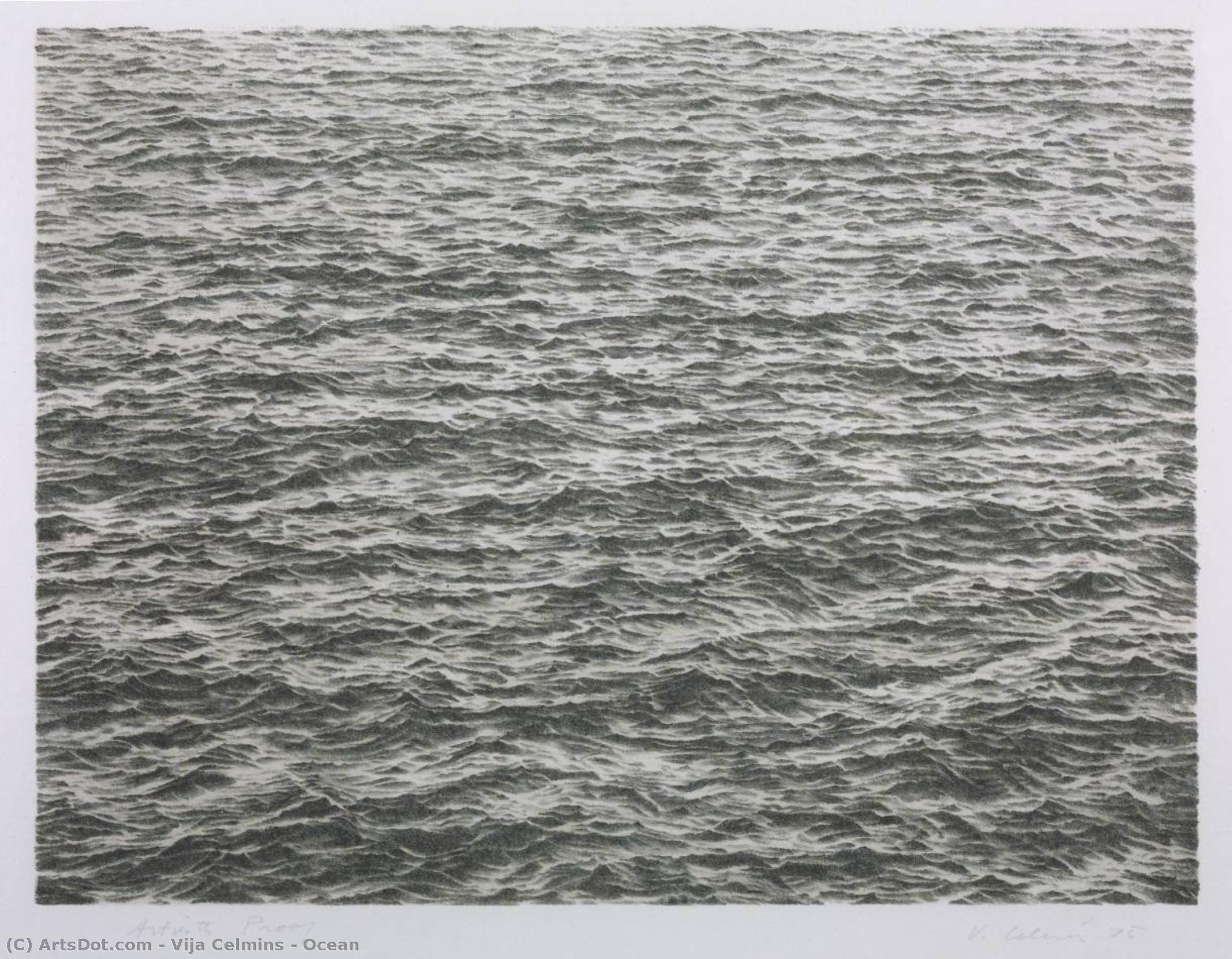
Ocean


 Lees meer
Koop een digitale afbeelding met hoge resolutie en verbeterde kwaliteit, die veel superieur is aan de online voorvertoning.
Elk bestand wordt met uiterste precisie voorbereid door onze interne specialisten, met behulp van geavanceerde tools en deskundige handmatige retouche. Wij garanderen dat elke afbeelding een uitzonderlijke helderheid, nauwkeurige kleurweergave en verfijnde details bezit.
Het uiteindelijke bestand wordt binnen 72 uur per e-mail geleverd, geoptimaliseerd voor direct gebruik in professionele, redactionele en printomgevingen. Dit is dezelfde kwaliteit waarop topontwerpstudio's, uitgevers en galerieën vertrouwen.
Digitale afbeeldingen
Download een bestand met hoge resolutie voor persoonlijke weergave, afdrukken en creatieve projecten. ( Switch to Print Switch to hand made Painting)
Inbegrepen bij elke bestelling van een digitale afbeelding
Professionele digitale levering, gegarandeerd
Wanneer u kiest voor OriginalUniqueArt.com, ontvangt u niet alleen een afbeelding – u krijgt een professioneel verbeterd digitaal kunstwerk, met precisie vervaardigd en voorzien van een tevredenheidsgarantie. Dit is alles wat automatisch bij uw bestelling is inbegrepen:

Snelle digitale levering
Uw hoogwaardige digitale afbeeldingsbestand wordt binnen 72 uur na bestelling naar u gemaild – klaar voor direct gebruik.

Met AI verbeterd digitaal bestand
Uw kunstwerk wordt professioneel geoptimaliseerd met behulp van geavanceerde AI-tools en handmatige bewerkingen, waardoor maximale details, helderheid en kleurnauwkeurigheid worden gegarandeerd.

Gratis levenslange herlevering van digitale afbeeldingen
Je bestand per ongeluk verwijderd of kwijtgeraakt? Geen zorgen – we sturen het u op elk gewenst moment gratis opnieuw toe.

Geen invoerkosten - Altijd
Geniet direct van uw kunstwerk zonder invoerrechten, belastingen of verzendkosten – digitale downloads zijn altijd belastingvrij.

Garantie op kleurgetrouwheid
Met behulp van professionele hulpmiddelen en kleurbeheer zorgen wij ervoor dat uw digitale afbeelding de originele kleuren zo nauwkeurig mogelijk weergeeft.

60 dagen tevredenheidsgarantie
Als u niet tevreden bent met uw digitale afbeelding, passen wij deze aan of storten wij 100% terug binnen 60 dagen – zonder vragen gesteld.

100% Geld-terug-garantie
Niet tevreden? Ontvang binnen 60 dagen na ontvangst van uw digitale bestand uw volledige aankoopbedrag terug – zonder vragen te stellen.

Korting bij grote bestellingen
Koop 3 afbeeldingen, bespaar 10% - Koop 5, bespaar 15% - Koop 10+, bespaar 20%. Ideaal voor creatieve projecten, galerieën en bureaus.
Beschrijving verzamelobject
The Unfolding Silence: An Encounter with Vija Celmins' 'Ocean'
Vija Celmins’s “Ocean” isn’t merely a painting; it’s an immersion. It’s a deliberate stripping away of all extraneous context, leaving only the raw, insistent presence of water itself. The work, created in 1975, presents a relentlessly horizontal expanse of gray and white – a seemingly simple depiction of waves that, upon closer inspection, reveals itself to be a profound meditation on observation, memory, and the very nature of perception. There’s no horizon line to anchor the eye, no suggestion of sky or distant shore; instead, we are confronted with an infinite field of undulating lines, each meticulously rendered to capture the subtle shifts in texture and tone that define the surface of the sea.
Celmins' approach is deeply rooted in a process of painstaking replication. She began by studying photographs of oceans, not as representations of reality, but as records of light and movement. This foundational act of observation informs every line, every shade, creating an illusion of depth and volume that defies the two-dimensionality of the medium. The work’s hyperrealistic quality isn't about photographic accuracy; it’s about distilling the essence of the ocean – its ceaseless motion, its subtle variations in color, and its inherent quietude – into a visual language that transcends literal depiction.
The Language of Graphite: Technique and Process
While often associated with painting, Celmins' technique leans heavily towards printmaking. The incredibly fine lines, achieved through the application of graphite on paper, evoke the delicate tracery of etching or lithography. This choice of medium is crucial to understanding the work’s impact. Graphite allows for an unparalleled level of detail and tonal control, enabling Celmins to capture the subtle nuances of light reflection and wave movement with astonishing precision. The process itself—the countless hours spent meticulously rendering each individual crest – speaks volumes about her dedication to observation and her commitment to translating a sensory experience into a tangible form.
It’s important to note that Celmins' work is not simply a technical exercise; it’s an intensely personal one. She has described the act of drawing as a way of “remembering” – of holding onto fleeting moments and impressions. The repetitive nature of her process, combined with the subject matter—the ocean, a symbol of vastness and timelessness—creates a meditative effect, inviting the viewer to lose themselves in the work’s quiet intensity.
Echoes of Morandi: A Subtle Influence
Celmins' early artistic development was profoundly shaped by her encounter with the Italian monochrome still life painter Giorgio Morandi. Like Morandi, she was drawn to the subtle variations in tone and texture—the way light plays across surfaces, the delicate interplay of shadow and highlight. This influence is evident in “Ocean,” where Celmins masterfully manipulates graphite to create a sense of depth and volume through carefully controlled gradations of gray. The work shares Morandi’s quiet contemplation, its focus on the beauty of simple forms and the power of observation.
The Symbolism of Stillness: Beyond the Surface
At first glance, “Ocean” might seem like a purely descriptive image—a straightforward representation of water. However, beneath this surface simplicity lies a wealth of symbolic meaning. The ocean has long been associated with vastness, mystery, and the unknown – representing both the potential for adventure and the inevitability of change. Celmins’s meticulous rendering of its surface suggests an attempt to capture this elusive quality—to hold onto the fleeting moment before it dissolves into nothingness. The work's stillness, despite the implied movement of the waves, speaks to a deeper sense of contemplation, inviting us to consider our place within the larger context of existence.
Kunstenaarsbiografie
Early Life and Influences
- Born: October 25, 1938, in Riga, Latvia
- Family History: Fled Soviet occupation of Latvia in 1940, initially to Germany then relocated to the United States (Indianapolis, Indiana) in 1948.
- Early Artistic Development: Found solace and encouragement in drawing due to language barriers upon arriving in the US.
- Education: Attended John Herron School of Art in Indianapolis; received a BFA in 1962 and an MFA from UCLA in 1965.
- Key Influences: Early exposure to Italian monotone still life painter Giorgio Morandi significantly impacted her artistic approach. Also influenced by Malcolm Morley and Jasper Johns during her early career.
Evolution of Artistic Style and Themes
- Early Pop Art Period (1960s): Initially explored pop sculptures and representational paintings featuring commonplace objects like TVs, lamps, and pencils. These works often incorporated themes of violence and conflict.
- Transition to Graphite Drawings (1970s-1980s): Abandoned painting for over a decade, focusing on meticulously detailed graphite pencil drawings depicting natural phenomena – the ocean surface, spiderwebs, lunar landscapes, rocks, and shells. This period marked a shift towards photorealism.
- Return to Painting & Printmaking (1980s-Present): Returned to painting in 1981, incorporating woodcuts, charcoal, and eraser techniques. Explored negative space and subtle tonal variations.
- Recurring Themes: Celmins' work consistently explores themes of vastness, detail, perception, and the relationship between representation and reality. Her depictions of natural elements often evoke a sense of awe and mystery.
Major Works and Recognition
- Notable Series: Ocean series (paintings and prints), Night Sky series (drawings), Spiderweb drawings, Rock drawings.
- Key Artwork Examples: "Tulip Car #1" (photograph), "Galaxy," "Mount Holyoke," "Concentric Bearings A."
- Solo Exhibitions: Has been the subject of over forty solo exhibitions since 1965, including major retrospectives at prestigious institutions such as the Museum of Modern Art, Whitney Museum of American Art, Los Angeles County Museum of Art, Institute of Contemporary Arts (London), and Centre Pompidou (Paris).
- Awards & Honors: Received numerous awards and grants throughout her career.
Historical Significance and Legacy
- Pioneer of Photorealism: Celmins is considered a significant figure in the photorealistic movement, known for her exceptional technical skill and meticulous attention to detail.
- Exploration of Perception: Her work challenges viewers' perceptions of reality by recreating natural phenomena with astonishing accuracy while simultaneously creating a sense of detachment and abstraction.
- Influence on Contemporary Art: Celmins’ influence can be seen in the work of contemporary artists who explore themes of representation, perception, and the relationship between art and science.
- Critical Acclaim: Her work has been widely praised by critics for its technical mastery, conceptual depth, and evocative power.

Vija Celmins
1938 - , Latvia
Belangrijkste feiten
- Artistic Movement Or Style: Photorealism
- Artists Who Influenced This Artist:
- Giorgio Morandi
- Jasper Johns
- Malcolm Morley
- Date Of Birth: October 25, 1938
- Full Name: Vija Celmins
- Nationality: Latvian-American
- Notable Artworks:
- Ocean
- Tulip Car #1
- Night Sky 2 Reversed
- Concentric Bearings A
- Mount Holyoke
- Galaxy
- Sky
- Ocean surface woodcut (1992)
- Place Of Birth: Riga, Latvia

