

 Bekijk op ware grootte
 Verstuur
 Delen
Delen
 Details bekijken
 Gids voor studentenkunstwerken

 Download
 Vergelijkbare items
 Röntgenonderzoek
 Diavoorstelling
 Statistieken
Mort de saint Bruno


 Lees meer
Giclée / Kunstafdrukken
Giclée- of canvasafdruk van museumkwaliteit met een snelle productie en flexibele afwerkingsmogelijkheden. ( Koop handgeschilderd kunstwerk Schakel over naar digitale afbeeldingen)




P118B $10

P118H $10

P118W $10

P438Z $10

P508JH $12

P508YH $12

P805H $10

P805Z $10

P919BZ $10

P919G $10

P919XJ $10

P959ZH $10

P968JZ $12

W106C $8

W218G $10

W218JH $8

W218Y $10

W307PJ $10

W316G $10

W316PJ $8

W316Y $10

W398PJ $8

W4111J $10

W500HY $15

W500JH $15

W692G $12

W849H $8

W940BG $15

W953PJ $8




Kies uit onze vooraf ingestelde maten die overeenkomen met de originele verhoudingen van het kunstwerk.

U kunt uw eigen afmetingen opgeven om in een specifieke lijst of ruimte te passen. Als de door u gekozen maat niet overeenkomt met de proporties van het originele kunstwerk, zullen wij de afbeelding bijsnijden of uitbreiden met een gespiegelde of effen rand. Een digitaal mockup wordt ter goedkeuring naar u verzonden voordat de productie begint.
Houd er rekening mee dat de preview op het scherm de werkelijke bijsneding of uitbreiding niet weergeeft. Alleen de mockup toont de uiteindelijke compositie nauwkeurig.
Hoewel aangepaste maten beschikbaar zijn, raden wij aan een afmeting uit de vooraf bepaalde lijst te kiezen om de originele proporties te behouden.
Wereldwijde levering () binnen 2 weken in plaats van de standaard 4/5 weken. (26 september)

Gratis wereldwijde expressverzending

Hoogwaardig linnen canvas

Volledige verzendverzekering

Garantie op terugbetaling van invoerrechten

Garantie op exacte kleurweergave

Retourbeleid van 100 dagen (alleen bij defecten)

100% Geld-terug-garantie

Korting bij meerdere afnames
 De optie voor glas is alleen beschikbaar bij een formaat kleiner dan 110 cm.

Mort de saint Bruno
Giclée / Kunstafdrukken
Formaat reproductie
-


Totaalprijs
$ 81
Vicente Carducho’s “Mort de Saint Bruno”: A Baroque Drama of Faith and Mortality
“Mort de Saint Bruno,” painted by Vicente Carducho in the early 17th century, is not merely a depiction of death; it's a profound meditation on faith, devotion, and the acceptance of fate rendered with the dramatic intensity characteristic of Spanish Baroque art. The painting, currently housed at the Louvre Museum in Paris, offers a glimpse into a pivotal moment in the life of Saint Bruno of Pontefract, founder of the Carthusian Order, and invites viewers to contemplate the solemn beauty of his final moments.
Carducho’s composition immediately establishes a sense of theatrical grandeur. The scene unfolds within a dimly lit chamber, dominated by a central pyramidal structure anchored by the figure of Saint Bruno himself. He lies serenely in repose, clad in monastic robes, his face exhibiting an expression of profound peace rather than anguish. Around him, a group of monks – some in mourning, others offering prayers – swirl with a restrained energy, their gestures conveying both grief and reverence. The use of a heavy curtain draped across the upper portion of the canvas serves to isolate this intimate scene, creating a sense of theatrical enclosure and drawing our focus entirely onto the central drama.
A Symphony of Light and Shadow: Technique and Style
The painting’s power resides significantly in Carducho's masterful manipulation of light and shadow – a hallmark of the Baroque style. He employs *chiaroscuro* with exquisite precision, bathing Saint Bruno’s face in a soft, ethereal glow while casting the surrounding figures and the chamber itself into deep shadows. This dramatic contrast not only highlights the saint’s peaceful countenance but also amplifies the overall mood of solemnity and reverence. The artist's meticulous attention to detail is evident in the rendering of textures – from the smooth fabric of the robes to the rough stone of the chamber walls – adding a remarkable sense of realism to the scene.
Carducho’s technique reveals a deep understanding of oil painting, utilizing layering and glazing to achieve rich colors and subtle gradations. The palette is predominantly dark—browns, grays, and blacks— punctuated by the warm light emanating from a single candle, which serves as a potent symbol of divine grace and hope. The figures are rendered with a naturalism that belies their symbolic significance; they aren’t idealized representations but rather believable human beings experiencing profound emotion.
Symbolism and Spiritual Depth
Beyond its visual impact, “Mort de Saint Bruno” is laden with symbolism. The candle, as previously mentioned, represents divine light and the promise of salvation. The monks' gestures—bowing heads, extending hands in prayer—underscore their devotion and acceptance of the saint’s passing. Saint Bruno himself embodies a quiet dignity and serenity, suggesting an acceptance of his fate that transcends earthly suffering. The setting within a Carthusian monastery further reinforces the painting’s spiritual themes, highlighting the order's commitment to contemplation and service.
The inclusion of the crucifix held by one of the monks is particularly significant. It serves as a visual reminder of Christ’s sacrifice and underscores the connection between Saint Bruno’s death and the broader Christian narrative of redemption. The entire scene, therefore, becomes a powerful meditation on mortality, faith, and the enduring power of spiritual devotion.
Historical Context and Artistic Legacy
Painted during the height of Spanish Baroque art—a period marked by dramatic intensity and emotional expression— “Mort de Saint Bruno” reflects the artistic sensibilities of its time. Carducho’s work stands as a testament to the influence of Italian Renaissance masters, particularly Caravaggio, whose use of *chiaroscuro* profoundly shaped the course of Baroque painting. His commission to decorate the Carthusian monastery at El Paular marked a significant turning point in his career, establishing him as one of Spain’s leading artists.
Today, “Mort de Saint Bruno” remains a captivating masterpiece—a poignant reminder of the beauty and complexity of faith, mortality, and the enduring legacy of Vicente Carducho. Its dramatic composition, masterful technique, and profound symbolism continue to resonate with viewers centuries after its creation, solidifying its place as a cornerstone of Spanish Baroque art.
Biografie van de kunstenaar
Vicente Carducho (1576-1638): Een vooraanstaande figuur van de Spaanse Barok
Vincenzo Carducci, beter bekend onder zijn Spaanse naam Vicente Carducho, was een cruciale Italiaanse schilder die het landschap van de 17e-eeuwse Spaanse kunst onherroepelijk vormgaf. Geboren in Florence in 1576 en overleden in Madrid in 1638, omspande zijn carrière zowel Italië als Spanje, wat hem uiteindelijk vestigde als een leidende figuur binnen de Spaanse Barokbeweging.
Vroege jaren en opleiding
- Oorsprong: Carducho werd geboren in Florence, Italië, te midden van een bruisende artistieke omgeving.
- Familiale invloed: Zijn eerste training ontving hij van zijn broer, Bartolome_olomeo Carduccio, eveneals een schilder. Deze familiale band bleek essentieel voor zijn vroege ontwikkeling.
- Verhuizing naar Spanje: In de voetsporen van zijn broer verhuisde Vicente als jonge man naar Madrid. Hij werkte aanvankelijk in Valladolid voordat hij opdrachten kreeg in het Escorial onder Filips II van Spanje.
- Vroege opdrachten: Hij ondersteunde zijn broer bij schilderprojecten voor Filips II en droeg later bij aan de decoratie van het herbouwde Palacio del Pardo tijdens de regering van Filips III, waarbij een geschiedenis van Achilles als een van zijn opmerkelijke vroege werken uit die tijd geldt.
Artistieke ontwikkeling en grote prestaties
- Monastieke fresco's: Een cruciaal keerpunt in zijn carrière was een vierjarige opdracht van de monniken van het Kartuizerklooster El Paular om hun klooster te decoreren. Dit resulteerde in 54 grote doeken met historische figuren, verdeeld over het leven van de heilige Bruno (27) en martelaren (27).
- Koninklijk mecenaat: Carducho genoot aanzienlijke steun van Filips IV, voor wie hij enkele van zijn bekendste werken voor het Prado schilderde. Deze werken toonden zijn meesterschap in dramatische compositie en religieuze thema's.
- Onderwijs en invloed: Gedurende vele jaren diende Carducho als leraar in Madrid, waar hij een nieuwe generatie Spaanse kunstenaars vormgaf. Zijn leerlingen, waaronder Giovanni Ricci, Pedro Obregon, Vela en Francisco Collantes, werden allemaal prominente figurend binnen de Spaanse school van de 17e eeuw.
- Theoretische geschriften: Hij schreef "De las excelencias de la pintura" (Dialogen over de schilderkunst), een traktaat gepubliceerd in 1633. Geschreven als een dialoog tussen een meester en een leerling, weerspiegelt het de vroomheid van het Spaanse rijk en biedt diepgaande inzichten in zijn artistische filosofie.
Artistieke stijl en invloeden
- Barokke kenmerken: De stijl van Carducho is stevig geworteld in de Barok, gekenmerkt door dramatische lichtinval, dynamische composities en een focus op emotionele intensiteit.
- Klassieke traditie: Zijn geschriften tonen een sterke betrokkenheid bij de klassieke kunsttheorie en de dialoogvorm.
- Kritiek op Caravaggio: Opvallend genoeg was Carducho een uitgesproken criticus van Caravaggio en zijn volgelingen. Hij beschuldigde hen ervan discipline te missen en te zwaar te leunen op naturalisme zonder voldoende studie of voorbereiding, wat hij zag als potentieel schadelijk voor de toekomst van de schilderkunst. Zijn kritiek strekte zich zelfs uit tot de stijl van Michelangelo, die hij als te afhankelijk van oppervlakkige nabootsing van de natuur beschouwde.
- Invloeden: Ondanks zijn kritiek op Caravaggio, weerspiegelen Carducho's werken ook invloeden van eerdere Italiaanse meesters en een uitgesproken Spaanse gevoeligheid.
Historische betekenis
Vicente Carducho neemt een prominente plaats in de geschiedenis van de Spaanse kunst in. Hij speelde een instrumentale rol bij het vestigen van een eigen Spaanse Barokstijl, waarin Italiaanse technieken werden versmolten met lokale tradities. Zijn rol als docent zorgde ervoor dat zijn artistieke principes werden doorgegeven aan volgende generaties. Hoewel zijn kritiek op Caravaggio een conservatief perspectief onthult, bieden zijn bijdragen aan de religieuze schilderkunst en zijn theoretische geschriften waardevolle inzichten in de artistieke debatten van zijn tijd. De nalatenschap van Carducho ligt in zijn vermogen om diverse invloeden te synthetiseren tot een uniek Spaanse Barokke esthetiek.

Vicente Carducho
1576 - 1638 , Italië
Snelle feiten
- Artistic Movement Or Style: Spaanse Barok
- Artists Or Movements Influenced By This Artist:
- Giovanni Ricci
- Pedro Obregon
- Artists Who Influenced This Artist:
- Michelangelo
- Caravaggio
- Date Of Birth: 1576
- Date Of Death: 1638
- Full Name: Vicente Carducho
- Nationality: Italiaans/Spaans
- Notable Artworks:
- Geschiedenis van Achilles
- Sint-Lucia
- Ontmoeting met Sint-Bruno
- Place Of Birth: Florence, Italië
Gerelateerde artikelen

Top 10 Barok Meesterwerken: Kunstgeschiedenis voor uw Interieur | OriginalUniqueArt.nl
Ontdek de 10 meest iconische Barok meesterwerken van Caravaggio, Rembrandt & Rubens! Duik in de geschiedenis en passie achter deze klassieke schilderijen. Vind museumkwaliteit reproducties voor uw interieur op OriginalUniqueArt.com.

Theatricality & Triumph: Baroque Drama in Painting & Sculpture
Explore the dramatic world of Baroque art! Discover its history, defining characteristics, & lasting influence on painting & sculpture. Expert insights into Caravaggio, Zurbarán, and Bernini – plus high-quality reproductions at OriginalUniqueArt.
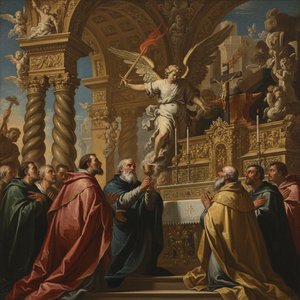
The Golden Age Reforged: Dramatic Realism & Religious Zeal in Spanish Baroque Art
Explore the dramatic world of Spanish Baroque art! Discover masters like Zurbarán & the powerful influence of religious zeal on painting techniques – a guide for collectors and enthusiasts.

The Dramatic Flourish: Exploring the Baroque Movement's Enduring Legacy in Art History
Explore the dramatic world of Baroque art! Discover iconic artists like Caravaggio & Rubens, defining techniques, and its lasting impact on art history. Expert insights for collectors & enthusiasts at OriginalUniqueArt.
Discover the Divine: Inspiring Saint Anthony Artworks to Elevate Your Home Decor
Transform your home with the profound beauty of Saint Anthony artworks. Explore exquisite Baroque reproductions by Murillo and Zurbarán, hand-painted on 100% cotton canvas to bring divine serenity and timeless elegance to your interior design.