
 Voorvertoning
 Verstuur
 Delen
Delen
 Details bekijken
 Gids
Gids

 Download
 Vergelijkbare items
 Röntgenonderzoek
 Diavoorstelling
 Vraag & antwoord
 Statistieken
Incorrigible One

- 87.0 x 113.0 cm


 Lees meer
Ontvang een bestand dat klaar is voor drukwerk en de kwaliteit van het online voorbeeld ver overstijgt. Elke digitale afbeelding die wij verkopen, is afkomstig van een high-resolution master uit onze database — meestal tussen de 5.000 en 15.000 pixels breed — zodat u met vertrouwen groot kunt afdrukken, nauwkeurig kunt bijsnijden of fijne details kunt reproduceren.
Geen enkel bestand verlaat ons atelier onbewerkt. Een digitaal expert controleert de kleuren aan de hand van het originele schilderij en corrigeert deze indien nodig, om vervolgens de helderheid en details te verbeteren met professionele retoucheertechnieken — waarbij de penseelstreek en stijl van de kunstenaar altijd strikt worden gerespecteerd. Het resultaat is een afbeelding die oogt als het schilderij zelf, en niet als een gescande foto met een filter.
U keurt de afbeelding goed voordat de bestelling wordt afgerond: onze expert stuurt u binnen 72 uur een e-mail ter beoordeling. Niet tevreden? Vraag om aanpassingen of correcties, of vraag een terugbetaling aan als de kwaliteit niet aan de verwachtingen voldoet.
Dit is de kwaliteit waarop uitgevers, designstudio's, galeries en drukkerijen vertrouwen.
Digitale afbeeldingen
Download een bestand met hoge resolutie voor persoonlijke weergave, afdrukken en creatieve projecten. ( Schakel over naar print Bestel handgeschilderde reproductie)
Inbegrepen bij elke bestelling van een digitale afbeelding
Professionele digitale levering, gegarandeerd
Wanneer u kiest voor OriginalUniqueArt.com, ontvangt u niet alleen een afbeelding – u krijgt een professioneel verbeterd digitaal kunstwerk, met precisie vervaardigd en voorzien van een tevredenheidsgarantie. Dit is alles wat automatisch bij uw bestelling is inbegrepen:

Snelle levering per e-mail
Uw hoogwaardige digitale afbeeldingsbestand wordt binnen 72 uur na bestelling naar u gemaild – klaar voor direct gebruik.

AI-verbeterd digitaal bestand
Uw kunstwerk wordt professioneel geoptimaliseerd met behulp van geavanceerde AI-tools en handmatige bewerkingen, waardoor maximale details, helderheid en kleurnauwkeurigheid worden gegarandeerd.

Gratis levenslange herlevering van digitale bestanden
Je bestand per ongeluk verwijderd of kwijtgeraakt? Geen zorgen – we sturen het u op elk gewenst moment gratis opnieuw toe.

Geen invoerkosten – nooit
Geniet direct van uw kunstwerk zonder invoerrechten, belastingen of verzendkosten – digitale downloads zijn altijd belastingvrij.

Garantie op kleurgetrouwheid
Met behulp van professionele hulpmiddelen en kleurbeheer zorgen wij ervoor dat uw digitale afbeelding de originele kleuren zo nauwkeurig mogelijk weergeeft.

100 dagen tevredenheidsgarantie
Mocht u niet tevreden zijn met uw digitale afbeelding, dan passen wij deze aan of storten wij 100% terug binnen 100 dagen – zonder vragen te stellen.

100% Geld-terug-garantie
Niet tevreden? Ontvang een volledige terugbetaling binnen 100 dagen na ontvangst van uw digitale bestand – zonder vragen te stellen.

Korting bij grote bestellingen
Koop 3 afbeeldingen, bespaar 10% - Koop 5, bespaar 15% - Koop 10+, bespaar 20%. Ideaal voor creatieve projecten, galerieën en bureaus.
A Moment of Unyielding Spirit
In the profound depths of Vasily Grigoryevich Perov’s 1873 masterpiece, Incorrigible One, we are thrust into a visceral scene of tension and social friction. The painting captures a raw, cinematic moment: a man in a striking red shirt is being forcibly restrained, his hands bound behind his back. This central figure, the eponymous "incorrigible" soul, stands as a defiant focal point amidst a landscape of looming authority. Surrounding him, two men engage in a grim dialogue of discipline; one holds a whip, a symbol of impending retribution, while another stands sentinel with a stick. The setting—an outdoor space characterized by rugged stone walls and the rustic presence of a horse—adds a layer of earthy realism that grounds the drama in the tangible, often harsh, reality of 19th-century Russian life.
Perov’s mastery of Critical Realism is on full display here. Rather than seeking to beautify the scene, he employs a meticulous technique to document the psychological weight of the encounter. The artist uses light and shadow to sculpt the figures, drawing our eyes to the vibrant crimson of the captive's shirt, which serves as both a visual anchor and a metaphor for his burning, unextinguished spirit. Every detail, from the texture of the brickwork to the curious, watchful gaze of the horse, is rendered with an observational precision that invites the viewer to step into the frame and feel the heavy atmosphere of the courtyard.
The Soul of the Peredvizhniki Movement
To understand this work, one must look toward the historical heartbeat of the Peredvizhniki (The Wanderers) movement, of which Perov was a founding pillar. This era of Russian art sought to move away from the polished, academic traditions of the past and instead bring art to the people, focusing on the poignant, often uncomfortable truths of social inequality and peasant life. In Incorrigible One, Perov does not merely paint a scene of punishment; he paints a commentary on the struggle between individual will and societal control. The presence of the fireplace in the background and the quiet benches suggest a domesticity that has been interrupted by this sudden act of coercion, creating a jarring contrast between peace and violence.
For the discerning collector or interior designer, this painting offers more than just aesthetic value; it provides a profound narrative depth. The composition’s balance of movement and stillness makes it an extraordinary centerpiece for a room that demands conversation and intellectual engagement. Whether placed in a sophisticated study or a grand gallery-style living space, the artwork’s rich textures and emotive power serve as a window into a bygone era of social awakening. It is a piece that resonates with anyone who appreciates art that dares to look closely at the human condition, making it an enduring choice for those seeking a high-quality reproduction that embodies both historical significance and timeless emotional impact.
Veelgestelde vragen
Waarvoor wordt een afdruk van "Incorrigible One" aanbevolen?
De aanbevolen toepassing voor "Incorrigible One" door Vasily Perov is Conversation. Het kan echter ook voor andere doeleinden worden gebruikt.
Hoe kan ik een digitale afbeelding van "Incorrigible One" door Vasily Perov verkrijgen?
"Incorrigible One" is beschikbaar als een digitale afbeelding in hoge resolutie om te downloaden, direct te verkrijgen op de Digitale afbeelding pagina.
Hoe licht is "Incorrigible One" in zijn geheel?
Wat betreft de waargenomen helderheid is "Incorrigible One" door Vasily Perov deep_shadow.
Kunstenaarsbiografie
Vasily Grigorevich Perov: A Voice of the Voiceless in Russian Realism
Vasily Grigoryevich Perov, born Vasily Vasiliev on January 21st, 1834, in the remote Siberian town of Tobolsk, stands as a monumental figure in Russian art – a painter whose work transcended mere representation to become a searing indictment of social injustice and a profound exploration of the human condition. His life story is inextricably linked to his artistic vision; born out of wedlock to Baron Grigory Kridener and Akulina Ivanova, Perov’s early years were marked by an unconventional upbringing that instilled within him a deep sensitivity to the inequalities prevalent in 19th-century Russia – a sensitivity he would translate onto canvas with unflinching honesty. The adoption of the surname “Perov,” derived from the Russian word for ‘feather,’ a subtle nod to his early aptitude for calligraphy, foreshadowed his meticulous attention to detail and his dedication to capturing the nuances of everyday life—a world often deliberately obscured by societal norms and political agendas. His formal artistic training began at the Alexander Stupin Art School in Arzamas, where he honed fundamental skills before enrolling at the Moscow School of Painting, Sculpture and Architecture in 1853 – a period crucial for shaping his technical abilities and exposing him to the diverse influences that would inform his distinctive style. Early recognition arrived swiftly, with silver and gold medals awarded by the Imperial Academy of Arts for works such as “Commissary of Rural Police Investigating” and, most notably, "Sermon in a Village" (1861) – a painting that catapulted him into national prominence and secured his place within the prestigious ranks of Russian art.The Soul of Russia: Themes and Techniques
Perov’s artistic philosophy was rooted in a profound commitment to portraying Russian society with an uncompromising gaze. He deliberately rejected the idealized depictions favored by many of his contemporaries, choosing instead to focus on the lives of ordinary Russians – peasants, laborers, the marginalized, and those often overlooked by official narratives. His paintings weren't simply visual records; they were potent social commentaries, exposing the hardships, injustices, and spiritual emptiness that characterized 19th-century Russia. “Sermon in a Village,” for example, subtly critiques religious hypocrisy by depicting a congregation largely detached from the sermon itself, while "The Queue at the Fountain" starkly illustrates the daily struggles of rural life – the long waits, the meager resources, and the pervasive sense of resignation. His technique was characterized by an extraordinary level of detail—he meticulously rendered every wrinkle, every thread, every expression on his subjects’ faces. This wasn't mere observation; it was a deliberate act of empathy, inviting viewers to confront uncomfortable truths about their own society. Perov’s color palettes were often somber and muted, reflecting the bleak realities he depicted, yet he masterfully employed light and shadow to create dramatic effect and draw attention to key elements within his compositions. He wasn't interested in romanticizing poverty or suffering; rather, he sought to present it with dignity and a quiet sense of sorrow—a refusal to shy away from the difficult aspects of human existence. Works like “The Last Journey,” depicting a peasant funeral procession, and "Troika: Apprentice Workmen Carrying Water" are poignant examples of his ability to evoke profound emotional responses through realistic portrayals of everyday life, imbued with a subtle yet powerful sense of melancholy. His skill extended beyond oil painting; he was also a gifted etcher, as evidenced by the emotionally charged monochromatic work “Naushnitsa. Before the storm,” which showcases his mastery of chiaroscuro and intricate detail.The Wanderers: A Movement Forged in Realism
Perov’s artistic vision aligned perfectly with the burgeoning spirit of artistic rebellion that led to the formation of the Peredvizhniki (Wanderers) in 1870. This collective of Russian realist painters, disillusioned with the constraints and elitism of the Imperial Academy of Arts, established an independent society dedicated to exhibiting art throughout Russia—reaching audiences beyond the confines of St. Petersburg and Moscow. The Peredvizhniki aimed to bring art directly to the people, fostering a deeper understanding of social issues and promoting a uniquely Russian artistic identity. Perov wasn’t merely a member; he was a driving force behind the movement's formation, instrumental in shaping its ideals and advocating for its principles. His commitment to portraying the lives of ordinary Russians resonated deeply with the Peredvizhniki's mission, solidifying his position as a leading figure within the group. The Wanderers’ exhibitions became immensely popular, attracting large crowds and sparking important conversations about art, society, and national identity—a testament to the power of Perov’s vision.Major Achievements and Artistic Legacy
Perov’s career was marked by a remarkable string of achievements that cemented his place in Russian art history. He received numerous awards throughout his artistic journey, including a silver medal in 1857 and a grand gold medal in 1861 – the latter securing him the opportunity to study abroad. His painting "Sermon in a Village" (1861) remains arguably his most celebrated work, capturing the essence of Perov’s artistic philosophy with its subtle critique of societal hypocrisy. Beyond this iconic piece, he produced a vast and diverse body of work that explored a wide range of themes – from rural life and poverty to social injustice and religious hypocrisy. Notable works include “The Queue at the Fountain” (1865), depicting the arduous wait for water in a Russian village; "The Last Journey" (1865), portraying a somber peasant funeral procession; “Troika: Apprentice Workmen Carrying Water” (1866), capturing the backbreaking labor of rural workers; and “Drowned Girl” (1867), a haunting depiction of a policeman discovering a drowned body, raising profound questions about life and death. His artistic legacy extends beyond individual masterpieces; he profoundly influenced subsequent generations of Russian realist painters, including Ilya Repin and Vasily Surikov, who built upon his foundation to create their own powerful works of social commentary. Perov’s paintings continue to resonate with audiences today, serving as a poignant reminder of the hardships faced by ordinary people throughout history and prompting reflection on the complexities of human existence.A Lasting Impact
Vasily Grigorevich Perov tragically died from tuberculosis in 1882 at the age of 48, cutting short a brilliant career but leaving behind an enduring legacy. His works are now housed in prominent collections across Russia, including the Tropinin Gallery and the Moscow Museum of Contemporary Art, ensuring that his vision continues to be appreciated and studied by art lovers worldwide. Perov’s contribution extends beyond mere artistic skill; he was a social conscience etched onto canvas, a voice for the voiceless, and a pioneer of Russian realism—a testament to the power of art to challenge, provoke, and ultimately, illuminate the human experience.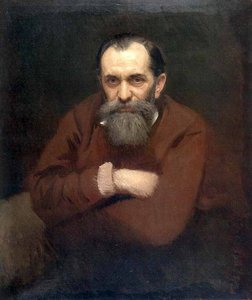
Vasily Perov
1833 - 1882 , Rusland
Belangrijkste feiten
- Artistic Movement Or Style: Realisme
- Artists Or Movements Influenced By This Artist:
- Repin
- Surikov
- Artists Who Influenced This Artist: ['Stupin']
- Date Of Birth: 2 januari 1834
- Date Of Death: 29 mei 1882
- Full Name: Vasily Grigorevich Perov
- Nationality: Russisch
- Notable Artworks:
- Sermon in een dorp
- Wachtrij bij de fontein
- Place Of Birth: Tobolsk, Rusland