

 Bekijk op ware grootte
 Verstuur
 Delen
Delen
 Details bekijken
 Gids voor studentenkunstwerken

 Download
 Vergelijkbare items
 Röntgenonderzoek
 Diavoorstelling
 Statistieken
The Mother

 Lees meer
Giclée / Kunstafdrukken
Giclée- of canvasafdruk van museumkwaliteit met een snelle productie en flexibele afwerkingsmogelijkheden. ( Koop handgeschilderd kunstwerk Schakel over naar digitale afbeeldingen)




P118B €10

P118H €10

P118W €10

P438Z €10

P508JH €12

P508YH €12

P805H €10

P805Z €10

P919BZ €10

P919G €10

P919XJ €10

P959ZH €10

P968JZ €12

W106C €8

W218G €10

W218JH €8

W218Y €10

W307PJ €10

W316G €10

W316PJ €8

W316Y €10

W398PJ €8

W4111J €10

W500HY €15

W500JH €15

W692G €12

W849H €8

W940BG €15

W953PJ €8




Kies uit onze vooraf ingestelde maten die overeenkomen met de originele verhoudingen van het kunstwerk.

Voer de breedte en de hoogte in die u nodig heeft, passend bij uw lijst of uw muur. Een afdruk kan alleen worden ingekort, nooit groter worden gemaakt dan het origineel, waardoor een formaat met een andere verhouding een deel van de afbeelding verliest. Wij sturen u een digitaal mockup ter goedkeuring voordat we iets drukken. De afbeelding op deze pagina toont niet de werkelijke uitsnede — dit is alleen te zien op het mockup.
Wereldwijde levering () binnen 2 weken in plaats van de standaard 4/5 weken. (24 oktober)

Gratis wereldwijde expressverzending

Hoogwaardig linnen canvas

Volledige verzendverzekering

Garantie op terugbetaling van invoerrechten

Garantie op exacte kleurweergave

Retourbeleid van 100 dagen (alleen bij defecten)

100% Geld-terug-garantie

Korting bij meerdere afnames
 De optie voor glas is alleen beschikbaar bij een formaat kleiner dan 110 cm.

The Mother
Giclée / Kunstafdrukken
Formaat reproductie
-


Totaalprijs
€ 71
The Artist's Mother: A Study in Expressionist Minimalism
Umberto Boccioni’s “The Artist’s Mother,” painted in 1907, stands as a pivotal work within the burgeoning Futurist movement and a testament to Boccioni’s profound engagement with Impressionism and Divisionism. Created during his formative years in Padua, Italy—a city brimming with artistic fervor—the painting embodies the spirit of its time while simultaneously forging a distinctive visual language that anticipates the radical innovations of Expressionism. This intimate portrait captures his mother's face and upper torso against a muted backdrop, prioritizing form and texture over detailed representation—a deliberate choice reflecting Boccioni’s stylistic evolution away from purely naturalistic observation.- Style & Technique: The artwork leans heavily into Divisionist principles, mirroring the influence of Giacomo Balla's pioneering explorations of optical blending and fragmented brushstrokes. However, unlike Balla’s dynamic compositions, “The Artist’s Mother” adopts a restrained aesthetic—characterized by dense hatching and crosshatching—to achieve tonal variations and convey an overwhelming sense of emotion. The artist meticulously renders the subject’s skin with subtle gradations of gray, emphasizing the materiality of the canvas itself.
- Composition & Color Palette: The composition is strikingly simple, focusing on a tightly cropped view of the woman's visage—a compositional strategy that directs the viewer’s gaze and minimizes distractions. The monochromatic grayscale palette—ranging from deep blacks to delicate whites—amplifies the painting’s expressive power, stripping away color to heighten awareness of surface texture and contour lines.
- Line & Texture: Dominating the canvas is an expansive network of interwoven lines that swirl around the woman's head and torso. These lines aren’t intended for precise anatomical depiction but serve as conduits for emotional energy—suggesting turbulence, introspection, and perhaps a quiet sorrow. The artist employs short, dense strokes to build up textural surfaces, mirroring the roughness of skin and hair, creating an immersive experience for the viewer.
- Symbolism & Context: “The Artist’s Mother” transcends mere portraiture; it delves into themes of familial devotion and maternal wisdom—concepts central to Boccioni's artistic worldview. The woman’s gaze—slightly averted—hints at contemplation and vulnerability, inviting viewers to consider the complexities of human experience. Furthermore, the painting’s genesis within Padua’s vibrant artistic milieu underscores the influence of Impressionist ideals and the broader cultural dialogue surrounding the burgeoning Futurist movement.
- Historical Significance: Produced in 1907, “The Artist’s Mother” represents a crucial step in Boccioni's stylistic journey—marking his departure from Impressionistic naturalism toward Expressionist abstraction. It foreshadows the expressive fervor and emotional intensity that would characterize his later masterpieces, establishing him as one of Italy’s foremost artists of the early 20th century.
Vragen & Antwoorden
Tot welke stijl behoort "The Mother"?
De stroming die verbonden is aan "The Mother" door Umberto Boccioni is Futurist Expressionism. Deze classificatie plaatst het werk tussen verwante kunstenaars en kunstwerken.
Welke plaatsing past bij het formaat van "The Mother" door Umberto Boccioni?
Het Portrait-formaat van "The Mother" door Umberto Boccioni wordt aanbevolen voor een Living Room. Formaat en ruimte samen bepalen de ideale plaatsing van een reproductie.
Welk kleurenpalet wordt gebruikt in "The Mother" door Umberto Boccioni?
"The Mother" door Umberto Boccioni maakt gebruik van een Neutrals kleurenpalet. Het palet vat het algemene kleurkarakter van het werk samen.
Biografie van de kunstenaar
A Life Forged in Motion: The Revolutionary Vision of Umberto Boccioni
Umberto Boccioni, geboren in Reggio Calabria in 1882, was een figuur van formaat binnen de Italiaanse Futuristische beweging – een kracht die streefde naar het ontwrichten van artistieke conventies en de dynamiek van de moderne wereld omarmde. Zijn leven, tragisch verkort op slechts dertig-driejarige leeftijd, werd een getuigenis van deze vurige overtuiging in vooruitgang, snelheid en de betoverende energie van de machine-tijdperk. Boccioni’s vroege jaren waren gekenmerkt door voortdurende verhuizingen vanwege zijn vader’s dienstplaatsingen binnen de overheidsadministratie – een opvoeding die hem blootstelde aan diverse landschappen en in hem een onrustige geest zaaide. Deze nomadenbestaan leidde uiteindelijk tot Rome, waar hij aanvankelijk studie volgde aan toegepaste kunstnijverheid, maar zich vervolgens richtte op schilderkunst, onder invloed van de Liberty-stijl posterkunstenaars van die tijd. Echter, het was zijn ontmoeting met Futurisme, aangewakkerd door de geschriften van Filippo Tommaso Marinetti, die zijn artistieke traject werkelijk in brand zette.Embracing the Whirlwind: The Rise of a Futurist
Het jaar 1910 bleek cruciaal voor Boccioni. Hij tekende de *Manifesto dei Pittori Futuristi*, waarmee hij zich committeerde aan een beweging die technologie, snelheid en zelfs geweld als emblemen van moderniteit vierde. Dit was niet slechts een esthetische keuze; het was een filosofisch verzet tegen het gewicht van traditie, een wens om de essentie te vangen van een wereld die met volle snelheid vooruit hurtelde naar een onzekere toekomst. Boccioni werd snel een van de meest overtuigende theoretici van Futurisme, verder uitwerkend aan Marinetti’s initiële verkondigingen en deze toepassend op de visuele kunsten. Hij betoogde dat een complete breuk met representatievere nauwkeurigheid noodzakelijk was, in plaats daarvan schilderijen die niet alleen *wat* dingen leken, maar ook *hoe* ze voelden in beweging – het gevoel van snelheid, de fragmentatie van vorm, de overweldigende energie van stedelijk leven – overbrachten. Zijn vroege werken, hoewel nog steeds hints van Impressionisme en Divisionisme vertoonden, begonnen deze opborrelende obsessie met dynamiek te demonstreren. Schilderijen zoals *The City Rises* (1910-1911) zijn monumentaal in schaal en ambitie, een chaotische weergave van de moderne stad – een draaiende vortex van menselijke figuren, gebouwen en machines die het Futurist ideaal belichaamt.Deconstructing Reality: Techniek en Thema’s
Boccioni’s artistieke ontwikkeling kenmerkte zich door een steeds radicalere benadering van vorm. Hij verliet traditionele opvattingen over perspectief en compositie, en omarmde fragmentatie als een manier om beweging en energie te communiceren. Objecten werden ontleed in hun samenstellende delen, krachtenlijnen straalden naar buiten, en kleuren vermengden in draaiende patronen – allemaal ontworpen om een gevoel van visuele trilling te creëren. Deze deconstructie was niet alleen stijliciëus; het was geworteld in Boccioni’s overtuiging dat werkelijkheid zelf vloeibaar en voortdurend veranderend was. Hij zocht naar een manier om niet alleen de statische verschijning van dingen te representeren, maar ook hun dynamische essentie. Dit is krachtig geïllustreerd in werken zoals *Dynamism of a Human Body* (1913), waarbij een figuur wordt afgebeeld niet als een solide vorm, maar als een reeks fragmentarische vormen die beweging door de ruimte suggereren. Zijn meest iconische creatie, *Unique Forms of Continuity in Space* (1913), gaat verder dan schilderkunst – een bronzen beeld dat het Futurist ideaal met verbluffende kracht belichaamt. De figuur lijkt midden in een stap te staan, zijn ledematen en torso uitgerekt en vervormd, die een gevoel van onstuitbare momentum overbrengen.Influences and Legacy
Boccioni’s vroege invloeden omvatten de technieken van Giacomo Balla’s Divisionisme, de fragmentatie van vorm uit Cubisme, en de filosofische geschriften van Nietzsche. Zijn werk werd beïnvloed door de Italiaanse kunstenaars Carlo Carrà en Luigi Russolo. Ondanks zijn vroege dood in 1916, bleef zijn ideeën en werken resoneren lang na zijn overlijden. Hij heeft niet alleen latere Futuristen beïnvloed, maar ook bewegingen als Constructivisme en Abstract Expressionisme. Zijn verkenning van beweging, dynamiek en de representatie van moderne levenswijze heeft nieuwe vormen van artistieke expressie geopend, traditionele opvattingen over schoonheid en representatie uitdaagend. Zijn werk gaat niet alleen over het weergeven van beweging; het is over het belichamen ervan.- Invloeden: Technieken van Giacomo Balla’s Divisionisme, fragmentatie van vorm uit Cubisme, filosofische geschriften van Nietzsche.
- Bekende Werken: *Dynamism of a Human Body*, *Unique Forms of Continuity in Space*, *The City Rises*, *Dynamism of a Cyclist*.
- Historische Betekenis: Een sleutelfiguur in de 20e-eeuwse kunst, daagde Boccioni artistieke conventies uit en heeft de loop van moderne kunst beïnvloed. Zijn theorieën over dynamiek en de representatie van beweging inspireren kunstenaars nog steeds.
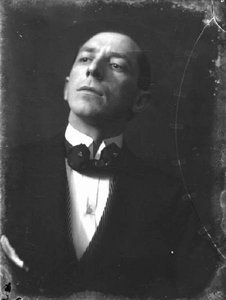
Umberto Boccioni
1882 - 1916 , Italië
Snelle feiten
- Artistic Movement Or Style: Futurisme
- Artists Or Movements Influenced By This Artist:
- Constructivisme
- Abstract Expressionisme
- Artists Who Influenced This Artist:
- Giacomo Balla
- Divisionisme
- Date Of Birth: 1882-10-19
- Date Of Death: 1916-08-17
- Full Name: Umberto Boccioni
- Nationality: Italiaans
- Notable Artworks:
- Dynamiek van een menselijk lichaam
- Unieke vormen van continuïteit in de ruimte
- De stad stijgt
- Place Of Birth: Reggio Calabria, Italië


