

 Voorvertoning
 Verstuur
 Delen
Delen
 Details bekijken

 Download
 Vergelijkbare items
 Röntgenonderzoek
 Diavoorstelling
Praying Saviour
 Acrylic On Canvas
- WallArt
- Expressionism
 1903
1903 100.0 x 82.0 cm
 Janus Pannonius Múzeum
 Lees meer
Giclée / Kunstafdrukken
Giclée- of canvasafdruk van museumkwaliteit met een snelle productie en flexibele afwerkingsmogelijkheden. ( Bestel handgeschilderde reproductie Koop afbeelding)




P118B $10

P118H $10

P118W $10

P438Z $10

P508JH $12

P508YH $12

P805H $10

P805Z $10

P919BZ $10

P919G $10

P919XJ $10

P959ZH $10

P968JZ $12

W106C $8

W218G $10

W218JH $8

W218Y $10

W307PJ $10

W316G $10

W316PJ $8

W316Y $10

W398PJ $8

W4111J $10

W500HY $15

W500JH $15

W692G $12

W849H $8

W940BG $15

W953PJ $8




Kies uit onze vooraf ingestelde maten die overeenkomen met de originele verhoudingen van het kunstwerk.

U kunt uw eigen afmetingen opgeven om in een specifieke lijst of ruimte te passen. Als de door u gekozen maat niet overeenkomt met de proporties van het originele kunstwerk, zullen wij de afbeelding bijsnijden of uitbreiden met een gespiegelde of effen rand. Een digitaal mockup wordt ter goedkeuring naar u verzonden voordat de productie begint.
Houd er rekening mee dat de preview op het scherm de werkelijke bijsneding of uitbreiding niet weergeeft. Alleen de mockup toont de uiteindelijke compositie nauwkeurig.
Hoewel aangepaste maten beschikbaar zijn, raden wij aan een afmeting uit de vooraf bepaalde lijst te kiezen om de originele proporties te behouden.
Wereldwijde levering () binnen 2 weken in plaats van de standaard 4/5 weken. (22 augustus)

Gratis wereldwijde expressverzending

Hoogwaardig linnen canvas

Volledige verzendverzekering

Garantie op terugbetaling van invoerrechten

Garantie op exacte kleurweergave

Retourbeleid van 60 dagen (alleen bij defecten)

100% Geld-terug-garantie

Korting bij meerdere afnames
 De optie voor glas is alleen beschikbaar bij een formaat kleiner dan 110 cm.

Praying Saviour
Giclée / Kunstafdrukken
Afmetingen reproductie
-


Eindtotaal
$ 81
Beschrijving verzamelobject
A Moment of Reverence: Tivadar Csontváry Kosztka’s “Praying Saviour”
Tivadar Csontváry Kosztka, born Mihály Tivadar Kosztka on July 5th, 1853, in Kisszeben (modern-day Sabinov, Slovakia), remains a figure of enduring fascination within Hungarian artistic circles—a painter whose life mirrored the turbulent currents of his era and whose canvases pulsed with an arresting blend of spirituality and psychological depth. His formative years were marked by a rich tapestry of influences: his father’s medical practice instilled in him a disciplined intellect alongside familial ties to Polish heritage, while Kosztka himself absorbed the vibrant cultural landscape of Slovakia and Germany—a confluence that undeniably shaped his artistic sensibilities. Unlike many of his contemporaries who embraced Impressionism's fleeting beauty, Kosztka resolutely pursued Expressionism, forging a path distinct from mainstream trends and establishing himself as one of Hungary’s foremost artists.The Expressionist Vision: Atmosphere and Emotion
“Praying Saviour,” completed in 1903, exemplifies the core tenets of Expressionist art—a movement characterized by its rejection of objective representation in favor of conveying subjective emotion and psychological experience. Kosztka eschewed meticulous detail, prioritizing instead a hazy, atmospheric depiction that captures not merely what is seen but how it feels. The muted palette—dominated by shades of grey, ochre, and indigo—creates an oppressive yet contemplative mood, mirroring the solemnity of the depicted prayer scene. Thick brushstrokes dominate the canvas, layering textures and conveying a palpable sense of urgency and emotional intensity. This deliberate disregard for photographic accuracy wasn’t merely stylistic choice; it was a conscious effort to bypass rational thought and tap into primal instincts—a hallmark of Expressionist philosophy.A Biblical Narrative Illuminated
The painting portrays Jesus Christ kneeling before a congregation, bathed in the diffused glow of twilight. Kosztka skillfully utilizes pyramidal composition to draw the viewer’s eye upwards towards Jesus' outstretched hands, symbolizing supplication and yearning for divine grace. The figures surrounding him are rendered with varying degrees of detail—some sharply defined, others blurred into the background—suggesting a hierarchy of importance while simultaneously emphasizing the universality of faith. Notably absent is any explicit depiction of faces; Kosztka deliberately obscures individual expressions, fostering instead an atmosphere of collective contemplation and shared devotion. This anonymity serves to elevate the scene beyond mere biographical representation, transforming it into a timeless meditation on spirituality and human aspiration.Symbolism Embedded in Texture and Color
The dominant grey hue underscores the painting’s solemn mood and evokes feelings of melancholy—a deliberate reflection of the spiritual struggles inherent in faith itself. The scattered trees silhouetted against the darkening sky contribute to the overall sense of isolation and vulnerability, mirroring Jesus' position as a solitary figure confronting divine authority. Kosztka’s masterful use of impasto technique – applying paint thickly onto the canvas – amplifies these textural qualities, creating palpable depth and conveying an emotional resonance that transcends visual perception. The subtle variations in color—particularly the indigo patches adorning the sky—suggest a profound contemplation of the cosmos and its mysteries.Legacy and Emotional Impact
“Praying Saviour” continues to resonate with audiences today due to its uncompromising honesty and its ability to evoke powerful emotions. Kosztka’s masterful portrayal of human vulnerability combined with his evocative Expressionist style ensures that this artwork remains a poignant reminder of the enduring quest for spiritual solace—a testament to the transformative power of art to transcend time and connect us to fundamental truths about the human condition. Its haunting beauty and contemplative atmosphere inspire viewers to consider questions of faith, compassion, and the significance of inner reflection.Biografie van de kunstenaar
A Life Illuminated: The Journey of Tivadar Csontváry Kosztka
Tivadar Csontváry Kosztka remains a captivating enigma in the landscape of Hungarian art—a painter whose life was as dramatic and unconventional as the canvases he produced. Born Mihály Tivadar Kosztka on July 5th, 1853, in Kisszeben (modern-day Sabinov, Slovakia), his origins were steeped in a fascinating confluence of cultures. His father, a physician and pharmacist, traced his lineage to Polish ancestry settled within Hungary, while young Tivadar navigated a childhood echoing with Slovak and German alongside the eventual fervent embrace of his Hungarian identity. This early immersion in diverse linguistic and cultural currents arguably contributed to the unique perspective that would later define his artistic vision—a vision both intensely personal and universally resonant. For many years, he dutifully followed in his father’s footsteps, practicing pharmacy—a profession pursued with diligence until a life-altering experience at the age of twenty-seven irrevocably altered his course. On October 13th, 1880, while immersed in his work, Csontváry claimed to receive a divine calling: a voice declared him destined to become “the greatest painter of the world, greater than Raphael.” This moment became the cornerstone of his artistic ambition, propelling him onto an extraordinary and often solitary path.From Apothecary to Artistic Pilgrim
The mystical vision irrevocably altered Csontváry’s trajectory. He embarked upon a period of intense preparation, fueled by unwavering self-belief and a relentless pursuit of artistic mastery. Initially rebuffed by traditional art schools, he persevered, traveling extensively throughout Europe—Rome, Paris, Munich—studying the masters and honing his skills. However, it wasn't merely technical proficiency that drove him; Csontváry sought something deeper, a unique visual language to express his inner world. He financed these journeys by continuing to work as an apothecary, sacrificing personal comfort for the sake of his artistic calling. From 1890 onwards, his travels expanded beyond Europe, taking him to North Africa and the Middle East—to Dalmatia, Italy, Greece, Lebanon, Palestine, Egypt, and Syria. These lands became a profound source of inspiration, imbuing his canvases with exotic landscapes, dramatic light, and a sense of spiritual yearning. He wasn’t simply documenting what he saw; he was interpreting it through the lens of his own intensely personal vision—a vision often tinged with melancholy and a deep reverence for nature's power. The sheer scale of his ambition is reflected in the monumental size of many of his works, demanding attention and enveloping the viewer in their immersive landscapes.The ‘Sunway’ and a Unique Artistic Voice
Csontváry’s artistic style defies easy categorization. While often associated with Post-Impressionism and Expressionism, he remained largely self-taught, forging his own path. His paintings are characterized by their monumental scale—many stretch several meters in width and height—and a bold use of color and composition. He developed what he termed the “sunway” (*napút*), an approach that emphasized the transformative power of light and its ability to reveal hidden truths. This wasn’t merely about depicting sunlight; it was about capturing the very essence of illumination, both physical and spiritual. His landscapes are often imbued with a sense of awe-inspiring grandeur, while his depictions of Middle Eastern scenes possess a haunting beauty and an undercurrent of melancholy. Works like The Lonely Cedar (1907) and Pilgrimage to the Cedars in Lebanon (1907) exemplify this approach—towering trees silhouetted against dramatic skies, evoking feelings of solitude, reverence, and the sublime. Other notable paintings include Springtime in Mostar (1903), capturing a romantic vision of the historic town, and The Wailing Wall in Jerusalem (1904), a poignant depiction of faith and remembrance. He sought to capture not just the appearance of things, but their underlying spiritual essence—a quality that sets his work apart from many of his contemporaries.A Painter of Light and Shadow
Csontváry’s artistic development can be understood as a progression from realistic depictions of everyday life to increasingly symbolic and emotionally charged landscapes. Early works, such as *The Apothecary’s Daughter* (1883), demonstrate a meticulous attention to detail and a fascination with the mundane. However, as he matured, his style became looser and more expressive, influenced by artists like J.M.W. Turner and Vincent van Gogh. He experimented with bold color palettes, dynamic brushstrokes, and unconventional compositions—techniques that would later define his unique “sunway” approach. His paintings are not simply representations of the external world; they are reflections of his inner state—his hopes, fears, and spiritual longings. The use of light is particularly significant in his work, often employed to create a sense of mystery and drama. He was fascinated by the way sunlight transformed landscapes, casting shadows that revealed hidden forms and suggesting deeper meanings.Recognition Delayed, Legacy Enduring
Despite his artistic innovations, Csontváry faced considerable challenges during his lifetime. His unconventional lifestyle—he was a vegetarian, teetotaler, and pacifist—and his often-prophetic writings led many to dismiss him as an eccentric crank. He struggled to gain recognition in Hungary, finding greater appreciation among critics in Western Europe, particularly in Paris where he exhibited in 1907. However, even there, full acceptance proved elusive. His paintings were rarely sold during his life, and financial hardship plagued his later years. Csontváry died in Budapest on June 20th, 1919, largely unappreciated by the Hungarian art establishment. It was only after his death that his genius began to be fully recognized. Today, Tivadar Csontváry Kosztka is celebrated as one of Hungary’s greatest painters—a visionary artist whose work continues to captivate and inspire. His paintings are held in prestigious collections such as the Hungarian National Gallery in Budapest and the Csontváry Museum in Pécs, ensuring that his legacy will endure for generations to come. In 2006, *Rendez-vous* (1902), also known as “Meeting of the Lovers,” sold at auction for over one million euros—a testament to the enduring power and value of his artistic vision—a fitting tribute to the man who dared to paint his own truth.A Lasting Influence
- Pioneering Spirit: Csontváry’s unwavering commitment to his artistic vision, despite facing rejection and hardship, serves as an inspiration to artists today.
- Unique Style: His “sunway” technique and monumental scale continue to influence landscape painters seeking to capture the spiritual essence of nature.
- Cultural Icon: Csontváry’s work has become a symbol of Hungarian national identity, celebrated for its unique blend of Eastern and Western influences.
- Spiritual Depth: His paintings offer viewers a profound meditation on themes of solitude, faith, and the sublime, resonating with audiences across cultures and generations.
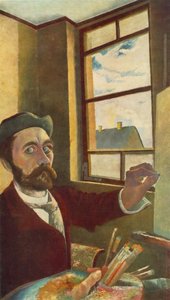
Tivadar Csontváry Kosztka
1853 - 1919 , Sловакия
Belangrijkste feiten
- Artistic Movement Or Style: Post-Impressionisme, Expressionisme
- Artists Or Movements Influenced By This Artist: ['Expressionisten']
- Artists Who Influenced This Artist: ['Raphael']
- Date Of Birth: 5 juli 1853
- Date Of Death: 20 juni 1919
- Full Name: Tivadar Csontváry Kosztka
- Nationality: Hongaars
- Notable Artworks:
- Lonely Cedar
- Pilgrimage Ceders
- Wailing Wall
- Place Of Birth: Sabinov, Slovakije
Gerelateerde artikelen

Tivadar Csontváry Kosztka: A Hungarian Visionary Between Symbolism and Existential Isolation
Explore the captivating art of Tivadar Csontváry Kosztka, a Hungarian visionary bridging Symbolism & Expressionism. Discover his unique 'sunway' style and profound themes – available as museum-quality reproductions at OriginalUniqueArt.
Fra Angelico's Top 25 Meesterwerken: Renaissance Kunst voor uw Interieur | OriginalUniqueArt.com
Ontdek de 25 mooiste meesterwerken van Fra Angelico! Verlies u in de spirituele schoonheid van Renaissance fresco's & panel schilderijen. Koop museumkwaliteit reproducties en breng Italiaanse kunst naar uw interieur op OriginalUniqueArt.com.
Figurative Expressionism: Emotional Intensity & Subjective Reality in 20th-Century Art
Explore the powerful world of Figurative Expressionism with OriginalUniqueArt. Discover key artists like Kirchner & Beckmann, understand its emotional depth, and learn how to collect this influential 20th-century art movement.
The Raw Emotion of Expressionism: A Deep Dive into its History, Characteristics & Enduring Influence
Explore the raw emotion of Expressionism with OriginalUniqueArt. Discover its history, key artists like Kirchner & Munch, and lasting influence on modern art. Expert insights for collectors & enthusiasts.

Károly Ferenczy: Pioneering Hungarian Modernism & the Soul of a Nation
Explore the life & art of Károly Ferenczy, a pivotal figure in Hungarian Modernism. Discover his landscapes, portraits, and role in founding the Nagybánya colony. Expert insights for collectors & enthusiasts.

