

 Bekijk op ware grootte
 Verstuur
 Delen
Delen
 Details bekijken
 Gids voor studentenkunstwerken

 Download
 Vergelijkbare items
 Röntgenonderzoek
 Diavoorstelling
 Statistieken
Isabella d'Este, hertogin van Mantua
 Olieverf op canvas
- Wanddecoratie
- Venetiaanse Renaissance
 1536
1536 102.0 x 64.0 cm
 Kunsthistorisches Museum
 Lees meer
Handgemaakte olieverfreproductie
Met de hand geschilderd in olieverf op canvas in uw gewenste maat en lijst, op bestelling gemaakt door onze kunstenaars. ( Schakel over naar print Schakel over naar digitale afbeeldingen)




P118B $10

P118H $10

P118W $10

P438Z $10

P508JH $12

P508YH $12

P805H $10

P805Z $10

P919BZ $10

P919G $10

P919XJ $10

P959ZH $10

P968JZ $12

W106C $8

W218G $10

W218JH $8

W218Y $10

W307PJ $10

W316G $10

W316PJ $8

W316Y $10

W398PJ $8

W4111J $10

W500HY $15

W500JH $15

W692G $12

W849H $8

W940BG $15

W953PJ $8




Kies uit onze vooraf ingestelde maten die overeenkomen met de originele verhoudingen van het kunstwerk.

U kunt uw eigen afmetingen invoeren om in een specifieke lijst of ruimte te passen. Als de door u gekozen maat niet overeenkomt met de verhoudingen van het originele beeld, zullen we het kunstwerk bijsnijden of het schilderij uitbreiden met extra handgeschilderde elementen. Een digitale mockup wordt ter goedkeuring naar u verzonden voordat de productie begint.
Houd er rekening mee dat de preview op het scherm niet de werkelijke uitsnede of uitbreiding weergeeft. Alleen de mockup toont de uiteindelijke compositie nauwkeurig.
Hoewel aangepaste afmetingen mogelijk zijn, raden we aan een maat uit de vooraf gedefinieerde lijst te selecteren om de originele verhoudingen te behouden.
Na de bestelling zal het team van OriginalUniqueArt.com per e-mail contact opnemen met de klant voor instructies en een mockup-voorbeeld sturen.
Wereldwijde levering () binnen 3 tot 4 weken in plaats van de standaard 5 weken. (25 september). Zonder concessies aan de kwaliteit.

Gratis wereldwijde expressverzending

Hoogwaardig linnen canvas

Volledige verzendverzekering

Garantie op terugbetaling van invoerrechten

Garantie op exacte kleurweergave

Retourbeleid van 100 dagen (alleen bij defecten)

100% Geld-terug-garantie

Korting bij meerdere afnames
 De optie voor glas is alleen beschikbaar bij een formaat kleiner dan 110 cm.

Isabella d'Este, hertogin van Mantua
Reproductiemethode
Formaat reproductie
-


Totaalprijs
$ 300
Een Portret van Koninklijke Gratie: Titiaans Isabella d'Este
Titiaans “Isabella d’Este, hertogin van Mantua,” geschilderd in 1536, is veel meer dan louter een portret; het is een zorgvuldig geconstrueerd tableau van macht, schoonheid en de ontluikende geest van de Renaissance. Dit voortreffelijke werk, uitgevoerd in olieverf op canvas en met een bescheiden maar indrukwekkende afmeting van 102 x 64 cm, biedt een zeldzame blik in het leven van een van de meest invloedrijke vrouwen van Italië – een beschermvrouwe van de kunsten, een scherpzinnig politica en een symbool van verfijnde smaak tijdens een periode van immense culturele transformatie. Het schilderij trekt de kijker onmiddellym naar binnen met een rijk palet dat wordt gedomineerd door warme bruintinten, glinsterend goud en gedempte roodtinten, wat een sfeer creëert die zowel weelderig als subtiel melancholisch is. Het meesterlijke gebruik van licht door Titiaan richt onze aandacht op het gezicht van Isabella, waarbij zijn gelaatstrekken worden geaccentueerd met een delicaat realisme dat de geïdealiseerde conventies van de portretkunst tart.
Venetiaanse Renaissance op haar Best: Stijl en Techniek
Het schilderij vestigt zichzelf stevig binnen de traditie van de Venetiaanse Renaissance, een stijl die wordt gekenmerkt door een omarming van kleur, een bereidheid om te experimenteren met penseelstreken en een diepgaand begrip van de menselijke anatomie. De kenmerkende techniek van Titiaan – het aanbrengen van dunne glazuren over een voorbereide gesso-ondergrond – zorgt voor een ongelooflijke luminositeit en diepte. Observeer hoe hij de texturen van haar fluwelen gewaad opbouwt, waarbij hij de ingewikkelde plooien en de glanzende schittering met opmerkelijke precisie vastlegt. De lineaire kwaliteit van de compositie, die vooral zichtbaar is in de scherpe definitie van haar gezicht en haar, wordt in evenwicht gebracht door de organische rondingen van haar kleding en hoofdtooi. Dit samenspel tussen structuur en vloeiendheid is een handelsmerk van de Venetiaanse schilderkunst en creëert een dynamische visuele ervaring. Het ondiepe perspectief, typerend voor de Renaissance-portretkunst, richt onze blik rechtstreeks op Isabella, wat haar belang binnen het kader versterkt.
Symboliek Verweven in Zijde en Steen
Buiten zijn technische briljantie is “Isabella d’Este” doordrenkt van symbolische betekenis. De uitgebreide hoofdtooi, versierd met parels en juwelen, spreekt boekdelen over haar adellijke status en rijkdom – een visuele verklaring van haar macht aan het hof van Mantua. De rijke stoffen, in het bijzonder de luxueuze bontrand, benadrukken verder haar positie als een vrouw van aanzienlijke middelen. Maar misschien wel het meest intrigerende element is de subtiele toevoeging van architecturale verwijzingen. Hoewel niet expliciet afgebeeld, weerspiegelt de compositie subtiel de principes van de Renaissance-stadsplanning, waarbij parallellen worden getrokken met de visionaire ontwerpen van Brunelleschi en Bramante voor centraal geplande kerken. Dit weerspiegelt Isabella's eigen rol als een kritische beschermvrouwe van de kunst en architectuur, waardoor zij wordt verbonden met de intellectuele stromingen die Florence in die tijd vormgaven.
Een Hertogin Gedefinieerd: Historische Context en Emotionele Resonantie
Geschilderd in 1536, tijdens een periode van intense politieke manoeuvres en artistieke innovatie, legt dit portret Isabella d’Este vast op het hoogtepunt van haar invloed. Geboren in een prominente Romeinse familie, navigeerde zij behendig door de complexe wereld van de Italiaanse politiek en werd zij uiteindelijk door huwelijk hertogin van Mantua. De weergave van Titiaan is niet louter een gelijkenis; het is een poging om haar karakter te belichamen – intelligent, geraffineerd en gezaghebbend. De licht afgewende blik, gecombineerd met een subtiele zweem van melancholie in haar uitdrukking, suggereert een vrouw die zich bewust is van haar verantwoordelijkheden en er misschien zelfs door belast wordt. Het schilderij dient als een krachtig getuigenis van Isabella's nalatenschap als cultureel icoon, een beschermvrouwe die artistieke excellentie bevorderde en een onuitwisbare stempel drukte op de stad Mantua.
Een reproductie van “Isabella d’Este, hertogin van Mantua” biedt een prachtige toevoeging aan elke kunstcollectie of interieur. De rijke kleuren, de meesterlijke techniek en de gelaagde symboliek creëren een boeiende visuele ervaring die mere decoratie overstijgt – het is een venster naar het hart van de Italiaanse Renaissance.
Biografie van de kunstenaar
The Venetian Titan: A Life in Color and Canvas
Tiziano Vecellio, even more famously known as Titian, stands as a monumental figure of the Italian Renaissance—perhaps its most celebrated colorist and a master who fundamentally reshaped the possibilities of oil painting. Born around 1490 in Pieve di Cadore, nestled amidst the dramatic landscapes of the Venetian Alps, his journey from humble beginnings to international acclaim is a testament to prodigious talent and an unwavering dedication to artistic innovation. The details surrounding Titian’s early life remain somewhat shrouded in mystery, but we know he was one of several children born to Gregorio Vecellio, a military man, and Lucia. Recognizing their sons' potential, the family arranged for young Tiziano and his brother Francesco to apprentice with an artist in Venice—a decision that would irrevocably alter the course of art history.
Venice at the turn of the 16th century was a vibrant hub of commerce, culture, and artistic ferment. Titian’s initial training took place within the workshop of Sebastiano Zuccato, a mosaicist, followed by brief periods under the tutelage of Gentile Bellini and, crucially, his brother Giovanni. However, it was his association with Giorgione—a fellow Venetian painter whose work possessed an ethereal poetic quality—that proved most formative. The two artists collaborated on several projects, including the exterior frescoes for the Fondaco dei Tedeschi, a bustling trading post for German merchants. Even in these early works, Titian’s exceptional skill was evident, earning him recognition among his contemporaries and foreshadowing the brilliance that would soon blossom.
A Master's Evolving Style
Titian’s artistic development can be characterized by a remarkable versatility and an ongoing exploration of painterly techniques. His early works, heavily influenced by Giorgione, exhibit a delicate lyricism and a masterful use of color to create atmospheric effects. Paintings like *A Man with a Quilted Sleeve* (circa 1509) demonstrate his emerging talent for portraiture, capturing not only the physical likeness of his subjects but also their inner character. He favored soft, diffused light and subtle gradations of tone, mirroring Giorgione’s approach. As he matured, Titian began to move away from Giorgione’s delicate subtlety and embrace a bolder, more dramatic approach to color. *The Visitation of Mary and Elizabeth* (now in the Accademia, Venice) exemplifies this shift, showcasing his growing confidence in handling complex compositions and vibrant hues. He experimented with layering colors—often applying thin glazes over dried underpaintings—to achieve luminous effects and intense saturation.
Throughout his long career, Titian consistently pushed the boundaries of artistic expression. He explored a vast range of subjects – mythological scenes, religious narratives, portraits of nobility, and even genre paintings depicting everyday life. He wasn’t afraid to break with convention, often employing unconventional compositions and dramatic lighting. His portraits became renowned for their psychological depth and realistic portrayal of textures and fabrics; he meticulously rendered the sheen of silk, the weight of velvet, and the warmth of skin tones. Simultaneously, he excelled in mythological and religious subjects, imbuing them with a sensuality and dramatic intensity that captivated audiences. A prime example is *Venus of Urbino*, a masterpiece that redefined the depiction of the female nude and established Titian as a leading figure in Venetian painting.
Patronage, Prestige, and Lasting Influence
Titian’s talent attracted the attention of powerful patrons from across Europe. He served as court painter to Emperor Charles V, King Philip II of Spain, and Pope Paul III, among others. This patronage not only provided him with financial security but also allowed him to create monumental works that showcased his artistic prowess on a grand scale. His ability to adapt his style to the tastes of different courts while maintaining his own distinctive voice is a testament to his exceptional skill and diplomatic finesse. He was known for his lavish use of gold leaf, particularly in portraits commissioned by royalty, further enhancing their prestige.
Titian’s influence on subsequent generations of artists was profound. From Peter Paul Rubens and Rembrandt to Eugène Delacroix and Édouard Manet, countless painters drew inspiration from his masterpieces. His innovative use of color, his loose brushwork, and his emphasis on capturing the emotional essence of his subjects profoundly influenced their artistic approaches. He is considered a pivotal figure in the transition from the High Renaissance to the Baroque period, paving the way for new artistic styles and techniques.
A Legacy Enduring Through Centuries
Titian passed away in Venice in 1576, leaving behind an extraordinary body of work that continues to inspire awe and admiration. His paintings can be found in museums around the world, including the Galleria Palatina in Florence, the Prado Museum in Madrid, and the National Gallery in London. To experience a Titian is to encounter a master craftsman at the peak of his powers—a painter who possessed an unparalleled ability to capture the beauty, drama, and complexity of the human condition.
Exploring Further
- Museums & Collections: Discover Titian’s works at the Scuola del Santo in Padua and San Salvador in Venice, both showcasing his breathtaking frescoes.
- Related Artists: Explore the influence of Giorgione on Titian's early style and the later impact of Titian on artists like Rubens and Delacroix.
- Historical Context: Immerse yourself in the world of the Italian Renaissance and Venetian painting to fully appreciate Titian’s artistic achievements.

Tiziano Vecellio
1490 - 1576 , Italië
Snelle feiten
- Artistic Movement Or Style: Venetiaanse schilderkunst
- Artists Or Movements Influenced By This Artist: ['Late Italiaanse Renaissance']
- Artists Who Influenced This Artist:
- Giovanni Bellini
- Giorgione
- Date Of Birth: c. 1490
- Date Of Death: 1576
- Full Name: Tiziano Vecellio
- Nationality: Italiaans
- Notable Artworks:
- Een man met een geborduurde mouw
- De bezoeking van Maria en Elisabeth
- Place Of Birth: Pieve di Cadore, Italië
Gerelateerde artikelen
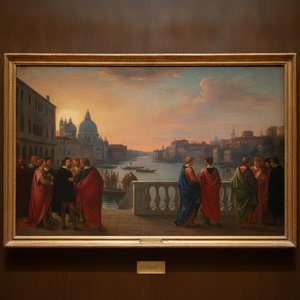
The Venetian Renaissance: A Masterclass in Colorito, Light, and the Birth of Atmospheric Brilliance
Explore the breathtaking mastery of the Venetian Renaissance. Discover how legends like Titian revolutionized art through Colorito, capturing the luminous light and vibrant pigments of the Venetian lagoon in a visual journey of unparalleled color and texture.

Jacopo Palma il Giovane: A Venetian Master's Poetic Evolution
Explore the captivating world of Jacopo Palma il Giovane, a pivotal Venetian Renaissance master. Discover his unique style, influenced by Titian & Tintoretto, and learn about key works perfect for discerning collectors.
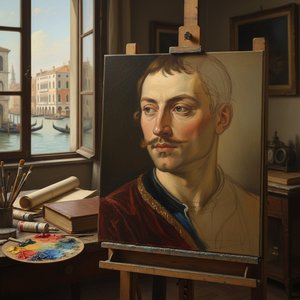
Titian: Innovation, Technique & the Venetian Renaissance Portrait Tradition
Explore the revolutionary techniques & enduring legacy of Titian, the master of Venetian Renaissance portraiture. Discover insights for collectors & appreciate his impact on art history.

Venetian Renaissance: The Mastery of Color, Light, and the Art of Colorito
Explore the luminous mastery of the Venetian Renaissance. Discover how masters like Titian and Giorgione revolutionized art through colorito, light, and atmosphere. An expert guide to the golden age of Italian painting for collectors and enthusiasts.

The Golden Light of Innovation: Exploring the Venetian Renaissance Art Movement (1430–1580)
Explore the Golden Age of Venetian art (1430–1580). Discover Giorgione, Titian & Tintoretto's techniques, the 'colorito' revolution, and lasting influence. Expert insights for collectors & enthusiasts.


