 Voorvertoning
 Verstuur
 Delen
Delen
 Details bekijken
 Gids
Gids

 Download
 Vergelijkbare items
 Röntgenonderzoek
 Diavoorstelling
 Vraag & antwoord
 Statistieken
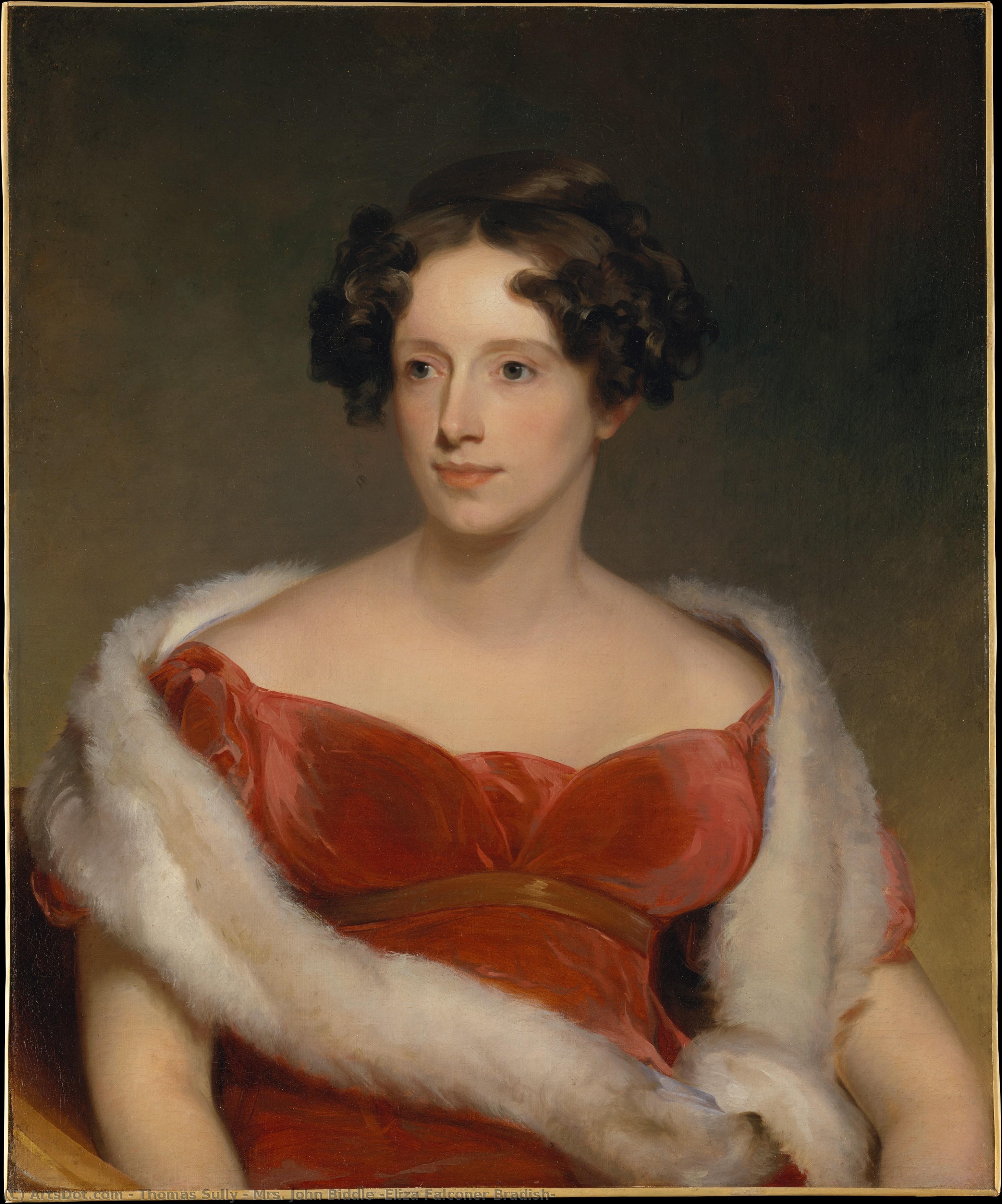
Mrs. John Biddle (Eliza Falconer Bradish)

- 76.0 x 63.0 cm


 Lees meer
Giclée / Kunstafdrukken
Giclée- of canvasafdruk van museumkwaliteit met een snelle productie en flexibele afwerkingsmogelijkheden. ( Bestel handgeschilderde reproductie Schakel over naar digitale afbeeldingen)




P118B €10

P118H €10

P118W €10

P438Z €10

P508JH €12

P508YH €12

P805H €10

P805Z €10

P919BZ €10

P919G €10

P919XJ €10

P959ZH €10

P968JZ €12

W106C €8

W218G €10

W218JH €8

W218Y €10

W307PJ €10

W316G €10

W316PJ €8

W316Y €10

W398PJ €8

W4111J €10

W500HY €15

W500JH €15

W692G €12

W849H €8

W940BG €15

W953PJ €8




Kies uit onze vooraf ingestelde maten die overeenkomen met de originele verhoudingen van het kunstwerk.

Voer de gewenste breedte en hoogte in, passend bij uw lijst of muur. Een afdruk kan alleen worden ingekort en nooit groter worden gemaakt dan het origineel; een formaat met andere verhoudingen zal daarom een deel van de afbeelding verliezen. Wij sturen u een digitaal mockup ter goedkeuring voordat we tot drukwerk overgaan. De afbeelding op deze pagina toont niet de werkelijke uitsnede — dit is alleen te zien op het mockup.
Wereldwijde levering () binnen 2 weken in plaats van de standaard 4/5 weken. (6 november)

Gratis wereldwijde expressverzending

Hoogwaardig linnen canvas

Volledige verzendverzekering

Garantie op terugbetaling van invoerrechten

Garantie op exacte kleurweergave

Retourbeleid van 100 dagen (alleen bij defecten)

100% Geld-terug-garantie

Korting bij meerdere afnames
 De optie voor glas is alleen beschikbaar bij een formaat kleiner dan 110 cm.

Mrs. John Biddle (Eliza Falconer Bradish)
Giclée / Kunstafdrukken
Afmetingen reproductie
-


Eindtotaal
€ 72
A Vision of Regency Elegance
In the soft, luminous glow of Thomas Sully’s 1818 masterpiece, Mrs. John Biddle (Eliza Falconer Bradish), we encounter more than just a portrait; we step into the refined atmosphere of early nineteenth-century American high society. This exquisite oil on canvas serves as a breathtaking window into an era defined by grace, social aspiration, and the burgeoning Romantic movement. As the eye meets the subject, one is immediately struck by the profound sense of poise held by Eliza Falconer Bradisch. She does not sit with the rigid, unyielding posture often found in earlier aristocratic portraiture; instead, Sully captures her in a moment of relaxed sophistication, an informal pose that suggests a quiet intimacy and a burgeoning ideal of domestic tranquility.
The painting is a masterclass in texture and light, where every brushstroke contributes to a sensory experience. The deep, rich crimson of her velvet gown commands the viewer's attention, its heavy folds rendered with such precision that one can almost feel the weight of the luxurious fabric. Draped across her shoulders, a plush fur stole adds a layer of tactile opulence, contrasting beautifully with the delicate shimmer of the pearls encircling her neck. Sully’s technique, heavily influenced by the British master Thomas Lawrence, utilizes subtle tonal gradations and luminous layering to create a skin tone that appears to radiate from within, imbuing the portrait with a lifelike, breathing quality that is rare in works of this period.
Symbolism and the Romantic Spirit
Beyond the mere depiction of a prominent socialite, the composition is rich with the subtle language of the Romantic era. The interplay between the dramatic flourish of her attire and the soft, focused rendering of her face creates a captivating visual tension. While the opulent drapery speaks to the wealth and status of the Biddle family—a lineage deeply woven into the cultural fabric of Philadelphia—the subject's expression hints at a deeper, more psychological narrative. There is an air of romantic uncertainty beneath the surface, a characteristic hallmark of Sully’s ability to capture the fleeting nuances of human emotion.
The choice of color also plays a pivotal role in the painting's emotional resonance. By diverging from the color palettes used in his earlier portraits of her husband, Major John Biddle, Sully creates a visual dialogue that scholars suggest reflects the complex layers of identity and marital harmony. For the discerning collector or interior designer, this piece offers a profound sense of historical continuity and timeless beauty. It is an artwork that does not merely decorate a space but transforms it, providing a focal point of intellectual depth and aesthetic splendor.
An Inspiration for the Modern Interior
For those seeking to curate a collection that speaks of heritage and refined taste, a high-quality reproduction of Mrs. John Biddle offers an unparalleled opportunity. The painting’s balanced yet dynamic composition makes it an ideal centerpiece for a variety of sophisticated settings, from a classic study lined with leather-bound books to a contemporary living space seeking a touch of historical grandeur. Its ability to evoke feelings of warmth, luxury, and quiet contemplation ensures that it remains a conversation piece for generations.
Integrating such a masterful work into an interior design scheme allows for the introduction of rich textures and a storied past. Whether placed in a gallery-style hallway or as a commanding presence above a mantle, this portrait brings with it the spirit of the American Renaissance—a period where art and identity were inextricably linked. To possess a reproduction of this caliber is to hold a fragment of history, rendered with the meticulous care required to honor Sully’s enduring legacy.
Veelgestelde vragen
Wanneer is "Mrs. John Biddle (Eliza Falconer Bradish)" door Thomas Sully gemaakt en bij welke stroming behoort het?
"Mrs. John Biddle (Eliza Falconer Bradish)" werd in 1818 gecreëerd als een werk uit de Romanticism-stroming. De datum en de stroming verankeren het kunstwerk in de kunstgeschiedenis.
Hoe oud was Thomas Sully toen "Mrs. John Biddle (Eliza Falconer Bradish)" werd gemaakt?
Toen "Mrs. John Biddle (Eliza Falconer Bradish)" werd gemaakt in 1818, was Thomas Sully - geboren in 1783 - 35 jaar oud.
Tot welke periode in de carrière van Thomas Sully behoort "Mrs. John Biddle (Eliza Falconer Bradish)"?
"Mrs. John Biddle (Eliza Falconer Bradish)" vertegenwoordigt de Mature Period van Thomas Sully.
Biografie kunstenaar
A Transatlantic Brushstroke: The Life and Art of Thomas Sully
Thomas Sully’s journey, a remarkable transatlantic passage – not merely geographical but artistic and cultural – began in 1783 under the skies of Horncastle, Lincolnshire. His story isn't simply that of a painter; it is a reflection of the burgeoning American identity finding its voice through portraiture. Born into a family of traveling actors—Matthew and Sarah Chester Sully—young Thomas experienced an itinerant childhood before settling in Charleston, South Carolina, in 1792, seeking new opportunities on the American stage. This early exposure to performance, to capturing fleeting expressions and embodying character, profoundly shaped his artistic sensibility. Initially drawn into the world of theatre himself as a tumbler, Sully’s innate talent soon found expression through a different medium: paint. An apprenticeship with an insurance broker revealed an aptitude for detail, but it was the guidance of Charles Fraser, a local artist, and later his brother-in-law Jean Belzons, that truly ignited his passion for miniature painting – a foundation upon which he would build a distinguished career.From Miniature to Monumental: Forging an American Style
Sully’s artistic development wasn't confined by geographical boundaries. A period of study in London with the esteemed Benjamin West, beginning in 1808, proved pivotal. While West was a significant figure in his own right, it was the influence of Thomas Lawrence that truly captivated Sully. Lawrence’s elegant style, his mastery of light and texture, and his ability to capture both likeness and character resonated deeply with the young American artist. He returned to the United States imbued with this aesthetic, earning him the moniker “the Sir Thomas Lawrence of America.” However, Sully didn't merely imitate; he adapted and refined these influences, forging a distinctly American style that blended European sophistication with a uniquely New World sensibility. His portraits weren’t simply representations of wealth or status; they were explorations of personality, imbued with psychological depth and emotional resonance. He quickly established himself in Philadelphia, becoming a leading portraitist and capturing the likenesses of prominent figures like Thomas Jefferson, John Quincy Adams, and Andrew Jackson – men who shaped the nation's destiny. His technique involved layering thin glazes of paint to achieve luminous effects, a hallmark of Lawrence’s style but executed with a subtle American warmth.Beyond Likeness: Historical Narratives and Artistic Legacy
While celebrated for his portraits, Sully’s artistic ambition extended beyond capturing individual faces. He ventured into historical painting with works like *The Passage of the Delaware* (1819), a grand depiction of Washington's iconic crossing – a piece that demonstrated his ability to handle large-scale compositions and imbue them with dramatic power. This willingness to engage with historical narratives broadened his appeal and cemented his place in the American art world. He also produced numerous landscapes, often infused with a romantic sensibility reminiscent of the Hudson River School. His prolific output—over 2,000 paintings over seven decades—testifies to both his skill and his relentless dedication. He wasn’t merely a painter of the elite; he documented an era, preserving the faces and stories of a nation undergoing rapid transformation. Sully's influence extended beyond his own canvases. He was a dedicated teacher, mentoring numerous artists including Marcus Aurelius Root, who would later become a pioneer in photography.A Patron of Culture: Music, Society, and Enduring Influence
Sully’s contributions weren’t limited to the visual arts. As a founding member of Philadelphia's Musical Fund Society, he demonstrated a deep commitment to fostering cultural life within his community. This involvement speaks to a broader artistic sensibility – an understanding that art in all its forms enriches society and elevates the human spirit. His portraits often depicted subjects engaged in social activities, reflecting his belief in the importance of civic engagement. He was known for his impeccable manners and refined taste, embodying the ideals of the American gentry. Sully’s work was even adapted for use on United States coinage, further solidifying his place in the national consciousness. Though Romanticism and Neoclassicism were dominant movements during his lifetime, Sully’s style transcended easy categorization. He skillfully blended elements of both, creating a unique aesthetic that prioritized emotional depth, technical precision, and psychological insight. Today, Thomas Sully's paintings hang in prestigious museums across the country, continuing to captivate audiences with their beauty, elegance, and enduring power. His legacy remains as a testament to the transformative potential of art and the enduring allure of the human face.Key Portraits
- Thomas Jefferson: A dignified portrait capturing the statesman’s intellectual gravitas.
- John Quincy Adams: A more intimate portrayal, revealing a thoughtful and introspective nature.
- Andrew Jackson: A dynamic depiction of the frontiersman-turned-president, conveying his strength and determination.
- The Passage of the Delaware: A monumental historical painting illustrating Washington’s leadership during a pivotal moment in American history.

Thomas Sully
1783 - 1872 , Verenigd Koninkrijk
Belangrijkste feiten
- Artistic Movement Or Style: Romantiek, Neoklassiek
- Artists Or Movements Influenced By This Artist: ['Amerikaanse portretschilder']
- Artists Who Influenced This Artist:
- Benjamin West
- Lawrence
- Date Of Birth: 19 juni 1783
- Date Of Death: 5 nov 1872
- Full Name: Thomas Sully
- Nationality: Engels-Amerikaans
- Notable Artworks:
- Passage Delaware
- Portret Jefferson
- Place Of Birth: Horncastle, VK
Gerelateerde artikelen
Thomas Barker of Bath: Landscape Painting & Societal Reflection in Early 19th-Century England
Explore the life & work of Thomas Barker of Bath, a key figure in 19th-century English Romanticism. Discover his Parisian success, iconic paintings like 'The Bride of Death', and lasting artistic legacy. Learn more at OriginalUniqueArt.

Mark Rothko's Top 25 Meesterwerken: Kleur, Emotie & Abstracte Kunst voor uw Interieur
Ontdek de top 25 meesterwerken van Mark Rothko! Duik diep in zijn emotionele kleurveldschilderijen en abstract expressionisme. Vind museumkwaliteit Rothko reproducties & interieurinspiratie op OriginalUniqueArt.com.

Crimson & Captivating: The Fiery Allure of Red-Haired Masterpieces to Inspire Your Home Gallery
Ignite your interior design with the fiery elegance of red-haired portraits. Explore premium, hand-painted oil reproductions of Renoir and Modigliani. Discover timeless beauty and bespoke commissions at OriginalUniqueArt.com—where art history meets modern luxury for your home.

Thomas Whitcombe: Navigating Light & Landscape – A Reassessment of Technique & Influence
Discover the captivating world of Thomas Whitcombe, a leading British marine painter. Explore his life, techniques, and enduring legacy with our expert analysis & guide for collectors.

Crimson Threads of Narrative: Exploring Symbolism & Representation in Artworks Featuring the Red Dress
Explore the rich symbolism of the red dress in art history! From ancient power displays to iconic portraits like Cézanne’s 'Madame Cezanne', discover the cultural and artistic significance behind this captivating color. Expert analysis & insights.