

 Bekijk op ware grootte
 Verstuur
 Delen
Delen
 Details bekijken
 Gids voor studentenkunstwerken

 Download
 Vergelijkbare items
 Röntgenonderzoek
 Diavoorstelling
 Statistieken
Mother and Son
 Oil On Canvas
- WallArt
- Romanticism
 1840
1840 145.0 x 115.0 cm
 Metropolitan Museum of Art
 Lees meer
Giclée / Kunstafdrukken
Giclée- of canvasafdruk van museumkwaliteit met een snelle productie en flexibele afwerkingsmogelijkheden. ( Koop handgeschilderd kunstwerk Schakel over naar digitale afbeeldingen)




P118B €10

P118H €10

P118W €10

P438Z €10

P508JH €12

P508YH €12

P805H €10

P805Z €10

P919BZ €10

P919G €10

P919XJ €10

P959ZH €10

P968JZ €12

W106C €8

W218G €10

W218JH €8

W218Y €10

W307PJ €10

W316G €10

W316PJ €8

W316Y €10

W398PJ €8

W4111J €10

W500HY €15

W500JH €15

W692G €12

W849H €8

W940BG €15

W953PJ €8




Kies uit onze vooraf ingestelde maten die overeenkomen met de originele verhoudingen van het kunstwerk.

U kunt uw eigen afmetingen opgeven om in een specifieke lijst of ruimte te passen. Als de door u gekozen maat niet overeenkomt met de proporties van het originele kunstwerk, zullen wij de afbeelding bijsnijden of uitbreiden met een gespiegelde of effen rand. Een digitaal mockup wordt ter goedkeuring naar u verzonden voordat de productie begint.
Houd er rekening mee dat de preview op het scherm de werkelijke bijsneding of uitbreiding niet weergeeft. Alleen de mockup toont de uiteindelijke compositie nauwkeurig.
Hoewel aangepaste maten beschikbaar zijn, raden wij aan een afmeting uit de vooraf bepaalde lijst te kiezen om de originele proporties te behouden.
Wereldwijde levering () binnen 2 weken in plaats van de standaard 4/5 weken. (3 oktober)

Gratis wereldwijde expressverzending

Hoogwaardig linnen canvas

Volledige verzendverzekering

Garantie op terugbetaling van invoerrechten

Garantie op exacte kleurweergave

Retourbeleid van 100 dagen (alleen bij defecten)

100% Geld-terug-garantie

Korting bij meerdere afnames
 De optie voor glas is alleen beschikbaar bij een formaat kleiner dan 110 cm.

Mother and Son
Giclée / Kunstafdrukken
Formaat reproductie
-


Totaalprijs
€ 70
Mother and Son: An Allegory of Domestic Harmony
This magnificent portrait by Thomas Sully, completed in 1840, transcends mere representation; it embodies a profound meditation on familial bonds and idealized femininity. More than just capturing the likenesses of Jane Cooper Sully Darley and her son Francis Thomas Sully Darley—the artist’s daughter and heir—Sully meticulously crafted an image steeped in symbolism that speaks to the core values of Romantic art and Victorian sensibilities. The painting resides within The Metropolitan Museum of Art's collection (Accession Number JP1847), a testament to its enduring artistic merit and scholarly significance.A Symphony of Symbolism: Decoding the Composition
Sully’s genius lies in his masterful deployment of iconography—visual symbols designed to convey deeper meanings beyond the surface appearance. The central motif is undeniably Penelope, Odysseus's wife from Homer’s epic poem *The Odyssey*, considered the archetype of marital devotion and steadfastness. Alongside Penelope sits her son Telemachus, representing filial piety and unwavering loyalty – qualities Sully wished to elevate as cornerstones of domestic life. These figures are not merely present; they dominate the visual space, anchoring the scene in a narrative tradition that prioritized moral virtue and familial sanctity.Technique and Style: Romantic Idealism Embodied
Executed in oil on canvas with meticulous detail, *Mother and Son* exemplifies Sully’s signature Romantic style. He skillfully employs chiaroscuro—the dramatic interplay of light and shadow—to sculpt the figures' forms and imbue them with a palpable sense of warmth and tenderness. The artist’s attention to texture is equally impressive; the ivy clinging to the wall, a symbol of faithfulness and constancy, appears remarkably realistic, mirroring the natural world outside the window. Furthermore, the urn depicts Hermes bringing Dionysus—the god of fertility and revelry—to nurture Telemachus, reinforcing the theme of nurturing and protecting the next generation. This careful consideration of artistic conventions underscores Sully’s commitment to conveying emotion and intellectual depth through visual representation.Historical Context: Victorian Values Reflected
Painted during a period marked by burgeoning industrialization yet deeply rooted in traditional moral values, *Mother and Son* reflects the Victorian preoccupation with domesticity and idealized family life. Thomas Sully's work aligns itself with the broader artistic movement of Romanticism, which championed emotion, imagination, and individualism—characteristics that contrasted sharply with the Enlightenment’s emphasis on reason and objectivity. The portrait speaks to a cultural yearning for stability and beauty amidst rapid societal change, cementing Sully’s place as one of the foremost artists documenting his era.Emotional Resonance: A Portrait of Perfection
Ultimately, *Mother and Son* succeeds in capturing not just likenesses but also an intangible essence—the profound connection between mother and child. The serene expressions on their faces convey a quiet contentment, suggesting a harmonious relationship characterized by mutual affection and unwavering support. Sully’s masterful brushwork conveys this emotional depth with remarkable sensitivity, inviting viewers to contemplate the enduring power of familial love and the pursuit of idealized beauty. It remains an unforgettable testament to Romantic art's ability to elevate human experience into timeless grandeur.Vragen & Antwoorden
Waar kan ik een voorproefje van "Mother and Son" bekijken?
Op de Voorvertoning-pagina van "Mother and Son" kunt u het kunstwerk bekijken voordat u bestelt.
Wie is de kunstenaar achter "Mother and Son"?
De kunstenaar achter "Mother and Son" is Thomas Sully. Het werk is gecatalogiseerd onder de naam van Thomas Sully.
Op welke leeftijd maakte Thomas Sully "Mother and Son"?
Toen "Mother and Son" werd gemaakt in 1840, was Thomas Sully - geboren in 1783 - 57 jaar oud.
Welke nationale herkomst ligt ten grondslag aan de Romanticism van "Mother and Son"?
"Mother and Son" verbindt de Romanticism-stroming met Verenigd Koninkrijk via de geboorteplaats van de maker.
In welk museum is het originele werk "Mother and Son" te zien?
"Mother and Son" door Thomas Sully is te zien in Metropolitan Museum of Art, New York, United States of America. De vermelding van het museum heeft betrekking op het originele werk, niet op reproducties.
In welk jaar werd "Mother and Son" door Thomas Sully gemaakt?
"Mother and Son" dateert uit 1840. Deze datum plaatst het werk binnen de carrière van Thomas Sully en de betreffende tijdperk.
Waar past "Mother and Son" binnen het oeuvre van Thomas Sully?
"Mother and Son" behoort tot het Romanticism-werk van Thomas Sully, waarvan de bekende thema's onder meer lawrence influence, ideal family values, mythological symbolism, domestic fidelity, portrait legacy omvatten.
Biografie van de kunstenaar
A Transatlantic Brushstroke: The Life and Art of Thomas Sully
Thomas Sully’s journey, a remarkable transatlantic passage – not merely geographical but artistic and cultural – began in 1783 under the skies of Horncastle, Lincolnshire. His story isn't simply that of a painter; it is a reflection of the burgeoning American identity finding its voice through portraiture. Born into a family of traveling actors—Matthew and Sarah Chester Sully—young Thomas experienced an itinerant childhood before settling in Charleston, South Carolina, in 1792, seeking new opportunities on the American stage. This early exposure to performance, to capturing fleeting expressions and embodying character, profoundly shaped his artistic sensibility. Initially drawn into the world of theatre himself as a tumbler, Sully’s innate talent soon found expression through a different medium: paint. An apprenticeship with an insurance broker revealed an aptitude for detail, but it was the guidance of Charles Fraser, a local artist, and later his brother-in-law Jean Belzons, that truly ignited his passion for miniature painting – a foundation upon which he would build a distinguished career.From Miniature to Monumental: Forging an American Style
Sully’s artistic development wasn't confined by geographical boundaries. A period of study in London with the esteemed Benjamin West, beginning in 1808, proved pivotal. While West was a significant figure in his own right, it was the influence of Thomas Lawrence that truly captivated Sully. Lawrence’s elegant style, his mastery of light and texture, and his ability to capture both likeness and character resonated deeply with the young American artist. He returned to the United States imbued with this aesthetic, earning him the moniker “the Sir Thomas Lawrence of America.” However, Sully didn't merely imitate; he adapted and refined these influences, forging a distinctly American style that blended European sophistication with a uniquely New World sensibility. His portraits weren’t simply representations of wealth or status; they were explorations of personality, imbued with psychological depth and emotional resonance. He quickly established himself in Philadelphia, becoming a leading portraitist and capturing the likenesses of prominent figures like Thomas Jefferson, John Quincy Adams, and Andrew Jackson – men who shaped the nation's destiny. His technique involved layering thin glazes of paint to achieve luminous effects, a hallmark of Lawrence’s style but executed with a subtle American warmth.Beyond Likeness: Historical Narratives and Artistic Legacy
While celebrated for his portraits, Sully’s artistic ambition extended beyond capturing individual faces. He ventured into historical painting with works like *The Passage of the Delaware* (1819), a grand depiction of Washington's iconic crossing – a piece that demonstrated his ability to handle large-scale compositions and imbue them with dramatic power. This willingness to engage with historical narratives broadened his appeal and cemented his place in the American art world. He also produced numerous landscapes, often infused with a romantic sensibility reminiscent of the Hudson River School. His prolific output—over 2,000 paintings over seven decades—testifies to both his skill and his relentless dedication. He wasn’t merely a painter of the elite; he documented an era, preserving the faces and stories of a nation undergoing rapid transformation. Sully's influence extended beyond his own canvases. He was a dedicated teacher, mentoring numerous artists including Marcus Aurelius Root, who would later become a pioneer in photography.A Patron of Culture: Music, Society, and Enduring Influence
Sully’s contributions weren’t limited to the visual arts. As a founding member of Philadelphia's Musical Fund Society, he demonstrated a deep commitment to fostering cultural life within his community. This involvement speaks to a broader artistic sensibility – an understanding that art in all its forms enriches society and elevates the human spirit. His portraits often depicted subjects engaged in social activities, reflecting his belief in the importance of civic engagement. He was known for his impeccable manners and refined taste, embodying the ideals of the American gentry. Sully’s work was even adapted for use on United States coinage, further solidifying his place in the national consciousness. Though Romanticism and Neoclassicism were dominant movements during his lifetime, Sully’s style transcended easy categorization. He skillfully blended elements of both, creating a unique aesthetic that prioritized emotional depth, technical precision, and psychological insight. Today, Thomas Sully's paintings hang in prestigious museums across the country, continuing to captivate audiences with their beauty, elegance, and enduring power. His legacy remains as a testament to the transformative potential of art and the enduring allure of the human face.Key Portraits
- Thomas Jefferson: A dignified portrait capturing the statesman’s intellectual gravitas.
- John Quincy Adams: A more intimate portrayal, revealing a thoughtful and introspective nature.
- Andrew Jackson: A dynamic depiction of the frontiersman-turned-president, conveying his strength and determination.
- The Passage of the Delaware: A monumental historical painting illustrating Washington’s leadership during a pivotal moment in American history.

Thomas Sully
1783 - 1872 , Verenigd Koninkrijk
Snelle feiten
- Artistic Movement Or Style: Romantiek, Neoklassiek
- Artists Or Movements Influenced By This Artist: ['Amerikaanse portretschilder']
- Artists Who Influenced This Artist:
- Benjamin West
- Lawrence
- Date Of Birth: 19 juni 1783
- Date Of Death: 5 nov 1872
- Full Name: Thomas Sully
- Nationality: Engels-Amerikaans
- Notable Artworks:
- Passage Delaware
- Portret Jefferson
- Place Of Birth: Horncastle, VK
Gerelateerde artikelen

Grant Wood & American Regionalism: Identity, Myth & the Rural Landscape
Explore the world of Grant Wood & American Regionalism with OriginalUniqueArt. Discover the symbolism behind 'American Gothic', recurring themes, and the movement's lasting impact on art history. High-quality reproductions available.
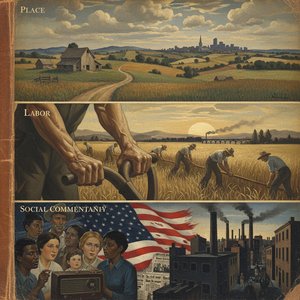
American Regionalism: A Crucible of Identity – Exploring Themes of Place, Labor & Social Commentary
Explore American Regionalism's powerful depiction of the American heartland during the Great Depression. Discover Grant Wood, Thomas Hart Benton & more. Expert analysis & high-quality art reproductions at OriginalUniqueArt.

American Romanticism: Capturing the Soul of the Wild Frontier through the Hudson River School
Explore the profound beauty of American Romanticism. Discover how the Hudson River School captured the wild frontier through masterful landscapes, exploring the legacy of legends like Thomas Cole and Asher Durand in this deep dive into art history.

Top 10 Meesterwerken van het Amerikaans Realisme | Kunst & Decoratie
Ontdek de 10 meest iconische meesterwerken van het Amerikaans Realisme! Van Edward Hopper tot Andrew Wyeth, leer over de kunstenaars en hun tijdloze schilderijen. Vind museumkwaliteit reproducties & decoratie op OriginalUniqueArt.com.
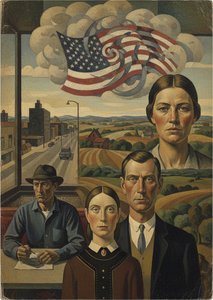
Echoes of Place: Regionalism & American Identity in Interwar Art
Explore the rise of American Regionalism in interwar art! Discover Grant Wood, Thomas Hart Benton & the movement's impact on American identity. Expert analysis & historical context.