

 Voorvertoning
 Verstuur
 Delen
Delen
 Details bekijken
 Gids
Gids

 Download
 Vergelijkbare items
 Röntgenonderzoek
 Diavoorstelling
 Statistieken
Cinderella at the Kitchen Fire


 Lees meer
Giclée / Kunstafdrukken
Giclée- of canvasafdruk van museumkwaliteit met een snelle productie en flexibele afwerkingsmogelijkheden. ( Bestel handgeschilderde reproductie Schakel over naar digitale afbeeldingen)




P118B €10

P118H €10

P118W €10

P438Z €10

P508JH €12

P508YH €12

P805H €10

P805Z €10

P919BZ €10

P919G €10

P919XJ €10

P959ZH €10

P968JZ €12

W106C €8

W218G €10

W218JH €8

W218Y €10

W307PJ €10

W316G €10

W316PJ €8

W316Y €10

W398PJ €8

W4111J €10

W500HY €15

W500JH €15

W692G €12

W849H €8

W940BG €15

W953PJ €8




Kies uit onze vooraf ingestelde maten die overeenkomen met de originele verhoudingen van het kunstwerk.

Voer de gewenste breedte en hoogte in, passend bij uw lijst of muur. Een afdruk kan alleen worden ingekort en nooit groter worden gemaakt dan het origineel; een formaat met andere verhoudingen zal daarom een deel van de afbeelding verliezen. Wij sturen u een digitaal mockup ter goedkeuring voordat we tot drukwerk overgaan. De afbeelding op deze pagina toont niet de werkelijke uitsnede — dit is alleen te zien op het mockup.
Wereldwijde levering () binnen 2 weken in plaats van de standaard 4/5 weken. (28 oktober)

Gratis wereldwijde expressverzending

Hoogwaardig linnen canvas

Volledige verzendverzekering

Garantie op terugbetaling van invoerrechten

Garantie op exacte kleurweergave

Retourbeleid van 100 dagen (alleen bij defecten)

100% Geld-terug-garantie

Korting bij meerdere afnames
 De optie voor glas is alleen beschikbaar bij een formaat kleiner dan 110 cm.

Cinderella at the Kitchen Fire
Giclée / Kunstafdrukken
Afmetingen reproductie
-


Eindtotaal
€ 71
A Portrait Steeped in Sentiment: Exploring Thomas Sully’s Cinderella at the Kitchen Fire
Thomas Sully's *Cinderella at the Kitchen Fire*, completed in 1843, transcends mere depiction; it embodies a profound exploration of domestic tranquility and feminine contemplation. This oil on canvas masterpiece resides within the Dallas Museum of Art, offering visitors a glimpse into a pivotal moment in American Romanticism – a movement characterized by an intense fascination with emotion and idealized beauty.- Artist’s Vision: Sully, born in Horncastle Lincolnshire in 1783, possessed an extraordinary ability to translate feeling onto canvas. His formative years spent touring England alongside his family instilled within him a deep appreciation for theatrical performance and capturing fleeting expressions—skills that would become foundational to his artistic practice.
- Style & Technique: The painting exemplifies the Romantic style’s hallmark – soft lighting, muted colors, and an emphasis on atmosphere. Sully skillfully employs glazing techniques, layering translucent washes of pigment over textured underpaintings to achieve remarkable luminosity and depth. Notice how the light spills from the hearth onto Cinderella's face, illuminating her serene gaze.
The Scene Unfurled: Narrative Detail & Composition
Sully meticulously crafted a tableau that speaks volumes about Victorian sensibilities. The central figure—presumably Cinderella—is seated by the kitchen fire, attended by a comforting feline companion. Surrounding her are commonplace objects – a chair, table, and bottle – deliberately chosen to ground the scene in everyday reality while simultaneously elevating it through artistic consideration. The placement of the figures contributes to a harmonious balance, guiding the viewer’s eye across the canvas.- Symbolism: Beyond its visual appeal, *Cinderella at the Kitchen Fire* resonates with symbolic significance. The hearth represents warmth, domesticity, and maternal care—values deeply cherished during the Victorian era. Cinderella's contemplative posture suggests introspection and inner resilience – qualities admired as emblems of feminine virtue.
- Historical Context: Painted against the backdrop of burgeoning American identity, the painting reflects a desire to portray idealized figures and scenes rooted in moral values. It aligns with broader artistic trends aimed at capturing the sublime—the awe-inspiring grandeur of nature and human emotion—a hallmark of Romantic art.
A Legacy Preserved: Conservation & Reproduction
The original painting remains housed at the Dallas Museum of Art, ensuring its preservation for future generations. Recognizing the enduring fascination with this iconic artwork, high-quality reproductions are available—allowing collectors and interior designers alike to experience the beauty of *Cinderella at the Kitchen Fire* within their own spaces. For more information on Thomas Sully’s oeuvre and related artists like Samuel Lovett Waldo, visit OriginalUniqueArt.com.- Further Exploration: Delve deeper into Romantic art by examining works by Mary Ann Paton (Mrs. Wood) and William Gwynn—artists who similarly championed emotional expression and idealized beauty within their artistic endeavors.
Veelgestelde vragen
Zijn de kleuren van "Cinderella at the Kitchen Fire" door Thomas Sully verzadigd of gedempt?
Het kleurenpalet van "Cinderella at the Kitchen Fire" heeft een verzadiging van Clear Color Presence.
Behoort "Cinderella at the Kitchen Fire" van Thomas Sully tot het publiek domein, en zo ja, waarom?
De auteursrechtstatus van "Cinderella at the Kitchen Fire" - bevindt zich in het publiek domein - de auteursrechten zijn verlopen - is gebaseerd op het overlijden van de kunstenaar in 1872.
Waarvoor wordt het gebruik van "Cinderella at the Kitchen Fire" door Thomas Sully aanbevolen?
De aanbevolen toepassing voor "Cinderella at the Kitchen Fire" door Thomas Sully is Accent. Het kan echter ook voor andere doeleinden worden gebruikt.
Biografie kunstenaar
A Transatlantic Brushstroke: The Life and Art of Thomas Sully
Thomas Sully’s journey, a remarkable transatlantic passage – not merely geographical but artistic and cultural – began in 1783 under the skies of Horncastle, Lincolnshire. His story isn't simply that of a painter; it is a reflection of the burgeoning American identity finding its voice through portraiture. Born into a family of traveling actors—Matthew and Sarah Chester Sully—young Thomas experienced an itinerant childhood before settling in Charleston, South Carolina, in 1792, seeking new opportunities on the American stage. This early exposure to performance, to capturing fleeting expressions and embodying character, profoundly shaped his artistic sensibility. Initially drawn into the world of theatre himself as a tumbler, Sully’s innate talent soon found expression through a different medium: paint. An apprenticeship with an insurance broker revealed an aptitude for detail, but it was the guidance of Charles Fraser, a local artist, and later his brother-in-law Jean Belzons, that truly ignited his passion for miniature painting – a foundation upon which he would build a distinguished career.From Miniature to Monumental: Forging an American Style
Sully’s artistic development wasn't confined by geographical boundaries. A period of study in London with the esteemed Benjamin West, beginning in 1808, proved pivotal. While West was a significant figure in his own right, it was the influence of Thomas Lawrence that truly captivated Sully. Lawrence’s elegant style, his mastery of light and texture, and his ability to capture both likeness and character resonated deeply with the young American artist. He returned to the United States imbued with this aesthetic, earning him the moniker “the Sir Thomas Lawrence of America.” However, Sully didn't merely imitate; he adapted and refined these influences, forging a distinctly American style that blended European sophistication with a uniquely New World sensibility. His portraits weren’t simply representations of wealth or status; they were explorations of personality, imbued with psychological depth and emotional resonance. He quickly established himself in Philadelphia, becoming a leading portraitist and capturing the likenesses of prominent figures like Thomas Jefferson, John Quincy Adams, and Andrew Jackson – men who shaped the nation's destiny. His technique involved layering thin glazes of paint to achieve luminous effects, a hallmark of Lawrence’s style but executed with a subtle American warmth.Beyond Likeness: Historical Narratives and Artistic Legacy
While celebrated for his portraits, Sully’s artistic ambition extended beyond capturing individual faces. He ventured into historical painting with works like *The Passage of the Delaware* (1819), a grand depiction of Washington's iconic crossing – a piece that demonstrated his ability to handle large-scale compositions and imbue them with dramatic power. This willingness to engage with historical narratives broadened his appeal and cemented his place in the American art world. He also produced numerous landscapes, often infused with a romantic sensibility reminiscent of the Hudson River School. His prolific output—over 2,000 paintings over seven decades—testifies to both his skill and his relentless dedication. He wasn’t merely a painter of the elite; he documented an era, preserving the faces and stories of a nation undergoing rapid transformation. Sully's influence extended beyond his own canvases. He was a dedicated teacher, mentoring numerous artists including Marcus Aurelius Root, who would later become a pioneer in photography.A Patron of Culture: Music, Society, and Enduring Influence
Sully’s contributions weren’t limited to the visual arts. As a founding member of Philadelphia's Musical Fund Society, he demonstrated a deep commitment to fostering cultural life within his community. This involvement speaks to a broader artistic sensibility – an understanding that art in all its forms enriches society and elevates the human spirit. His portraits often depicted subjects engaged in social activities, reflecting his belief in the importance of civic engagement. He was known for his impeccable manners and refined taste, embodying the ideals of the American gentry. Sully’s work was even adapted for use on United States coinage, further solidifying his place in the national consciousness. Though Romanticism and Neoclassicism were dominant movements during his lifetime, Sully’s style transcended easy categorization. He skillfully blended elements of both, creating a unique aesthetic that prioritized emotional depth, technical precision, and psychological insight. Today, Thomas Sully's paintings hang in prestigious museums across the country, continuing to captivate audiences with their beauty, elegance, and enduring power. His legacy remains as a testament to the transformative potential of art and the enduring allure of the human face.Key Portraits
- Thomas Jefferson: A dignified portrait capturing the statesman’s intellectual gravitas.
- John Quincy Adams: A more intimate portrayal, revealing a thoughtful and introspective nature.
- Andrew Jackson: A dynamic depiction of the frontiersman-turned-president, conveying his strength and determination.
- The Passage of the Delaware: A monumental historical painting illustrating Washington’s leadership during a pivotal moment in American history.

Thomas Sully
1783 - 1872 , Verenigd Koninkrijk
Belangrijkste feiten
- Artistic Movement Or Style: Romantiek, Neoklassiek
- Artists Or Movements Influenced By This Artist: ['Amerikaanse portretschilder']
- Artists Who Influenced This Artist:
- Benjamin West
- Lawrence
- Date Of Birth: 19 juni 1783
- Date Of Death: 5 nov 1872
- Full Name: Thomas Sully
- Nationality: Engels-Amerikaans
- Notable Artworks:
- Passage Delaware
- Portret Jefferson
- Place Of Birth: Horncastle, VK
Gerelateerde artikelen

De Blijvende Erfenis van Olieverf op Doek: Techniek, Geschiedenis en Hedendaagse Praktijk
Ontdek de rijke geschiedenis en technieken van olieverfschilderen. Van Renaissance meesterwerken tot moderne toepassingen, leer over pigmenten, glazuur en conservering.
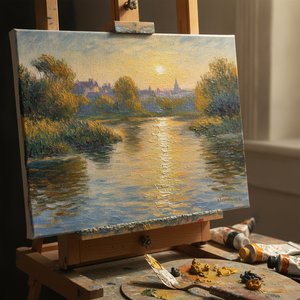
The Soul of Impressionism: Why Oil on Canvas Captures Eternal Light and Timeless Emotion
Discover the enchanting alchemy of Impressionism. Explore how the mastery of oil on canvas, through glazing and impasto, captures eternal light and emotion. Perfect for lovers of Monet and Van Gogh seeking the profound depth of hand-painted fine art.

The Enduring Power of Painting: A Historical & Contemporary Exploration of Form and Emotion
Explore the rich history & enduring techniques of oil painting with OriginalUniqueArt. Discover masterpieces, learn about art collecting, and find authentic handmade reproductions crafted by skilled artists.

Oil on Canvas: A Historical & Technical Exploration of a Timeless Artistic Medium
Explore the rich history & enduring techniques of oil painting on canvas. Discover the science behind its longevity, conservation practices, and contemporary relevance. Expert insights for art enthusiasts.

The Enduring Legacy of Oil on Canvas: Technique, History & Aesthetic Impact
Explore the rich history & techniques of oil painting – from Renaissance masters to Impressionism. Discover pigments, layering methods, and why this timeless medium endures. Expert insights for artists & art enthusiasts.